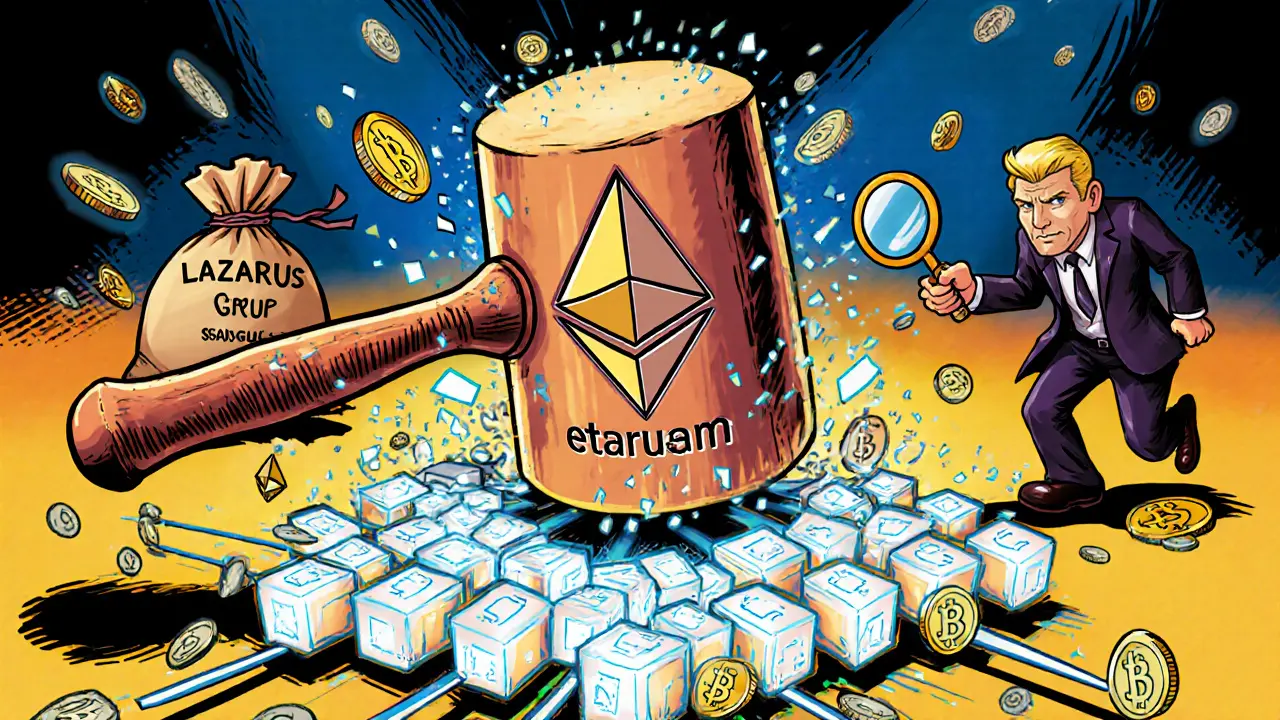
The U.S. sanctioned Tornado Cash in 2022 for laundering billions in crypto, including funds from North Korean hackers. This landmark case raised legal questions about regulating decentralized code-and changed crypto privacy forever.
When you hear OFAC, the U.S. Treasury’s Office of Foreign Assets Control, which enforces economic sanctions against individuals, entities, and countries. Also known as the Office of Foreign Assets Control, it doesn’t just target banks—it tracks crypto wallets, exchanges, and even DeFi protocols that interact with blocked addresses. If you’re trading, staking, or running a crypto business, OFAC isn’t something you can ignore. It’s not about politics—it’s about legal risk. One wrong transaction, and your funds could be frozen, your exchange shut down, or worse—your business fined up to $1 million per violation.
OFAC’s Specially Designated Nationals (SDN) list, a public database of individuals and entities banned from U.S. financial systems includes crypto addresses tied to ransomware groups, North Korean hackers, and sanctioned exchanges like BitMEX before its shutdown. You can’t just say "I didn’t know"—exchanges are required to screen every deposit and withdrawal. That’s why platforms like Kraken and Coinbase block transactions to flagged wallets before they even hit your account. Even decentralized protocols aren’t safe: if a smart contract interacts with an SDN address, it could trigger compliance flags, freezing liquidity or triggering legal action.
And it’s not just about bad actors. If you’re in Nigeria, you’re already dealing with VASP licensing, a local requirement for crypto businesses to register with the SEC, which aligns with OFAC’s global standards. If your platform doesn’t screen for OFAC-listed addresses, you won’t get licensed. Same goes for cross-border traders: sending crypto to someone in Iran, Syria, or Crimea—even if they’re a friend—is a violation. The IRS and FinCEN track these moves. And if you’re holding a token like SINGLE, a Cronos-based DeFi token with minimal liquidity and no clear team, and it gets linked to a sanctioned wallet, your entire position could vanish overnight without warning.
OFAC doesn’t care if you’re a beginner or a whale. It doesn’t care if you used a mixer or a bridge. It cares about the origin and destination of funds. That’s why posts here cover everything from FBAR violations for foreign accounts to why fake exchanges like Yum Yum never survive scrutiny—they can’t comply. It’s why platforms like CRXzone and FEX are flagged: no licensing, no transparency, no OFAC screening. And it’s why you need to ask: does your exchange check for blocked addresses? Do you know where your tokens came from? This collection isn’t about theory—it’s about survival. Below, you’ll find real cases, red flags, and practical steps to stay compliant, avoid penalties, and protect your assets in a world where crypto and law collide.
The U.S. sanctioned Tornado Cash in 2022 for laundering billions in crypto, including funds from North Korean hackers. This landmark case raised legal questions about regulating decentralized code-and changed crypto privacy forever.