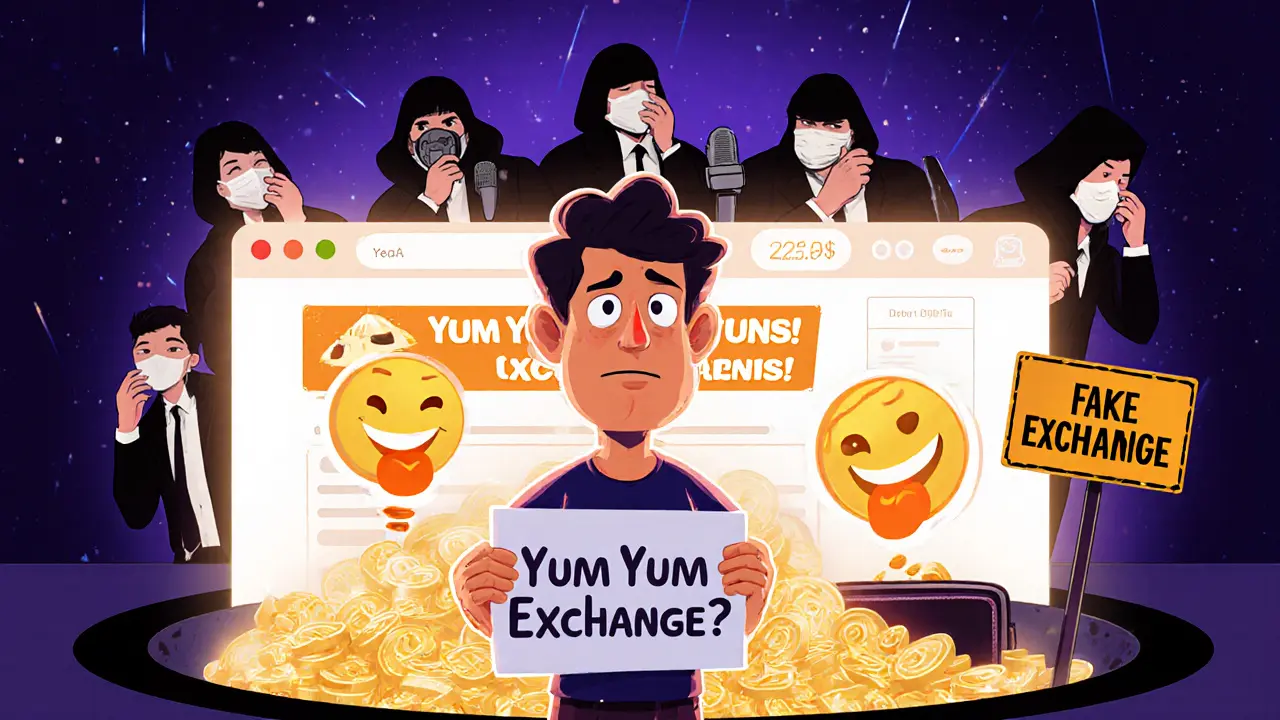
Yum Yum crypto exchange is not real-it's a scam. Learn how fake exchanges trick users, how to spot them, and which safe platforms to use instead. Protect your crypto from fraud.

When you hear "Yum Yum trading fees," you might think it’s just a small charge added to your trade. But trading fees, the cost you pay every time you buy or sell crypto on an exchange. Also known as transaction fees, they’re not just a number—they’re the hidden tax that eats into your profits, whether you’re trading Bitcoin or a memecoin with $10k in volume. Many traders overlook them until their gains vanish. And it’s not just about the percentage. It’s about slippage, maker-taker models, and whether the exchange charges extra for withdrawals or deposits.
Real trading fees don’t show up in ads. You won’t see them on a coin’s landing page. They’re buried in fine print on exchanges like BitMEX, LFJ v2, or UBIEX—places where leverage and liquidity look great until you check the fee schedule. Some exchanges charge 0.1% per trade. Others charge 0.2% for takers and pay you 0.05% as a maker. That’s not a difference—it’s a strategy. And if you’re trading small amounts on a low-liquidity DEX like Wagmi on zkSync Era, your fee might be 5% in slippage alone. That’s not a fee—it’s a trap.
And it’s not just about the exchange. Your wallet choice matters. Gas fees on Ethereum can make a $5 trade cost $20. That’s why people move to BSC or zkSync Era, where fees drop to pennies. But then you run into token-specific costs—like needing to hold a platform’s native token to get discounted fees, or paying in that token just to withdraw. It’s a game of cost stacking. The cheapest exchange might be the one that forces you to buy another coin first. Yum Yum trading fees aren’t about the rate. They’re about the total cost of moving money in and out of crypto.
What you’ll find below isn’t a list of top exchanges. It’s a collection of real reviews from traders who got burned by hidden fees, failed to qualify for discounts, or traded on platforms that vanished overnight. You’ll see how Strike Finance is great for payments but useless for trading. How Bistox disappeared without a trace. How Wagmi’s "DEX" has zero volume and zero liquidity. These aren’t hypotheticals. These are people who paid the price—and wrote it down so you don’t have to.
Yum Yum crypto exchange is not real-it's a scam. Learn how fake exchanges trick users, how to spot them, and which safe platforms to use instead. Protect your crypto from fraud.