
- 16 Dec 2025
- Elara Crowthorne
- 21
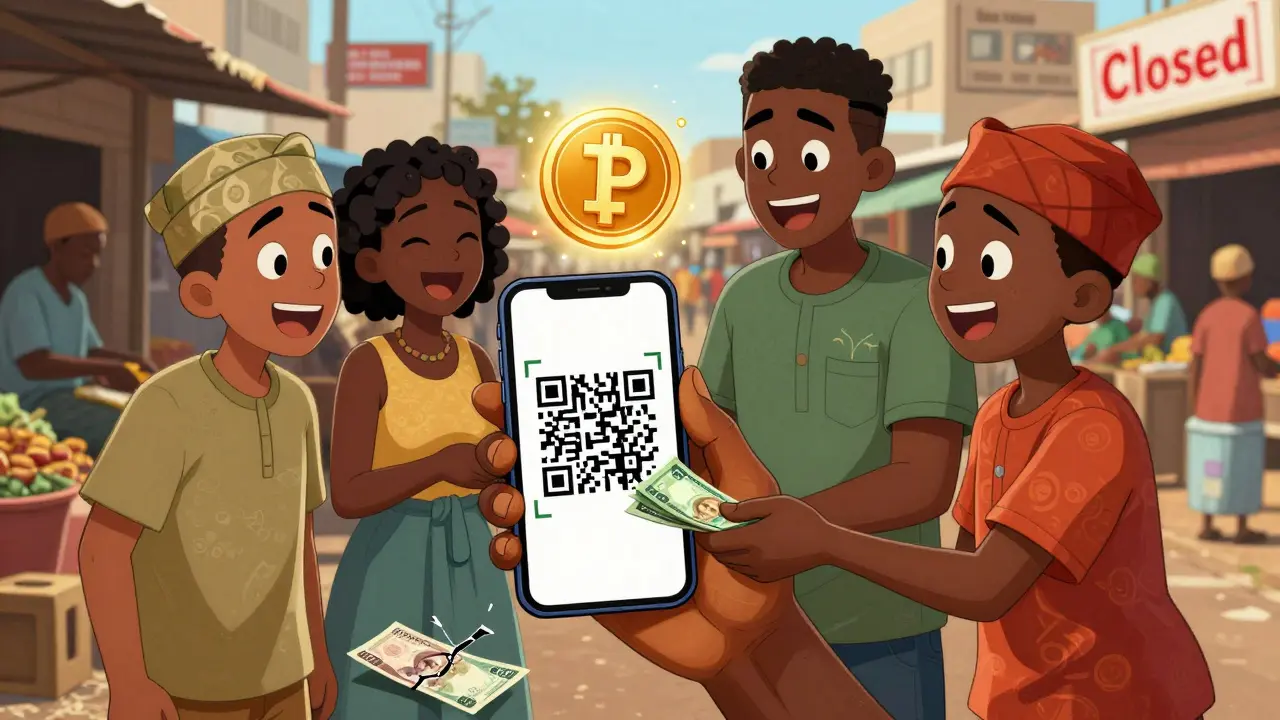
When your country’s money loses 75% of its value in eight years, you don’t wait for the government to fix it. You find another way. That’s exactly what millions of Nigerians did with cryptocurrency - not because they loved Bitcoin as an investment, but because they had no other choice. Banks blocked their dollars. The naira kept crashing. Remittance fees ate up 8% of every dollar sent home from abroad. So they turned to crypto. Not through ads or corporate apps. Not because a CEO told them to. But because their neighbor showed them how to send money to family in London using a phone app, and it cost less than a cup of tea.
Why Crypto Grows When Governments Try to Stop It
Banning something doesn’t make it disappear - it just makes people get smarter about using it. That’s what happened in Nigeria after the Central Bank tried to shut down crypto exchanges in 2021. The ban didn’t stop trading. It just pushed it underground. People switched to peer-to-peer platforms like Paxful and LocalBitcoins. They used WhatsApp groups to find buyers and sellers. They paid in cash at local markets, then sent the equivalent in Bitcoin through a QR code. Within months, Nigeria became the second-largest crypto-adopting country in the world, behind only Vietnam. This isn’t about speculation. It’s about survival. Inflation hit 24% in 2023. Salaries couldn’t keep up. Savings vanished overnight. People who used to save in naira started buying stablecoins like USDT - digital tokens pegged to the U.S. dollar - to protect their money. A nurse in Lagos might earn 150,000 naira a month. That’s about $100. But if she buys $100 worth of USDT, she can hold it for weeks, then cash out later when the naira drops further. She’s not gambling. She’s preserving.The Tools People Use When Banks Say No
You won’t find these tools in Apple’s App Store or Google Play. They’re not marketed by big banks. They’re built by developers in Lagos, Jakarta, and Buenos Aires - people who’ve seen their parents lose life savings to currency collapse.- Peer-to-peer (P2P) marketplaces: Platforms like Paxful and Binance P2P let users trade crypto directly with others. No bank account needed. Just a phone, internet, and trust.
- Stablecoins: USDT and USDC are the real workhorses. They don’t swing wildly like Bitcoin. They hold steady at $1, acting like digital cash you can send anywhere.
- Mobile wallets: Apps like Trust Wallet and MetaMask let people store crypto without relying on banks. Some even let you pay for groceries with crypto through QR codes.
- Telegram bots: In countries with poor internet, people use simple bots to buy crypto via SMS or WhatsApp. You text “buy 10 USDT,” send cash to a local agent, and get crypto delivered in minutes.
Nigeria vs. The U.S.: Two Different Worlds, One Common Thread
In the United States, people buy crypto because they think it’ll go up. They watch TikTok videos of guys turning $500 into $50,000. They trade on Coinbase. They worry about taxes and SEC rules. In Nigeria, people buy crypto because their bank won’t let them withdraw dollars. Because their salary buys less each week. Because their child’s school fees are due in dollars, and the official exchange rate is a joke. The U.S. government debated whether crypto should be classified as a security or a commodity. Nigeria’s government just tried to shut it down - and failed. Why? Because you can’t ban something that’s already in everyone’s pocket. By 2024, over 33 million Nigerians owned crypto. That’s one in every five adults. The government couldn’t arrest them all.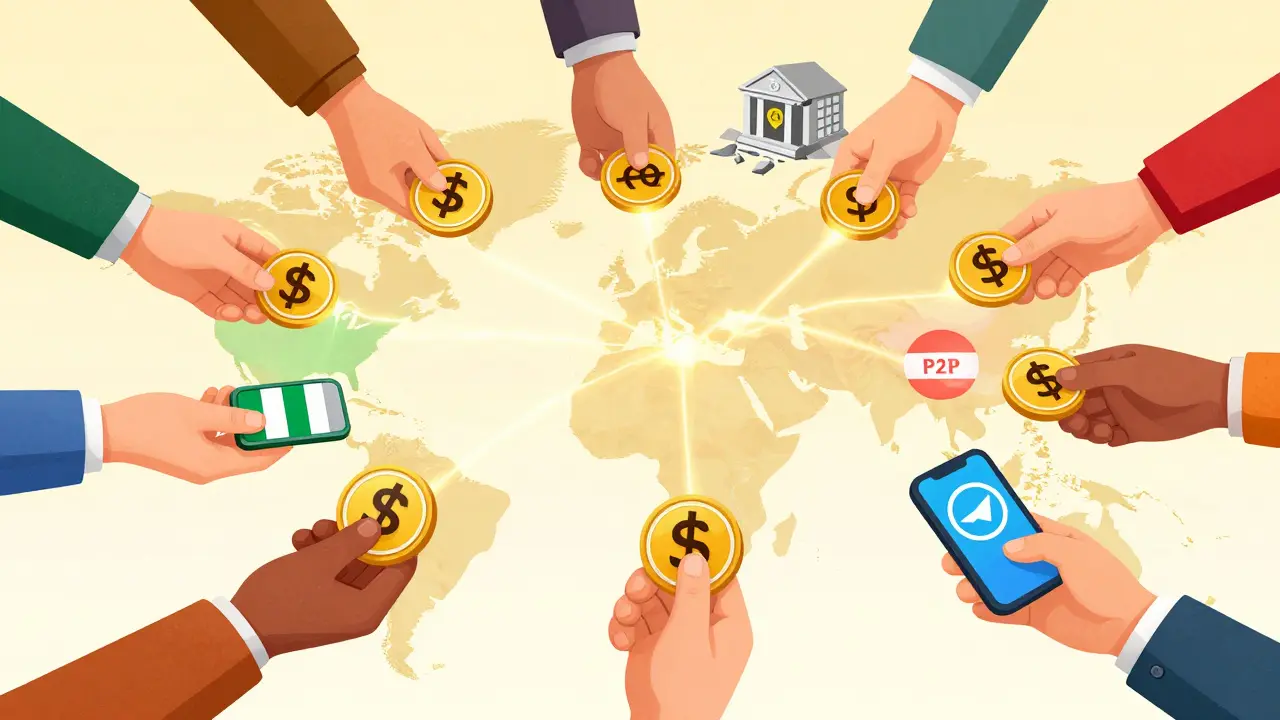
How Governments Eventually Give In
History doesn’t repeat, but it rhymes. When a technology becomes too widespread to stop, regulators don’t win - they adapt. In 2025, the U.S. Congress passed the GENIUS Act, a bipartisan law that created clear rules for stablecoin issuers. It required them to back every USDT or USDC with real U.S. dollars or short-term Treasury bonds. No more shady reserves. No more “we’ll figure it out later.” It was a direct response to the fact that Americans - even those who never heard of Bitcoin - were already using stablecoins to pay rent, buy groceries, and send money to family overseas. The same thing happened in El Salvador, where Bitcoin became legal tender in 2021. At first, the IMF warned of disaster. Now, over 70% of Salvadorans use Bitcoin for daily transactions. The government didn’t win the fight - it just lost control, and then made peace with it. Nigeria’s government didn’t lift the ban outright. Instead, they quietly allowed crypto exchanges to operate again - under new licensing rules. They didn’t celebrate. They didn’t tweet about innovation. But they stopped blocking access. That’s how grassroots adoption wins: not by force, but by volume.It’s Not Just Nigeria - It’s Everywhere
Nigeria is the poster child, but it’s not alone.- In Argentina, where inflation hit 280% in 2023, people use crypto to buy groceries and pay for Uber rides. Many shops now display a QR code for USDT alongside pesos.
- In Vietnam, crypto adoption surged after the government cracked down on forex trading. People turned to crypto to buy foreign goods online - from iPhones to textbooks.
- In Lebanon, after the banking system collapsed in 2019, citizens used crypto to access their own savings. Banks had frozen accounts. Crypto wallets didn’t.
- In India, despite strict capital controls, millions use P2P crypto to pay for international freelancing gigs - bypassing bank delays and high fees.
What Happens When the Economy Gets Better?
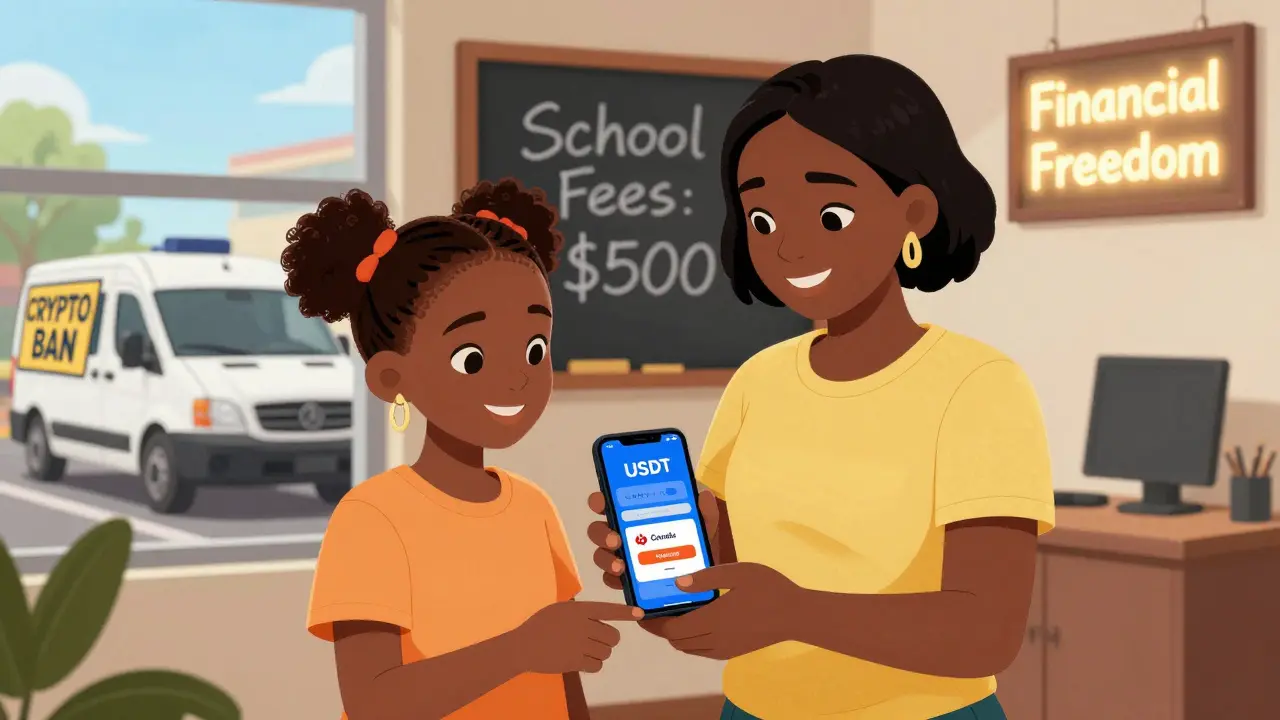
A common question: If inflation drops and the naira stabilizes, will people stop using crypto? Maybe. But probably not. Once people learn how to send money across borders in minutes for pennies, they don’t go back to paying 8% fees and waiting three days. Once they realize they can hold value without a bank’s permission, they don’t trust the system again. Crypto isn’t just a tool for survival. It becomes a new kind of financial literacy. People who used to be excluded from the system now understand how money works - and they’re not giving that up. In Lagos, a 19-year-old student now teaches her mother how to use USDT to pay for her sister’s university fees in Canada. Her mother never had a bank account. Now she has a digital wallet. That’s not a trend. That’s a revolution.The Real Risk Isn’t Bans - It’s Ignoring the People
Governments still worry about money laundering, scams, and volatility. Those are real concerns. But the bigger risk? Ignoring the millions who are already using crypto because they have no other option. When you ban something people need, you create black markets. When you regulate it, you bring it into the light. Nigeria’s experience shows that the best way to protect people isn’t to stop crypto - it’s to make it safe, clear, and accessible. The U.S. government didn’t ban Bitcoin. It regulated it. El Salvador didn’t fight Bitcoin. It made it legal. Nigeria didn’t win by banning it. It lost by trying. The lesson is simple: You can’t stop people from using money they trust. You can only choose whether to help them use it safely - or force them to hide.Why do people use crypto if their government bans it?
People use crypto when traditional systems fail. If your currency is crashing, banks won’t let you send money abroad, or you’re unbanked, crypto offers a way to save, send, and spend without needing permission. It’s not about speculation - it’s about survival.
Is crypto really safer than banks in unstable countries?
It’s not about safety - it’s about control. Banks can freeze your account. Governments can block transfers. Crypto wallets, if kept secure, can’t be shut down by anyone else. You hold the keys. That’s not perfect, but it’s better than having no access at all.
Can governments shut down crypto forever?
No. Crypto runs on a global network of computers. You can block websites and apps, but you can’t shut down the entire internet. People will always find ways - P2P trading, cash exchanges, mesh networks. Bans slow adoption, but they don’t stop it.
What’s the difference between crypto adoption in Nigeria and the U.S.?
In the U.S., people buy crypto to invest or speculate. In Nigeria, people use it to survive - to send money home, protect savings, and pay for essentials. One is driven by opportunity. The other is driven by necessity.
Will crypto replace traditional money in developing countries?
Not replace - supplement. Crypto won’t make cash disappear. But it’s becoming the invisible layer underneath - the way people actually move money when banks and governments fail them. It’s the backup system everyone hoped for but never got.

21 Comments