
- 10 Dec 2025
- Elara Crowthorne
- 20
BULEI Liquidity Calculator
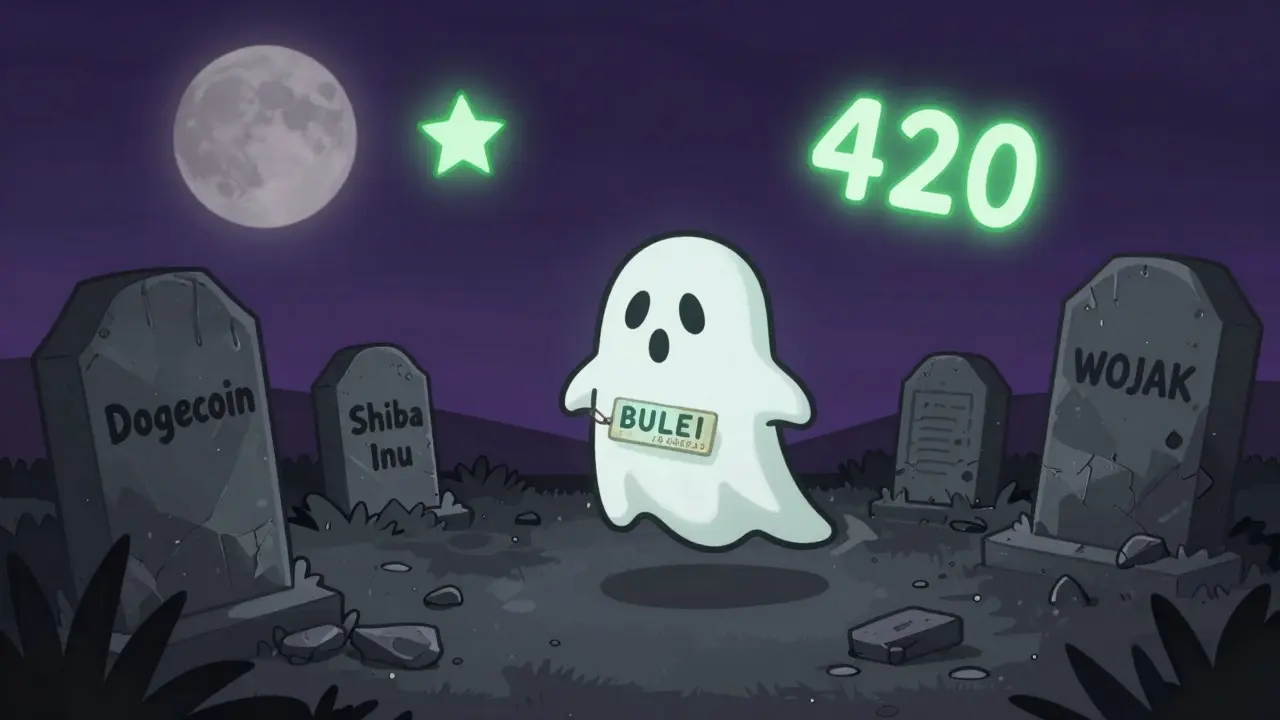
If you’ve stumbled upon Bulei (BULEI) while scrolling through crypto forums or a low-traffic exchange, you’re probably wondering: is this real? Is it worth anything? Or is it just another ghost token floating in the crypto graveyard?
Bulei (BULEI) is an ERC-20 token launched on June 13, 2024, built on the Ethereum blockchain. At first glance, it looks like just another meme coin-something meant to be funny, viral, or chaotic. And honestly? That’s about all it is. It has no team, no roadmap, no utility, and no community. What it does have is a supply of 420,690,000,000 tokens. Yes, that’s 420.69 billion. The number is a direct nod to internet meme culture, especially the number 420 tied to cannabis humor and the absurdity of some crypto launches. But unlike Dogecoin or Shiba Inu, which at least built some traction, BULEI never got off the ground.
Price and market performance: A crash from day one
BULEI’s all-time high was $0.0000129 on its launch day. That’s less than a millionth of a dollar. And then it collapsed. By October 2024, it was trading around $0.000000235-down 97.5% from its peak. That’s not volatility. That’s a death spiral.
Its market cap hovered between $80,000 and $135,000 during that time. To put that in perspective, Dogecoin’s market cap is over $14 billion. BULEI is 100,000 times smaller. Even obscure meme coins like WOJAK have a market cap 15 times bigger. The 24-hour trading volume? Sometimes as low as $1.70. That means if you tried to buy $100 worth of BULEI, you’d likely drain the entire market and end up paying 10x the price-or worse, your transaction would fail entirely.
Where can you buy BULEI? (Spoiler: Not easily)
BULEI is listed on Bybit and a few small decentralized exchanges. It’s not on Binance, Coinbase, Kraken, or any major platform. Even Binance’s Web3 Wallet lists it as “Not listed.” That’s a red flag. Big exchanges don’t list tokens with no volume, no community, and no development. If a token can’t get on Binance, it’s not because they’re being picky-it’s because they’re avoiding risk.
Trying to buy BULEI means using a decentralized exchange (DEX) like Uniswap or PancakeSwap. You’ll need an Ethereum wallet (MetaMask, Trust Wallet), some ETH for gas fees (which cost $1.50-$3 per transaction), and the exact contract address. Mess that up, and you’ll lose your money. There’s no customer support. No help center. No Discord. No Telegram. Just a token address and a price chart that hasn’t moved in weeks.
Why does BULEI even exist?
It doesn’t solve a problem. It doesn’t offer DeFi yield, NFTs, or gaming. It’s not a payment coin. It’s not even trying to be. It’s a pure speculation play-designed to attract people who think “low price = high upside.” But here’s the catch: with a supply of 420.69 billion, even if the price went up 100x, you’d still be holding a token worth fractions of a cent. The math doesn’t work.
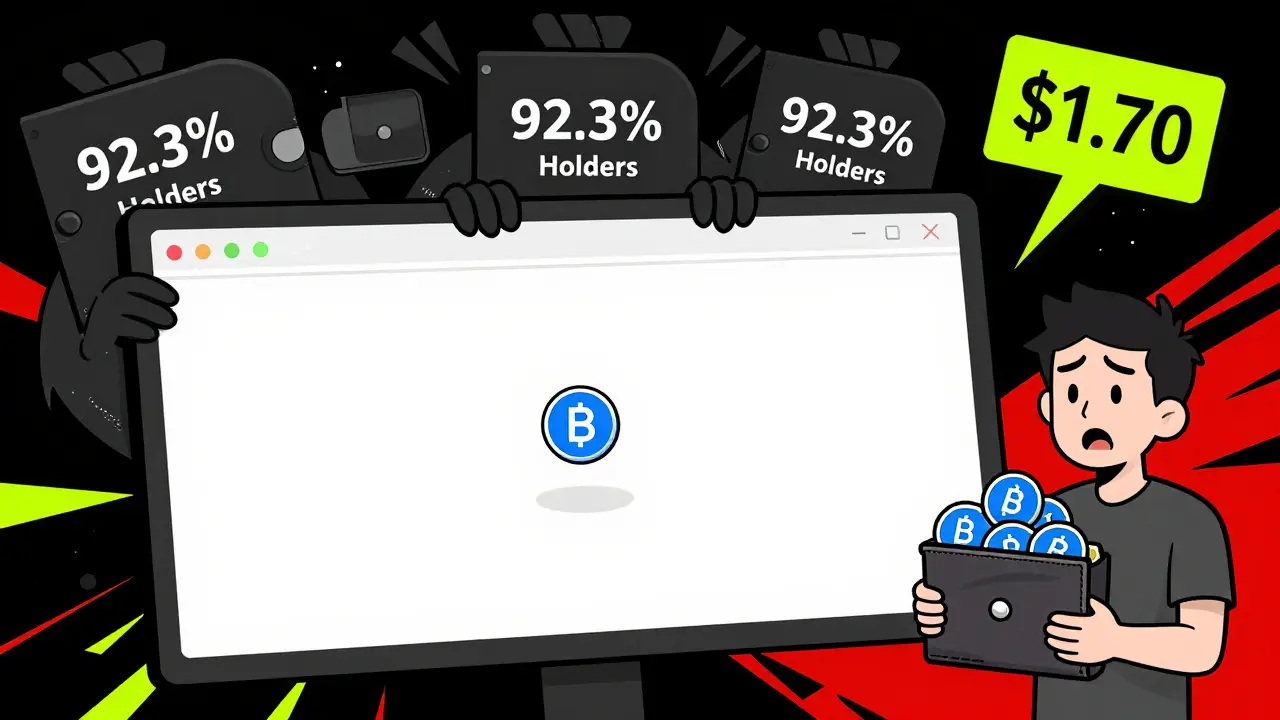
And the supply isn’t even evenly distributed. According to blockchain analytics from Arkham Intelligence, 92.3% of all BULEI tokens are held by just 10 wallets. That means a handful of people control almost the entire market. If they sell-even a small portion-it crashes. There’s no safety net. No lock-up period. No team to hold the line. Just a few wallets sitting on a pile of digital junk.
No community. No conversation. No future
Look for discussions about BULEI on Reddit, Twitter, or crypto forums. You won’t find any. Not real ones, anyway. The few mentions you see are from bot accounts posting the same generic message: “Buy BULEI! 1000x coming!” There are no threads. No debates. No memes. No memes about memes. Nothing.
Compare that to Dogecoin in 2021. People were making jokes, posting art, organizing charity donations. BULEI doesn’t even have that. It’s a silent token. A ghost. And that’s the biggest warning sign of all.
Is BULEI a scam?
It’s not technically a scam in the way a fake ICO or rug pull works. There’s no evidence the creators stole funds. But it’s a low-liquidity trap. That’s a term used by crypto analysts like Michael van de Poppe to describe tokens that look like they’re alive-but are barely breathing. They’re designed to lure retail investors with the illusion of opportunity. You see a low price. You think, “I can buy a lot.” But when you try to sell, there’s no one to buy from. Your tokens become worthless because no one else wants them.
Regulators are starting to crack down on these kinds of tokens. In October 2024, the SEC took action against 15 micro-cap tokens with similar profiles-no utility, no team, no volume. BULEI fits the profile perfectly. If regulators ever target it, the price could drop to zero overnight.

Who’s holding BULEI? And why?
Only about 127 unique wallets hold BULEI. That’s fewer than a small Reddit community. Most of those wallets are likely the original creators or early bots. A few might be people who bought it during the brief spike in June 2024 and are now stuck. A tiny number are gamblers hoping for a miracle pump.
There’s no real holder base. No loyal fans. No long-term believers. Just people who clicked “buy” because the price looked cheap. And that’s the problem. Cheap doesn’t mean valuable. In crypto, cheap usually means abandoned.
What’s the future of BULEI?
VanEck’s October 2024 report on micro-cap tokens found that 98.7% of tokens with a market cap under $200,000 and no development activity within six months of launch end up completely worthless. BULEI has been live for over four months with zero updates, no code commits, no whitepaper, no GitHub, no announcements. It’s dead on arrival.
There’s no coming back. No team to revive it. No investor interest. No exchange will list it unless someone pays them to. And even then, it wouldn’t matter-there’s no demand.
BULEI isn’t a cryptocurrency you invest in. It’s a cryptocurrency you learn from. It’s a case study in how not to build a token. It’s what happens when you take the meme coin formula-low supply, funny name, viral potential-and strip away everything that makes it work: community, utility, transparency.
If you’re thinking of buying BULEI, ask yourself: Why? What’s your exit plan? Who’s going to buy it from you? And what happens when the last person who bought it decides to sell?
The answer is simple: no one will. And your tokens will sit there forever-worthless, ignored, and forgotten.

20 Comments
BULEI is just a ghost coin. No team, no community, no future. I’ve seen dozens like this - they pop up, get a tiny pump from bots, then vanish. Save your gas fees and your heart.
Just don’t touch it.
lol they’re just using this to launder money through fake wallets. I’ve seen the same 10 addresses moving it around like a game of hot potato. The SEC’s gonna shut this down next week. Mark my words.
Also, 420.69 billion? That’s not a meme. That’s a middle finger to math.
People still falling for this? 😭
Low price = high upside? Bro, that’s how you end up buying a digital napkin.
Next time, check the volume before you click buy. Or better yet - don’t click at all.
Another ‘low-cap gem’ that’s just a graveyard with a price chart. The only thing BULEI is good for is teaching newbies how not to lose money.
At least Dogecoin had memes. This? It’s a spreadsheet with a blockchain label.
I know it’s tempting to think ‘what if this is the next DOGE?’ - but that’s not how it works. Real projects have people behind them. Real tokens have updates. Real communities have inside jokes and art and Discord calls at 2 a.m.
BULEI has none of that. It’s not a coin. It’s a cautionary tale wrapped in a smart contract.
Don’t be the person who says ‘I just wanted to see what happened.’ You’ll end up watching your $50 disappear while the blockchain laughs at you.
Trust me. I’ve been there. And I’m still recovering.
What fascinates me is how this mirrors the broader pathology of retail crypto speculation - the belief that scarcity of effort equals abundance of reward.
There’s no intrinsic value here, no network effect, no utility - just the hollow echo of ‘what if?’
This isn’t finance. It’s behavioral economics in its most primitive form: hope dressed as a ticker symbol.
And yet, we keep doing it. Why? Because we’re wired to chase the whisper of a miracle.
But miracles don’t live in 420.69 billion token supplies. They live in communities that build, not buy.
Market cap under $200k with zero development activity? That’s not a coin. That’s a tombstone.
And the fact that 92% is held by 10 wallets? That’s not decentralization. That’s a cartel with a blockchain label.
Don’t confuse low price with opportunity. It’s just a trap with a pretty chart.
Brooo... BULEI is the crypto version of a haunted house with a ‘For Sale’ sign. 🏚️👻
You think you’re getting a bargain, but the only thing inside is regret and gas fees.
Also, 420.69 billion? That’s not a supply. That’s a cry for help.
Love you, but don’t touch this. 💔🪦
Wow. Just wow. Someone actually wrote a whole essay on this? And you’re still here? 🤦♀️
It’s a ghost. Move on. There are 10,000 other coins. Pick one that’s not a zombie.
This is such a clear example of why education matters in crypto.
People see a low price and think ‘cheap = undervalued.’ But in reality, cheap = abandoned.
It’s not about the number on the chart. It’s about the people behind it.
And BULEI? No people. Just pixels.
Thank you for this breakdown - it’s exactly what new investors need to read before they lose their first $100.
you know what’s wild? this token has more supply than all the sand on earth 🤯
and yet... no one wants it.
it’s like printing a billion lottery tickets and giving them away for free… but no one even bothers to scratch them.
we’re all just waiting for the universe to say ‘nope’
and it did.
and it’s so quiet.
so so quiet.
like a library after the last person left.
and the books? still there.
but no one reads them anymore.
that’s bulei.
and i’m kinda sad for it.
not because it’s bad…
but because it could’ve been something.
but it wasn’t.
and now it’s just… there.
waiting.
for no one.
Of course Americans are still falling for this. We love ‘free money’ scams. The only thing more American than this is a TikTok influencer selling NFTs of their breakfast.
Meanwhile, in Europe, we just laugh and move on.
Y’all need to stop gambling and start thinking.
I’ve read through this entire breakdown and I just feel… sad.
Not angry. Not mad. Just… sad.
Because this isn’t about money. It’s about people believing in something that doesn’t believe in itself.
There’s no malice here - just emptiness.
And that’s the scariest part.
It’s not a rug pull. It’s a ghost story.
And we’re all just whispering into the void, hoping someone answers.
They won’t.
Let me say this plainly: if you’re considering buying BULEI, you’re not investing. You’re participating in a liquidity experiment - and you’re the experiment.
The only thing growing here is the number of people who’ve lost money.
Don’t be one of them.
There are better ways to learn crypto. This isn’t one of them.
Thank you for the thorough analysis. This is precisely the kind of content that helps prevent retail investors from making irreversible mistakes.
The absence of a team, community, and utility is not an oversight - it is the defining characteristic of this asset.
It is not a failure of market efficiency. It is a failure of judgment.
97.5% drop? That’s not volatility. That’s a funeral.
And the fact that it’s still listed on Bybit? That’s the real scam.
Exchanges should be gatekeepers, not graveyards.
They’re just collecting fees from dead coins.
And you’re the corpse paying the fee.
There’s a philosophical layer here that’s rarely discussed: BULEI doesn’t represent failure - it represents the collapse of meaning.
It was never meant to be useful. It was meant to be a symbol of absurdity.
And yet, people still assign value to it.
That’s the real tragedy.
We’ve become so desperate for meaning in a decentralized world that we’ll give it to a number with no story.
Maybe BULEI isn’t a coin.
Maybe it’s a mirror.
USA is full of dumbasses who think low price = high reward
bro its 420.69 billion tokens
you think its gonna go to 1 cent?
nope
even if it did youd only have 42069 dollars
but you spent 50 on gas
and you still got scammed
and you still think its a good idea
lmao
we need to ban this crap
imagine being the person who bought this at the top
like… you saw the chart go up
you thought ‘this is it’
you sent your eth
you waited
and then… nothing
no one talks
no one buys
no one sells
just you… and your 420 billion tokens…
and the silence…
and the gas fees…
and the dreams…
and the 3am scrolling…
and the regret…
and the fact that you still haven’t sold…
because maybe… just maybe…
it’ll come back…
it’ll come back…
it’ll come back…
it won’t.
it never does.
but you still hope.
and that’s the real trap.
Given the absence of a development team, the concentration of token ownership, and the negligible trading volume, this asset exhibits all the hallmarks of a non-viable security under current SEC guidelines. I would strongly advise against any speculative exposure.