

- 31 Jan 2026
- Elara Crowthorne
- 25
If you’ve seen FUSAKA pop up on a crypto tracker or a Telegram group promising quick gains, you’re not alone. But here’s the thing: Fusaka isn’t a project. It’s not an innovation. It’s not even a real cryptocurrency in the way Bitcoin or Ethereum are. It’s a meme token with a bizarre supply number, zero official documentation, and a trail of contradictions that make it more of a warning sign than an investment opportunity.
What Exactly Is FUSAKA?
FUSAKA is a cryptocurrency token with a circulating supply of exactly 420,690,000,000 coins. That number isn’t random-it’s a joke. 420 is internet slang for marijuana culture. 69 is a well-known meme number. Together, they’re a punchline wrapped in a token contract. The token trades at around $0.00000288, which sounds cheap-until you realize you’d need over 347,000 of them to make just one dollar. That’s not affordability. That’s a red flag. Its market cap hovers between $1.2 million and $1.4 million. For context, that’s less than 0.0001% of the entire crypto market. It ranks #3713 on CoinGecko. There are over 3,700 other cryptocurrencies with more market value. FUSAKA isn’t just small-it’s practically invisible in the grand scheme.The Blockchain Confusion
Here’s where things get messy. Some sites, like CoinSwitch, say FUSAKA runs on Solana. Others, like CoinMarketCap, call it an "Ethereum upgrade." That’s not just wrong-it’s technically impossible. Ethereum upgrades are protocol-level changes. Think of them like updating your phone’s operating system. You don’t trade "Ethereum 2.0" as a token. You use the network. There’s no such thing as a tradeable token called "Fusaka" that’s an Ethereum upgrade. Ethereum Foundation developer Tim Beiko confirmed this in October 2023: "There is no Ethereum upgrade or protocol component named Fusaka. This appears to be misinformation." Meanwhile, Solana-based data shows FUSAKA is listed on decentralized exchanges like Raydium. That makes sense-Solana is full of low-effort meme tokens. But even there, no official website, no GitHub repo, no team members, no whitepaper. Just a contract address and a price chart.No Team, No Roadmap, No Future
Legitimate crypto projects have teams. They have GitHub commits. They update their Discord. They publish roadmaps. FUSAKA has none of that. You won’t find any developer names. No Twitter account with verified blue check. No Medium posts explaining the vision. No community calls. Just anonymous Telegram groups pushing pumps. That’s not a startup. That’s a shell. Blockchain security firm TokenSniffer gives FUSAKA an 87/100 danger score. Why? No liquidity locked. No audit. Anonymous creators. The supply number is a meme. The token has zero utility. It doesn’t pay staking rewards. It doesn’t power a dApp. It doesn’t solve a problem. It’s just a number on a chart.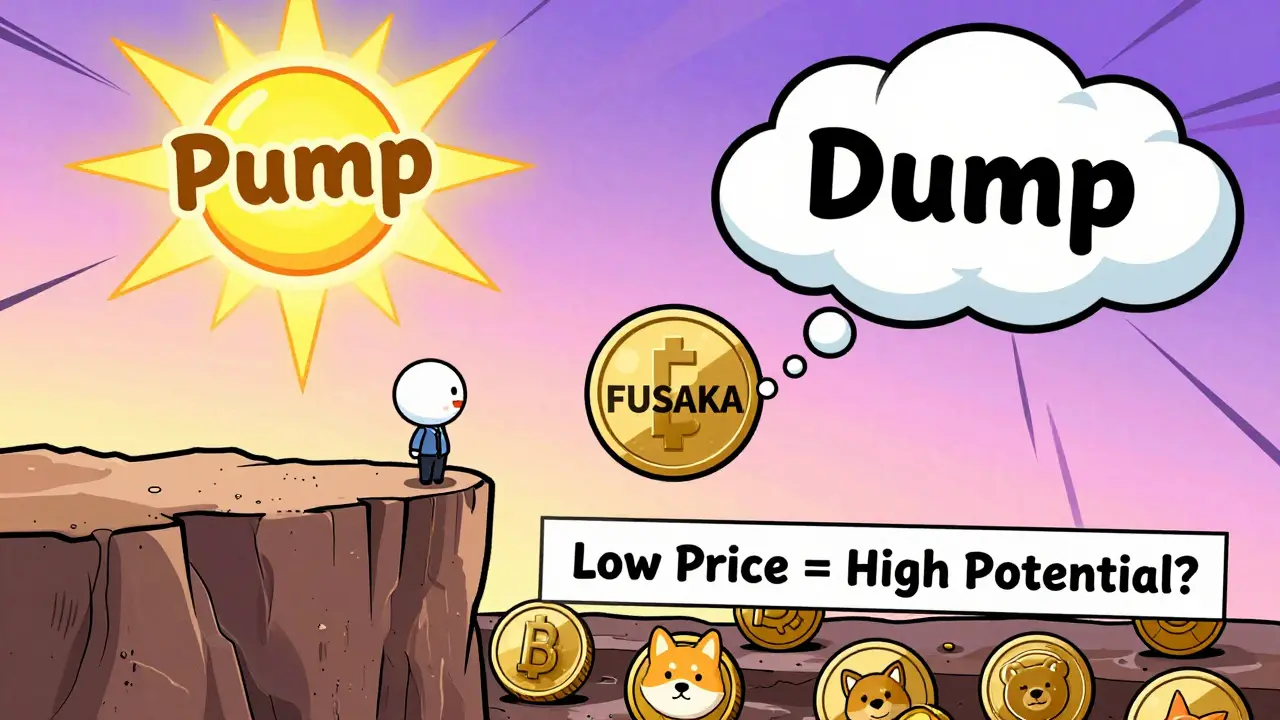
Why Do People Buy It?
The only reason anyone buys FUSAKA is because the price is low. $0.00000288 feels like a bargain. People think, "If this goes up 10x, I’ll be rich!" But here’s the reality: low price doesn’t mean high potential. It means high risk. Tokens like this are built for one thing: pump-and-dump cycles. A small group buys in, hyped up by bots and fake volume. They push the price up for a few hours. Then they sell. The people who bought late get stuck with worthless tokens. CoinGecko shows FUSAKA’s 7-day price change was 49.15%-that’s not growth. That’s volatility from manipulation. Compare it to Dogecoin or Shiba Inu. Even those meme coins have communities, developers, and real use cases (like tipping on social media). FUSAKA has nothing. Not even a mascot.Expert Opinion: It’s a Gambling Chip
No reputable crypto analyst covers FUSAKA. Not Messari. Not Blockworks. Not Cointelegraph. The absence of professional coverage speaks volumes. Crypto developers on GitHub and Reddit call it a "copy-paste token" and "low-effort meme coin." One Solana trader on Telegram warned: "FUSAKA has no liquidity locked, no audits, and that 420,690,000,000 supply number is a massive red flag-avoid unless you’re gambling with money you can afford to lose entirely." CertiK’s research found that tokens with meme-based supply numbers like 420,690,000,000 have a 92.7% chance of being pump-and-dump schemes. Messari’s risk framework gives tokens like FUSAKA a 98.6% probability of becoming worthless within 18 months.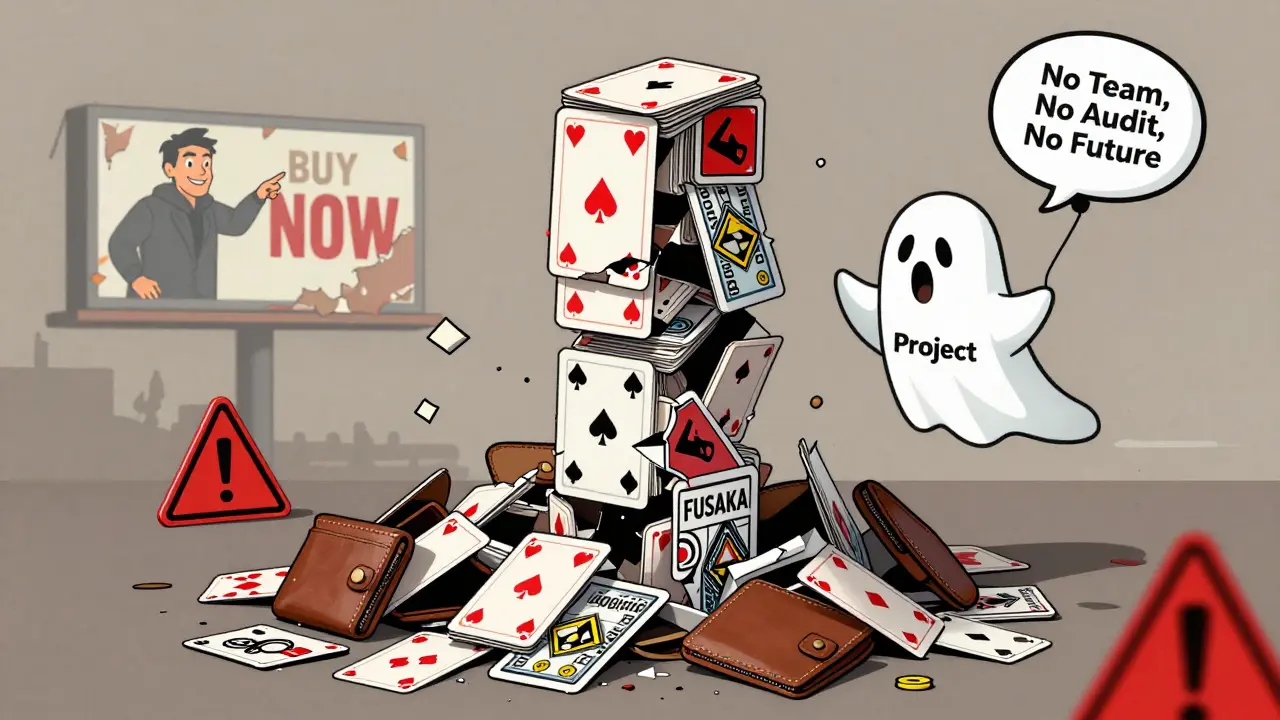

25 Comments