- 9 Feb 2026
- Elara Crowthorne
- 22
When your salary becomes worthless in weeks, and grocery prices double overnight, what do you do? In Venezuela, millions didn’t wait for government help. They turned to Bitcoin - and more often, to USDT, the stablecoin pegged to the U.S. dollar. This isn’t speculation. It’s survival.
By 2025, over 4.3 million Venezuelans - 13% of the population - were using digital wallets daily. Not because they loved crypto. Not because they wanted to get rich. But because the bolívar had lost over 70% of its value in just eight months. Banks refused to open accounts. ATMs ran out of cash. Salaries paid in bolívares couldn’t buy a kilo of rice. Crypto wasn’t an option. It was the only way to eat.
How Venezuela’s Economy Broke
The collapse didn’t happen overnight. Years of mismanagement, oil price crashes, and U.S. sanctions turned Venezuela’s economy into a ghost town of printing presses. Inflation hit 229% in May 2024. Prices changed multiple times a day. People carried stacks of cash just to buy bread. By late 2023, the government stopped trying to prop up the bolívar. It was over.
That’s when ordinary people started looking for alternatives. The government had launched the Petro in 2018 - a state-backed cryptocurrency tied to oil. It failed. No one trusted it. Transactions were slow. No one accepted it outside government offices. Meanwhile, the real money - U.S. dollars - was nearly impossible to get. Banks wouldn’t let people withdraw foreign currency. Remittances from abroad were blocked by sanctions. People were trapped.
Why USDT, Not Bitcoin
Bitcoin is volatile. Its price swings can wipe out savings in hours. That’s useless when you need to pay rent or buy medicine tomorrow.
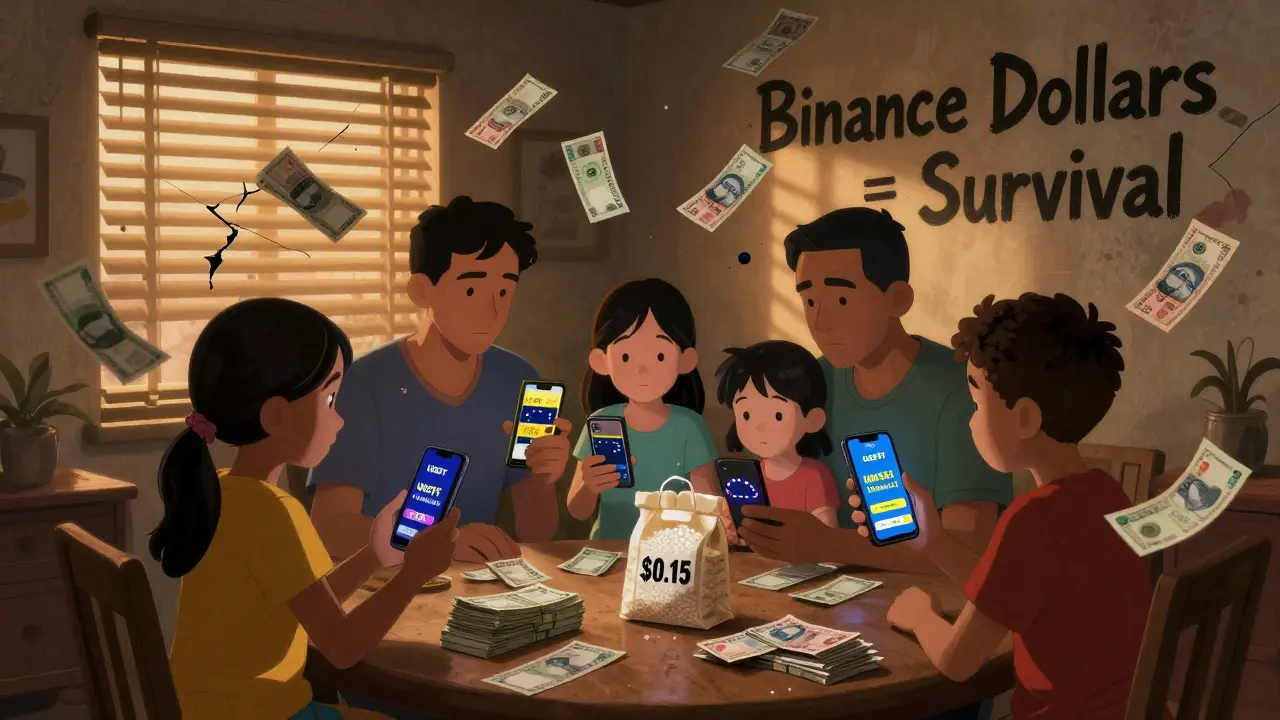
So Venezuelans didn’t use Bitcoin for daily spending. They used USDT - Tether. Why? Because 1 USDT = $1. Always. It doesn’t move. It doesn’t fluctuate. It’s stable. Locals call it "Binance dollars." It’s the closest thing to cash they’ve got.
By July 2025, 91% of all crypto transactions in Venezuela were in USDT. People used it to pay for food, rent, phone bills, even medical treatments. A Caracas mechanic told CoinCentral, "I get paid in USDT. I pay my suppliers in USDT. I buy my daughter’s medicine in USDT. The bolívar? It’s just paper now."
Bitcoin still plays a role - but mostly as a long-term store of value. People convert their USDT to Bitcoin when they want to save for months ahead. But for daily life? USDT is king.
The Infrastructure Nobody Saw Coming
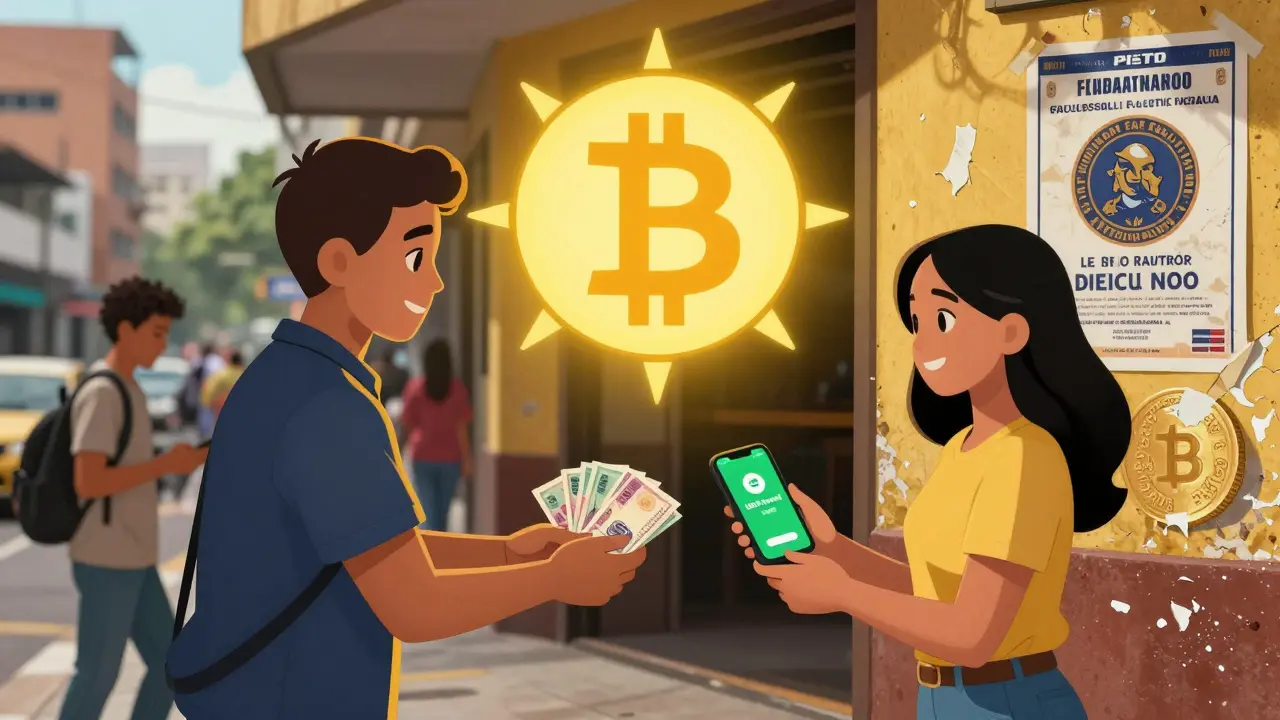
There’s no banking system left. So how do people send money? Through peer-to-peer (P2P) platforms. Binance P2P handles 63% of all crypto trades in Venezuela. LocalBitcoins comes second. These platforms let users trade directly - no bank, no government, no intermediaries.
You find a seller. You pay them cash. They send you USDT. Or vice versa. It’s simple. It’s fast. And it works even when banks are closed.
Wallets like Binance Wallet and Airtm became essential. Airtm, originally designed for Latin American remittances, now lets Venezuelans convert crypto into mobile airtime, gift cards, or even cash via local agents. It’s a parallel economy built on smartphones and WhatsApp.
But it’s not perfect. Internet speeds average just 14.79 Mbps - among the slowest in the world. Network outages are common. A transaction that should take 30 seconds can stall for 15 minutes. And U.S. sanctions block about 18% of transactions, especially those linked to Venezuelan banks. Many users get locked out without warning.
Real People, Real Stories
Victor Sousa, a 34-year-old electrician in Caracas, started using USDT in October 2023. His salary was 12 million bolívares - worth $0.15. He couldn’t buy a single bag of rice. Within two weeks, he learned how to use Binance P2P. He now gets paid in USDT by his clients. He sends money to his sister in Colombia via crypto. He buys groceries from vendors who accept it.
"I used to cry when I saw my paycheck," he said. "Now? I check my wallet. If it’s up, I’m okay."
On Reddit’s r/BitcoinVenezuela, 42,700 members share daily updates. One user, "CryptoSurvivorVE," posted in June 2025: "My husband lost his job. We had no money. I sold my gold necklace for 0.5 BTC. Converted it to USDT. We ate for three months."
These aren’t outliers. They’re the norm.
What’s Missing? The Big Gaps
Crypto solves one problem: inflation. It doesn’t solve others.
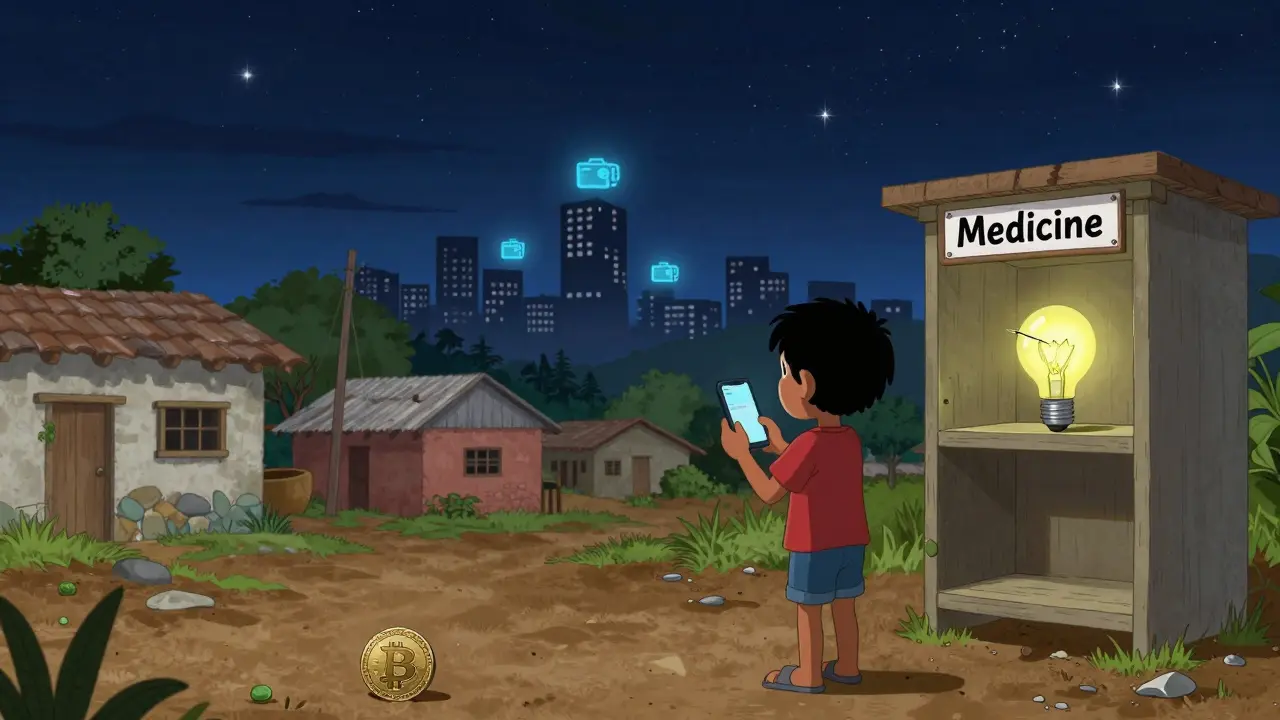
There’s still no food. No medicine. No reliable power. No clean water. Even if you have USDT, you can’t buy what isn’t available. Supermarkets are empty. Import chains are broken. Sanctions keep out medicines, spare parts, even baby formula.
And rural areas? Forget it. Only 45% of Venezuelans have reliable internet. In the Andes, the Amazon, and the llanos, crypto is invisible. No smartphones. No Wi-Fi. No way to connect.
Then there’s the risk of dependence. Tether Limited controls 76% of Venezuela’s stablecoin supply. If they freeze accounts - or if U.S. regulators shut down Binance - the entire system could collapse overnight. There’s no backup. No plan B.
The Government’s Confusing Role
The Venezuelan government says it supports crypto. It passed a law in 2020. It created the Petro. It even tried to tax crypto transactions.
But in 2023, it shut down SUNACRIP - the agency meant to regulate crypto. Then it arrested crypto traders. Then it demanded banks report crypto activity. Then it ignored all reports.
This isn’t policy. It’s chaos.
Meanwhile, the Central Bank of Venezuela admitted in its 2024 report that crypto is "a critical part of the economy." But it offered no protection. No oversight. No rules.
So Venezuelans operate in a gray zone - legal enough to use, dangerous enough to fear.
How Did People Learn?
No one taught them in school. No bank gave them a guide.
They learned from YouTube. "Cripto Para Todos," a channel with 127,000 subscribers, became a national resource. It shows step-by-step how to buy USDT, how to avoid scams, how to send money to family abroad.
Universities jumped in too. In January 2025, the Universidad Central de Venezuela made cryptocurrency a required course for economics students. Students learned how to use wallets, how to read blockchain data, how to protect themselves from hacks.
It took most people just 2 to 3 weeks to become comfortable. The learning curve was steep - but survival made it necessary.
What’s Next?
Most economists agree: crypto adoption in Venezuela won’t fade - until inflation does.
The IMF says that won’t happen before 2027. Until then, crypto will remain the backbone of daily life.
Some hope Venezuela will join BRICS - the group of nations building alternative financial systems. That could mean new payment rails, less reliant on U.S. infrastructure.
Others fear a collapse. If the bolívar ever regains stability, people might abandon crypto. And if Tether ever falters? Millions could lose everything.
For now, the system works. Not because it’s perfect. But because there’s nothing else.
Why do Venezuelans use USDT instead of Bitcoin for daily transactions?
Venezuelans use USDT because it’s pegged 1:1 to the U.S. dollar, making it stable. Bitcoin’s price swings too much for daily needs like buying food or paying rent. USDT acts like digital cash - you know exactly how much it’s worth. Bitcoin is used for saving, not spending.
How do Venezuelans buy crypto without banks?
They use peer-to-peer (P2P) platforms like Binance P2P and LocalBitcoins. Buyers pay sellers in cash - often in person - and receive USDT or Bitcoin directly to their digital wallet. No bank account is needed. This bypasses the collapsed banking system entirely.
Are U.S. sanctions blocking crypto use in Venezuela?
Yes. U.S. sanctions restrict transactions involving Venezuelan banks and sanctioned individuals. About 18% of attempted crypto transactions are blocked, especially those tied to banks. This makes some platforms unreliable, and users often get locked out without warning.
Is crypto adoption growing in rural Venezuela?
No. Only 45% of Venezuelans have reliable internet. In rural areas, where electricity and connectivity are poor, crypto adoption is nearly nonexistent. Most users are in cities like Caracas, Maracaibo, and Valencia.
Can the Venezuelan government stop crypto adoption?
No. Crypto runs on decentralized networks. Even if the government bans exchanges or arrests traders, people can still use wallets, P2P apps, and blockchain technology. The system is too widespread and too essential to shut down.
What happens if Tether collapses?
If Tether lost its dollar peg, Venezuela’s entire crypto economy would crash. USDT is used for 91% of transactions. Without it, people would lose confidence. Savings would vanish. Many would return to the bolívar - but with no trust in either system.
The story of crypto in Venezuela isn’t about technology. It’s about people refusing to starve. They didn’t choose Bitcoin. They chose survival. And in a broken economy, that’s the most powerful currency of all.

22 Comments