- 22 Jul 2026
- Elara Crowthorne
- 0
Have you ever stumbled upon a cryptocurrency exchange that feels like it was built for someone else? If you are not fluent in Korean, Bitsonic is exactly that platform. For the average international trader looking for the next big thing in 2026, this Seoul-based centralized exchange (CEX) might seem like a ghost town. But for South Korean investors navigating the local regulatory landscape, it serves a specific, albeit niche, purpose. This review cuts through the noise to tell you what Bitsonic actually offers, who it is for, and whether your funds are safe.
What Is Bitsonic?
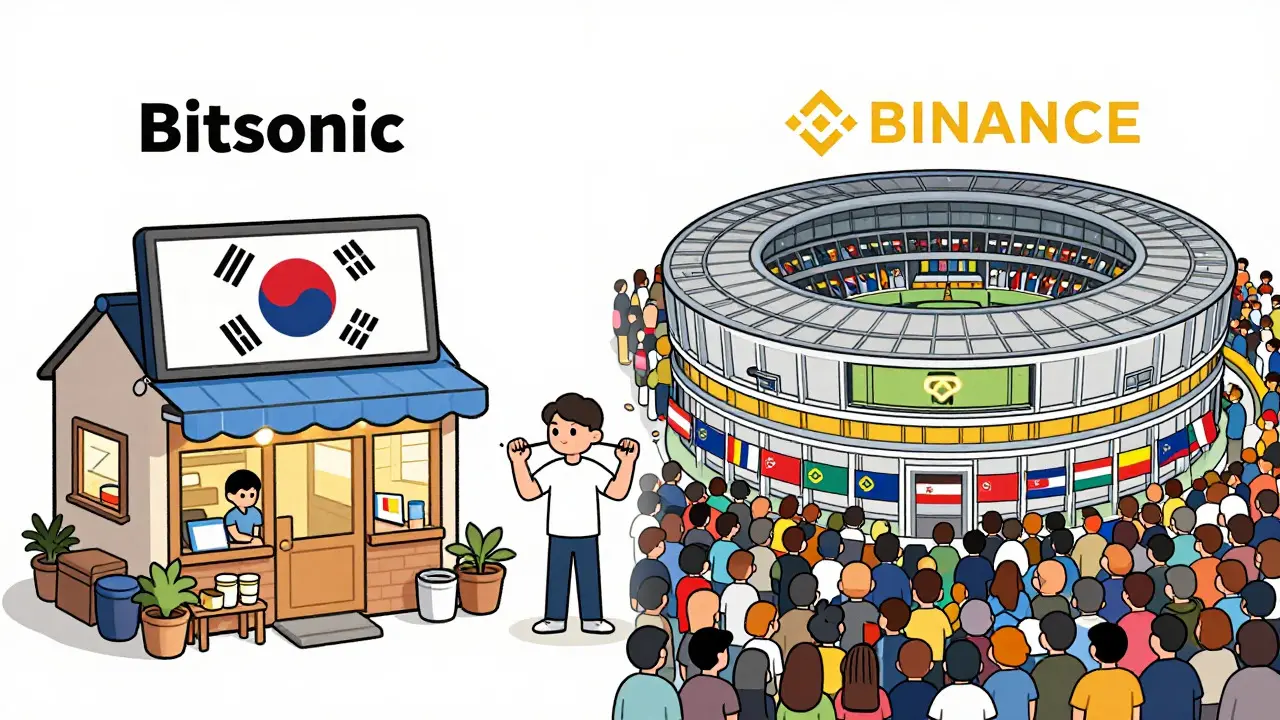
Bitsonic is a centralized cryptocurrency exchange headquartered in Seoul, South Korea, primarily designed for domestic users trading against the Korean Won (KRW). Unlike global giants like Binance or Coinbase, which cater to millions of users across dozens of countries, Bitsonic operates with a laser focus on the South Korean market. Established as a digital asset trading platform, it allows users to buy, sell, and trade various cryptocurrencies using fiat currency pairs specific to Korea.
The platform functions similarly to other CEXs you might know, acting as an intermediary between buyers and sellers. However, its identity is deeply tied to its location. It is not just an exchange; it is a localized financial tool for Koreans who need easy access to crypto markets without dealing with complex international banking restrictions or foreign language barriers. If you are outside of Korea, you will likely find the experience frustratingly opaque.
User Experience and Interface Barriers
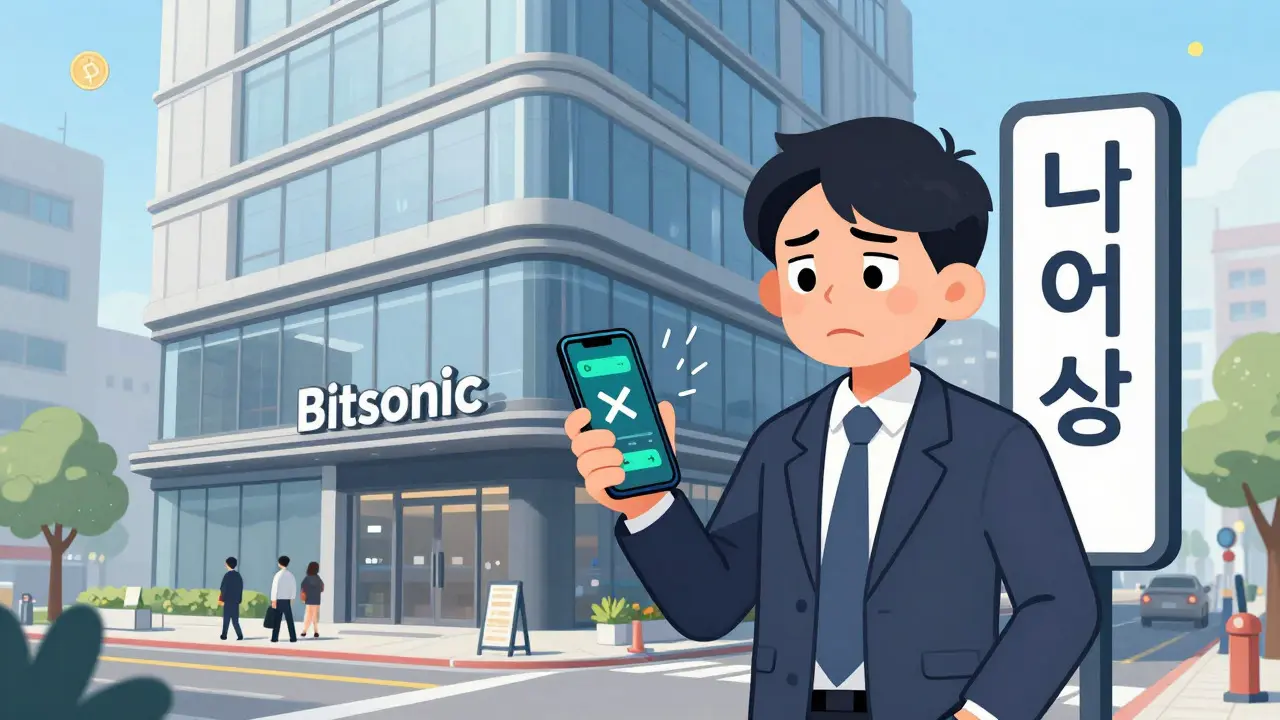
Let’s get the biggest elephant in the room out of the way first: the language. As of 2024 and continuing into 2026, Bitsonic’s interface remains entirely in Korean. There are no English options, no Japanese translations, and no auto-translate features baked into the site. For a non-Korean speaker, this is a significant barrier to entry. You aren’t just learning how to trade; you are trying to decipher a new language while managing real money.
This design choice tells us something important about their target audience. They are not trying to compete globally right now. They are serving locals. If you can read Hangul, the navigation is reportedly straightforward, featuring standard trading pair categories found on major exchanges. You’ll see spot trading interfaces, order books, and wallet management sections. But if you rely on Google Translate, be prepared for potential misinterpretations of critical financial terms, which could lead to costly errors.
Supported Cryptocurrencies and Trading Pairs
When it comes to assets, Bitsonic supports a wide range of cryptocurrencies and tokens. The platform is particularly strong in offering pairs with the South Korean Won (KRW). This is crucial because many global exchanges have restricted direct fiat on-ramps from Korea due to strict local regulations. Bitsonic bridges this gap by allowing direct KRW deposits and withdrawals.
Beyond KRW pairs, you can trade crypto-to-crypto pairs involving major assets like:
- BTC (Bitcoin): The market leader, available for trading against stablecoins and other alts.
- ETH (Ethereum): The primary smart contract platform, widely traded on the platform.
- USDT (Tether): Essential for hedging volatility within the crypto ecosystem.
- EOS: A blockchain platform that has maintained a presence on Korean exchanges.
The exchange also features its own native cryptocurrency, known as Bitsonic Coin (BSC). This token serves dual purposes: it acts as a utility token within the Bitsonic ecosystem (potentially offering fee discounts or voting rights, though specifics are scarce in English sources) and as a tradable asset itself. Keep in mind that "BSC" is also commonly associated with Binance Smart Chain, so do not confuse Bitsonic Coin with the BNB Chain network.
Fees, Leverage, and Advanced Features
One of the most frustrating aspects of reviewing Bitsonic is the lack of transparent, English-language documentation regarding fees. On most major exchanges, you can easily find a tiered maker/taker fee structure. Here, we are left with gaps.
Unlike competitors such as Bitunix, which explicitly advertises up to 125x leverage and clear VIP fee structures, Bitsonic appears to focus on spot trading rather than advanced derivatives. There is no public information suggesting they offer high-leverage futures or options trading. This makes them less attractive to day traders seeking aggressive positions but potentially safer for long-term holders who want to avoid liquidation risks.
Without clear fee schedules, it is hard to compare costs directly. However, Korean exchanges typically charge competitive fees to remain viable against giants like Upbit and Bithumb. We recommend assuming standard industry rates for spot trading until you verify the exact numbers on the platform itself-provided you can navigate the Korean interface.
| Feature | Bitsonic | Binance | Bitunix |
|---|---|---|---|
| Primary Market | South Korea | Global | Global / Privacy-focused |
| Language Support | Korean Only | 30+ Languages | Multi-language |
| Fiat On-Ramp | KRW (Direct) | Multiple Fiat | Crypto-only / P2P |
| Leverage | Unspecified (Likely Spot Only) | Up to 125x | Up to 125x |
| Regulatory Focus | South Korea | Global Compliance | US/Canada/Philippines Licenses |
Security and Regulatory Status
In the world of crypto, security is everything. Bitsonic operates within South Korea’s highly regulated environment. The country has implemented some of the strictest Anti-Money Laundering (AML) and Know Your Customer (KYC) requirements in the world. This means that to use Bitsonic, you will almost certainly need to undergo rigorous identity verification. This is not a "no-KYC" playground like some offshore exchanges claim to be.
While Bitunix boasts licenses from FinCEN (USA), FINTRAC (Canada), and VASP (Philippines), Bitsonic’s specific regulatory credentials are not prominently displayed in English sources. However, operating legally in Seoul implies compliance with the Financial Services Commission (FSC) and the Financial Supervisory Service (FSS) of Korea. This adds a layer of legitimacy compared to unregistered offshore entities.
That said, transparency regarding Proof of Reserves (PoR) is lacking in public English reviews. Major exchanges now regularly publish Merkle tree proofs to show they hold user assets 1:1. Without similar public audits from Bitsonic, international users may feel uneasy about where their funds are stored. For Korean residents, trust is often built through brand recognition and local legal recourse, which doesn’t translate well across borders.
Who Should Use Bitsonic?
Based on the evidence, Bitsonic is not for everyone. In fact, for most people reading this in English, it is probably not for you at all. Here is who fits the profile:
- Resident South Korean Investors: If you live in Korea, earn in KRW, and want a local platform that integrates seamlessly with Korean banks, Bitsonic is a viable option alongside Upbit and Bithumb.
- Korean Language Speakers: If you can navigate the UI without error, you gain access to a localized market with potentially different liquidity dynamics for certain altcoins.
- Niche Asset Hunters: Sometimes, smaller regional exchanges list tokens before global giants do. If you are tracking a specific project popular in Asia, Bitsonic might offer early access.
Conversely, if you are an international trader, a leveraged derivatives enthusiast, or someone who values multilingual customer support, look elsewhere. Exchanges like Binance, Kraken, or even Bitunix offer better infrastructure for global users.
Final Verdict: Niche Player or Hidden Gem?
Bitsonic is neither a hidden gem nor a disaster-it is simply a specialized tool. It solves a specific problem for a specific demographic: enabling South Koreans to trade crypto easily in their local currency and language. For anyone outside that bubble, the barriers are too high. The lack of English support, limited international payment methods, and opaque fee structures make it a poor choice for global adoption.
If you are in Seoul, give it a try. Compare its KRW deposit speeds and fees against Upbit. If you are anywhere else, save yourself the translation headaches and stick to exchanges with robust global infrastructure. In 2026, convenience and clarity are king, and Bitsonic currently only crowns one kingdom.
Is Bitsonic safe for international users?
Safety is relative. While Bitsonic operates legally in South Korea, the lack of English support and unclear international dispute resolution mechanisms makes it risky for non-residents. If you cannot read the terms of service, you cannot fully understand the risks.
Does Bitsonic require KYC verification?
Yes. Given South Korea's strict financial regulations, Bitsonic almost certainly requires full KYC (Know Your Customer) verification, including ID checks and proof of address, to prevent money laundering.
Can I trade Bitcoin on Bitsonic?
Yes, Bitcoin (BTC) is one of the primary assets listed on Bitsonic, available for trading against KRW, USDT, and other cryptocurrencies.
What is the Bitsonic Coin (BSC)?
Bitsonic Coin (BSC) is the native utility token of the Bitsonic exchange. It is distinct from Binance Smart Chain (BSC). It may be used for fee discounts or platform governance, but details are limited in English sources.
Are there English tutorials for Bitsonic?
No. There are virtually no English-language guides, tutorials, or support channels for Bitsonic. Users must rely on the Korean interface or third-party community translations, which may be outdated.
