
- 20 Jan 2026
- Elara Crowthorne
- 14
Smart contracts aren’t just code on a blockchain anymore. By 2026, they’re the invisible engines behind how money moves, identities are verified, supply chains track goods, and even AI agents negotiate with each other - all without a single human stepping in to mediate. If you’ve only heard of them as automated agreements that trigger when certain conditions are met, you’re already behind. The real shift isn’t about automation. It’s about smart contracts becoming the foundational layer of trust in a world where no one needs to believe each other - because the system proves it for them.
What Smart Contracts Actually Do Today
Forget the early days of Bitcoin-era contracts that just sent ETH when a payment was due. Today’s smart contracts are dynamic, responsive, and integrated. They pull live data from weather feeds to trigger crop insurance payouts. They verify your medical records before releasing treatment funds. They lock game assets in your wallet until you complete a quest. They even let AI models pay each other for data access on decentralized networks like Ocean Protocol. These aren’t theoretical. In DeFi, over $120 billion in assets are managed by smart contracts across Ethereum, Polygon, and Solana. In supply chains, companies like Maersk and IBM use them to track shipping containers in real time, reducing delays by up to 40%. In healthcare, hospitals in Estonia and Singapore are piloting blockchain-based patient records where access is granted only through patient-signed smart contracts. The magic isn’t in the code itself. It’s in what the code replaces: banks, lawyers, notaries, middlemen, and even some internal audit teams. Every time a contract executes without human intervention, you’re saving time, reducing error, and cutting cost.The Rise of AI-Powered Smart Contracts
The biggest leap since 2023? AI isn’t just talking to smart contracts - it’s running them. Imagine a smart contract that doesn’t just wait for a price to hit $2,000 before selling ETH. Instead, it analyzes market sentiment across Twitter, Reddit, and on-chain volume, predicts a 78% chance of a dip in 48 hours, and sells early - then rebuys when conditions change. That’s not science fiction. It’s happening on platforms like Fetch.ai and SingularityNET, where autonomous agents use smart contracts as their payment and coordination layer. These AI-driven contracts can adjust terms in real time. A loan agreement might raise interest rates if your on-chain spending habits suggest financial stress. A rental contract could lower rent if your smart meter shows you’re using 30% less energy than last month. The contract doesn’t just enforce rules - it learns from data and adapts. This isn’t without risk. Bad data leads to bad decisions. A contract that trusts a manipulated price feed can drain funds. That’s why zero-knowledge proofs (ZKPs) are now standard in enterprise-grade contracts. They let AI verify data without seeing the raw details - keeping sensitive info private while still making accurate decisions.Cross-Chain Interoperability: Breaking the Silos
In 2022, if you wanted to use a smart contract on Ethereum and another on Solana, you were stuck. You had to bridge assets, pay high fees, and wait hours. Today, that’s obsolete. Protocols like LayerZero, Chainlink CCIP, and Axelar now let smart contracts talk directly across chains. A DeFi lender on Arbitrum can verify your identity stored on Polygon ID. A game item minted on Solana can be used in a metaverse built on Ethereum. This isn’t just convenience - it’s survival. No single blockchain can handle the scale, speed, and diversity of use cases needed in 2026. Even IoT devices are joining the party. AlkylVM, a new virtual machine designed for low-power sensors, lets a smart thermostat on a farm in New Zealand trigger a payment to a farmer when soil moisture drops below a threshold - all recorded on a private blockchain. No cloud server. No middleman. Just code, sensors, and trustless execution.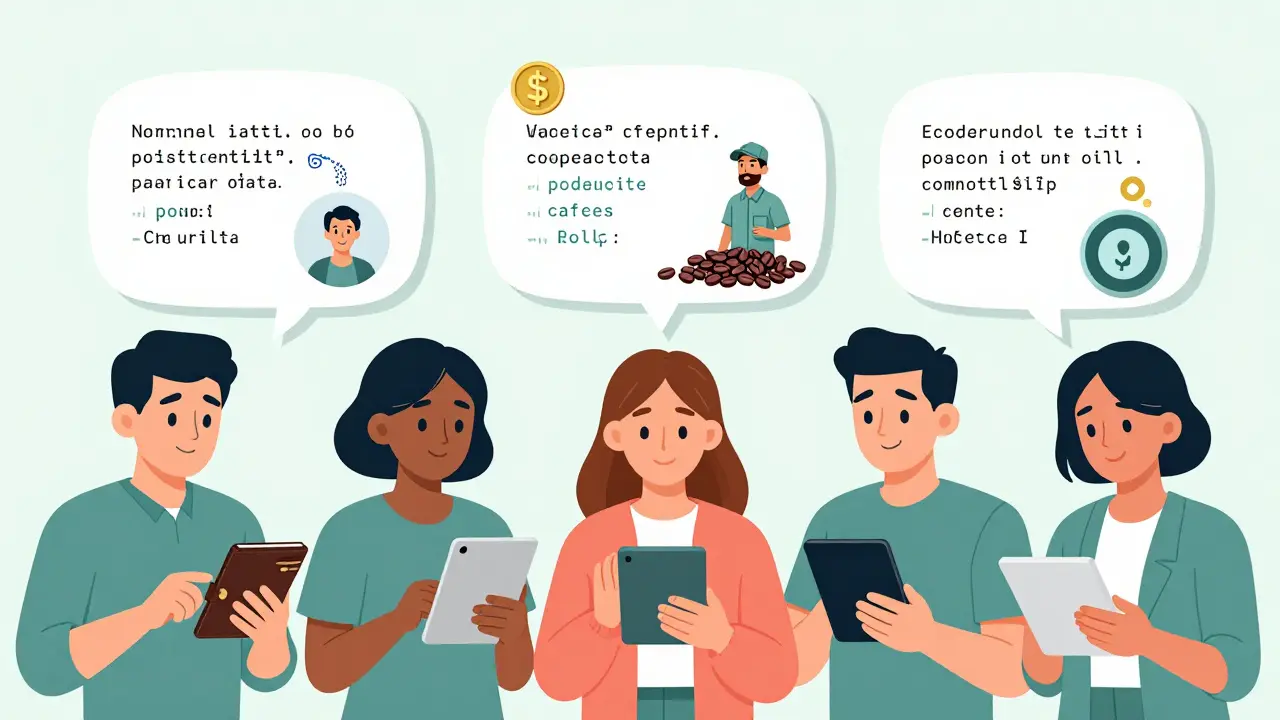
Private Blockchains and DAOs: The Enterprise Takeover
Public blockchains get all the hype. But the real growth? Private blockchains. In 2024, over 68% of enterprise smart contract deployments used private or permissioned chains. Why? Control. Speed. Privacy. A bank doesn’t want every trade visible to the public. A hospital doesn’t want patient data on a public ledger. Private chains let organizations run smart contracts with only authorized participants - faster, cheaper, and more secure. And who runs them? DAOs. Decentralized Autonomous Organizations are no longer just crypto collectives. They’re replacing traditional corporate structures in finance, logistics, and even government services. The EU’s EBSI program uses DAO governance to verify academic credentials across 27 countries. Worldcoin’s proof-of-personhood system relies on DAO voting to approve new users. DAOs don’t need CEOs. They don’t need HR departments. Their rules are coded into smart contracts. Voting power comes from token holdings. Decisions are executed automatically. This isn’t utopia - it’s efficiency. A 2025 Deloitte study found DAO-run supply chains reduced administrative overhead by 57% compared to traditional models.Security, Legal Gray Zones, and Why Adoption Is Still Slow
Let’s be honest: smart contracts aren’t perfect. The 2022 Ronin Bridge hack, where $625 million vanished due to a flawed signature check, still haunts the industry. Code is law - but if the code has a bug, there’s no customer service line to call. That’s why audits are now mandatory. Firms like CertiK and Trail of Bits charge $50,000-$200,000 to review contracts before deployment. Many startups skip this - and pay for it later. Legal issues are even messier. If a smart contract fails, who’s liable? The developer? The user who deployed it? The blockchain network? Most countries still treat them as unenforceable code. The U.S. and EU are starting to draft frameworks - Wyoming passed the first smart contract law in 2023, and the EU’s MiCA regulation now recognizes them as legally binding in certain contexts - but global consistency is years away. And then there’s scalability. Ethereum’s gas fees still spike during high demand. That’s why ZK-rollups and Layer-2 solutions like zkSync and StarkNet are now the default for new dApps. They bundle hundreds of transactions into one on-chain proof, slashing fees by 90% and increasing throughput to 2,000+ transactions per second.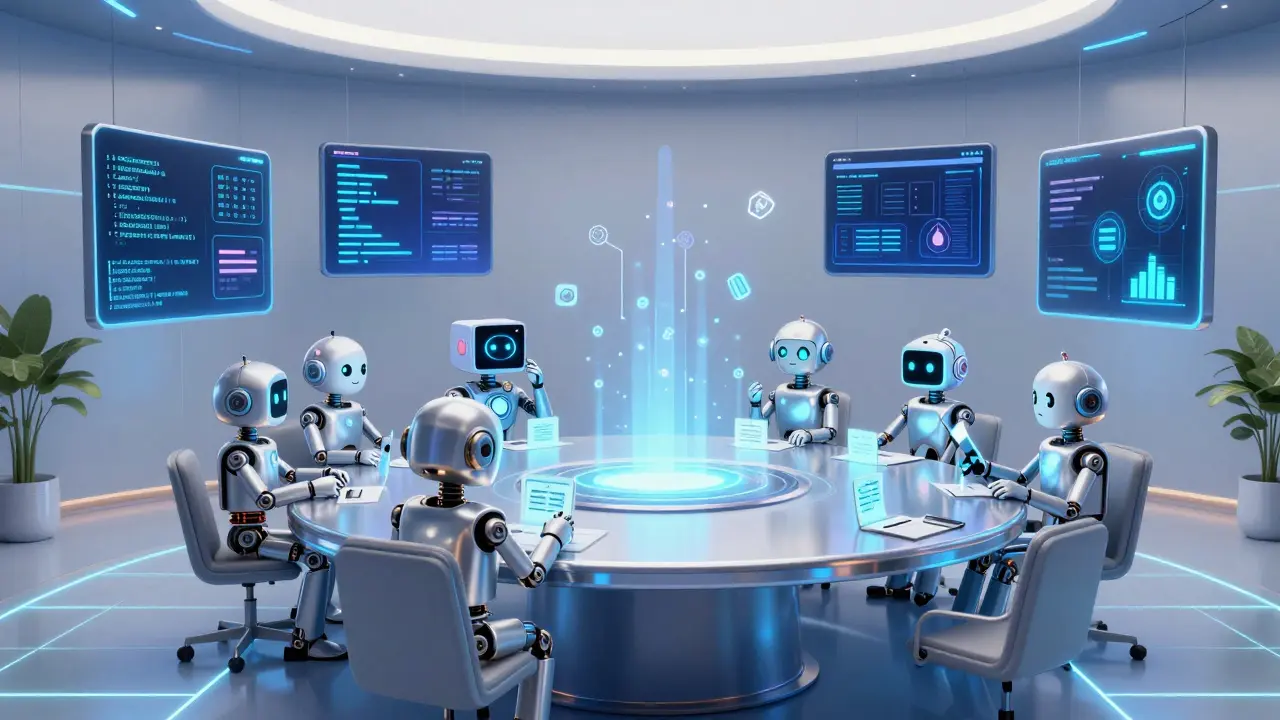
Real Use Cases You Can See Right Now
Here’s what’s working in 2026:- DeFi Lending: A user in Brazil borrows USDC against their Bitcoin, with the loan automatically liquidated if BTC drops below a threshold - no bank approval needed.
- Healthcare: A patient in Singapore grants temporary access to their genomic data via a smart contract. Researchers pay in tokens to use it. The contract logs every download and automatically splits revenue.
- Gaming: A player in Japan buys a rare sword in a Web3 game. The item is stored on-chain. If the game shuts down, they can still use it in another compatible game thanks to open standards.
- Supply Chain: A shipment of coffee beans from Colombia to Germany triggers a payment to the farmer as soon as the container’s temperature stays within range, verified by IoT sensors and recorded on a private blockchain.
- Digital Identity: A student in Germany proves they graduated from university without sharing their full transcript. A zero-knowledge proof confirms the credential is valid - and only that.
What You Need to Know to Get Involved
If you’re thinking of building or using smart contracts in 2026, here’s what matters:- Learn Solidity or Rust. Solidity still dominates Ethereum and EVM chains. Rust is rising fast on Solana and Polkadot.
- Use audited templates. Don’t write from scratch. Use OpenZeppelin’s libraries - they’ve been battle-tested.
- Always test on testnets. Deploying on mainnet without testing is like driving without brakes.
- Understand gas costs. Optimize your code. Unnecessary loops and storage writes cost money.
- Consider privacy. If you’re handling sensitive data, use ZKPs. Don’t store personal info on-chain.
- Choose the right chain. For DeFi? Ethereum or Polygon. For IoT? Solana or Algorand. For enterprise? Private chains like Hyperledger Fabric or Quorum.
The Bigger Picture: Smart Contracts as Infrastructure
The future isn’t about apps that use smart contracts. It’s about apps that can’t exist without them. Think of it like the internet in the 1990s. No one talked about TCP/IP - they just used email and websites. Smart contracts are becoming the same. You won’t notice them. But everything you do - from paying for a ride-share to claiming insurance after a storm - will rely on them behind the scenes. By 2030, analysts predict over 70% of global financial transactions will involve at least one smart contract. Governments will use them for tax collection and welfare distribution. Energy grids will auto-adjust prices based on real-time demand. Even your car might pay for its own charging using a smart contract tied to your wallet. This isn’t just a tech shift. It’s a power shift. Control moves from corporations and institutions to code and communities. The question isn’t whether smart contracts will change the world. It’s whether you’ll be building them - or just using them.Are smart contracts legally binding?
In some places, yes. Wyoming (U.S.) and the EU under MiCA recognize smart contracts as legally enforceable if they meet certain criteria: clear terms, verifiable execution, and consent from all parties. But globally, enforcement is still patchy. Courts don’t yet know how to interpret code as law. Until regulations catch up, treat smart contracts as self-executing agreements - not court-ready contracts.
Can smart contracts be hacked?
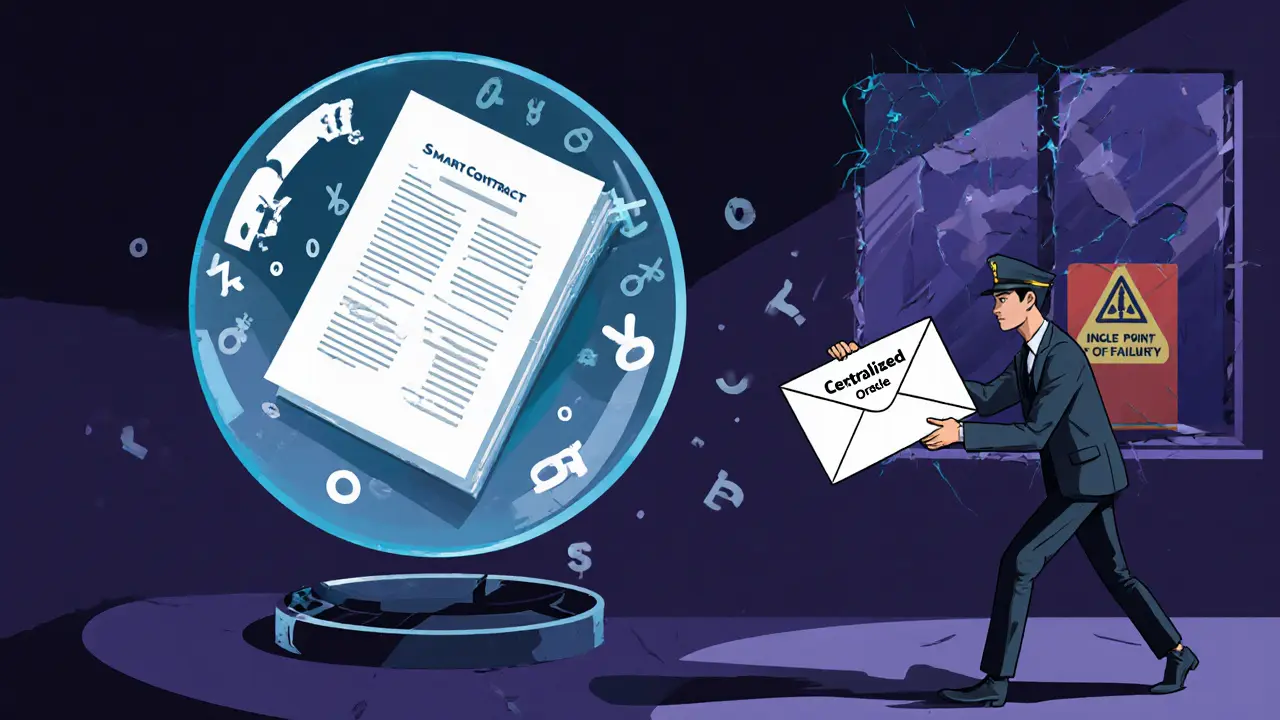
Yes - but not because the blockchain is broken. Smart contracts are code, and code has bugs. Reentrancy attacks, oracle manipulation, and unchecked inputs have drained billions. The solution isn’t perfect security - it’s constant auditing, using trusted libraries like OpenZeppelin, testing on testnets, and limiting what the contract can do. The most secure contracts are simple, minimal, and audited by professionals.
Do I need to be a coder to use smart contracts?
No. Most users interact with smart contracts through wallets like MetaMask or apps like Uniswap and Aave. You don’t need to write code - you just need to understand what you’re approving. Always check what permissions you’re granting. If an app asks for unlimited token access, walk away. Legit apps only ask for what they need.
What’s the difference between public and private smart contracts?
Public contracts run on open blockchains like Ethereum - anyone can see and interact with them. Private contracts run on permissioned networks like Hyperledger Fabric - only authorized parties can join. Public = transparency, public audit. Private = speed, privacy, control. Enterprises use private chains for compliance. DeFi and gaming use public chains for openness.
Will smart contracts replace lawyers?
Not entirely. They replace routine, rule-based tasks - like releasing funds after a delivery is confirmed. But complex negotiations, disputes, and interpretations still need human judgment. Lawyers are shifting from drafting contracts to auditing them, advising on legal design, and representing clients in blockchain-related disputes. The role is changing, not disappearing.
How do smart contracts connect to AI?
AI provides the intelligence; smart contracts provide the trust. An AI might predict a stock price drop, but a smart contract executes the trade and pays the AI for the signal. AI can’t be trusted alone - it can be manipulated. Smart contracts ensure the AI’s actions are transparent, verifiable, and paid for fairly. Together, they form autonomous systems that operate without human oversight - like AI agents trading energy on a decentralized grid.
What’s the biggest barrier to adoption?
Usability. Most people still find wallets, gas fees, and transaction confirmations confusing. Until interfaces become as simple as PayPal or Apple Pay, mass adoption will be slow. The real breakthrough will come when you don’t know you’re using a smart contract - it just works in the background, like Wi-Fi.



14 Comments
This is wild. I just used a smart contract to get paid for my freelance work last week. No invoices. No delays. Just done. 🤯
The transformation from manual intermediaries to trustless automation is one of the most profound shifts in economic history. We're not merely replacing clerks or notaries-we're rearchitecting the very foundation of contractual obligation. The implications for global labor markets, legal systems, and institutional power structures are staggering. Consider that in 2026, a farmer in Kenya can receive payment the moment IoT sensors confirm optimal soil moisture levels, bypassing cooperatives, brokers, and currency exchange fees entirely. This isn't efficiency-it's sovereignty redistribution. The real challenge lies not in the code, but in the cultural and psychological adaptation required to relinquish human oversight. We've been conditioned to trust people, not protocols. The next decade will be defined by whether societies can evolve beyond the instinct to blame the machine when things go wrong.
Great breakdown. If you're new to this, start with OpenZeppelin’s audited templates-don’t reinvent the wheel. And always test on Sepolia or Goerli before touching mainnet. One typo and your ETH is gone forever. Also, ZKPs aren’t optional anymore if you’re handling any kind of sensitive data. Privacy is now a feature, not a luxury.
I am from India. We have many small farmers. Smart contracts can help them get fair price. No middlemen take money. This is good for poor people. I hope more people use this.
Y'all are overcomplicating it. It's just code that pays itself. You don't need to be a genius to use it-just don't click 'approve unlimited' on some sketchy dApp. Been there, lost my ETH. Learn from my pain.
Interesting how the legal landscape is scrambling to catch up. I’ve seen cases where courts refuse to enforce smart contracts because ‘no human signed it.’ But if the code executes exactly as agreed upon, why should intent matter more than execution? The law is still stuck in the era of paper and pen.
lol smart contracts my ass. Every time someone says 'code is law' they forget the devs wrote the code. That Ronin hack? Total scam. The devs had backdoors. You think they didn't? Nah. They just got lazy and got caught. And now they want you to trust their 'audits'? Pfft. CertiK? They got paid to look the other way. This whole thing is a pyramid scheme dressed up in blockchain buzzwords.
Okay but like... imagine if your car could just pay for gas without you even thinking about it? That's the future and I'm not ready. Also why do I need to know Solidity? I just want to buy NFTs and cry when they drop. This is too much work for a 30-year-old who just wants to chill
America built the internet. Now China and the EU are stealing our tech and calling it 'decentralized governance.' Smart contracts? More like socialist control mechanisms disguised as innovation. They want to replace banks with code so they can track every dollar you spend. This isn't freedom-it's digital serfdom. And don't tell me about 'transparency'-I know what they're really after.
The architectural shift from monolithic, centralized state machines to composable, cross-chain, verifiable computation layers represents a paradigmatic rupture in distributed systems theory. The convergence of ZK-rollups, modular consensus engines, and AI-orchestrated state transitions is enabling emergent properties previously constrained by Byzantine fault tolerance thresholds. We're witnessing the birth of a new computational substrate-trustless, permissionless, and inherently scalable.
Y’all need to stop being scared of this. Smart contracts are the future and if you’re not learning Solidity or Rust, you’re falling behind. I started coding at 40 and now I’m deploying my own DAO. You can too. 💪✨ Just start small. Use OpenZeppelin. Test on Goerli. Don’t panic. You got this.
Of course you're all acting like this is magic. It's not. It's just code written by people who don't understand human nature. You think an AI contract won't get hacked? You think a DAO won't get taken over by whales? You think people won't game the system? This isn't progress-it's a disaster waiting to happen. And when it blows up, you'll all be begging for the old system back. I told you so.
Let me ask you something-what happens when the government decides to shut down access to the blockchain? What if they ban private keys? What if they force wallet providers to KYC everyone? You think your 'trustless' contract will save you then? No. You'll be left with a digital corpse and no recourse. This isn't liberation-it's a trap. They're building the perfect surveillance state and calling it decentralization. Wake up.
It's worth noting that the EU’s MiCA regulation doesn’t just recognize smart contracts-it mandates audit trails, version control, and human-readable summaries alongside the bytecode. That’s the real innovation: legal compliance baked into the architecture. The U.S. is still debating whether code can be a contract. Europe is already enforcing it. This isn’t just technological evolution-it’s institutional adaptation at scale.