
- 6 Nov 2025
- Elara Crowthorne
- 24
DLT Use Case Decision Tool
Determine if Distributed Ledger Technology is the right solution for your business needs based on key criteria from real-world applications.
Answer these questions
Your DLT Recommendation
Most people think DLT and blockchain are the same thing. They’re not. Blockchain is just one way to build a distributed ledger - and not always the best one. If you’ve only heard of DLT in the context of Bitcoin or Ethereum, you’re missing the bigger picture. Distributed Ledger Technology isn’t about crypto. It’s about trust without middlemen. It’s about data that can’t be secretly changed, shared instantly across organizations, and verified without a central boss calling the shots.
What DLT Really Is - Not What You Think
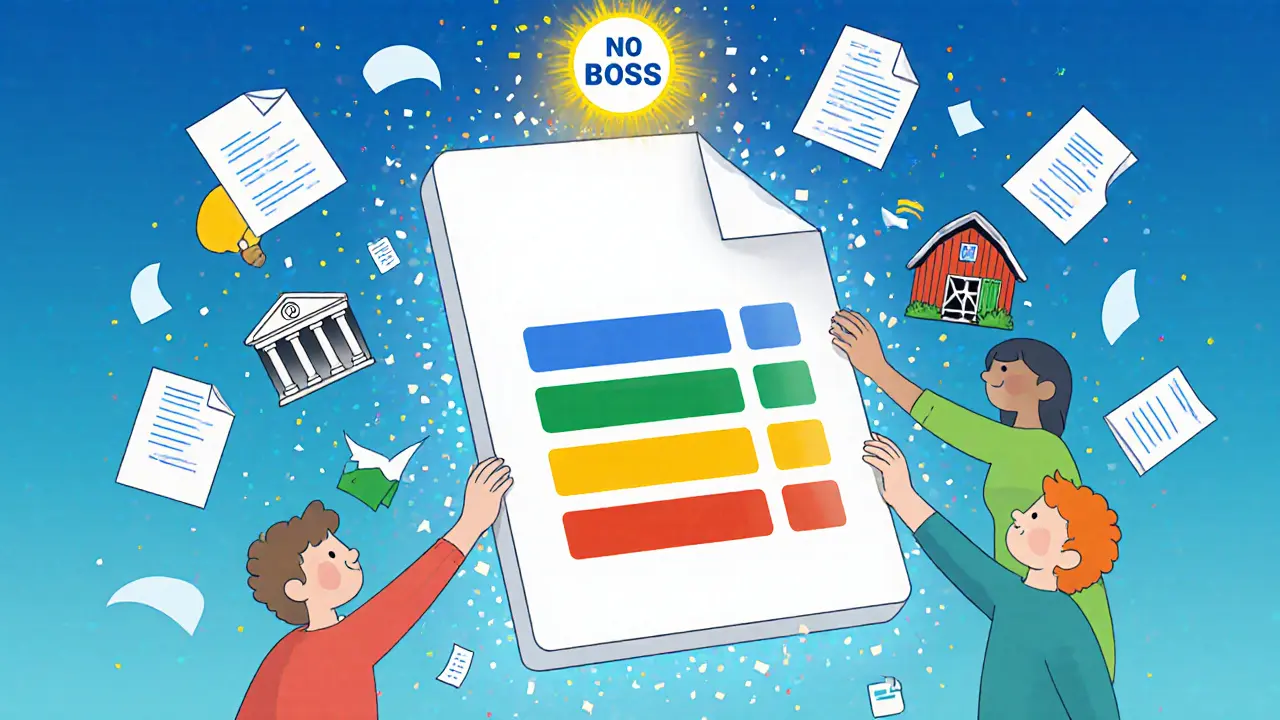
Imagine a shared Google Sheet that everyone in a network can see and update - but no one can delete or secretly edit past entries. Every change gets locked in with cryptography, and every participant has an identical copy. That’s DLT in simple terms. It’s not a chain of blocks. It’s not mining. It’s not even necessarily public. It’s a database that lives on many computers at once, synchronized by rules everyone agrees to follow.
Traditional databases? They’re controlled by one company, one server, one person. If that server crashes, the data’s gone. If someone inside gets corrupted, they can alter records. DLT removes that single point of failure. There’s no boss. No central authority. Just a network of nodes - computers or institutions - that all hold the same version of the truth.
That’s why banks like BBVA use it. Not for Bitcoin. For international trade. They replaced paper documents and slow bank confirmations with a DLT system where suppliers, freight companies, and banks all see the same shipment status in real time. No more lost invoices. No more disputes over who signed what. Just one version of the truth, updated automatically.
How DLT Differs From Blockchain - The Key Breakdown
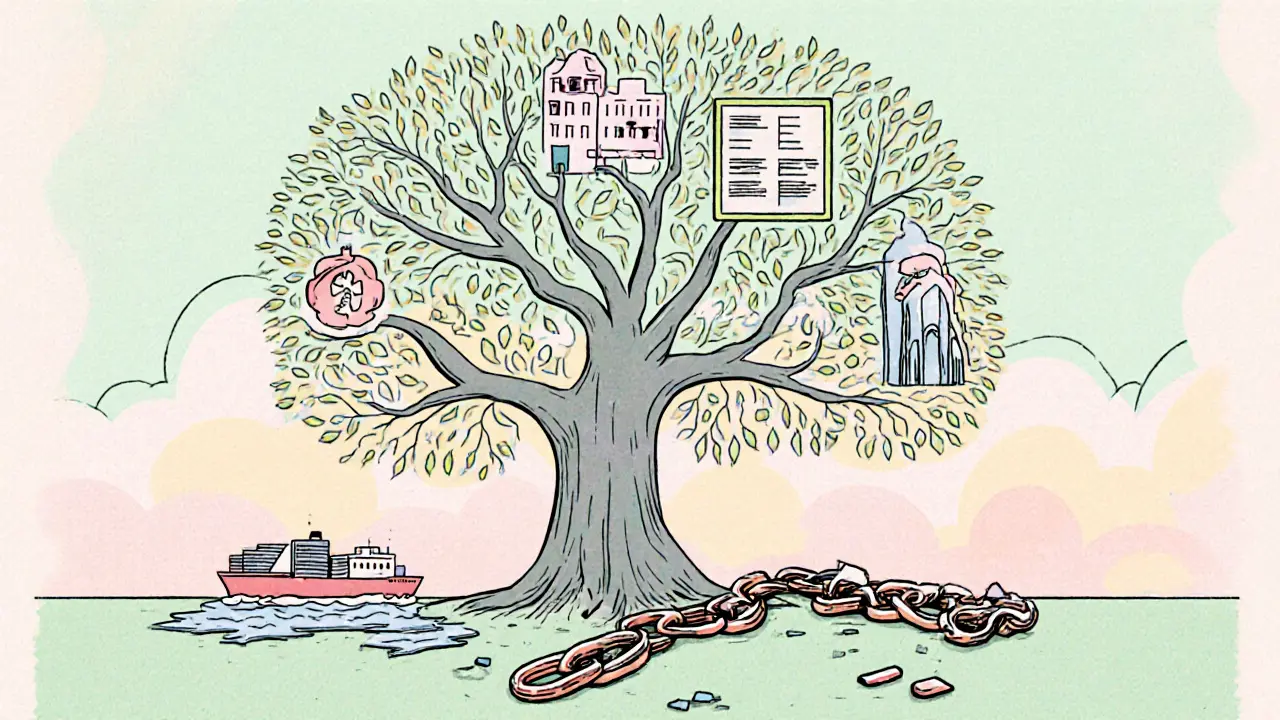
Blockchain is a type of DLT. But not all DLTs are blockchains. Think of it like this: all squares are rectangles, but not all rectangles are squares. Blockchain forces data into a linear chain of blocks, each linked to the one before it. That’s rigid. DLT doesn’t care. It can store data as a graph, a tree, or even a directed acyclic graph (DAG). That flexibility matters.
Here’s the real difference:
- Consensus: Blockchain often uses proof-of-work (like Bitcoin), which needs massive computing power. DLT can use faster, lighter methods like practical Byzantine fault tolerance (PBFT) or proof-of-stake - no mining required.
- Tokenization: Blockchain systems usually need a native token (like ETH or BTC) to pay for transactions or reward miners. DLT? Not at all. You can run a private DLT for supply chain tracking with zero tokens involved.
- Structure: Blockchain demands blocks in sequence. DLT allows parallel updates. Multiple changes can be added at once, not one after another. That means higher speed and better scalability.
- Access: Blockchain is often public. Anyone can join. DLT can be permissioned - only approved companies or individuals get to write data. That’s critical for banks, governments, and hospitals.
Take BitTorrent, for example. Launched in 2001, it’s one of the earliest real-world DLT systems. It didn’t use blocks. It didn’t have tokens. It just let users share files directly, with each user holding pieces of the data. No central server. No middleman. That’s DLT - and it worked long before Bitcoin existed.
Why DLT Matters More Than Blockchain Right Now
Blockchain got all the hype. But DLT is quietly solving real problems that blockchain struggles with.
Let’s say you’re a hospital. You need to share patient records with clinics, insurers, and labs. Blockchain? Too slow. Too expensive. Too public. DLT? Perfect. You set up a private network. Only authorized staff can add or view data. Changes are encrypted and immutable. No one can erase a diagnosis. No one can fake a prescription. And it runs on regular servers - no energy-hungry miners.
Or consider the UK’s Combined Online Information System. It uses DLT to track medical supplies across public hospitals. When a vaccine shipment leaves a warehouse, every stop - transport, storage, delivery - gets recorded automatically. If a batch goes missing, they trace it in minutes, not days. No blockchain needed. Just a secure, shared ledger.
Financial institutions are leading the charge. BBVA, HSBC, and others are part of the R3 and Hyperledger consortia - not to build crypto, but to replace legacy systems that still rely on fax machines and manual reconciliation. They’re using DLT to cut settlement times from days to minutes. To reduce fraud. To automate contracts with smart contracts - but without the crypto noise.
Real-World Use Cases That Have Nothing to Do With Crypto
DLT isn’t just for finance. It’s being used everywhere data needs to be trusted, not just shared.
- Supply Chains: Walmart uses DLT to track food from farm to shelf. If lettuce causes an outbreak, they find the exact batch in 2 seconds - not 7 days.
- Identity: Estonia’s e-Residency program lets anyone in the world get a digital identity backed by DLT. No passport needed. Just a secure, tamper-proof record of who you are.
- Real Estate: In Sweden, land registry records are now on a DLT system. Buyers and sellers complete transactions without paper deeds. Titles can’t be forged. Payments auto-trigger when conditions are met.
- Energy Grids: In Australia, neighbors with solar panels trade excess power using a DLT system. No utility company in the middle. Just direct, automated, verified trades.
These aren’t experiments. They’re live, operational systems. And none of them require you to buy a single coin.

When You Should - and Shouldn’t - Use DLT
DLT isn’t magic. It’s not always better than a regular database.
Use DLT when:
- You need multiple parties to trust each other without a central authority.
- Data integrity is critical - tampering could cost millions or lives.
- You’re dealing with slow, manual processes (like paper-based trade finance).
- Transparency among participants is a competitive advantage.
Avoid DLT when:
- You’re a small business with one database and one admin.
- Speed matters more than trust - like a mobile app with 10,000 daily users.
- You need to delete data (GDPR compliance). DLT is immutable by design.
- You’re just trying to “blockchain your business” because it’s trendy.
Too many companies waste millions trying to force blockchain onto problems that a simple cloud database could solve. DLT is powerful - but only when the problem actually needs decentralization.
The Future of DLT - Less Hype, More Hardware
The next five years won’t be about new coins or NFTs. It’ll be about integration.
DLT systems are getting faster. New consensus protocols like HoneyBadgerBFT and Algorand’s proof-of-stake can handle thousands of transactions per second - far beyond Bitcoin’s 7. They’re also using less energy. Some DLT networks use less power than a single home air conditioner.
Interoperability is the big challenge. Right now, a DLT system used by a bank can’t talk to one used by a hospital. But standards are forming. The Linux Foundation’s Hyperledger and the Enterprise Ethereum Alliance are building bridges. Soon, you’ll see DLT networks talking to each other - like email systems did in the 90s.
The real winners? Companies that use DLT to fix broken processes - not to chase crypto fame.
DLT isn’t the future of money. It’s the future of truth.
Is DLT the same as blockchain?
No. Blockchain is one type of DLT - the most famous one. But DLT includes many other systems that don’t use blocks, chains, or tokens. Think of blockchain as a specific recipe, and DLT as the whole kitchen. You can cook many meals without using that one recipe.
Do I need cryptocurrency to use DLT?
Absolutely not. Many DLT systems - especially private ones used by banks, governments, and hospitals - don’t use any cryptocurrency at all. Tokens are optional. They’re only needed if you want to incentivize participation or create a digital asset. Most enterprise DLTs skip them entirely.
Can DLT be hacked?
It’s extremely hard. Since data is copied across dozens or hundreds of nodes, you’d need to hack most of them at once to change anything. Plus, every change is cryptographically signed and verified. If one node tries to submit a fake entry, the network rejects it. It’s not 100% impossible - but it’s far more secure than a single server.
Is DLT faster than traditional databases?
It depends. For simple tasks like logging user logins, a traditional database is faster. But for complex, multi-party processes - like cross-border payments or supply chain tracking - DLT is faster because it removes manual reconciliation, paperwork, and delays from third-party verification.
What’s the biggest mistake companies make with DLT?
Trying to use it just because it’s trendy. DLT adds complexity. If you don’t have multiple untrusted parties needing to share and verify data, you’re better off with a regular cloud database. Don’t force a solution that doesn’t fit your problem.
Can DLT delete data?
No. That’s by design. Once data is added, it can’t be erased - only marked as invalid or hidden. This makes it perfect for audit trails and compliance. But it’s a problem for privacy laws like GDPR, which require data deletion. Some DLT systems work around this by storing only hashes of data off-chain, keeping sensitive info in encrypted private storage.

24 Comments
DLT isn't blockchain. And that's it.
I love how this post cuts through the crypto noise. It's like realizing your toaster doesn't need Wi-Fi to make toast. DLT is just... better infrastructure. Quiet, reliable, and actually useful.
Imagine a world where your medical records, your property deed, and your supply chain receipts all just... exist. No chasing paper, no fax machines, no 'can you resend that?' DLT isn't sexy, but it's the quiet hero of trust. 🌱
Stop pretending this isn't just blockchain with a new haircut. Everyone knows this is crypto trying to look corporate. Wake up.
Leo, you're missing the point. This isn't about crypto. It's about replacing fax machines with something that doesn't break every time someone sneezes. I've seen it in action-hospitals saving lives because they stopped trusting paper.
Benjamin, you nailed it. DLT doesn't need to be loud to be powerful. It's the silent upgrade no one tweets about-but everyone benefits from.
Let's be honest: most of these 'enterprise DLT' projects are glorified Excel sheets with a blockchain veneer. The real-world impact is negligible. The hype? Explosive. The ROI? Questionable. Don't confuse complexity with innovation.
If you're not using crypto, you're not using real DLT. This is just centralized databases with extra steps. You're being manipulated by corporate PR.
Wow. So you're telling me... we can have trust without a middleman? And it doesn't require me to buy a coin? I feel like I just discovered the internet again.
So what? This is just a database. Big deal. All this talk and no numbers. Where are the benchmarks? The cost savings? The adoption stats? This is hand-waving.
DLT is a Trojan horse for authoritarian control. No deletion? No central authority? That’s not freedom-that’s a surveillance state with cryptographic locks. This is how governments track everything.
Think about it-what if truth itself became a public good? Not owned by corporations, not manipulated by bureaucrats. DLT doesn’t just store data-it restores dignity to information. It’s not tech. It’s philosophy. And it’s beautiful
the whole 'no central authority' thing is kinda funny when you think about it. who's actually running the nodes? banks? governments? corporations? it's still centralized, just with more layers. also, i think 'immutable' is overrated. sometimes you need to fix mistakes.
Okay, I’ve been thinking about this all day. DLT isn’t about replacing databases-it’s about replacing *distrust*. We’ve spent decades building systems that assume everyone’s lying. DLT assumes everyone’s honest... unless proven otherwise. That’s revolutionary. Not because it’s new tech-but because it’s new *faith*.
When Walmart finds bad lettuce in 2 seconds? That’s not efficiency. That’s care. That’s a parent knowing their kid won’t get sick because the system didn’t let a lie slip through.
And Estonia’s digital identity? That’s not a government app. That’s a person’s right to exist in the digital world without begging for permission.
People think DLT is about tech. It’s not. It’s about giving people back control. No tokens. No hype. Just... truth.
And yeah, it’s slow sometimes. And yeah, it’s complex. But so was the printing press. And we didn’t throw it out because it took time to learn.
We’re not building a new tool. We’re building a new kind of society.
Respectfully, the author has presented a remarkably accurate and nuanced perspective. The conflation of blockchain with DLT is not merely a semantic error-it is a fundamental misunderstanding that impedes technological progress in enterprise environments. The operational advantages of permissioned DLT systems, particularly in regulated sectors such as healthcare and finance, are empirically verifiable and well-documented in peer-reviewed literature. The continued propagation of crypto-centric narratives undermines the legitimate, non-speculative applications of this technology.
Why are we letting foreigners dictate our tech future? Sweden and Estonia? What about American innovation? This is just Europe trying to out-tech us again. We need real American solutions.
While the post correctly distinguishes DLT from blockchain, it omits a critical point: regulatory uncertainty remains a significant barrier to adoption. Many institutions are hesitant to deploy DLT due to unclear legal frameworks surrounding data sovereignty and auditability across jurisdictions. Until regulators provide clarity, implementation will remain fragmented.
What I find beautiful is how DLT mirrors cultural values. In places like Estonia, it’s about individual sovereignty. In supply chains, it’s about accountability. In energy grids, it’s about community. It’s not a tool-it’s a reflection of what a society chooses to value. And that’s why it’s spreading-not because it’s trendy, but because it’s honest.
Who owns the nodes? Who controls the consensus protocol? Who audits the auditors? DLT is a myth. It’s centralized control dressed in cryptography. The same few corporations, the same few governments, the same few developers-they’re just hiding behind ‘decentralized’ labels. This is the new Orwellian playbook.
Let’s not confuse scalability with utility. While DAG-based DLTs like IOTA or Hedera offer higher throughput, they still lack the auditability and compliance rigor required for financial institutions. The trade-off between speed and verifiability remains unresolved in most non-blockchain DLTs. This is not a solved problem-it’s a trade-off.
I’ve been using DLT in my nonprofit for tracking donations. No crypto. No tokens. Just a shared ledger between donors, auditors, and field teams. The best part? People actually believe us now. Not because we said it-we showed them. That’s the real power.
Okay but what about the energy? I know you said 'less than an AC' but come on-every node is a computer running 24/7. That's thousands of servers. That's thousands of watts. That's thousands of tons of CO2. You can't just ignore the environmental cost because it's 'enterprise.' This is still tech with a footprint.
And don't get me started on the legal mess. If a node in Germany holds data that violates California law? Who's liable? Who pays the fine? This isn't magic-it's a liability minefield.
And why is no one talking about the fact that the biggest adopters are banks? Banks that caused the 2008 crash? Are we really trusting them with 'truth'?
DLT isn't the future. It's just the next corporate buzzword. And I'm tired of being sold solutions that solve problems no one asked for.
DLT is a Western tool for Western problems. In India, we have 800 million people without bank accounts. DLT won't help them. What they need is mobile money, not cryptographic ledgers. This is tech colonialism-exporting solutions that ignore local realities.
While I appreciate the technical clarity, the post's tone is disarmingly optimistic. It ignores the institutional inertia that still dominates enterprise adoption. DLT projects often fail not due to technical flaws, but because legacy stakeholders refuse to relinquish control. The real challenge isn't cryptography-it's human politics. And that’s a problem no algorithm can solve.