- 8 Feb 2026
- Elara Crowthorne
- 23
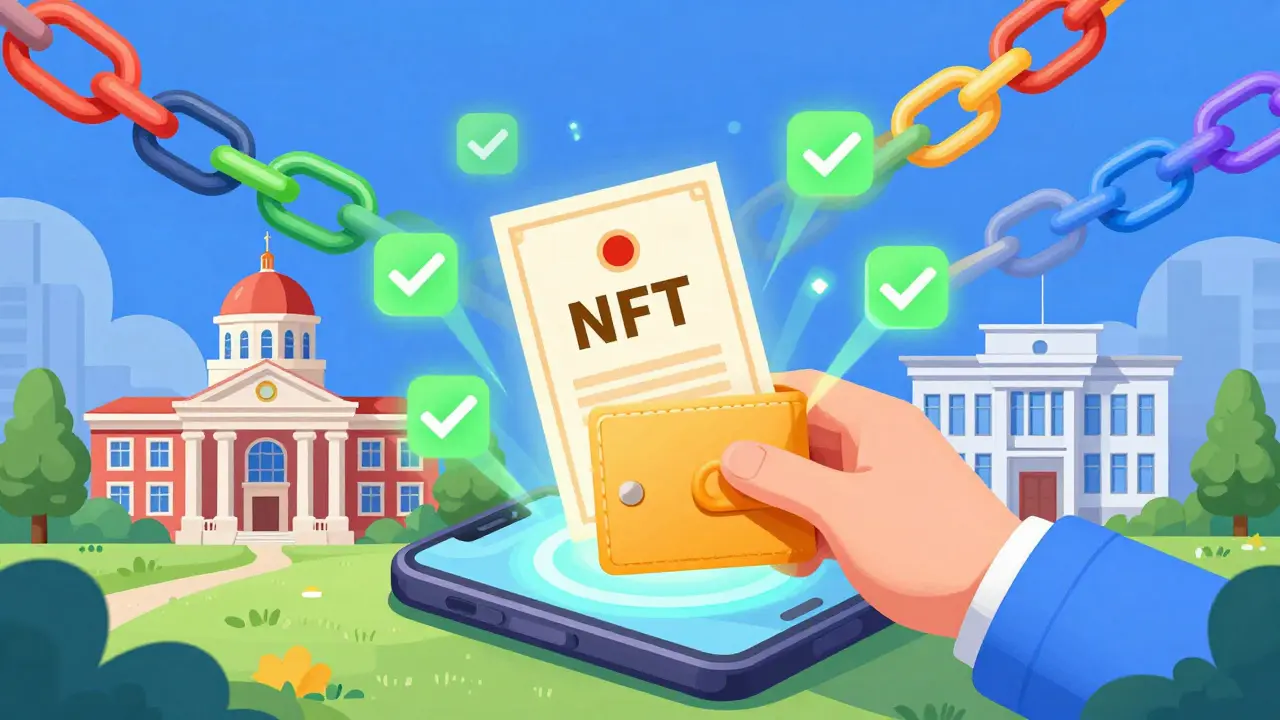
Think of your diploma, your nursing license, or your coding certification. Now imagine never losing it, never waiting weeks for someone to verify it, and never having to send a scanned copy to every employer or school. That’s what NFTs are doing with verified credentials - and it’s not science fiction. By early 2026, over 40 of the world’s top universities and nearly 30% of Fortune 500 companies are already using NFTs to issue and verify professional and academic credentials. This isn’t about buying pixel art. It’s about blockchain giving you control over your own identity.
How NFTs Actually Store Credentials
NFTs don’t store your entire diploma or certificate like a PDF. Instead, they store a digital fingerprint - a cryptographic hash - that links to your credential. This hash is written onto the blockchain, usually Ethereum, using standards like ERC-721 or ERC-1155. The real credential? It lives off-chain, on decentralized storage like IPFS or Arweave. Think of the NFT like a sealed envelope with a unique serial number. The envelope can’t be opened or altered without breaking the seal. Anyone can check that serial number on the blockchain and know instantly if the credential is real.
Here’s how it works step by step:
- An institution - say, a university - issues a credential and generates a unique digital token (the NFT).
- The NFT’s metadata contains a link to the credential stored on IPFS - not on the blockchain itself.
- A cryptographic hash of that credential is embedded into the NFT’s smart contract.
- The NFT is sent to your wallet, tied to your Ethereum address.
- When you need to prove your credential, you sign a challenge with your private key. The verifier checks the blockchain, resolves your identity, confirms the hash matches, and validates the credential - without ever seeing your personal data.
This system is called verifiable credentials. The magic? You prove you own it without revealing what it is. Zero-knowledge proofs (ZKPs) make this even stronger. For example, you can prove you graduated from MIT without saying your name, your major, or your GPA. Just ‘yes, I have it’.
Why This Beats Traditional Systems
Right now, if you want to prove your degree, you email the registrar. They send a transcript. It takes days. Maybe it gets lost. Maybe it’s forged. Employers call the school. Schools have staff just for this.
NFT credentials cut that down to seconds. According to the World Bank’s 2023 analysis, blockchain-based verification can slash administrative costs by 60-75%. No more fax machines, no more PDFs, no more waiting.
And it’s portable. You move countries? Your NFT credential moves with you. It lives in your wallet. No institution holds it hostage. No middleman controls access. You own it. You control who sees it - and what they see.
Compare that to a traditional digital certificate. It’s stored on a server. If that server goes down? The credential disappears. If the institution closes? You lose proof. With an NFT? It’s on the blockchain. Immutable. Permanent. Unstoppable.
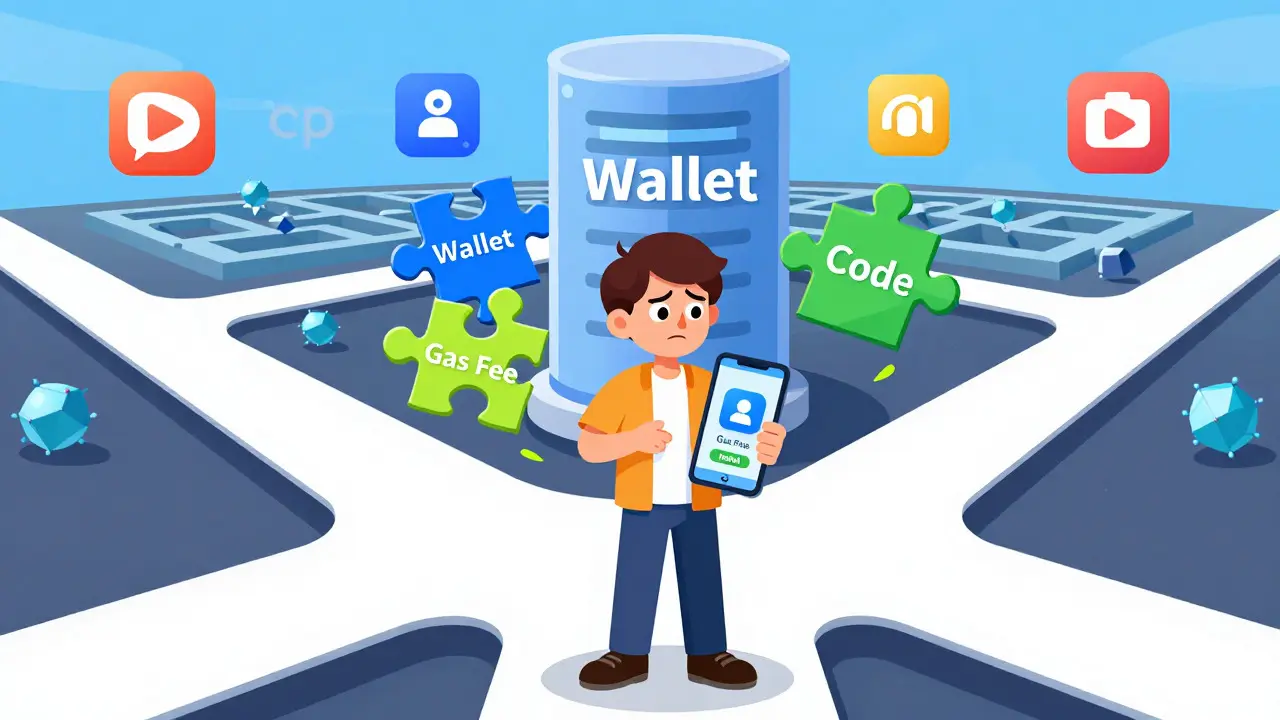
The Hidden Catch: Keys and Usability
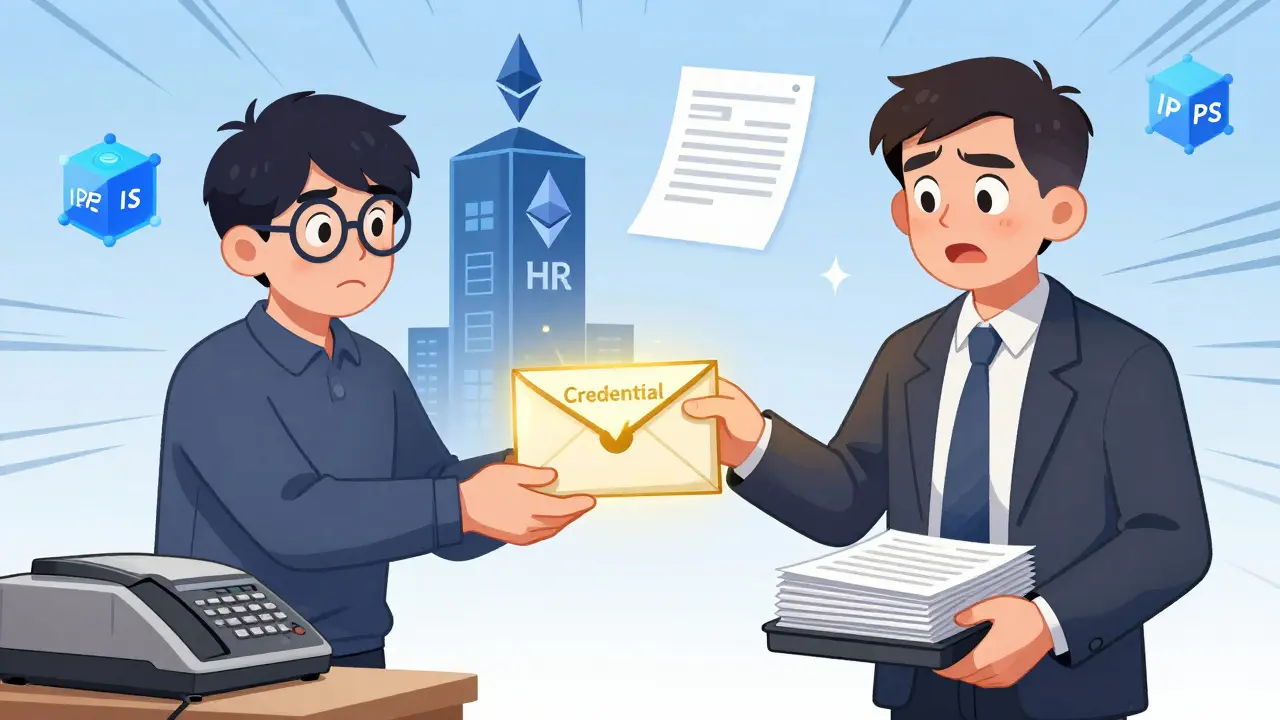
Here’s the hard truth: NFT credentials are only as secure as your private key. If you lose it? You lose your credential. No reset button. No customer service line.
According to Itexus’s November 2025 security report, 78% of credential breaches happen because users lost their keys - not because the blockchain was hacked. Reddit threads are full of stories like: “I reset my phone and didn’t back up my seed phrase. Now I can’t prove I graduated.” That’s not a flaw in the tech. It’s a flaw in the user experience.
Most people don’t know what a seed phrase is. They don’t understand wallets. And HR departments? They’re still using Excel spreadsheets. A 2024 user study by WorkersBadge found that 65% of non-technical users struggled to set up a wallet. Even if the system works perfectly, it fails if the user can’t use it.
That’s why new upgrades are coming. Ethereum’s Pectra upgrade, launching in early 2026, introduces account abstraction. This means your wallet can have recovery options - like email or multi-factor authentication - without giving up decentralization. It’s like having a password reset for your identity.
Who’s Using This Right Now?
Academia is leading the charge. In 2025, 41 of the top 100 global universities issued diplomas as NFTs. Stanford, MIT, and the University of Melbourne are all on board. Students report 92% satisfaction because they can share proof instantly when applying for jobs - no more waiting for transcripts.
Enterprise adoption is growing. Deloitte’s 2025 report shows 27% of Fortune 500 companies are piloting NFT-based certifications for employees. Think: IBM issuing blockchain certifications, or Siemens verifying engineering licenses. No more manual checks. No more fraud.
Regulators are catching up. The European Blockchain Services Infrastructure (EBSI) set official standards for NFT credentials in early 2025. The U.S. Department of Education launched a pilot in April 2025 to issue digital diplomas as NFTs. This isn’t a fringe experiment anymore.
What’s Next?
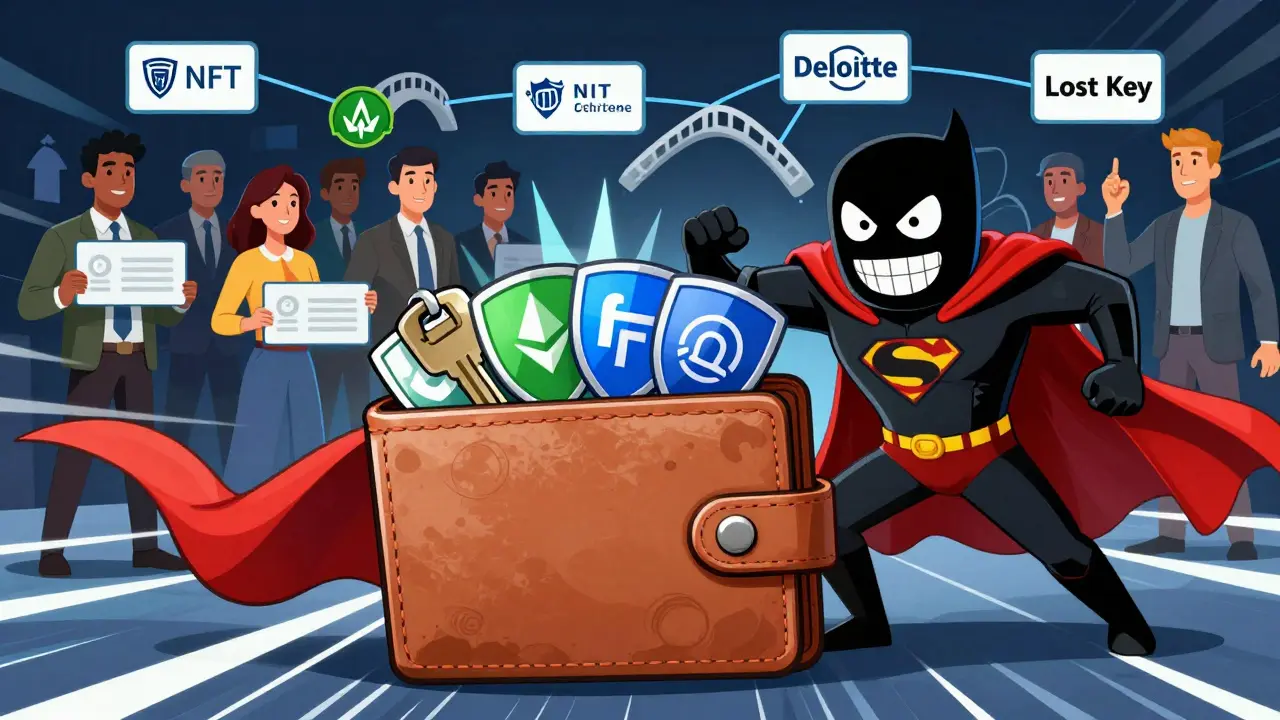
The next phase is interoperability. Right now, if you get a credential on Ethereum, it won’t work on Solana or Polygon. That’s changing. Working groups are building cross-chain verification protocols so your credential works anywhere.
Multi-chain wallets are becoming standard. You’ll soon be able to store academic credentials, professional licenses, and even voting rights in one wallet - all verified, all portable, all under your control.
By 2030, Gartner predicts NFT credentials will be the default for academic and professional verification - but only if usability improves by 40%. That means simpler wallets, better onboarding, and education for institutions and users alike.
Final Thought: You Own Your Identity Now
NFTs aren’t replacing paper diplomas. They’re replacing the system that made you depend on institutions to prove who you are. With NFTs, your credentials live with you. Not in a database. Not on a server. Not in an office you can’t reach. In your wallet. And that changes everything.
Can NFTs be stolen or copied like regular files?
No. The NFT itself is a unique token on the blockchain - you can’t copy it like a PDF. But someone could steal access to your wallet if they get your private key. That’s why key management is critical. The credential’s data is cryptographically signed - if altered, the signature breaks. So while the NFT can’t be duplicated, losing your key means losing access.
Do I need Ethereum to use NFT credentials?
Most current systems use Ethereum because of its mature standards (ERC-721/ERC-1155) and wide adoption. But other blockchains like Polygon, Solana, and Algorand are now supporting verifiable credentials too. The goal is cross-chain compatibility, so you won’t be locked into one network forever.
Can I hide my personal info while proving my credential?
Yes. Zero-knowledge proofs (ZKPs) let you prove you hold a credential without revealing any details. For example, you can prove you’re a licensed nurse without saying your name, employer, or license number. Only the verifier sees a ‘yes’ or ‘no’ response. This keeps your data private while still proving authenticity.
What happens if the institution that issued my credential shuts down?
Nothing. The credential lives on the blockchain, linked to your wallet. The issuer’s role ends once the NFT is minted and sent to you. You don’t need them anymore. Your proof stays valid forever, even if the school closes, changes its name, or goes out of business.
Are NFT credentials legal and recognized by governments?
Yes, increasingly so. The European Union’s EBSI standard legally recognizes NFT credentials for academic and professional use. The U.S. Department of Education’s 2025 pilot program treats them as equivalent to paper diplomas. Many countries are updating their legal frameworks to accept blockchain-based proof - as long as the system follows cryptographic standards and verifiable identity protocols.

23 Comments