- 2 Dec 2025
- Elara Crowthorne
- 0
Metaverse Asset Profit Calculator
Calculate Your Potential Earnings
Based on 2025 market data. Only 15-20% of assets hold value after 6 months.
Your Estimated Results
Asset Type:
Platform:
Hours Invested:
Important Note: Only 15-20% of metaverse assets hold value after 6 months.
Based on real 2025 market data from Decentraland, The Sandbox, and OpenSea.
Creating and trading metaverse assets isn’t science fiction anymore-it’s a real, active market where people earn thousands selling digital clothes, land, and art. But most beginners lose money because they jump in without understanding how it actually works. This isn’t about buying a random NFT and hoping it goes up. It’s about building something people want, in the right place, with the right tools-and knowing when to sell.
What Exactly Are Metaverse Assets?
Metaverse assets are digital items that exist in virtual worlds and are owned through blockchain. Think of them like real-world property, but inside a game or virtual environment. They include:
- Virtual land (plots in Decentraland or The Sandbox)
- Wearables (clothes, shoes, hats for your avatar)
- Art and collectibles (digital paintings, limited-edition items)
- Interactive objects (games, signs, doors you can click)
- Audio and music NFTs (soundtracks, DJ sets played in virtual clubs)
All of these are stored as NFTs-non-fungible tokens-on blockchains like Ethereum or Polygon. Unlike cryptocurrencies like Bitcoin, each NFT is unique. You can’t swap one for another and get the same thing. That’s what gives them value.
As of 2025, Ethereum still handles about 80% of all metaverse NFT trades. But Polygon is catching up fast because its fees are 1,000 times cheaper. If you’re just starting out, Polygon is where you’ll want to create.
How to Create Metaverse Assets
You don’t need to be a coder to make assets-but you do need to learn a few tools. Here’s how real creators do it:
1. Choose Your Asset Type
Start small. Wearables are the easiest entry point. A simple pair of digital sneakers can take 20 hours to design and sell for $50. Virtual land? That’s a 6-month project for most beginners. You need to understand zoning, traffic flow, and what kinds of experiences attract people.
2. Pick Your Tools
Free tools work just fine:
- Blender (free) - for 3D modeling wearables and objects
- VoxEdit (free) - for voxel-based assets in The Sandbox
- Decentraland Builder (browser-based, free) - drag-and-drop land creation
Professional tools like Maya or 3ds Max cost over $1,700 a year. You don’t need them. Most top-selling wearables on Decentraland are made in Blender.
3. Follow Platform Rules
Every platform has strict file specs. Break them, and your asset won’t load.
- Decentraland: GLB format, under 20MB, PBR materials only
- The Sandbox: VXM format, max 32x32x32 voxel size
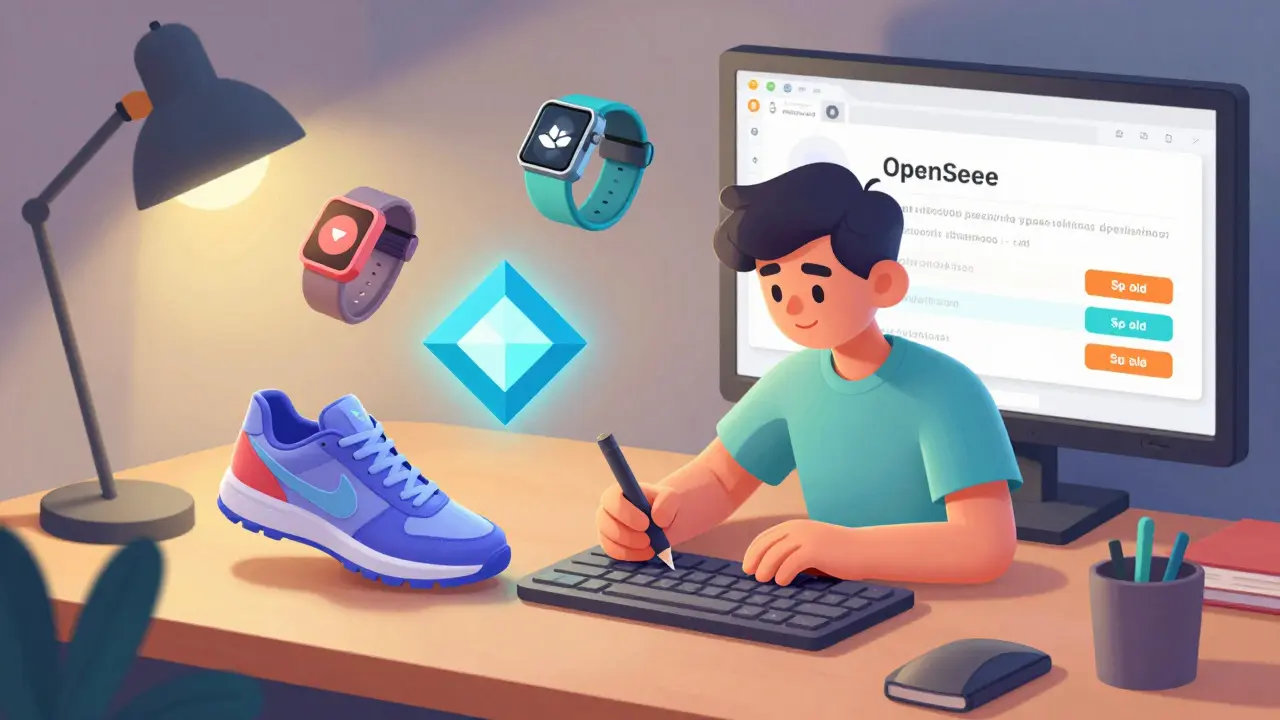
- OpenSea: Accepts most formats, but must be minted as ERC-721 or ERC-1155
Don’t guess. Check the official documentation before you start modeling.
4. Mint Your Asset
Minting means turning your 3D file into an NFT on the blockchain. On Ethereum, gas fees can run $50-$200 per asset. On Polygon? $0.01-$1. That’s why new creators use Polygon. You can mint 100 wearables for less than $100 total.
Use platforms like OpenSea or the native marketplaces (Decentraland Marketplace, The Sandbox Marketplace) to mint. They walk you through connecting your wallet (MetaMask, Phantom) and uploading files.
Where to Sell Metaverse Assets
Not all marketplaces are equal. Here’s what works in 2025:
OpenSea
Still the biggest. $5.8 billion in metaverse asset sales in 2022. Charges 2.5% fee. Good for exposure. But crowded. You need to promote your stuff.
Decentraland Marketplace
Only sells assets for Decentraland. 3% fee. Better for land and buildings. Buyers here are serious-they’re building entire virtual cities.
The Sandbox Marketplace
Focuses on voxel assets and gaming items. 5% fee. Strong community of gamers. If you make fun, quirky wearables, this is your spot.
Polygon-based Marketplaces
New platforms like Magic Eden (Polygon) and Rarible (Polygon) are gaining traction. Lower fees, faster sales. Less traffic, but less competition too.
Pro tip: List your asset on OpenSea AND your platform’s native marketplace. Double exposure. More buyers.
What Sells Best Right Now
Not everything sells. Here’s what’s moving in 2025:
- Wearables with utility - Items that work across platforms (like a jacket that looks the same in Decentraland, The Sandbox, and Meta’s Horizon Worlds) are worth 3x more.
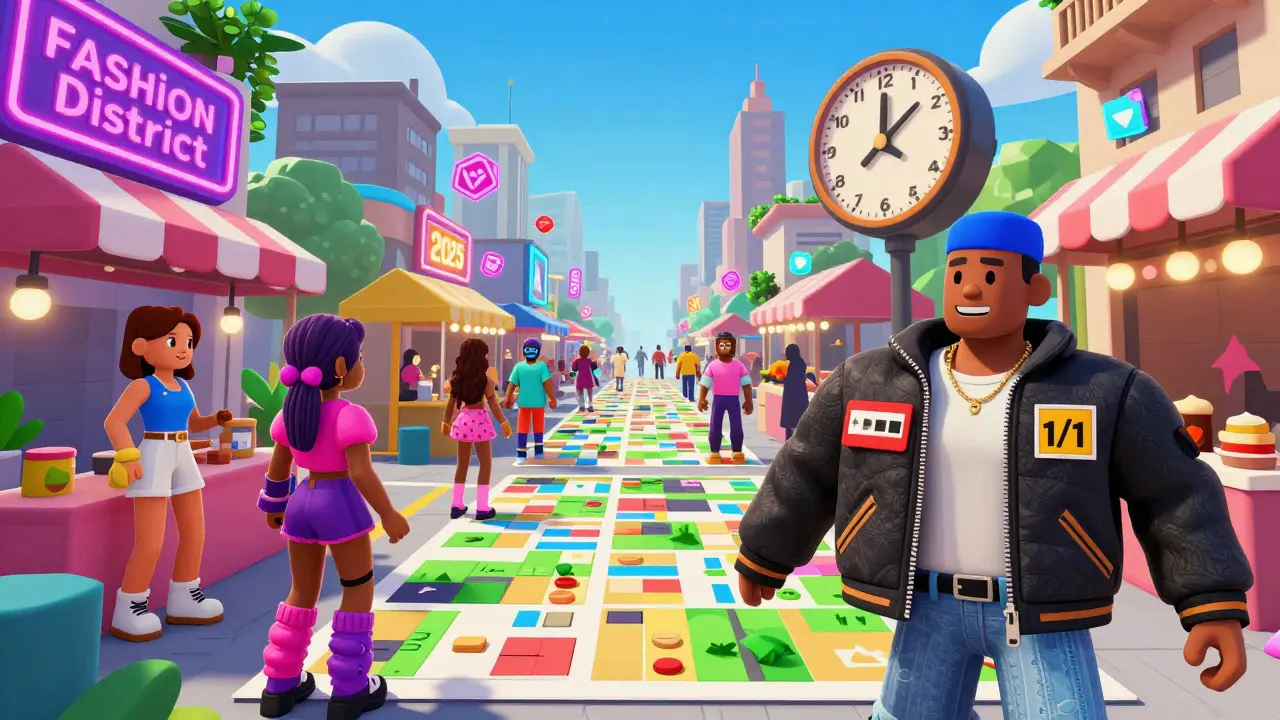
- Exclusive drops - Limited editions of 10-50 items. Scarcity drives price. A 1/1 wearable from a known artist can sell for $1,000+.
- Land near landmarks - In Decentraland, plots next to the Fashion District or VIP club sell for $10,000-$15,000. Land in the middle of nowhere? $800.
- Interactive art - Digital paintings that change based on time of day or user interaction. These are trending in The Sandbox.
Remember: Avatar fashion is the most accessible. Hiroto Kai, a creator on Decentraland, makes over $50,000 a month selling digital clothes. He didn’t start with land. He started with socks.
Realistic Earnings and Risks
Most people think they’ll get rich quick. They don’t.
A Reddit user named u/MetaBuilder earned $180,000 in 2023 designing virtual buildings in Decentraland. But it took him 8 months of daily work to learn the tools, understand the economy, and build a reputation.
Meanwhile, u/VirtualStruggles spent $800 on gas fees trying to mint his first 10 wearables. Only 2 sold. He quit after 6 months.
Here’s the hard truth: Only 15-20% of metaverse assets hold or increase value after six months, according to Coin Bureau’s analysis of 10,000 sales. That’s not a market. It’s a lottery.
Big brands like Nike, Adidas, and Gucci are still spending millions. But they’re not selling NFTs to make money. They’re selling brand presence. For them, it’s marketing. For you? It’s a business.

How to Avoid Getting Scammed
The metaverse is full of hype. Here’s how to stay safe:
- Never send ETH or MATIC to a stranger - If someone says “send me 0.5 ETH and I’ll give you land,” it’s a scam.
- Check the contract address - Always verify the NFT contract on Etherscan or Polygonscan. Fake marketplaces copy real ones.
- Don’t trust influencers - Just because someone says “this land will 10x” doesn’t mean it will. Look at sales history.
- Use multi-sig wallets for big sales - If you’re selling land for $10,000+, use a wallet that needs two signatures to move funds.
Also, be aware of regulatory risk. The SEC is watching NFTs. If your asset acts like a stock (e.g., promises profits from others’ work), it could be classified as a security. That could shut down trading.
Where to Learn
You don’t need a degree. But you need to learn.
- Decentraland Academy - Free, but assumes you know 3D modeling already.
- The Sandbox Game Maker - Beginner-friendly, no code needed. Great for first-time creators.
- Coursera: Blockchain and Cryptocurrency - $49/month. Covers wallets, NFTs, and smart contracts.
- Udemy: 3D Modeling for Games - $89.99. Teaches Blender basics for NFTs.
Join Discord servers. Decentraland has 100,000+ members. The Sandbox has 80,000. Ask questions. Watch how experienced creators build.
Is This Worth It in 2025?
Some say the metaverse is dead. Jaron Lanier calls it a bubble. Gartner predicts 90% of platforms will fail.
But here’s what’s real: People still buy digital things they love. Nike sold $185 million in virtual sneakers in 2022. Gucci’s virtual bag sold for more than the real one. Apple’s Vision Pro launch in early 2024 created new demand for high-res 3D assets.
The metaverse isn’t for everyone. But if you’re good at design, patient with tech, and understand scarcity, it’s one of the few places where a single person can build a business from their bedroom.
You don’t need millions. You don’t need a team. You just need one good asset, the right platform, and the discipline to keep improving.
Start small. Learn fast. Sell smart.