

- 19 Jan 2026
- Elara Crowthorne
- 23
Ever donated to a charity and wondered where your money actually went? You’re not alone. A 2024 survey found that 68% of donors say they’d give more if they could see exactly how their contributions were used. Traditional charity systems often leave donors in the dark-funds get passed through layers of intermediaries, reports are delayed, and sometimes, the impact is hard to prove. That’s where blockchain charity tracking comes in. It’s not just a buzzword. It’s a working system that lets you watch your donation move from your wallet to a child’s meal, a clean water well, or a medical supply shipment-in real time.
How Blockchain Makes Charity Transparent
Blockchain is a digital ledger that records every transaction in a way that can’t be changed or deleted. When a charity uses blockchain, every dollar you give is stamped with a unique code and added to a public chain. No one can hide it. No one can alter it. You don’t need to trust the charity-you can verify everything yourself. Think of it like a public spreadsheet everyone can see but no one can edit. When you donate $50 to a clean water project, that $50 gets recorded with a timestamp, your wallet address (if you choose to be public), and the recipient’s wallet. Later, you can check the chain and see when that money was sent to a supplier, when the pipes were delivered, and when the well was dug. Each step is tied to a smart contract-a self-executing code that triggers updates automatically. For example, the LUXARITY platform lets buyers of pre-owned luxury goods choose which cause gets a portion of their purchase. After buying a jacket, you get a PIN. You enter it on their site, pick a charity, and then watch as your share flows through the system. You get a report showing: $12 went to shipping, $23 to local labor, $15 to medical supplies. All verified. All public.Smart Contracts: The Automatic Receipt System
Smart contracts are the engine behind real-time tracking. They’re not human-run. They’re code. And they run exactly as programmed. Here’s how it works: A nonprofit sets up a smart contract that says, “When $5,000 is received, send $3,000 to the food supplier and $2,000 to the logistics team.” Once the funds hit the wallet, the contract triggers automatically. No manager needs to approve it. No invoice gets lost. No delay. These contracts can even tie to real-world events. A project in Kenya uses blockchain to track donations for school meals. The contract is coded to release the next payment only after photos and GPS coordinates confirm meals were served. Donors get a push notification: “Your $25 fed 12 children today.” This isn’t theory. The BECP (Blockchain Enabled Charity Process Framework) has been tested with multiple NGOs and donors. Every participant-donor, NGO, vendor-is registered on the network. Only authorized addresses can move funds. Every transaction is recorded. Every document (receipts, delivery slips, invoices) is hashed and stored on-chain. If someone tries to fake a receipt, the system flags it immediately.Tracking Not Just Money, But Goods Too
Blockchain doesn’t just track cash. It tracks physical goods from the moment they’re bought to the moment they’re handed out. Say you donate 500 blankets to a refugee camp. In a traditional system, you get a thank-you email. Maybe a photo. But you don’t know if they got there. With blockchain, each blanket gets a QR code. When it’s packed, scanned, shipped, cleared through customs, delivered to the camp, and handed to a family-all those steps are recorded. You can open an app and see: “Blanket #48217 was delivered to Camp Zeta, Section 3, on Jan 10, 2026, to a family of four.” Platforms like Firefly Giving and Charity Wall are building this end-to-end traceability. Donors can see the full journey: where the goods were purchased, who transported them, who received them, and even how they were used. This level of detail reduces fraud and builds trust in ways receipts and annual reports never could.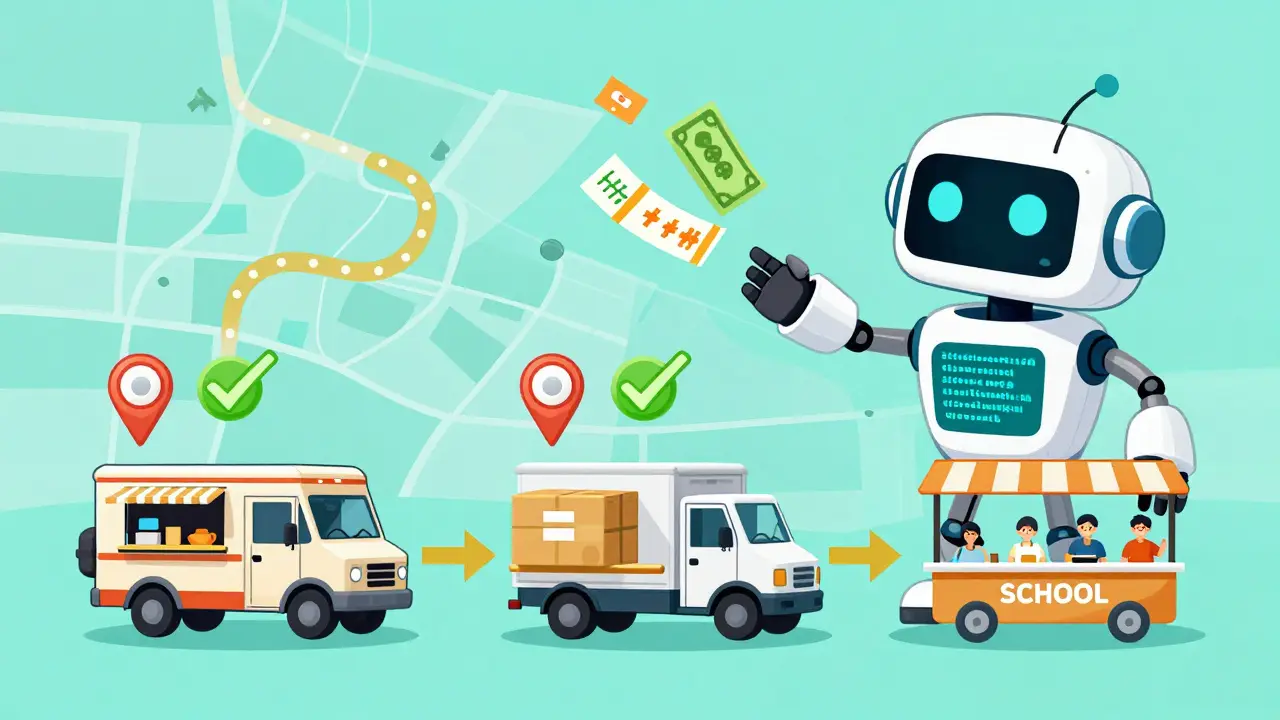
Why This Beats Traditional Charity Reporting
Traditional charities often rely on annual reports filled with photos, stories, and vague percentages. “Your donation helped 80% of our beneficiaries.” But what does that mean? Who were they? How many meals? Where did the money go? Blockchain fixes that. Here’s how it compares:| Feature | Traditional System | Blockchain System |
|---|---|---|
| Transaction Visibility | Delayed, summarized reports (quarterly or yearly) | Real-time, public ledger with every transaction |
| Verification | Relies on audits, which can be costly and infrequent | Anyone can verify on-chain using a blockchain explorer |
| Intermediaries | Multiple layers (payment processors, banks, admin teams) | Direct transfers with near-zero fees |
| Documentation | Paper or PDF receipts, easily forged | Digital documents hashed and stored on-chain |
| Donor Control | No control after donation | Choose specific projects, receive automated updates |
Who’s Using This Right Now?
You don’t have to wait for the future. Real organizations are using blockchain today. - LUXARITY, in partnership with ConsenSys, tracks donations from luxury resale events. Buyers get PINs, choose causes, and receive detailed allocation reports. Over 12,000 donors have used it since 2024. - Firefly Giving processes donations with zero fees and screens nonprofits using financial and impact data. Their platform shows exactly how much goes to overhead vs. programs. - UNICEF’s CryptoFund accepts Bitcoin and Ethereum donations and publishes real-time blockchain records of how funds are allocated to emergency relief. - Beach Clean-Up NGOs in Indonesia use blockchain to track donations for plastic collection. Each bag of trash collected is logged with GPS, weight, and photo. Donors see how much plastic was removed from their chosen beach. These aren’t pilot programs. They’re live, scaling, and delivering results.What’s Holding It Back?
Blockchain charity tracking isn’t perfect. It has real hurdles. First, it needs digital literacy. If you don’t know what a wallet is, or how to check a transaction on Etherscan, it’s intimidating. That’s why platforms are simplifying interfaces-many now let you donate with a credit card while still recording the transaction on-chain behind the scenes. Second, not all charities can afford to build or integrate blockchain systems. Smaller NGOs might rely on third-party platforms like Charity Wall or Firefly Giving to get access without coding. Third, regulation is still catching up. In some countries, crypto donations aren’t clearly recognized for tax purposes. But that’s changing. The IRS now accepts blockchain transaction records as valid proof for charitable deductions-if they’re properly documented. Many platforms now auto-generate IRS-compliant receipts. And yes, scalability is a concern. Bitcoin and Ethereum can be slow and expensive during peak times. But newer blockchains like Polygon, Solana, and Avalanche handle thousands of transactions per second at pennies per fee. Most new charity platforms now use these.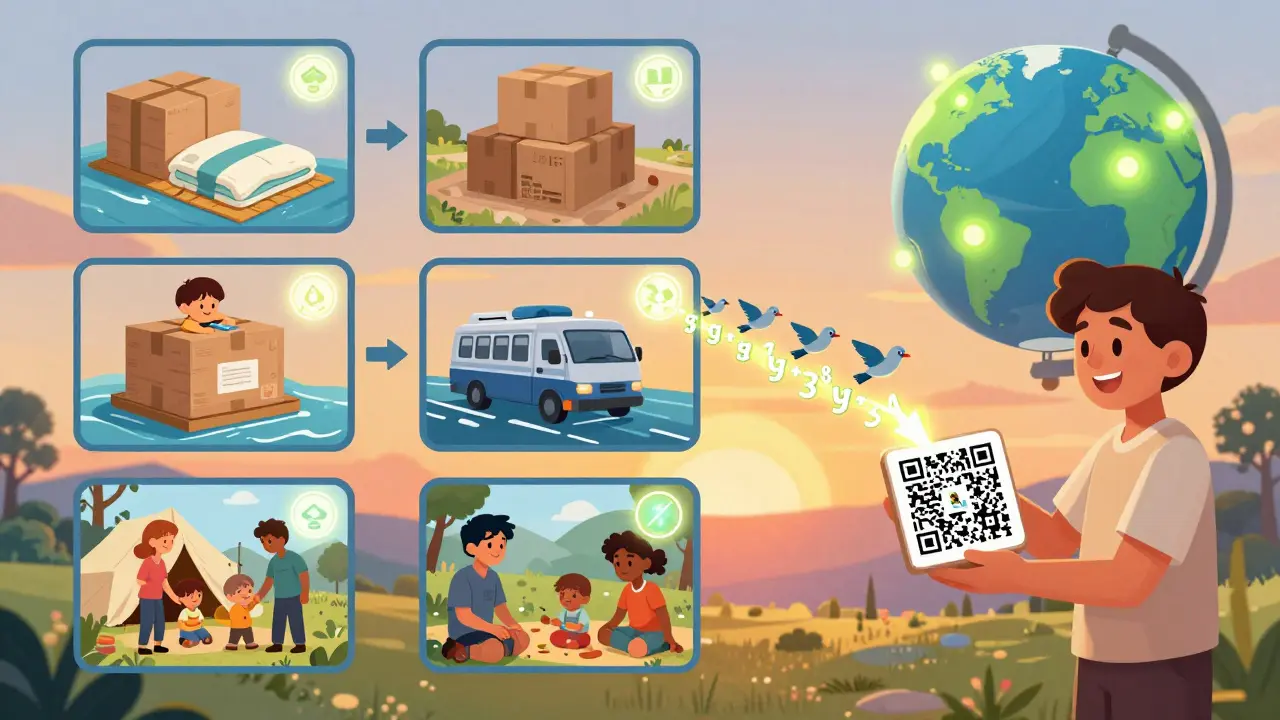
How to Start Using Blockchain Charity Platforms
You don’t need to be a tech expert. Here’s how to get started:- Choose a platform: Try Firefly Giving, LUXARITY, or UNICEF’s CryptoFund. All have simple donation buttons.
- Donate: Use a credit card, bank transfer, or crypto wallet. Even if you use a card, your donation is still recorded on-chain.
- Get your tracking link: After donating, you’ll get a unique link to your transaction on the blockchain.
- Check updates: Log in weekly. You’ll see automated alerts: “Funds sent to partner,” “Supplies delivered,” “Project completed.”
- Share your impact: Many platforms let you generate a public report to show friends how your donation made a difference.
What’s Next for Blockchain Charity?
The next wave is even smarter. Platforms are adding AI to analyze donation impact. Instead of just saying “100 meals were served,” AI will analyze photos, weather data, and local food prices to estimate nutritional value. Others are integrating with traditional banking so donors can give in USD but still get blockchain transparency. Regulators are starting to recognize blockchain as a valid audit trail. The World Bank is piloting blockchain-based aid distribution in 12 countries. In 2025, the EU passed a directive requiring all NGOs receiving public funds to use transparent tracking systems-blockchain is the default choice. This isn’t about replacing charities. It’s about giving them the tools to be more honest, more efficient, and more trusted.Final Thought: Your Donation Deserves More Than a Thank-You Email
You give because you care. You shouldn’t have to guess whether your care made a difference. Blockchain doesn’t just track money-it tracks compassion. It turns uncertainty into certainty. It turns passive giving into active participation. The technology is here. The platforms are live. The donors are already using it. The question isn’t whether blockchain charity tracking works. It’s whether you’re ready to see exactly where your generosity goes.Can I track my donation if I use a credit card, not crypto?
Yes. Many platforms like Firefly Giving and Charity Wall let you donate with a credit card, bank transfer, or PayPal. Behind the scenes, the donation is still converted into a blockchain transaction and recorded on a public ledger. You’ll get a unique link to track it just like a crypto donation.
Is blockchain charity tracking secure?
Yes, more secure than traditional systems. Blockchain records are encrypted and stored across thousands of computers. Once a transaction is confirmed, it can’t be deleted or changed. Even if a charity’s internal system is hacked, the blockchain record stays intact. The biggest risk is losing access to your wallet or falling for phishing scams-just like with online banking.
Can I get a tax receipt from a blockchain donation?
Yes. Platforms that partner with registered nonprofits automatically generate IRS-compliant digital receipts with your donation amount, date, charity name, and blockchain transaction ID. These are accepted by tax authorities in the U.S., Canada, UK, and EU.
What if the charity I donate to doesn’t use blockchain?
You can still choose charities that do. Platforms like Firefly Giving list only verified nonprofits using blockchain tracking. You can filter by transparency level, impact metrics, and fund usage. Don’t support charities that refuse transparency-your money deserves better.
How much does it cost to use a blockchain charity platform?
Most platforms charge zero fees to donors. Some take a small percentage (1-3%) from the nonprofit, not you. A few charge a tiny blockchain gas fee (less than $0.10) when you donate with crypto. This is far less than the 5-15% fees charged by credit card processors in traditional systems.
Is blockchain charity tracking only for big organizations?
No. Smaller NGOs can join platforms like Charity Wall or Firefly Giving without building their own tech. These platforms handle the blockchain integration, so even a local food bank can offer donors real-time tracking. The barrier to entry is low-most setups take less than a week.

23 Comments