
- 4 Mar 2026
- Elara Crowthorne
- 24
When you're looking for a crypto exchange that feels like a bank, not a wild west market, Gemini is one of the first names that comes up. Founded in 2014 by the Winklevoss twins, it wasn’t built to be the cheapest or the most crowded with coins. It was built to be safe, regulated, and trustworthy. And in 2026, that’s still its biggest selling point.
Who Is Gemini For?
Gemini isn’t for everyone. If you’re hunting for 200+ altcoins or trying to buy Bitcoin with a credit card and pay the lowest possible fee, you’ll probably be frustrated. But if you care about knowing your money is protected by real regulations - not just promises - then Gemini delivers.
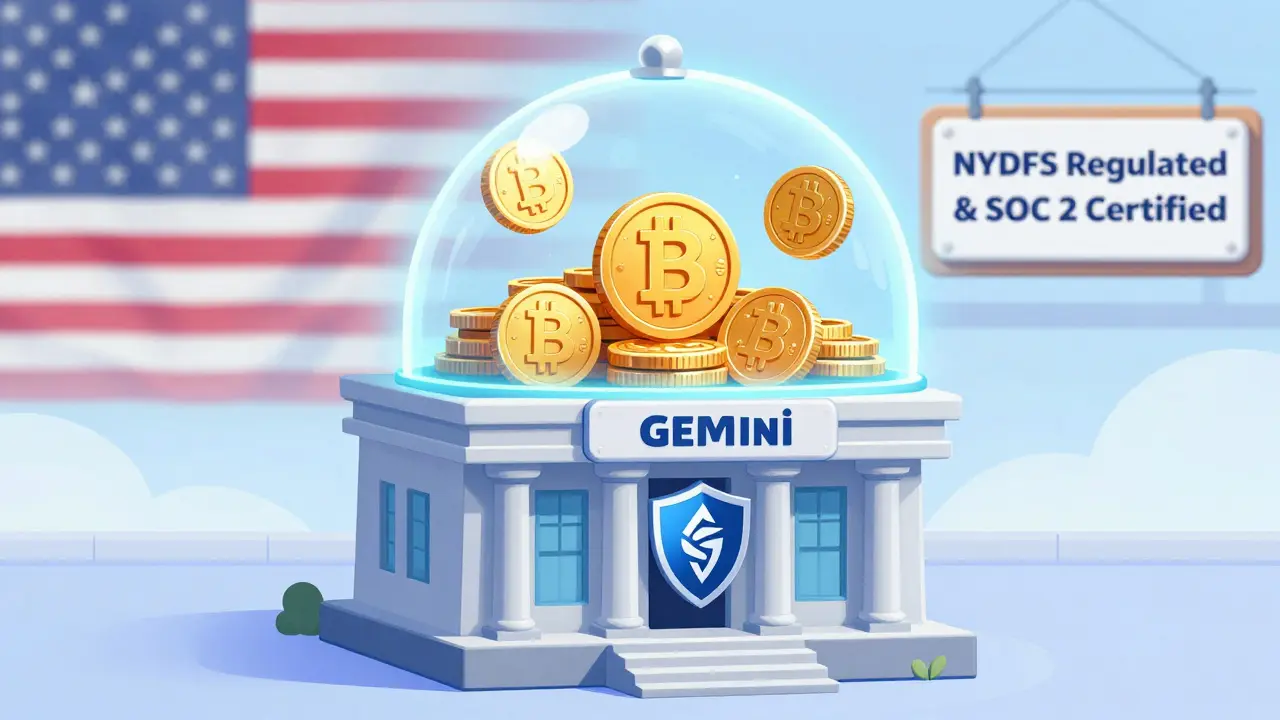
The platform is regulated by the New York Department of Financial Services (NYDFS) as a trust company. That’s rare. Most crypto exchanges operate in legal gray zones. Gemini doesn’t. It’s one of the first to earn SOC 1 Type 2 and SOC 2 Type 2 certifications - the same standards banks use to prove their internal controls are solid. That means your Bitcoin isn’t just sitting in a digital wallet somewhere. It’s backed by audits, insurance, and compliance teams.
What Coins Can You Trade?
Gemini offers between 70 and 80 cryptocurrencies as of March 2026. That’s far fewer than exchanges like Binance or KuCoin, which list hundreds. But Gemini doesn’t list every coin that shows up. It picks carefully. You’ll find Bitcoin, Ethereum, Solana, Cardano, and a few others you actually hear about in the news. No obscure tokens with no liquidity or no team behind them.
The trading pairs? Around 131 crypto-to-crypto options. That’s enough for most traders. But if you’re into niche DeFi tokens or new memecoins, you’ll need another platform. Gemini’s philosophy is simple: stick to what’s proven. It’s a trade-off - fewer choices, but less risk of getting burned by a scam.
Fees: Instant vs. ActiveTrader
This is where Gemini gets tricky. The fees aren’t hidden - they’re just layered.
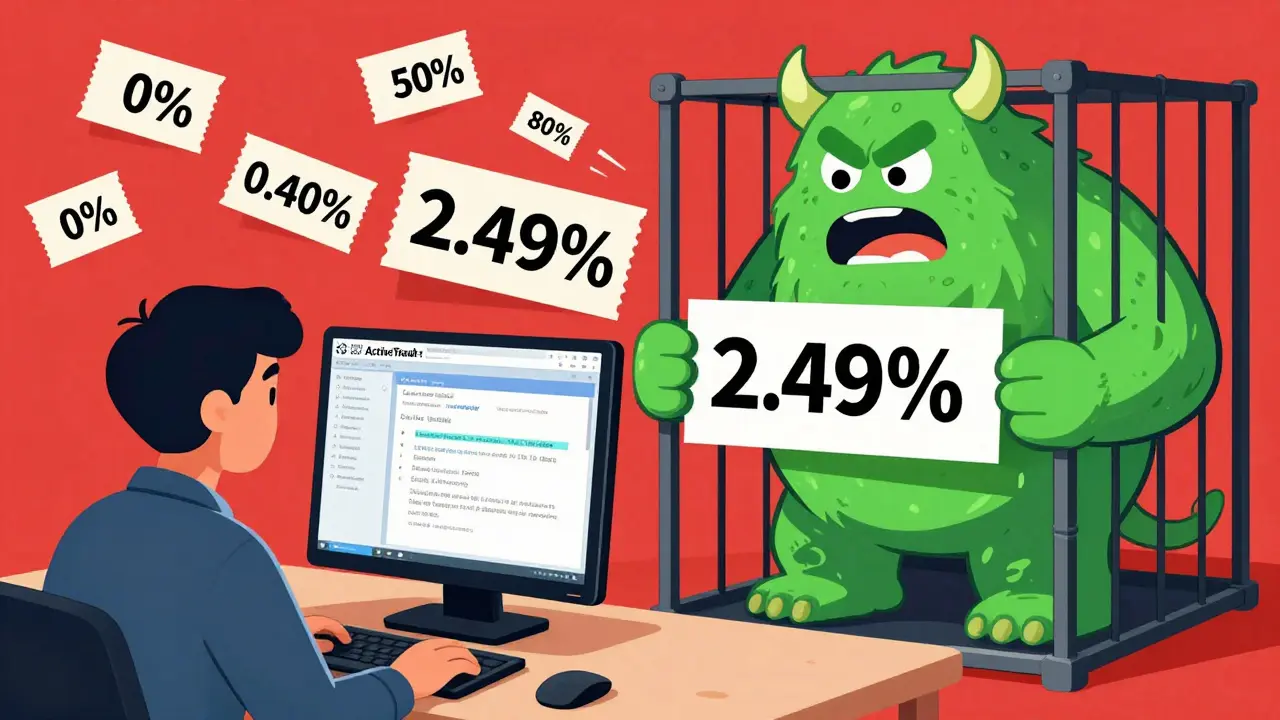
If you use the Web Trader interface and hit "Buy Now," you’re looking at a 2.49% fee. That’s not a flat fee. It’s a spread built into the price, plus a small service charge. So if you buy $100 of Bitcoin, you might actually get $97.50 worth. It’s convenient, yes - one click, done. But it’s expensive.
That’s why most serious traders skip the "Buy Now" button entirely. Instead, they use ActiveTrader. Here, fees drop to between 0% and 0.40%, depending on your trading volume. Maker orders (limit orders that add liquidity) are often free. Taker orders (market orders that remove liquidity) cost a bit more. If you’re trading more than $1,000 a month, you’ll notice the difference immediately.
Minimum trade amounts? As low as 0.00001 BTC. That’s about $4 at current prices. So even if you’re starting small, you can get in.
Security: Built Like a Bank
Gemini’s security isn’t just marketing. It’s infrastructure.
- Over 90% of customer funds are stored offline in cold storage.
- Two-factor authentication (2FA) is required for every login and withdrawal.
- You can whitelist withdrawal addresses - once set, funds can’t be sent anywhere else.
- US users get FDIC insurance on USD deposits up to $250,000.
In 2022, when FTX collapsed and users lost millions, Gemini paused its Gemini Earn program. Many exchanges vanished. Gemini didn’t. It took over a year, but by June 2024, every dollar owed to users was returned. That’s not luck. That’s responsibility.
Regional Restrictions - A Big Caveat
If you live outside the United States, this matters: Gemini has pulled back hard.
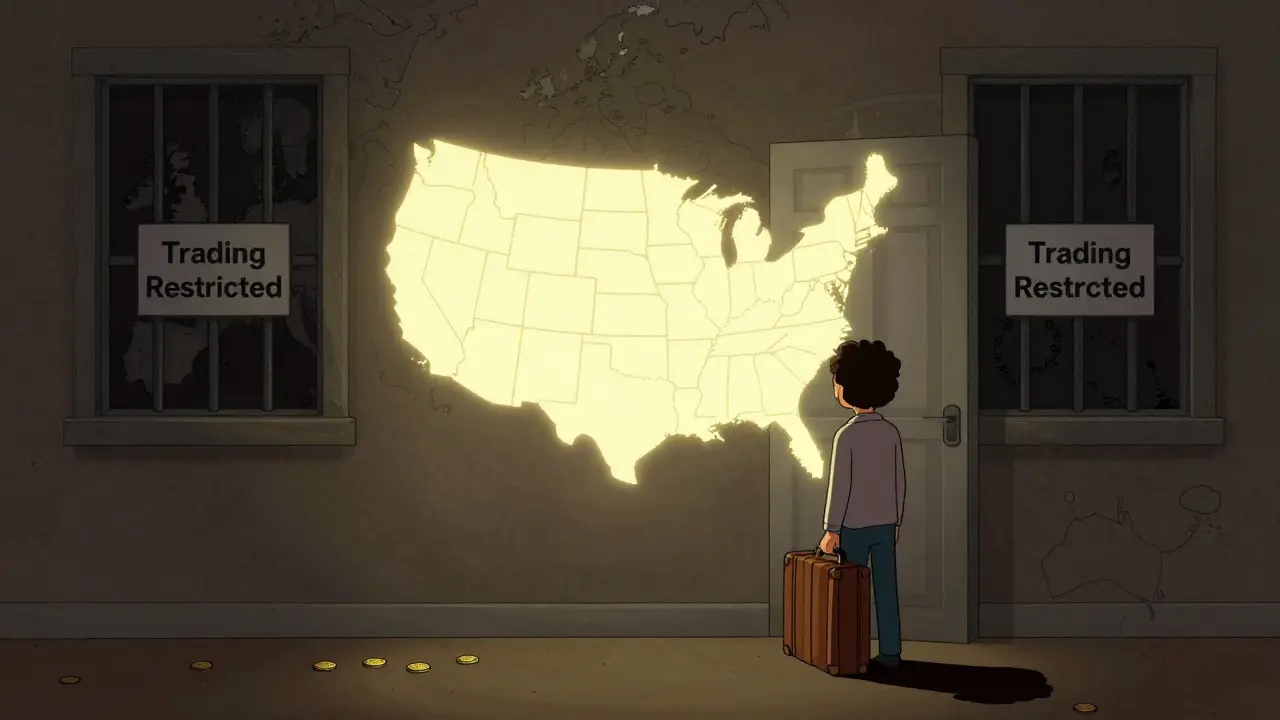
As of March 2026, users in the United Kingdom, the European Economic Area, and Australia can no longer deposit or trade. They can only withdraw funds they already have. That’s not a glitch. It’s policy. Gemini has chosen to focus on the US market, where regulations are clearer - and more profitable.
If you’re in one of those restricted regions, Gemini isn’t an option anymore. You’ll need to look elsewhere. This isn’t just a minor inconvenience - it’s a dealbreaker for international users.
Extra Features: Card, Staking, NFTs
Gemini isn’t just a trading platform. It’s a crypto ecosystem.
- Gemini Dollar (GUSD): A regulated stablecoin pegged 1:1 to the US dollar. It’s backed by cash reserves and audited monthly.
- Gemini Credit Card: Earn up to 4% back in Bitcoin or Ethereum on purchases. No annual fee. Rewards are automatic and paid weekly.
- Staking: Earn up to 6% APY on Ethereum and Solana. Your coins stay in your wallet - Gemini doesn’t take custody.
- NFT Marketplace: Buy, sell, and list non-fungible tokens. It’s not as big as OpenSea, but it’s clean, simple, and integrated with your Gemini account.
These aren’t gimmicks. They’re tools designed for people who already use crypto in daily life - not just as speculation.
Customer Support and Mobile App
Gemini’s support isn’t great. It’s not terrible - it’s just slow.
You get email and live chat. No phone number. Trustpilot reviews are mixed, with common complaints about delays in verification, frozen accounts during withdrawals, and unresponsive help for credit card issues. The mobile app scores 3 out of 5. It does the basics: biometric login, price alerts, recurring buys, and portfolio tracking. But it’s clunky. No advanced charting. No order types beyond market and limit.
If you’re a beginner, the app works fine. If you’re trading daily, you’ll probably switch to the desktop ActiveTrader interface.
How Gemini Compares
Here’s how Gemini stacks up against the competition in early 2026:
| Feature | Gemini | Binance | Coinbase |
|---|---|---|---|
| Regulation | NYDFS Trust Company, SOC 2 certified | Offshore, minimal oversight | US-regulated, but less strict than Gemini |
| Coins Available | 70-80 | 500+ | 150 |
| Instant Buy Fee | 2.49% | 1.5-2% | 1.49% |
| ActiveTrader Fees | 0%-0.40% | 0.02%-0.10% | 0.50%-0.60% |
| US Only? | Yes (rest restricted) | No (global) | Yes (mostly) |
| Staking APY | Up to 6% | Up to 8% | Up to 5% |
| Customer Support | Email/chat only, slow | 24/7 chat, fast | Email/chat, moderate |
Gemini wins on security and compliance. It loses on cost, speed, and global access. If you’re in the US and want peace of mind, it’s hard to beat. If you’re anywhere else - or if you want to trade 100 altcoins a day - look elsewhere.
Final Verdict: Who Should Use Gemini?
Gemini is ideal for:
- US residents who want a bank-like crypto experience
- Long-term holders who care about regulatory safety
- Traders who use ActiveTrader to avoid high fees
- People who want to earn crypto rewards with a credit card
Gemini is NOT ideal for:
- Users outside the US (can’t deposit or trade)
- Altcoin hunters looking for obscure tokens
- People who want the absolute cheapest instant buys
- Those who need fast, 24/7 customer support
As of March 2026, Gemini remains one of the most trustworthy exchanges in the world. It’s not flashy. It’s not the cheapest. But if you want to know your crypto is safe - even if the whole market crashes - it’s one of the few platforms that can genuinely say that.
Is Gemini safe to use in 2026?
Yes, Gemini is one of the safest crypto exchanges in 2026. It’s regulated by the NYDFS as a trust company, holds over 90% of assets in cold storage, and is SOC 2 Type 2 certified - the same standard as major banks. US users also get FDIC insurance on USD deposits up to $250,000. Its track record during the FTX collapse, where it returned 100% of customer funds, proves its commitment to security.
Can I trade on Gemini if I live outside the US?
As of March 2026, Gemini has restricted trading and deposits for users in the UK, European Economic Area, and Australia. You can still withdraw funds you already own, but you can’t buy, sell, or deposit new crypto. If you’re outside the US, Gemini is not a viable option for active trading.
Why are Gemini’s fees so high for instant buys?
The 2.49% fee for instant buys includes a spread - meaning the price you see already includes a markup. It’s not a flat fee; it’s built into the exchange rate. This makes it convenient but expensive. For lower fees, use ActiveTrader and place limit orders on the order book instead. There, fees drop to as low as 0%.
Does Gemini offer staking?
Yes. Gemini offers staking for Ethereum and Solana with yields up to 6% APY. Your coins stay in your Gemini wallet - they’re not sent to third parties. Rewards are paid weekly. This is one of the most secure staking options available, since it’s backed by the same compliance and security infrastructure as the rest of the platform.
What’s the difference between Gemini and Coinbase?
Both are US-regulated, but Gemini is stricter. It has fewer coins, lower trading fees on ActiveTrader, and stronger security certifications. Coinbase has more user-friendly support and a wider global presence. Gemini’s interface is more professional, while Coinbase feels more consumer-focused. If security is your top priority, Gemini edges out Coinbase. If you want easier support and more coins, Coinbase wins.

24 Comments
Also, the Gemini dollar staking at 6%? That's better than my savings account. And no, I'm not sponsored. I just hate losing money to sketchy platforms.
Yeah, fees are high on instant buy - but if you're using ActiveTrader, it's practically free. Stop complaining about 2.49% and learn how to use limit orders. It's not that hard.
They didn't return FTX funds because they're ethical. They did it because they were forced to. Trust is a myth. Your Bitcoin is never really yours unless you hold the keys. And if you're on Gemini... you don't.
Gemini was the only one that felt human. It's sad they left international users behind. But I get it - they’re a US-first company. Still, a little global love wouldn’t hurt.
The credit card rewards? 4% in BTC? That’s free money. I bought groceries last week and got $1.20 in Bitcoin. That’s like finding cash in your jeans.
And yes, the app is clunky. But the desktop ActiveTrader? Smooth as butter. Use that.
And don’t even get me started on the ‘2.49% fee’ crowd. That’s not a fee. That’s a tax on ignorance. If you can’t set a limit order, maybe crypto isn’t for you.
Also, the NFT marketplace? Clean. No rug pulls. Just art. 🤓
They are a trust company - meaning they can freeze accounts, report to FinCEN, and comply with OFAC sanctions. This is not freedom. This is surveillance with a blockchain veneer.
And yes, they returned FTX funds. But only after being sued. Not because they’re good. Because they’re scared.
People think more coins = more opportunity. No. More coins = more scams.
And the fact that they pulled out of the UK and EU? Good. They’re not here to be a global casino. They’re here to build a regulated financial institution. Which means they have to pick their battles.
Stop whining about ‘missing out’ on Shiba Inu. You’re not an investor. You’re a gambler.
The fact that they paused Gemini Earn during the FTX collapse? That’s leadership. Most platforms kept paying out until the system collapsed.
And yes, support is slow. But I’ve never had my account frozen. Never. That’s worth more than 24/7 chat.
Used the card. Staked ETH. Bought BTC monthly. Didn’t chase coins. Didn’t panic sell.
It’s not about the platform being flashy. It’s about being reliable.
And if you’re outside the US? Yeah, sucks. But that’s the price of playing in the regulated zone.
Stay safe. Stay simple. 🚀
The fact that they only serve the US? That’s not ‘trustworthy’ - that’s ‘profit-driven.’ They didn’t build this for safety. They built it because the US government gave them a license to print money - with oversight.
True decentralization? You won’t find it here. But if you want a bank that accepts Bitcoin? You’re welcome.
Simple. Safe. No surprises.
But... I still use it. Because I don’t want my Bitcoin to vanish overnight. And that’s worth a few inconveniences.
They are not perfect. But they are the most transparent exchange in terms of operational security. Most others don't even publish audit summaries.
And now I’m stuck with Binance, which has a 10% withdrawal fee on weekends.
They call themselves ‘trustworthy’? They’re just corporate cowards. Too scared to deal with EU regulations. Pathetic.
And then I found out they’re sharing data with the IRS.
So yeah, ‘safe’? Maybe. But not for privacy. Not for freedom.
They’re a surveillance tool with a crypto interface. 🤷♀️
Regulation means control. Control means power. Power means the state can take your assets.
They didn’t return FTX funds because they’re noble. They did it because they had the liquidity. And the legal obligation.
True security isn’t in a trust company. It’s in your own hands.
And if you’re not holding your own keys... you’re not owning anything.
Here’s the truth: if you’re using Gemini because you’re scared of losing money, you’re not ready for crypto.
Real crypto is permissionless. Unregulated. Wild.
Gemini is crypto for people who want to keep their money in a bank, but call it Bitcoin.
It’s not bad. It’s just not crypto. It’s fintech with a blockchain sticker.
I had $18k in staking. One day, it just disappeared. No notification. No email. Just ‘account under review.’
It took 6 weeks to get it back. They said it was ‘fraud prevention.’
But I never moved a coin. Never used a VPN. Never did anything wrong.
Now I know: safety means control. And control means they own you.
Don’t get me wrong - I appreciate the stability. But if you’re looking for innovation, you won’t find it here.
Where’s the DAO? Where’s the on-chain governance? Where’s the real decentralization?
Gemini is the Apple Store of crypto. Clean. Controlled. Expensive. And you can’t install anything you want.
I’m not saying it’s bad. I’m saying it’s not crypto. It’s crypto-flavored finance. And I’m over it.
And here’s what I know: they don’t care about you. They care about their license.
They didn’t return FTX funds because they’re ethical. They did it because they had the money - and the PR team told them to.
They’re not heroes. They’re executives with a compliance department.
And if you think otherwise... you’re being manipulated.
But I still respect them for it. They didn’t pretend to be global. They didn’t overpromise. They said: ‘We’re here for the US.’
That’s honesty. Most exchanges say ‘we’re global’ while quietly ignoring regulations.
Gemini? They just walked away. And that’s actually brave.
And the staking? I earn $150/month in ETH rewards. That’s passive income I didn’t have to chase.
Yes, the app is clunky. But I use the desktop version. Problem solved.
Gemini isn’t perfect. But it’s the only one I trust with my long-term holdings.
My mom asked if it was safe. I said yes. She didn’t ask why. She just nodded.
That’s all I need. Simple. Clear. Secure.