- 13 Feb 2026
- Elara Crowthorne
- 0
When you hear about Bitcoin, you might think of price charts, mining rigs, or online wallets. But behind every transaction is something just as important: law. In 2026, Bitcoin isn’t just a digital currency - it’s a legal puzzle that varies from one country to the next. Some places treat it like cash. Others ban it outright. And a growing number are building entire systems around it. So where does Bitcoin stand right now? And what does that mean if you’re holding, trading, or using it?
Bitcoin Is Legal in Most Countries - But That’s Not the Whole Story
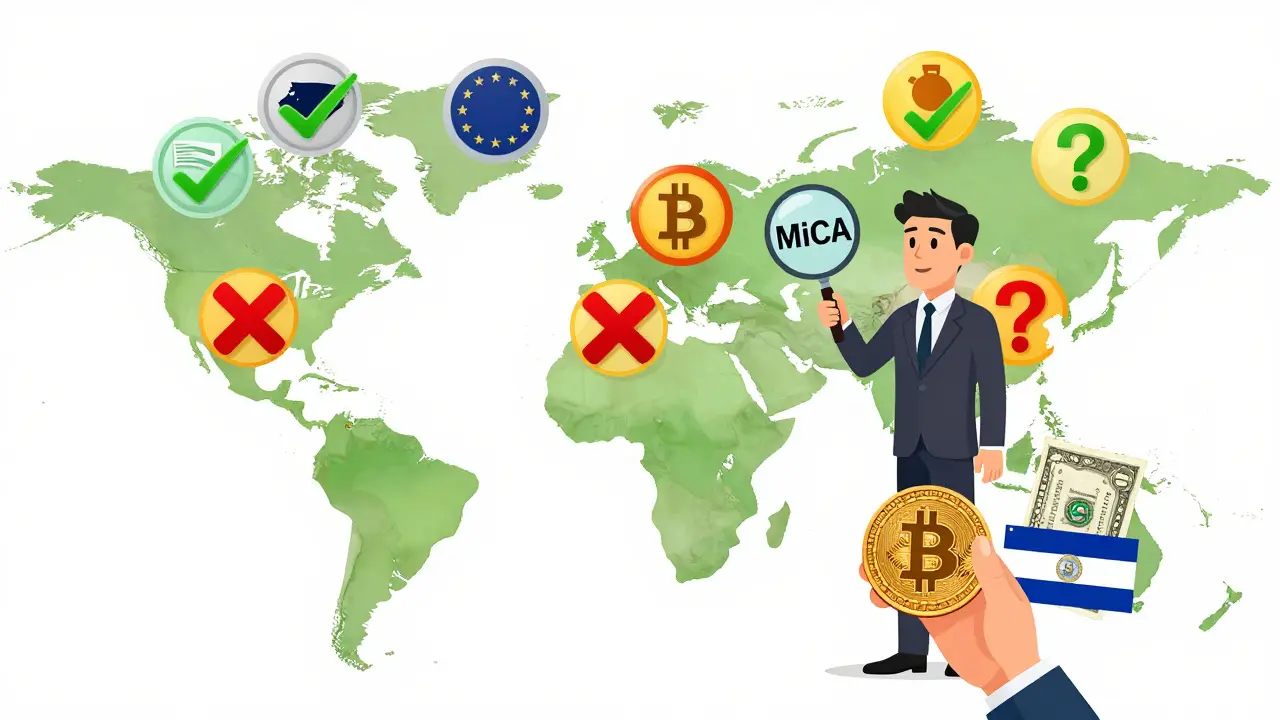
The simple answer is yes: Bitcoin is legal in the vast majority of countries. That doesn’t mean it’s always welcome. In places like Nigeria, Canada, Germany, and Brazil, you can buy, sell, and hold Bitcoin without breaking the law. But legality doesn’t equal legitimacy. Many governments don’t recognize Bitcoin as official money. Instead, they treat it as property, an asset, or even a commodity - which changes how you’re taxed, how businesses can accept it, and whether banks will touch it. For example, in Australia, Bitcoin is legal and regulated under anti-money laundering rules. Exchanges must register with AUSTRAC and follow strict customer checks. But the Reserve Bank of Australia has never said Bitcoin is money. It’s just something people can trade. Same in South Africa: the tax office classifies it as an intangible asset. That means every time you sell Bitcoin for rand, you owe capital gains tax. No one’s stopping you from using it - but the system isn’t built for it.The European Union: First in the World to Standardize Crypto Rules
The EU didn’t just react to Bitcoin - it built a whole new rulebook for it. In 2023, the Markets in Crypto-Assets (MiCA) is a comprehensive regulatory framework for digital assets in the European Union, adopted in 2023 and fully enforceable since mid-2024. MiCA doesn’t just cover Bitcoin. It applies to every token, stablecoin, and exchange operating in the EU. But Bitcoin’s role under MiCA is clear: it’s treated as a crypto-asset, not money. That means no VAT on Bitcoin-to-euro trades (a rule set by the European Court of Justice back in 2015), but all exchanges and wallet providers must be licensed. The big shift? Transparency. Under MiCA, any company offering Bitcoin services must disclose their reserves, security practices, and team members. They’re also subject to ongoing audits. This isn’t about banning Bitcoin - it’s about bringing it into the same room as banks. If you’re running a Bitcoin exchange in France or Finland, you now need a license. No more fly-by-night platforms.The United States: A New Federal Framework Emerges
For years, the U.S. crypto scene was a mess. The SEC said Bitcoin was a security. The CFTC said it was a commodity. State regulators added their own rules. Then came the GENIUS Act of July 2025. While this law focuses on stablecoins, it changed the entire landscape. By defining stablecoins as neither securities nor commodities, the U.S. government created a clear path for digital assets to be regulated like payment systems - not Wall Street products. That shift didn’t just help stablecoins. It forced regulators to rethink Bitcoin. In early 2026, the Office of the Comptroller of the Currency (OCC) and the Federal Reserve began working on a unified digital asset taxonomy. The goal? To finally answer: Is Bitcoin money? Is it property? Is it something else? For now, Bitcoin remains legal everywhere in the U.S., but tax rules vary by state. The IRS still treats it as property, so every trade triggers a taxable event. But with federal clarity coming, that’s likely to change.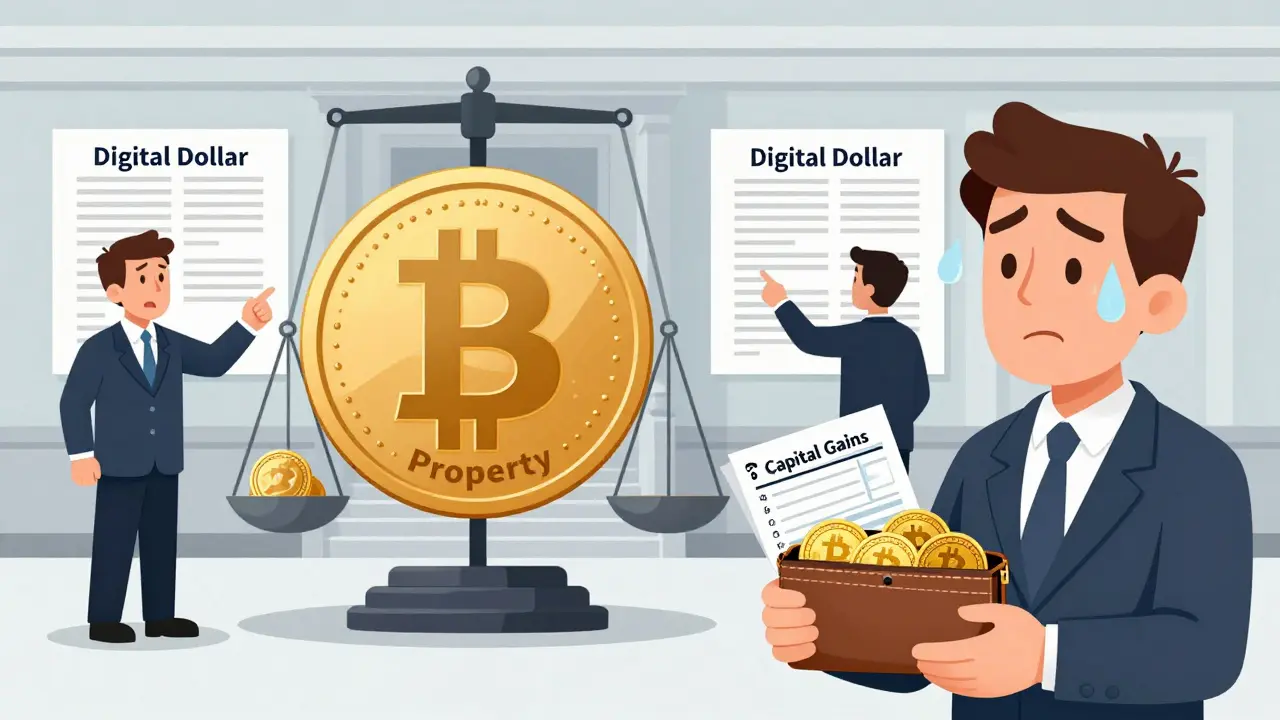
Asia: From Strict Bans to Strategic Adoption
Asia’s story is split in two. On one side, China doubled down on its 2021 ban. On February 6, 2026, Chinese authorities declared that all virtual currency activities - mining, trading, even holding - are illegal financial activities. Any platform or wallet operating in China now risks shutdown. Bitcoin is effectively dead in the country. But elsewhere in Asia, Bitcoin is finding new life. Japan was one of the first to regulate it, back in 2017. Today, Bitcoin exchanges must be licensed by the Financial Services Agency. And in 2023, Japan updated its Payment Services Act to include digital money-type stablecoins - making it a global leader in payment-focused crypto regulation. Singapore and Hong Kong took similar steps. Both now have clear licensing systems for crypto firms. The UAE and Saudi Arabia have also opened their markets, with Dubai’s Virtual Assets Regulatory Authority (VARA) now overseeing over 200 crypto firms. In India, Bitcoin remains legal, though the government has pushed for heavy taxation - up to 30% on gains. Still, millions of Indians trade Bitcoin daily.Latin America and Africa: Bitcoin as a Financial Workaround
In countries where banks are unreliable or inflation is out of control, Bitcoin isn’t a luxury - it’s a lifeline. El Salvador made history in 2021 by making Bitcoin legal tender. But by 2026, its adoption remains low. Most people still use the U.S. dollar. The government’s Chivo wallet has struggled with security and usability. Other nations took notice. The Central African Republic briefly made Bitcoin legal tender in 2022 - then reversed course in 2023. Still, countries like Nigeria, Kenya, and Ghana see Bitcoin as a way to bypass slow or corrupt banking systems. In Nigeria, peer-to-peer Bitcoin trading hit $14 billion in volume in 2025, according to Chainalysis. The government hasn’t banned it - but it hasn’t embraced it either. In Angola, Bitcoin is unregulated but legal. In Tanzania, the central bank warns against its use, but doesn’t prohibit it. In South Africa, Bitcoin is taxed as property, but used widely for cross-border trade. For many in these regions, Bitcoin isn’t about speculation - it’s about survival.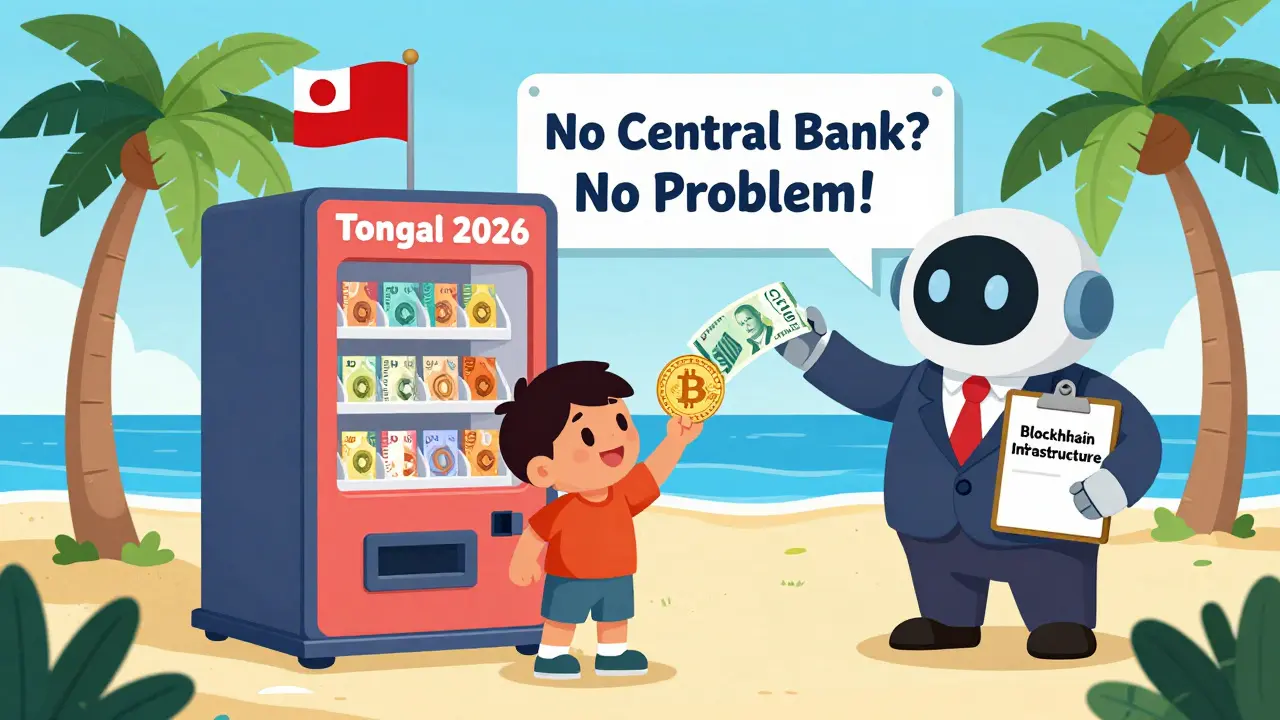
The Pacific Islands: A New Frontier for Digital Money
You might not hear much about Bitcoin in Fiji or Vanuatu - but they’re quietly leading the charge. Vanuatu legalized cryptocurrency in 2021. Fiji’s Prime Minister publicly backed Bitcoin in 2023, aiming to make it legal tender. Samoa and Tonga have also signaled openness, with Tonga planning to adopt Bitcoin by late 2023 - a plan still active in 2026. Tuvalu, a tiny island nation with no central bank, is using blockchain to digitize its currency. It’s not Bitcoin itself - but the infrastructure is the same. These nations aren’t trying to compete with the U.S. dollar or euro. They’re building their own financial systems from scratch. And Bitcoin is the tool they’re using.What About Stablecoins? They’re the Real Game-Changer
Here’s the twist: Bitcoin isn’t the main focus of regulators anymore. It’s stablecoins. In 2026, seven major economies - the U.S., EU, UK, Singapore, Hong Kong, UAE, and Japan - all have clear rules for stablecoins. They must be fully backed by reserves. Issuers need licenses. Redemption rights are guaranteed. No more algorithmic coins that vanish overnight. The EU’s MiCA, the U.S. GENIUS Act, and Singapore’s MAS framework all treat stablecoins like digital banknotes. That’s huge. It means businesses can now use them to pay suppliers, employees, or customers without fear of collapse. And because stablecoins are tied to real money (like the dollar or euro), they’re easier to regulate than Bitcoin. Bitcoin’s future? It’s now tied to how stablecoins evolve. As more banks and payment systems integrate stablecoins, Bitcoin becomes more of a store of value - like digital gold - than a day-to-day currency. That’s not a failure. It’s a maturation.What Should You Do If You Use Bitcoin?
If you’re holding Bitcoin in 2026, here’s what matters:- Know your country’s rules. Is it legal? Taxed? Regulated? Don’t assume what’s true in the U.S. applies in Brazil or Thailand.
- Use licensed exchanges. If your country requires registration (like Australia or the EU), only use platforms that comply. Unlicensed exchanges are risky - and may be shut down.
- Track your taxes. Most countries treat Bitcoin trades as taxable events. Keep records of every buy, sell, and swap.
- Don’t rely on Bitcoin as cash. Very few merchants accept it. Even in places where it’s legal tender, adoption is low. Use it as a long-term asset, not a payment tool.
The bottom line? Bitcoin is legal almost everywhere - but it’s not free from rules. The age of wild west crypto is over. The new era is about compliance, transparency, and integration. Whether you’re a user, investor, or business, understanding your local laws isn’t optional anymore. It’s essential.
Is Bitcoin legal in the United States?
Yes, Bitcoin is legal in the United States. You can buy, sell, and hold it without breaking any federal law. However, it’s not considered legal tender - meaning businesses don’t have to accept it as payment. The IRS treats Bitcoin as property, so every trade or sale may trigger capital gains tax. In 2025, the GENIUS Act began reshaping crypto regulation by creating a federal framework for stablecoins, which has indirectly clarified Bitcoin’s status as a digital asset under federal oversight.
Can I use Bitcoin to pay for goods in the EU?
Yes, you can use Bitcoin to pay for goods in the EU, but it’s not required. Merchants can choose to accept it, and many do - especially online. Under MiCA, Bitcoin transactions are exempt from VAT when exchanged for euros, but VAT still applies when Bitcoin is used to buy products or services. Businesses accepting Bitcoin must comply with anti-money laundering rules and report large transactions. Most EU countries treat Bitcoin as an asset, not money.
Is Bitcoin banned in China?
Yes, as of February 6, 2026, China declared all activities related to virtual currencies - including Bitcoin - as illegal financial activities. This includes mining, trading, exchanging, and even holding Bitcoin through unlicensed platforms. Chinese banks and payment processors are prohibited from handling crypto transactions. While individuals still hold Bitcoin privately, they can’t legally use it for payments or convert it to yuan through official channels.
Which countries have made Bitcoin legal tender?
As of 2026, only El Salvador has fully implemented Bitcoin as legal tender nationwide. The Central African Republic briefly adopted it in 2022 but repealed the law in 2023. Other countries like Tonga and Fiji have expressed intentions to adopt Bitcoin as legal tender, but no formal legislation has passed yet. Most nations treat Bitcoin as a digital asset or commodity - not as official currency.
How is Bitcoin taxed in Australia?
In Australia, Bitcoin is classified as property by the Australian Taxation Office (ATO). This means capital gains tax applies when you sell, trade, or use Bitcoin to buy goods or services. You must keep records of every transaction, including dates, values in AUD, and purpose. Exchanges must register with AUSTRAC and follow strict KYC rules. Mining Bitcoin is also taxable - income from mining is treated as ordinary income.
Are there any countries where Bitcoin is completely illegal?
Yes. As of 2026, China is the only major economy with a full ban on all Bitcoin-related activities. Other countries like Egypt, Iraq, and Qatar have restrictions that effectively block Bitcoin use - such as banning banks from processing crypto transactions or outlawing trading platforms. But even in these places, individuals may still hold Bitcoin privately. Enforcement varies widely.
Why are stablecoins getting more attention than Bitcoin?
Stablecoins are easier to regulate because they’re tied to real-world assets like the U.S. dollar or euro. Unlike Bitcoin, which is volatile, stablecoins act like digital cash. That makes them useful for payments, remittances, and everyday transactions. In 2026, major economies like the U.S., EU, UK, and Singapore have created clear rules for stablecoins - requiring full reserves, licensed issuers, and guaranteed redemption. Bitcoin, while still important, is now seen more as a store of value, not a payment tool.
Can I mine Bitcoin legally in Turkmenistan?
Yes. Turkmenistan passed a law on January 1, 2026, legalizing cryptocurrency mining and digital asset exchanges. The country’s central bank now issues licenses to mining companies and regulates digital-asset operations. This makes Turkmenistan one of the few nations actively encouraging Bitcoin mining - offering low electricity costs and legal protection for operators. However, mining must be done through licensed entities; private mining without a license is still prohibited.