
- 26 Sep 2026
- Elara Crowthorne
- 0
You’re staring at your screen, trying to figure out where to buy your first Bitcoin without getting eaten alive by hidden fees or overwhelmed by a dashboard that looks like the cockpit of a spaceship. You’ve heard about Nexus Trade, a newer cryptocurrency exchange launched in 2024 that promises simple spot trading with low flat fees and no complex tiered systems. It sounds appealing, right? But is it actually safe, reliable, and worth your time, or is it just another shiny new platform that will disappear when the market gets tough?
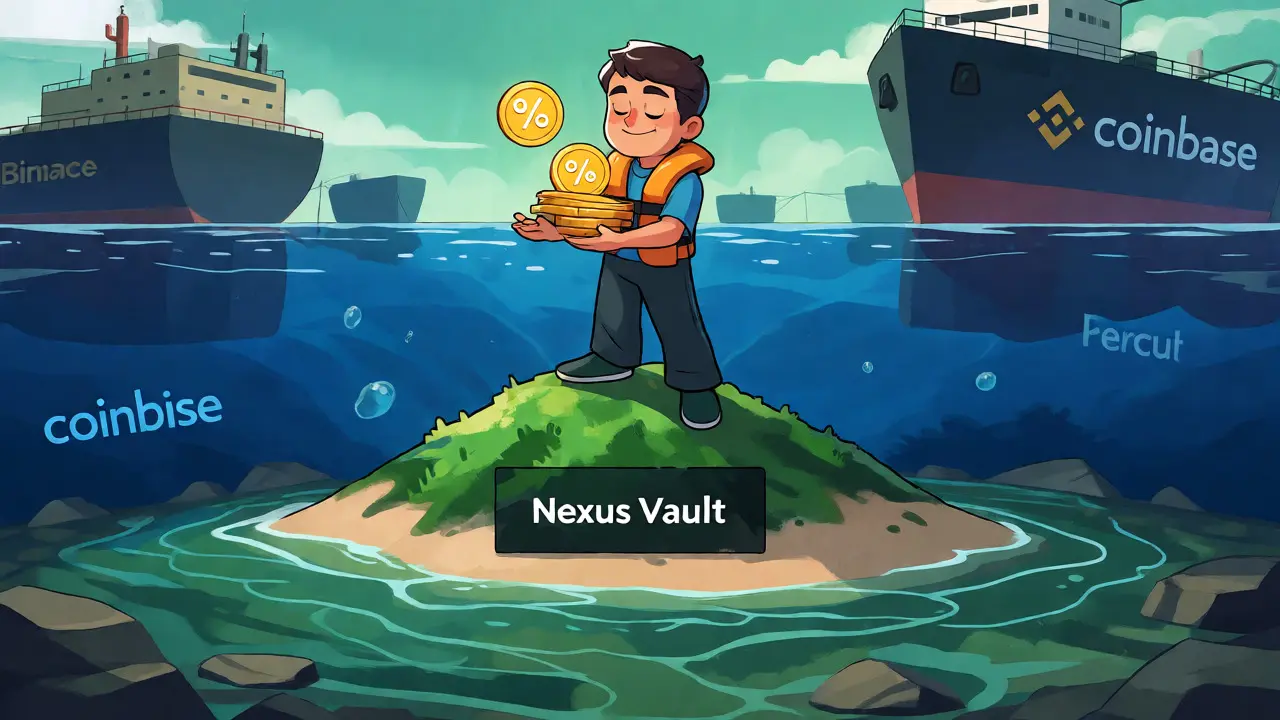
Here’s the reality check: Nexus Trade isn’t trying to beat Binance or Coinbase at their own game. It’s carving out a tiny niche for people who want simplicity over sophistication. If you’re an active trader needing leverage, stop-loss orders, or mobile apps, this might not be your home. But if you’re a beginner who hates math and just wants to swap dollars for crypto with minimal fuss, there are some genuine perks here. Let’s break down exactly what works, what doesn’t, and whether this platform deserves a spot in your portfolio.
The Core Proposition: Simplicity Over Features
Nexus Trade operates as a proprietary web-based platform. That means there’s no mobile app. None. Zip. If you plan on checking prices while waiting for your coffee or making trades during your commute, you’re already disqualified. The entire experience happens in a browser window, which limits flexibility but keeps the interface clean. The founders remain anonymous, a common trait among newer exchanges, but one that raises eyebrows regarding accountability compared to regulated giants like Kraken or Coinbase.
The main draw is the fee structure. While most major exchanges use complex volume-based tiers (where you need to trade millions to get good rates), Nexus Trade charges a flat 0.22% commission for both maker and taker orders. For small traders, this is transparent and predictable. You know exactly what you’ll pay before you click "Buy." There’s no guessing if you’ll hit a higher tier next month. However, don’t mistake low fees for high value. A 0.22% fee is decent, but it’s still higher than Binance’s base rate of 0.1%, and significantly lower than Coinbase’s steep 0.6% standard fee. It’s a middle-ground approach designed for those who prioritize clarity over absolute lowest cost.
Trading Capabilities and Limitations
If you’re looking for advanced tools, keep walking. Nexus Trade supports spot trading only. There is zero leverage available-you cannot borrow funds to amplify your position. You also won’t find stop-loss or take-profit orders. This means if the market crashes while you’re asleep, you can’t automatically sell to limit losses. You have to be awake and ready to act manually. For long-term holders who buy and hold, this might not matter. For anyone trying to day-trade or swing-trade, it’s a dealbreaker.
The asset selection is limited. As of early 2025, the platform offered around 63 trading pairs. Compare that to Binance’s 1,000+ pairs, and you see the gap. You can trade major coins like Bitcoin (BTC) and Ethereum (ETH), plus some altcoins and fiat-crypto pairs. But if you’re hunting for obscure memecoins or newly listed tokens, they likely aren’t here yet. The order book depth is also shallow. Reports indicate depth often falls below $50,000 per pair. In plain English? If you try to buy $5,000 worth of a less popular coin, you might suffer significant slippage-meaning you pay more than the displayed price because there aren’t enough sellers at that exact level.
Security and Trustworthiness Concerns
This is the elephant in the room. Nexus Trade lacks the transparency of industry leaders. There is no public proof-of-reserves audit showing exactly how much customer money they hold versus their own liabilities. Major exchanges like Kraken publish these regularly; Coinbase undergoes third-party audits. Nexus Trade does neither publicly. They use standard SSL encryption and two-factor authentication (2FA), which is basic hygiene, not a premium feature.
There’s no documented cold storage percentage. Cold storage means keeping private keys offline, away from hackers. Without knowing what percentage of funds are in cold storage, you’re trusting them blindly. Furthermore, there’s no bug bounty program visible, unlike Binance’s $250,000 reward system for finding security flaws. Security expert Dr. Evelyn Reed noted in April 2025 that the lack of transparent custody solutions represents a "significant risk factor." If you’re storing large amounts of capital here, treat it like a hot wallet, not a bank vault.
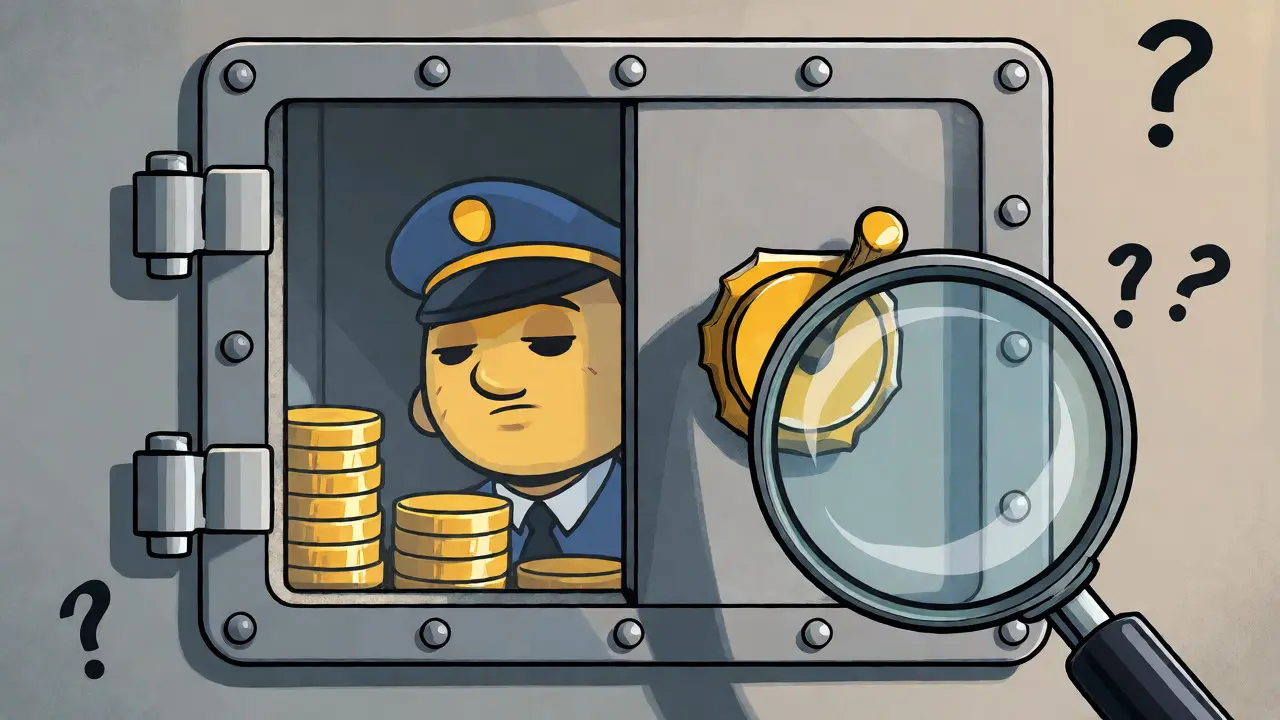
Nexus Vault: Passive Income Reality Check
To attract users who don’t trade actively, Nexus Trade offers "Nexus Vault," a passive earnings program. You deposit crypto, and they lend it out or stake it to generate yield. The advertised annual percentage yield (APY) ranges between 2.5% and 4.5%, depending on the asset. Let’s put that in perspective. It’s better than a traditional savings account, sure. But it’s far below the historical highs of platforms like Celsius (which collapsed) or current competitors like Nexo, which offer up to 12% for loyal users.
Is it safe? Unclear. Since Nexus Trade hasn’t published proof-of-reserves, you don’t know if the yields are coming from genuine lending activities or simply paying old investors with new deposits (a Ponzi-like structure). Users report modest returns, but the risk-reward ratio is questionable when safer, regulated alternatives exist. Treat any yield here as a bonus, not a primary investment strategy.
User Experience and Customer Support
Getting started is relatively easy. The minimum deposit is $20, making it accessible for beginners. KYC verification takes 24-48 hours on average, which is slower than Coinbase’s 6-12 hour turnaround but comparable to Kraken. Once verified, the interface is praised for being intuitive. New users report executing their first trade within 15-20 minutes. There are no built-in tutorials or educational blogs, so you’ll need to learn elsewhere.
Customer support is where things get rocky. There is no live chat. No phone support. Just a ticket system. User reports suggest response times range from 72 to 96 hours for non-urgent issues. Imagine submitting a withdrawal request on Monday and not hearing back until Thursday. For a platform handling real money, that’s frustrating. Reddit threads highlight complaints about delayed responses and unresolved tickets. If you run into a technical glitch, patience is your best tool.
| Feature | Nexus Trade | Binance | Coinbase | Kraken |
|---|---|---|---|---|
| Base Fee | 0.22% (Flat) | 0.1% (Tiered) | 0.6% (Standard) | 0.16%-0.26% (Tiered) |
| Mobile App | No | Yes (iOS/Android) | Yes (iOS/Android) | Yes (iOS/Android) |
| Leverage | None (Spot Only) | Up to 100x | None (US Spot) | Up to 5x (US) |
| Proof of Reserves | No Public Audit | Yes (Merkle Tree) | Yes (Third-Party) | Yes (Monthly) |
| Support Channel | Ticket Only | Live Chat/Ticket | Live Chat/Phone | Live Chat/Ticket |
| Min Deposit | $20 | $10 | No Min | $10 |
Who Should Use Nexus Trade?
Let’s cut through the noise. You should consider Nexus Trade if:
- You are a complete beginner who finds other exchanges intimidating.
- You prefer a flat fee structure and hate calculating tiered discounts.
- You trade infrequently and mostly buy-and-hold major assets like BTC or ETH.
- You primarily access markets via desktop computer.
You should avoid Nexus Trade if:
- You need mobile trading capabilities.
- You require advanced order types like stop-loss or OCO (One-Cancels-the-Other).
- You trade large volumes where liquidity depth matters.
- You demand regulatory certainty and transparent proof-of-reserves.
Final Verdict
Nexus Trade is a functional, low-friction entry point for casual crypto buyers. Its flat 0.22% fee is honest, and the interface is clean. However, its lack of mobile support, thin liquidity, and opaque security practices make it risky for serious capital. It ranks #87 globally by volume, meaning it’s a minor player in a consolidated market. If you decide to use it, stick to small amounts you can afford to lose if the platform faces operational hurdles. Don’t let the promise of "simple" blind you to the lack of "secure." For now, it’s a viable option for testing the waters, but probably not the place to park your life savings.
Does Nexus Trade have a mobile app?
No, Nexus Trade currently operates exclusively as a web-based platform. There are no iOS or Android applications available for download, meaning all trading must be conducted through a desktop or laptop browser.
What are the fees on Nexus Trade?
Nexus Trade charges a flat commission rate of 0.22% for both maker and taker orders on spot trades. Unlike many competitors, there are no volume-based tiers or discounts, making the cost predictable for all users regardless of trading size.
Is Nexus Trade regulated?
As of mid-2025, Nexus Trade does not appear to hold major licenses in jurisdictions like the US, EU, or Singapore. It operates in a regulatory gray area, lacking the explicit oversight seen with platforms like Coinbase (licensed in 48 US states) or Kraken.
Can I use leverage on Nexus Trade?
No, Nexus Trade supports spot trading only. There is no margin or futures trading available, meaning you cannot use leverage to amplify your positions. All trades are executed with funds fully held in your account.
How fast is customer support at Nexus Trade?
Customer support is generally slow, operating solely through a ticket system with no live chat or phone options. User reports indicate average response times range from 72 to 96 hours for non-urgent inquiries, which can be problematic for time-sensitive trading issues.
