
- 12 Feb 2026
- Elara Crowthorne
- 14
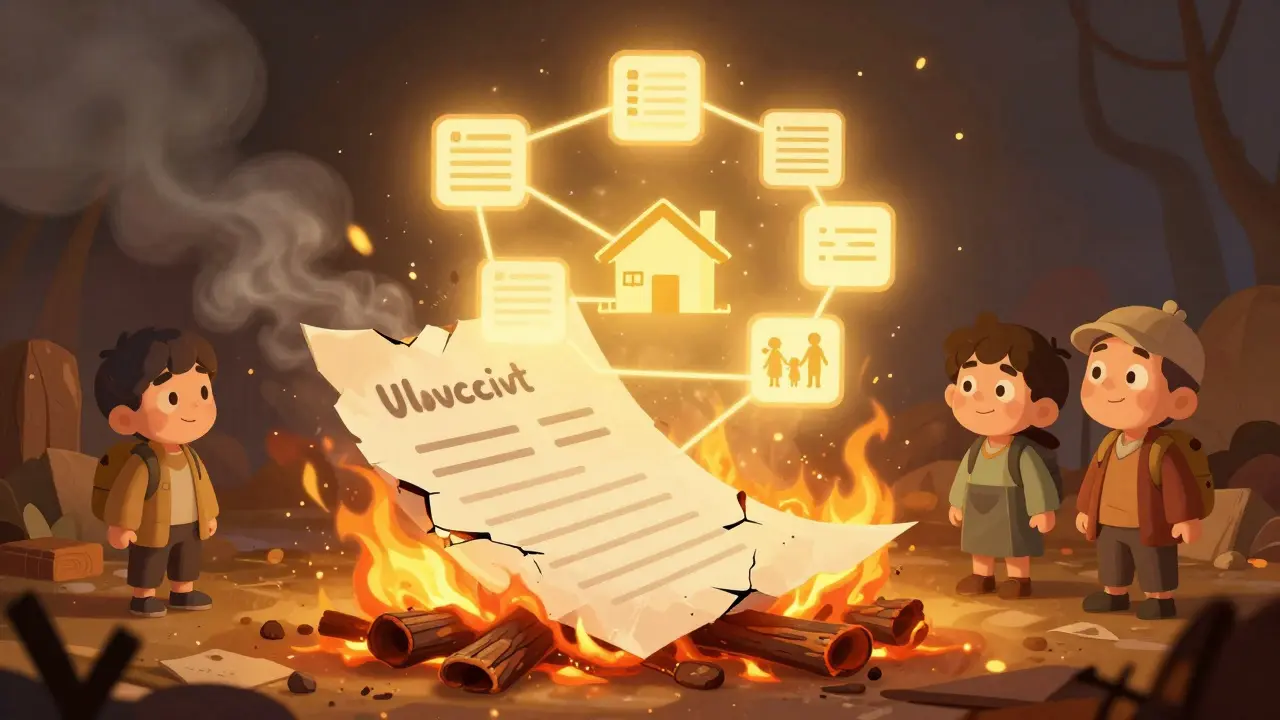
Imagine losing your home because a fire destroyed the only copy of your property deed. That’s not a scene from a movie - it happened in Haiti after the 2010 earthquake. Over a million people lost proof of ownership because their land records were stored on paper. No backups. No copies. Just ash. Today, blockchain property titles are offering a way out of this nightmare.
Blockchain isn’t just for Bitcoin. It’s becoming the new foundation for something far more personal: who owns your house, your land, your business property. Instead of filing deeds in dusty county offices, governments and startups are turning to distributed ledgers that record ownership like a tamper-proof digital ledger. This isn’t theory. It’s happening - right now.
How Blockchain Property Titles Actually Work
Traditional property titles rely on centralized systems. A government agency keeps the master record. Lawyers, notaries, and title companies act as middlemen to verify transfers. All of that takes time, money, and creates single points of failure. A server crash. A corrupt clerk. A fire. One mistake - and your ownership vanishes.
Blockchain changes that. Every property title becomes a digital asset recorded across hundreds or thousands of computers. Each time ownership changes - sale, inheritance, lien - the new transaction is added as a new “block.” That block is cryptographically linked to the one before it. Once it’s there, it can’t be erased or altered. No central server. No single authority. Just a chain of verified facts.
Smart contracts do the heavy lifting. These are self-executing programs coded into the blockchain. If you sell your house, the contract can automatically:
- Verify the buyer’s funds are in escrow
- Transfer the title to the buyer’s digital wallet
- Notify tax authorities of the change
- Update zoning records
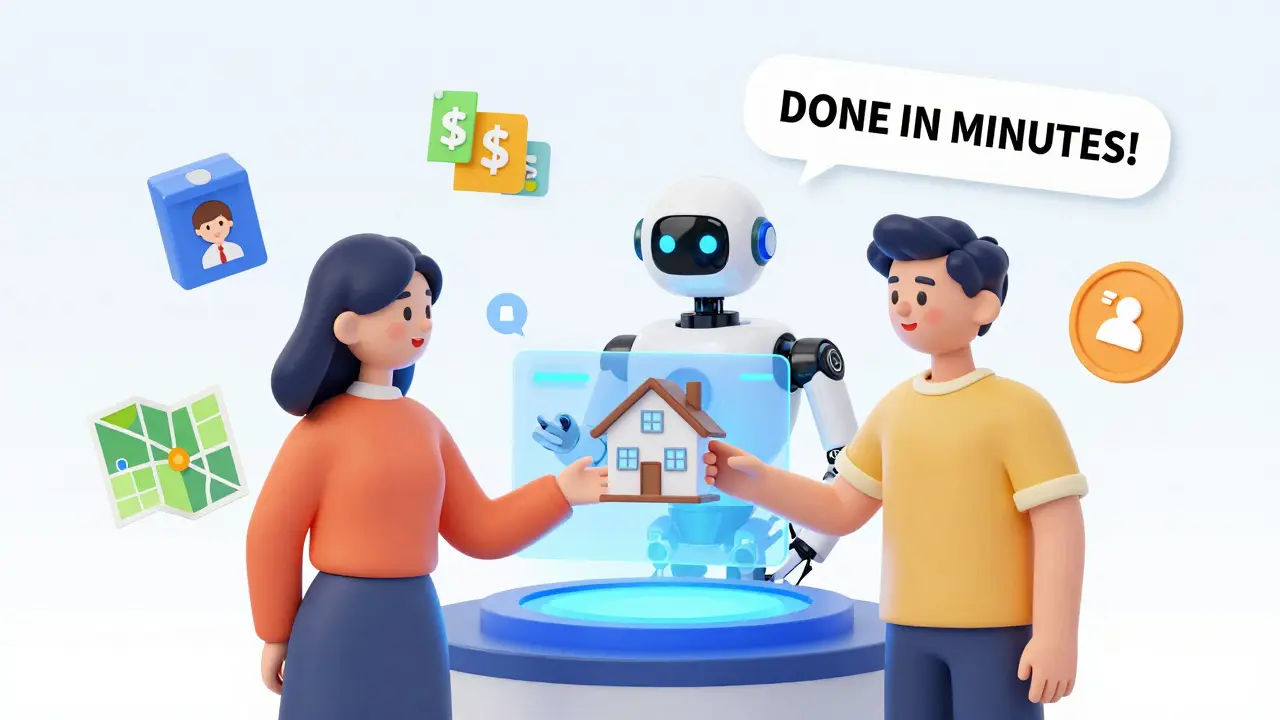
All of this happens in minutes - not weeks. No paperwork. No signatures. No delays. The system verifies itself.
Why This Is a Game-Changer
Let’s compare what happens today versus what blockchain enables.
| Feature | Traditional System | Blockchain System |
|---|---|---|
| Record Storage | Paper files or centralized digital databases | Distributed across global network nodes |
| Verification Time | Days to months | Minutes to hours |
| Security Risk | Hacking, fire, fraud, human error | Immutable, encrypted, tamper-proof |
| Intermediaries Needed | Title companies, lawyers, notaries | None - smart contracts automate execution |
| Access to History | Hard to trace full chain of ownership | Full history visible to all authorized users |
In Sweden’s pilot program, property transfers that used to take 3-4 months were cut to under two weeks. In Georgia, the national land registry reduced processing time from days to under 10 minutes. Ghana’s rural landowners, once stuck in decades-long boundary disputes, saw their claims resolved because the blockchain showed the true history - no one could fake it.
And it’s not just about speed. It’s about fairness. In places where land records are unreliable or corrupt, blockchain gives ordinary people proof they own what they’ve lived on for generations. No more bribes. No more lost documents. Just a digital key to your property.
Real-World Pilots and Where They Stand
There are no full nationwide blockchain land registries yet - but there are working pilots that prove it’s possible.
- Georgia: Launched in 2016, the government partnered with a tech firm to record property deeds on a private blockchain. Over 500,000 titles have been transferred since. No major security breaches.
- Sweden: The national land registry (Lantmäteriet) tested blockchain for residential sales. Real estate agents reported 92% satisfaction. The main complaint? Elderly users struggled with the interface.
- Ghana: A World Bank-backed project helped rural communities map land using GPS and blockchain. Boundary disputes dropped by 70% in pilot areas.
- United States: Vermont passed a law in 2016 recognizing blockchain records as legally valid. Wyoming followed in 2019. But most states still don’t accept them.
Why aren’t we all using this yet? Because legacy systems are stubborn. Lawyers, title insurers, and county clerks built their careers around paper records. They’re not going away overnight.
The Hidden Challenges
Blockchain isn’t magic. It has real limits.
Garbage in, garbage out. If the original title is wrong - say, a deed was forged in 1987 - putting it on the blockchain doesn’t fix it. The system only records what’s fed into it. That’s why every pilot starts by digitizing old records first. It’s messy, expensive, and slow.
Legal recognition is the biggest roadblock. In most places, blockchain titles aren’t legally binding. Even if the blockchain says you own the land, a court might still require a paper deed. Only 19 countries out of 195 have laws that explicitly recognize blockchain land records as valid. That’s changing - but slowly.
Access and literacy matter too. A farmer in rural Kenya or an elderly retiree in Ohio may not have a smartphone or know what a blockchain is. Systems need simple interfaces - voice options, kiosks, local agents who can help - not just apps.
Cost is another issue. Building a blockchain registry for a whole country costs tens of millions. Governments are hesitant to spend that without proof it’ll stick.
Tokenization: Owning a Piece of a House
Here’s where it gets even more interesting. Blockchain doesn’t just record full ownership. It can split it.
Tokenization turns property into digital tokens. Each token represents a fraction of ownership. You don’t need $500,000 to buy a house anymore. You can buy one token worth $5,000. That token gives you a proportional share of rental income, appreciation, and voting rights on property decisions.
J.P. Morgan says this could open real estate to millions of small investors who were locked out before. Imagine investing in a commercial building in Chicago or a vacation rental in Costa Rica with $1,000 instead of $100,000. It’s not sci-fi - platforms like Haus and RWA.io are already building this.
But it’s risky. Who regulates fractional ownership? What happens if one token holder wants to sell and another doesn’t? Legal frameworks haven’t caught up. Still, the potential is huge.
What’s Next? The Road Ahead
By 2030, experts predict blockchain will handle 35% of commercial property transactions and 22% of residential ones. But full replacement? That’s decades away.
The next big step is standardization. In October 2025, the International Organization for Standardization (ISO) launched the first global protocol for blockchain property titles. This means systems in Sweden, Ghana, and Texas can talk to each other. No more silos.
Future upgrades will include:
- IoT sensors on property boundaries to auto-update records
- AI that flags suspicious title transfers (e.g., someone trying to fraudulently claim a house)
- Integration with national ID systems so only verified owners can make changes
The goal isn’t to replace governments. It’s to make them better. To give people certainty. To end the chaos of lost deeds and forged papers. To let anyone, anywhere, prove they own what’s theirs.
Final Thoughts
Blockchain property titles aren’t about replacing lawyers or banks. They’re about removing the middlemen who profit from confusion. They’re about giving people back control over their most valuable asset - their home.
It’s still early. There are hurdles. Legal, technical, social. But the trend is clear: the old system is broken. The new one works. And it’s already saving people their homes - one immutable record at a time.

14 Comments