- 1 Feb 2026
- Elara Crowthorne
- 22
Memecoins used to be jokes with no substance-dog pictures, cat memes, and wild promises on Twitter. But in 2025, that’s not the whole story anymore. Some memecoins have grown into real blockchain ecosystems with actual users, functional tools, and economic models that don’t collapse the moment the hype dies. This isn’t about flipping a token overnight. It’s about projects that built something lasting.
What Makes a Memecoin Successful Now?
Back in 2021, a memecoin could spike because a celebrity tweeted a dog picture. Today, that’s not enough. The ones surviving-and thriving-are the ones that added real value. They didn’t just copy-paste a meme and launch. They built platforms, integrated with NFTs, created staking rewards that actually work, and gave holders a reason to stick around beyond hoping for a price pump.
Look at the winners: they all share three things. First, they’re built on strong blockchains like Solana or Ethereum-not random chains with high fees and slow transactions. Second, they have tokenomics that control supply, not just print more coins endlessly. And third, they give users something to do with the token besides trade it.
Bonk (BONK): The Solana Powerhouse
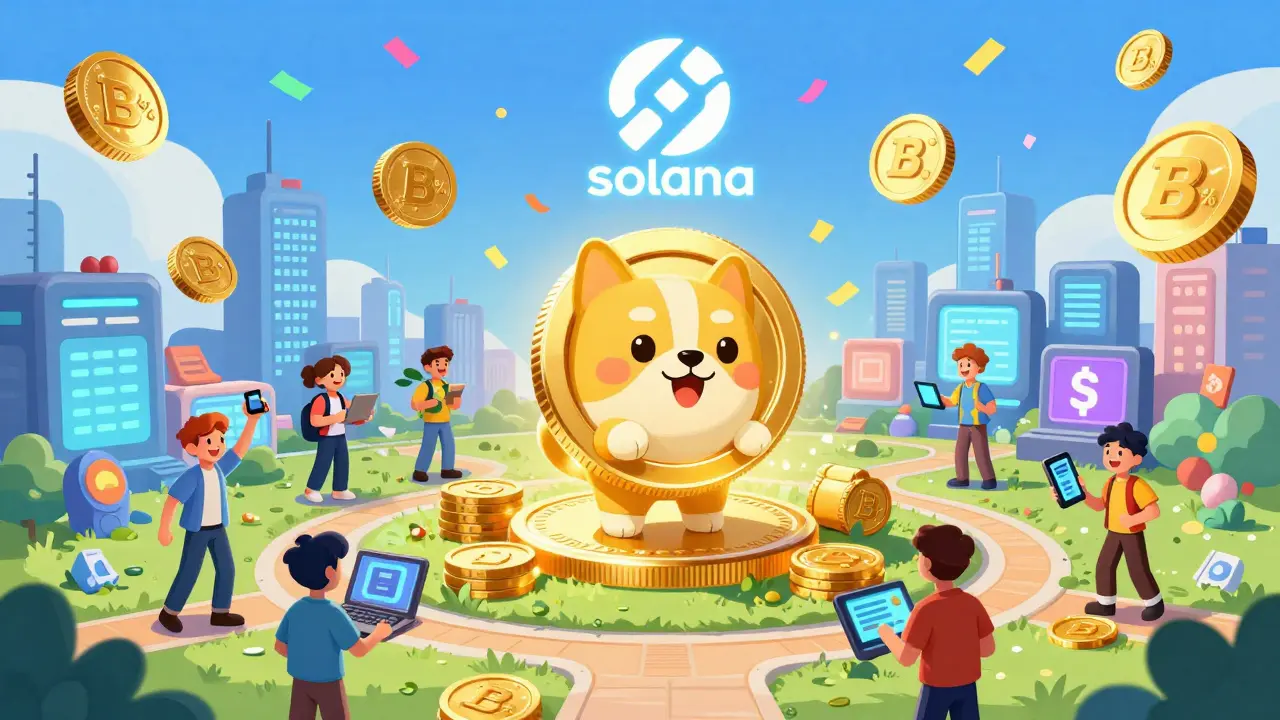
Bonk isn’t just another dog coin. It’s the official memecoin of the Solana ecosystem. In 2025, it hit a $2.7 billion market cap-not because of a viral tweet, but because it became the go-to token for everyday use on Solana. Developers use it to pay for transactions. Gamers use it in decentralized apps. Wallets accept it for fees. It’s not a speculative gamble; it’s infrastructure.
What sets Bonk apart is how it was distributed. Instead of a few big investors holding most of the supply, over 70% was airdropped to Solana users, NFT collectors, and DeFi participants. That created instant community buy-in. People didn’t just buy Bonk-they already had it, and they started using it. That’s how you build organic demand.
Book of Meme (BOME): When NFTs Meet Memes
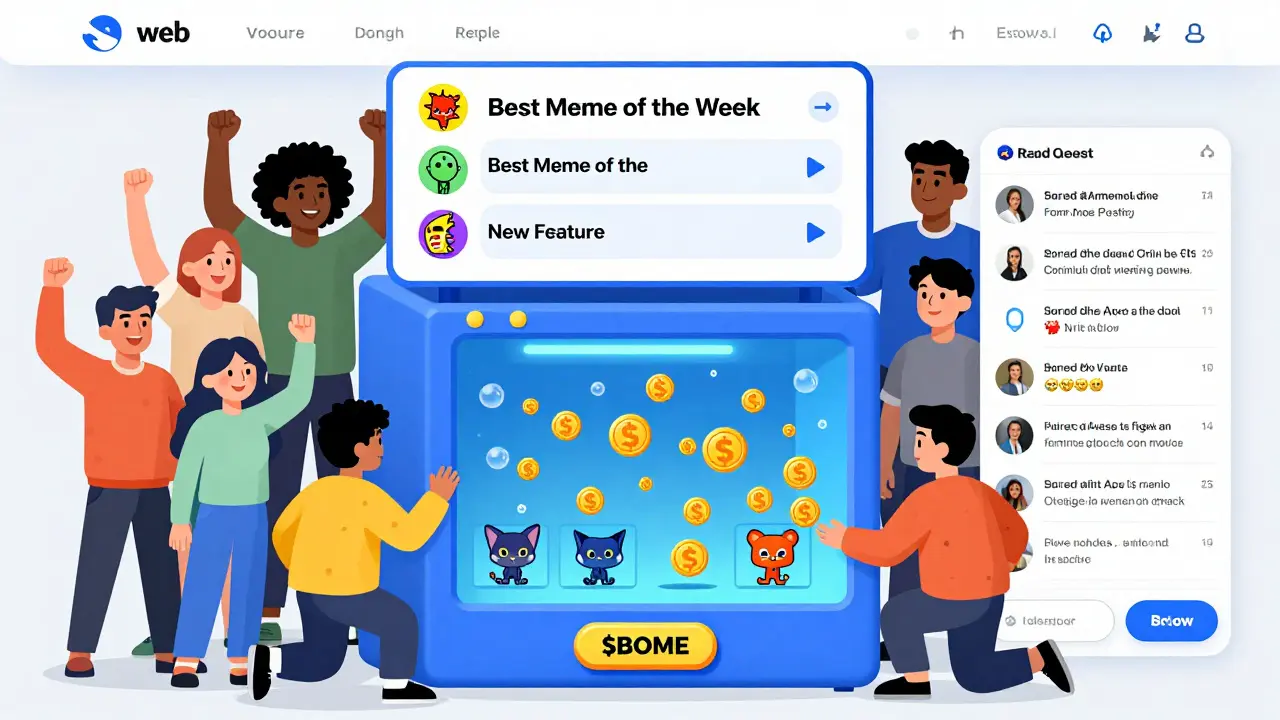
Book of Meme takes a wild idea and makes it work. You can earn $BOME tokens by staking your Bored Ape Yacht Club NFTs. That’s right-those expensive ape pictures you bought for $100,000? Now they can earn you a crypto token. This isn’t just a gimmick. It turns static digital art into active assets.
BOME isn’t just a currency. It’s a governance token. Holders vote on what memes get featured, what features get added to the platform, and how the treasury is used. The project built a full web app where users create, share, and earn from memes. It’s like Reddit meets crypto, but with real ownership.
The result? People who owned NFTs had a reason to stay in the ecosystem. Instead of selling their apes when the market cooled, they kept them to earn $BOME. That reduced selling pressure and created a feedback loop: more memes → more engagement → more token value.
BullZilla (BZIL): Presales Done Right
Most presales are scams. BullZilla isn’t. It raised over $680,000 in its presale with more than 2,100 unique holders. That’s not a small number-it’s proof of real community interest.
BullZilla’s secret? Three smart mechanics. First, a progressive price engine: the harder you buy early, the more tokens you get. Second, a supply-burning system that destroys a portion of every transaction. Third, staking rewards that start at 45% APY and scale up over time. These aren’t empty promises. They’re coded into the contract and visible on-chain.
People aren’t buying BullZilla because they think it’ll go to the moon. They’re buying because they understand the math. Burn more tokens → fewer in circulation → higher scarcity → potential price rise. It’s basic economics, not magic.
Chill Memez ($CHIMZ): Build Your Own Memecoin
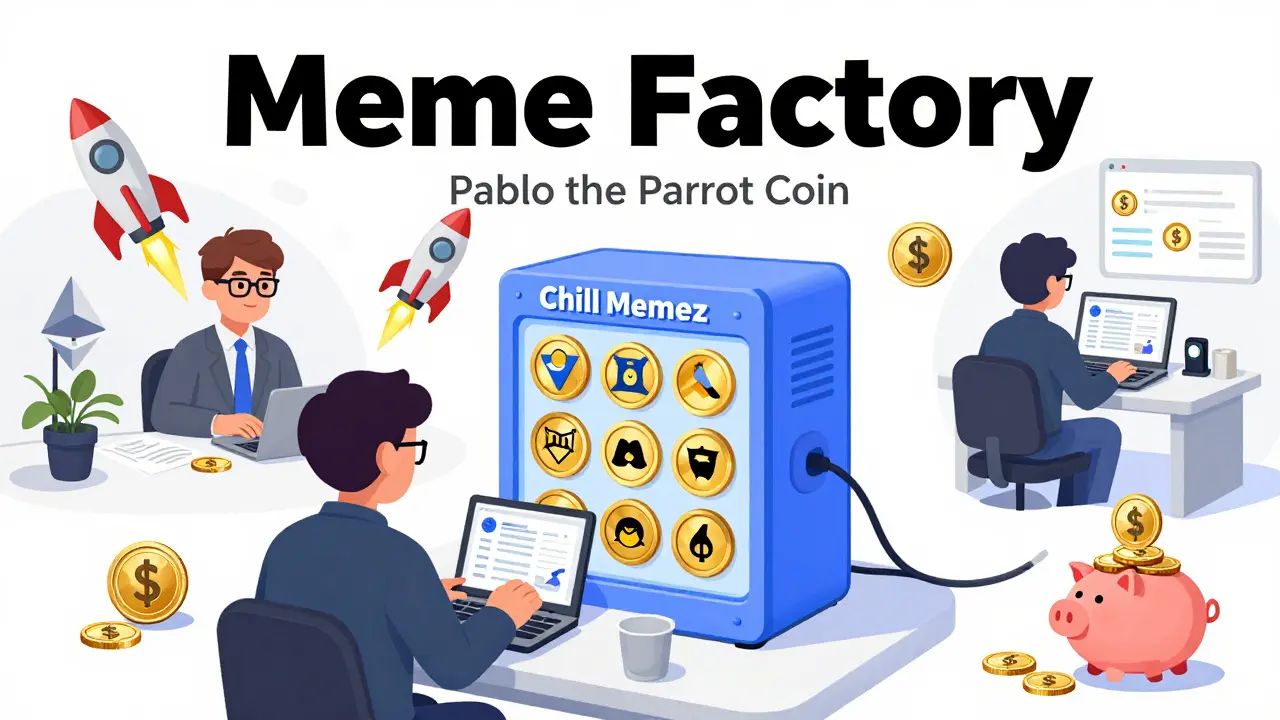
Chill Memez lets you create your own memecoin in minutes. No coding. No technical skills. Just pick a name, upload a logo, set the supply, and launch. It’s like Shopify for memes.
During its presale, $CHIMZ was priced at $0.00233. Holders got 150% APY on staked tokens, paid out after the presale ended. But the real value? The platform is open-source and cross-chain. You can use $CHIMZ on Solana, Ethereum, or BSC. Developers can plug into its APIs to build games, wallets, or marketplaces around it.
This turns memecoins from one-off jokes into building blocks. Someone creates a meme coin for their local basketball team. Another builds one for their pet parrot. Each one adds to the ecosystem. And $CHIMZ takes a small cut from every creation-creating sustainable revenue without needing to pump its own price.
SLAP: The Power of Partnerships
SLAP didn’t go viral because of a TikTok dance. It exploded because it partnered with Best Wallet-a trusted crypto wallet with over 500,000 active users. That’s a direct pipeline to real people, not bots.
On its first day, SLAP jumped 1,800%, going from $1 million to nearly $20 million in market cap. Why? Because Best Wallet integrated SLAP as a native token. Users could instantly buy, send, and stake it inside an app they already used. No new wallet. No confusion. Just one click.
Plus, 10% of all SLAP tokens are reserved for community rewards. Stakers earn 30% APY. That’s not a flash-in-the-pan incentive. It’s a long-term reward system designed to keep people holding, not dumping.
MooShot ($HIPO): Institutional-Grade Fundraising
MooShot raised over $1.2 million-not just in ETH, but also USDT and BNB. That’s huge. Most memecoins take only one token. MooShot made it easy for people to invest how they wanted. That’s not a gimmick. That’s professionalism.
It’s built on Ethereum, which means it inherits the security and liquidity of the most trusted blockchain. The team published a detailed tokenomics whitepaper. They didn’t just say “we’ll burn tokens.” They showed the exact schedule: 5% burned every month for the first year. That transparency builds trust.
People aren’t investing in MooShot because it’s funny. They’re investing because they see structure. They see accountability. They see a project that treats crypto like a business, not a meme.
Why Most Memecoins Still Fail
Not every meme coin is built to last. Cheems, for example, had a big launch, a big price run, and then vanished. Why? No utility. No staking. No community governance. Just a dog with a hat and a Twitter bot army.
The difference? Successful projects have a plan. They don’t just hope for a price surge. They design systems that keep value growing even when the hype fades. Staking rewards reduce selling pressure. Token burns create scarcity. Cross-chain tools increase adoption. NFT integrations add depth.
And the biggest mistake most memecoins make? They chase influencers. Real success comes from building tools people actually use. If you can create a game, a wallet, or a marketplace around your token, you’ve moved beyond meme status.
What to Look For in 2025
If you’re looking at a memecoin today, ask these questions:
- Is it built on Solana, Ethereum, or another major chain?
- Does it have a clear tokenomics model-burns, staking, supply limits?
- Can you do anything with the token besides trade it?
- Who’s behind it? Are they anonymous, or do they have a track record?
- Are there partnerships with wallets, exchanges, or platforms?
- Is there a community, or just a Discord with bots?
The memecoins that win in 2025 aren’t the loudest. They’re the ones that built something real. They didn’t just ride the wave-they became part of the ocean.
Can memecoins still be profitable in 2025?
Yes-but only the ones with real utility. Memecoins like BONK, BOME, and CHIMZ have proven that profit isn’t just about price spikes. It’s about long-term demand created by staking, governance, and platform use. Investors who treat them like tools, not gambling chips, are seeing consistent returns.
Are memecoins safe to invest in?
No investment in crypto is completely safe. But memecoins with transparent teams, audited smart contracts, and real utility are far less risky than anonymous projects with no code or roadmap. Look for projects that publish their tokenomics publicly and have a growing user base-not just a large Discord.
Why do some memecoins succeed while others crash?
Success comes from sustainability. Memecoins that rely on influencers and hype burn out fast. The ones that build platforms, reward long-term holders, and integrate with existing ecosystems last. Think of it like this: a meme might get you to click. But a tool keeps you using it.
Do I need to be a crypto expert to invest in these memecoins?
Not necessarily. Projects like Chill Memez and SLAP are designed for everyday users. You don’t need to understand blockchain to use them. But you do need to understand the basics: don’t invest more than you can lose, check for audits, and avoid projects that promise 1000% returns overnight. Real value takes time to build.
What’s the difference between a memecoin and a regular cryptocurrency?
Regular cryptocurrencies like Bitcoin or Ethereum are built for specific functions-store of value, smart contracts, etc. Memecoins started as jokes, but the successful ones now serve real roles: enabling content creation, rewarding NFT holders, or acting as utility tokens in apps. The difference isn’t the meme-it’s the underlying system that turns the joke into something useful.

22 Comments