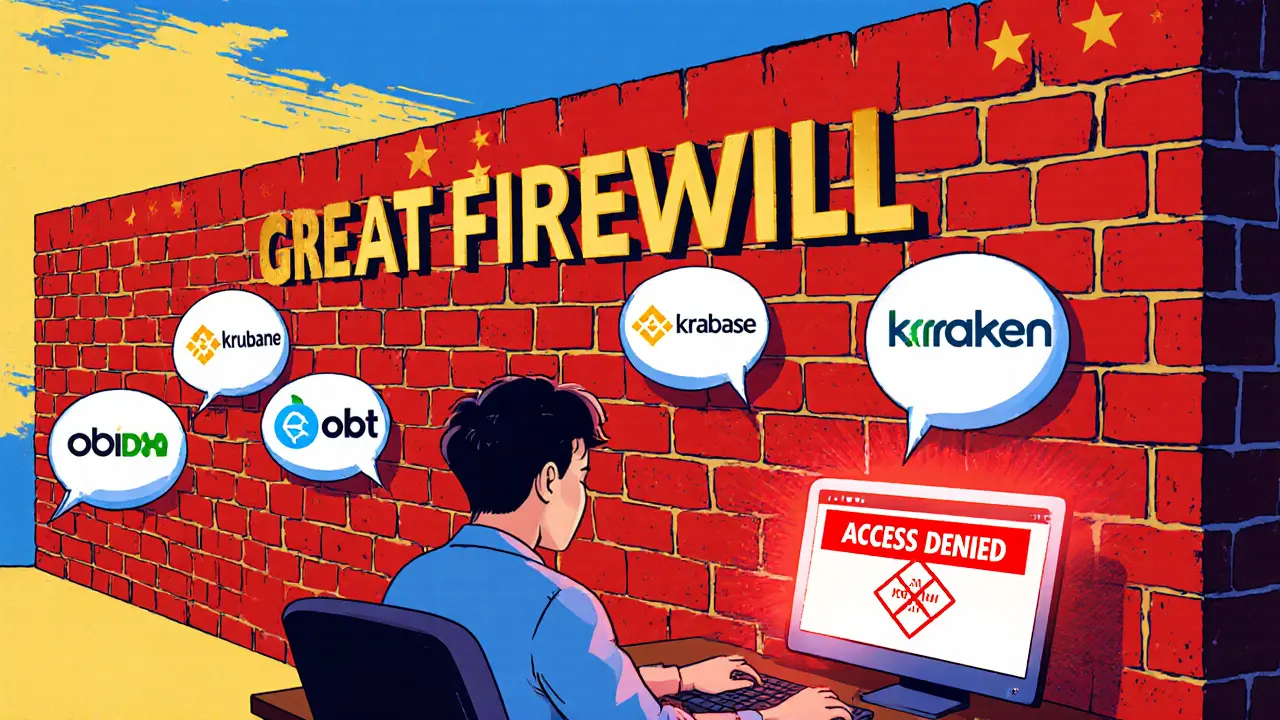
A 2025 guide that reveals which crypto exchanges are banned in China, how the ban works, its market impact, and what workarounds exist.

When we talk about Chinese crypto regulation, the strict, state-driven framework that banned crypto trading and mining in China starting in 2021. Also known as China’s digital currency crackdown, it’s one of the most decisive moves any government has made against decentralized finance. Unlike other countries that slowly tweak rules, China shut down entire industries overnight—mining farms, exchanges, even wallet services. The goal? Control money flow, protect the state’s own digital currency, and stop capital flight.
This isn’t just about Bitcoin or Ethereum. It’s about the digital yuan, China’s central bank digital currency (CBDC) designed to replace cash and monitor every transaction. Also called e-CNY, it’s the backbone of China’s financial future. While global markets saw crypto as freedom, China saw it as a threat to its monetary sovereignty. So they crushed it. Mining operations vanished from Xinjiang and Sichuan. Binance, OKX, and Huobi lost their Chinese user bases. Even peer-to-peer trading got risky.
But here’s the twist: people still hold crypto. Not because they’re reckless, but because the digital yuan isn’t perfect. It’s traceable, controlled, and tied to your real identity. Crypto, even if held privately, still offers a way out—especially for businesses dealing with international trade or people worried about asset freezes. You won’t find a legal exchange in Shanghai, but you’ll still hear whispers about OTC desks, VPNs, and cold wallets tucked away in basements.
And it’s not just about holding coins. The rules also pushed developers overseas. Teams that once built DeFi tools in Shenzhen now operate from Singapore, Dubai, or Estonia. Their tech still powers global protocols—just without a Chinese IP address. Meanwhile, China’s blockchain research continues, but only in state-approved areas: supply chain tracking, land registries, public records. Anything that doesn’t challenge the state’s control is fine. Anything that enables decentralization? Not allowed.
So what does this mean for you? If you’re outside China, you’re not directly affected—but you’re still feeling the ripple effects. The mining ban sent Bitcoin’s hash rate plunging, then rebounding elsewhere. It pushed liquidity out of Chinese exchanges and into global ones. It made investors more cautious about regulatory risk everywhere. And it proved that when a major economy moves against crypto, the market doesn’t collapse—it just relocates.
Below, you’ll find real-world examples of how these rules played out—from people in Egypt holding Bitcoin despite bans, to Nepal’s old laws that mirror China’s approach. You’ll see how crypto remittances bypassed restrictions, how utility tokens found new homes, and how exchanges like Bitpanda and Paribu adapted to survive in a world where regulation can change in a single decree. This isn’t theory. It’s what happened. And it’s still happening.
A 2025 guide that reveals which crypto exchanges are banned in China, how the ban works, its market impact, and what workarounds exist.