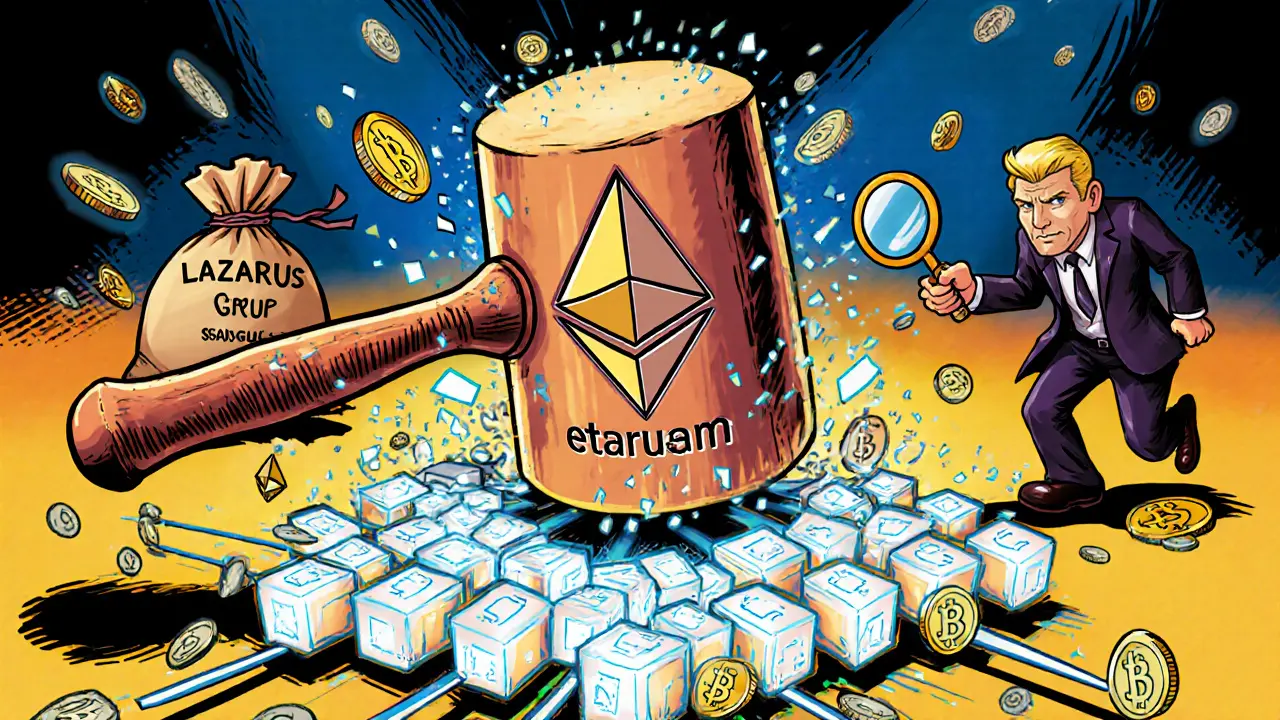
The U.S. sanctioned Tornado Cash in 2022 for laundering billions in crypto, including funds from North Korean hackers. This landmark case raised legal questions about regulating decentralized code-and changed crypto privacy forever.
When you send cryptocurrency, everyone can see where it came from and where it went—unless you use something like Tornado Cash, a decentralized Ethereum mixer that obscured transaction trails by pooling funds from hundreds of users. Also known as a privacy mixer, it was designed to protect users from surveillance, whether from governments, hackers, or predatory traders. Tornado Cash didn’t hold your money—it just shuffled it through smart contracts, making it nearly impossible to trace the original source.
This wasn’t just a technical trick. It was a direct challenge to how blockchains are monitored. Regulators saw it as a tool for laundering money from hacks and scams. The U.S. Treasury blacklisted it in August 2022, making it illegal for Americans to interact with it. Developers were targeted. Wallets got frozen. Even open-source code became a legal risk. But for many users—especially in countries with capital controls or oppressive regimes—it was the only way to keep their transactions private. Tornado Cash didn’t care who you were. It only cared that your money stayed yours.
What followed was a clash between two truths: blockchain’s promise of permissionless finance, and the real-world need to prevent crime. The tool itself didn’t steal funds—it just made them harder to track. But that’s exactly why it was both powerful and dangerous. People used it to hide stolen crypto. Others used it to avoid censorship. And now, even after its shutdown, its legacy lives on in every debate about financial privacy. You can’t have true decentralization without anonymity. But you also can’t have trust without accountability.
The posts below dig into what happened after the ban, how people still use similar tools, and what alternatives exist today. You’ll find real breakdowns of mixer alternatives, legal risks for users, and how blockchain analytics firms now track even the most obfuscated transactions. Some of these stories are about failed projects. Others are about people who still believe privacy isn’t optional—it’s a right. Whether you’re trying to protect your own funds or just understand the fallout, this collection gives you the facts—not the hype.
The U.S. sanctioned Tornado Cash in 2022 for laundering billions in crypto, including funds from North Korean hackers. This landmark case raised legal questions about regulating decentralized code-and changed crypto privacy forever.