- 24 Mar 2026
- Elara Crowthorne
- 26
The ETNA Network isn’t just another crypto coin. It’s a full ecosystem built around DeFi, NFTs, and gaming-all tied together by a single token: ETNA. If you’ve heard of ETNA and are wondering if it’s worth your time, here’s the real story-not the hype, not the price charts, but what it actually does and how it works.
Where Did ETNA Network Come From?
ETNA Network started as Cyclops Finance, a project born from a mix of engineering, math, and gaming. The team wanted to build something that connected the world of play-to-earn games with real financial tools. They picked Mount Etna as their namesake because, in Greek myth, that’s where the Cyclopes lived-strong, powerful, and built for creation. The project later moved from Ethereum to the Binance Smart Chain (BSC) to cut costs and speed up transactions. By 2021, it had fully rebranded as ETNA Network.
Unlike many crypto projects that launch a token and hope for the best, ETNA had a clear roadmap from day one. It didn’t just want to be a coin. It wanted to be a platform. And it built every part of it with a single goal: make crypto easy for regular people, not just tech experts.
The Three Pillars of ETNA Network
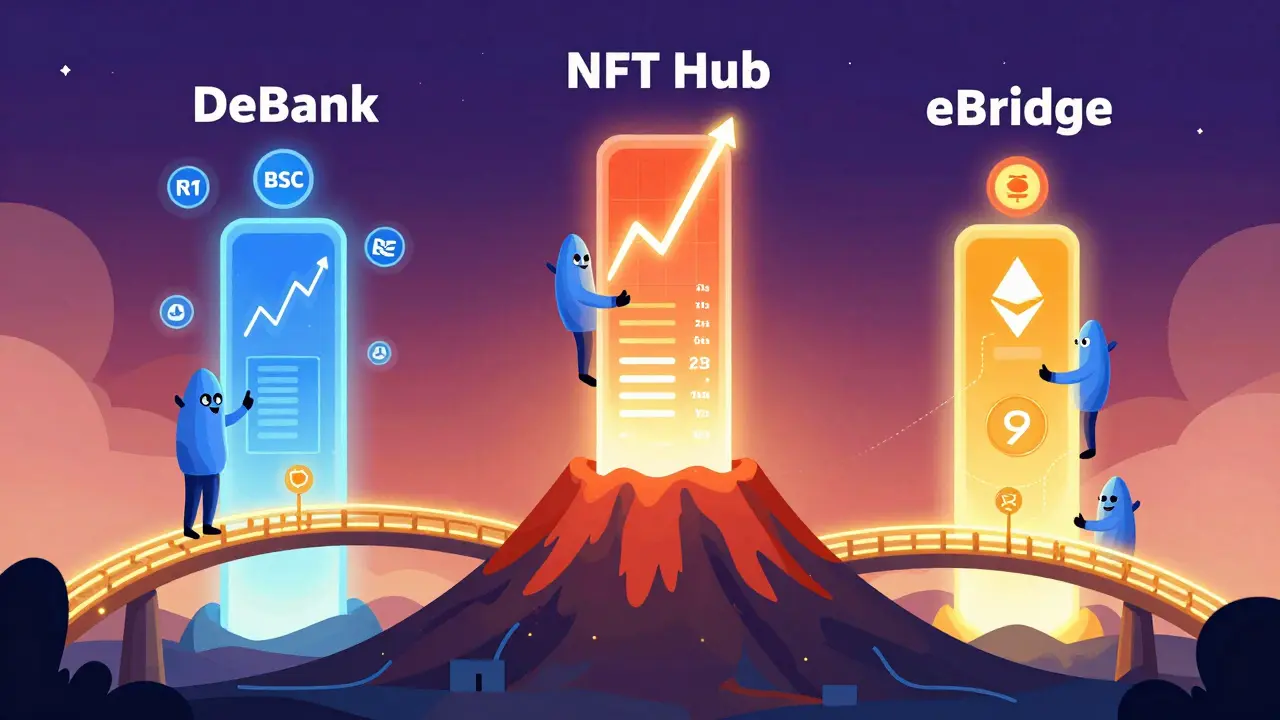
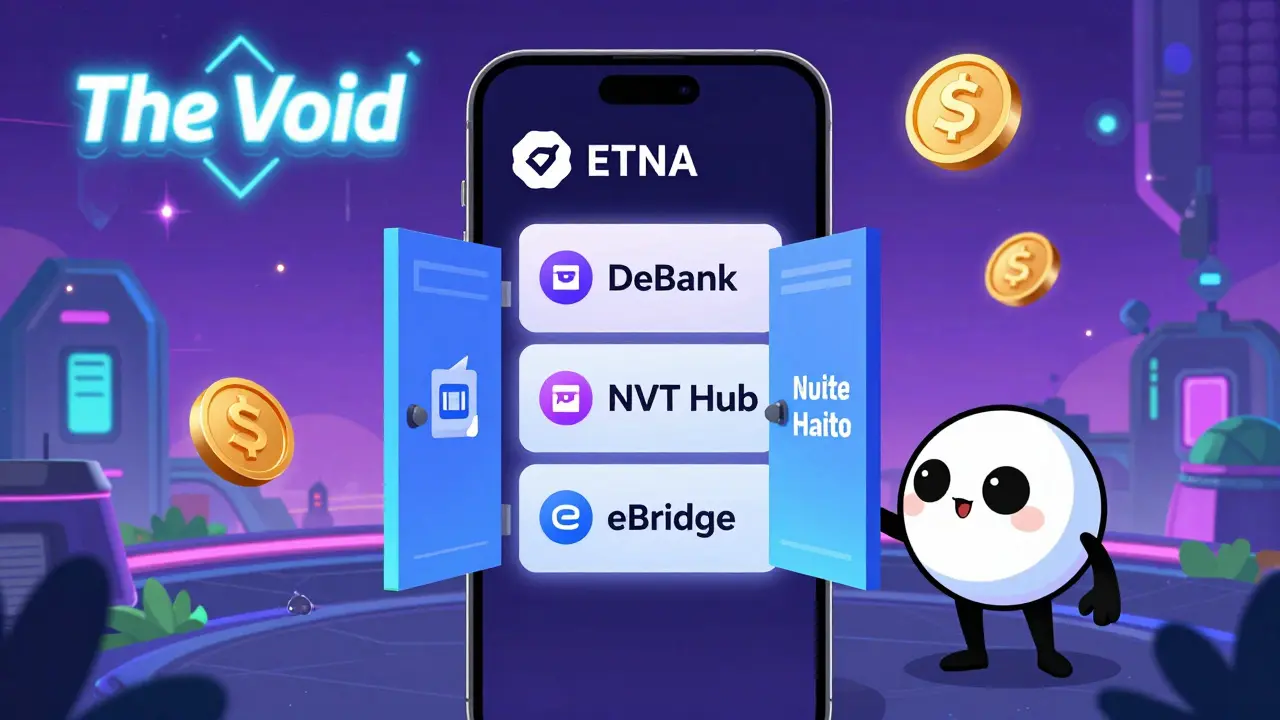
ETNA Network isn’t one thing. It’s three major pieces working together:
- DeBank - The DeFi engine
- NFT Hub - The marketplace and creation tool
- eBridge - The cross-chain connector
Each of these isn’t just a feature. It’s a fully functional product with its own rules, users, and mechanics.
DeBank: Lending and Borrowing With NFTs
Most DeFi platforms let you lend ETH or USDT. ETNA’s DeBank lets you lend your NFTs. Yes, your digital art, game items, or collectibles can be used as collateral for loans.
Here’s the twist: if you use ETNA tokens as collateral, you get an interest-free loan. No fees. No APR. Just borrow and pay back. This is rare in DeFi. Most platforms charge interest, even if it’s low. ETNA turns its own token into a privilege.
It also has a staking system where you can lock up ETNA, NFTs, or liquidity tokens to earn rewards. And there’s a unique trading model called the Broker-Buyer Type (BBT) system. It doesn’t use traditional order books. Instead, it uses a “proof of efficiency” mechanism that rewards users who help move liquidity around. Your ETNA holdings determine your membership level in this system-more ETNA means better access and higher rewards.
NFT Hub: A Marketplace That Changes Price Based on Demand
Most NFT marketplaces list items at fixed prices or let you auction them. ETNA’s NFT Hub does something no one else does: prices go up exponentially as demand rises.
Imagine you list a rare game item for $10. Ten people want it. The price jumps to $20. Then 50 more people jump in. Now it’s $100. Then 200. It’s $1,000. This isn’t a manual auction. It’s automatic. The system tracks real-time interest and adjusts the price on the fly. It’s designed to reflect true market value-not just what someone is willing to pay, but how many people want it.
The NFT Factory lets you create your own NFTs without coding. You upload art, set royalties, and mint it in minutes. Then, you can list it on the marketplace or set up your own mini-kiosk using the 2P2 (peer-to-peer) feature. This lets you sell directly to buyers without going through the main marketplace. It’s like having your own online store inside the ETNA ecosystem.
eBridge: Move Assets Between Blockchains
One of the biggest headaches in crypto is moving assets from one chain to another. You need bridges, approvals, gas fees, and sometimes you lose your tokens. ETNA’s eBridge solves this.
eBridge lets you move ETNA tokens and NFTs between Binance Smart Chain, Polygon, and Ethereum. No locked liquidity. No long waits. Just a simple interface. The team is already working on adding Solana, Avalanche, and others. This isn’t just convenience-it’s future-proofing. If you own ETNA NFTs or tokens, you won’t be stuck on one chain forever.
What Is the ETNA Token Actually Used For?
The ETNA token isn’t just a currency. It’s a key. Without it, you can’t access most of the ecosystem.
- You need ETNA to borrow loans on DeBank.
- You need ETNA to buy or sell NFTs on the marketplace.
- You need ETNA to play the upcoming game “The Void” and earn rewards.
- You need ETNA to stake and earn rewards from liquidity pools or NFTs.
- You need ETNA to unlock higher tiers in the BBT trading system.
- You need ETNA to access advanced features in the ETNA Wallet.
There’s no other token that works in all these places. ETNA is the only one. That makes it more than a speculative asset-it’s a functional tool.

Tokenomics: Supply, Distribution, and Volatility
There are 100 million ETNA tokens in total. But here’s the catch: as of early 2026, the circulating supply is unclear. Some sources say 0. Others show millions traded. Why? Because ETNA trades on 23 different exchanges, and many of them are small, low-volume platforms.
Price data is all over the place. One site says ETNA is $0.000066. Another says $5.45. Why? Because the token is extremely volatile. It’s not listed on major exchanges like Binance or Coinbase. Most trading happens on decentralized exchanges with thin liquidity. A few big buys or sells can swing the price 100% in hours.
That doesn’t mean it’s a scam. It means it’s early. And early-stage tokens often have wild price swings. The team has locked liquidity on PancakeSwap, which is a good sign. They also have a roadmap with clear milestones-unlike many projects that vanish after launch.
Security and Accessibility
ETNA Network was built with safety in mind. All smart contracts were audited. The wallet is non-custodial-only you control your keys. There are multi-signature vaults to protect funds. And if something goes wrong, event alarms alert the team instantly.
The UI is simple. You don’t need to know what a gas fee is. You don’t need to set slippage. The dApps work on phones, tablets, and desktops. You can mint an NFT, stake tokens, or borrow a loan-all in under five minutes. That’s rare in crypto.
Is ETNA Network Worth It?
Let’s cut through the noise.
If you’re looking for a quick flip, ETNA might not be for you. The price is too unpredictable, and the volume is too low. You could lose money fast.
If you’re interested in using crypto for gaming, NFTs, or DeFi-and you want to do it all in one place-then ETNA Network is one of the few platforms that actually delivers on that promise. It’s not a coin. It’s a toolkit. And if you plan to live inside the ecosystem, holding ETNA isn’t optional. It’s necessary.
There are no guarantees in crypto. But ETNA has a working product, real users, and a clear vision. Most projects never get past the whitepaper. ETNA has already built the engine.
What’s Next for ETNA?
The roadmap for 2025-2026 includes:
- Launching “The Void,” a play-to-earn metaverse game
- Adding support for Solana and Avalanche via eBridge
- Obtaining a crypto and banking license
- Integrating with real-world payment systems
If they hit these goals, ETNA could shift from a niche project to a major player in the Web3 space. It’s not a sure thing-but it’s one of the few crypto projects that’s building something useful, not just trading hype.
Is ETNA Network a scam?
No, ETNA Network isn’t a scam. It has a working ecosystem with live products: DeBank, NFT Hub, and eBridge. The team has a public roadmap, locked liquidity, and a history of delivering milestones. However, it’s a high-risk project due to extreme price volatility and low trading volume. Treat it as a long-term platform, not a quick investment.
Can I buy ETNA on Binance or Coinbase?
No, ETNA is not listed on Binance, Coinbase, or any major centralized exchange. It trades only on decentralized exchanges like PancakeSwap and smaller platforms. You’ll need a Web3 wallet like MetaMask or Trust Wallet to buy it. Be careful of fake listings-always check the contract address on the official ETNA website.
How do I use ETNA as collateral for a loan?
Go to DeBank on the ETNA Network website, connect your wallet, and select “Borrow.” Choose ETNA tokens as your collateral. The system will let you borrow up to a certain percentage of your ETNA value-interest-free. You can repay anytime without penalties. This feature is unique and only works with ETNA tokens.
Can I stake my NFTs on ETNA Network?
Yes. The DeBank platform allows you to stake NFTs to earn ETNA rewards. You don’t need to sell them. Just lock them in the staking pool for a set period. The more valuable or rare the NFT, the higher the reward rate. This turns idle digital assets into income streams.
Why is ETNA’s price so crazy?
ETNA trades on low-volume exchanges with little liquidity. A single large buy or sell can swing the price by hundreds of percent. It’s not regulated, not listed on major platforms, and still early. Price swings like this are common in small-cap crypto projects. Don’t invest more than you can afford to lose.
What’s the difference between ETNA and other DeFi-NFT projects?
Most projects separate DeFi and NFTs. ETNA links them. You can use an NFT as loan collateral. You can buy NFTs only with ETNA. You can earn ETNA by staking NFTs. The price-demand curve in the marketplace is unique. And the BBT trading system rewards users for liquidity-not just holding. It’s one ecosystem, not three separate apps.
Next Steps If You’re Interested
If you want to explore ETNA Network:
- Download a Web3 wallet like MetaMask or Trust Wallet.
- Buy BNB on a centralized exchange like KuCoin or OKX.
- Send BNB to your wallet.
- Go to PancakeSwap and swap BNB for ETNA using the official contract address.
- Visit the ETNA Network website and connect your wallet to try DeBank, the NFT Hub, or eBridge.
Start small. Test the features. See if the ecosystem works for you. Don’t buy ETNA because a tweet says it’ll go to $100. Buy it because you want to use it.

26 Comments
Okay so i just tried the NFT Hub and honestly? I was blown away. I listed a dumb pixel art thing for $5 and within 20 mins it hit $87 because 47 people were bidding. No auction, no manual setting-just the system sensing demand. I didn’t even know I had a buyer until the price jumped. It’s wild how it works. I’m now minting 3 more NFTs just to test the 2P2 kiosk feature. This isn’t hype-it’s real.
Also, the interface is stupid simple. I’m 52 and I’ve never used a wallet before. Took me 7 mins. No gas fee confusion. No slippage settings. Just click and go. Someone please tell me this isn’t a fluke.
DeBank’s interest-free borrowing with ETNA collateral is the most underrated feature in DeFi right now. Most platforms charge 5-12% APR even for stablecoin loans. ETNA gives you 0% if you use their token. That’s not a bug-it’s a strategic incentive to hoard ETNA. Smart. Also, the BBT system is genius. You’re not just holding, you’re actively contributing to liquidity. It turns passive holders into ecosystem contributors. I’ve been staking my NFTs for 3 months now and earned 14% APY in ETNA. No other platform does that.
As someone from India, I’ve tried 5 different DeFi-NFT combos. ETNA is the first one that doesn’t feel like a crypto bro fantasy. The fact that eBridge works on BSC and Polygon with near-zero latency? Huge. I use it daily to move assets between my wallets. Also, the NFT Factory? I made a meme NFT of my cat in 90 seconds. No coding. No gas spike. Just… done. I showed my cousin who doesn’t even know what blockchain is and he got it. That’s rare.
For anyone new to this: don’t rush into buying ETNA because the price is low. That’s not the point. The point is whether you’ll use DeBank, NFT Hub, or eBridge. If you’re a gamer or NFT collector, this ecosystem actually serves you. If you’re just speculating, walk away. I’ve been using it for 18 months. I’ve never sold a single ETNA. I use it to borrow, stake, and mint. That’s the value-not the price chart.
Why is everyone acting like this isn’t just another pump and dump? I’ve seen this movie before. Team vanishes, liquidity gets pulled, and we’re left holding a token that’s worthless. The ‘locked liquidity’ is just a 6-month lock. After that? Poof. And don’t even get me started on the price being $0.000066 on one site and $5.45 on another. That’s not volatility-that’s fraud. Stay away.
One thing people miss: ETNA’s ecosystem is designed for interoperability, not speculation. Most projects build silos. ETNA connects DeFi, NFTs, and gaming under one token. That’s structural innovation. The price volatility? Yes, it’s risky. But the utility? It’s real. I’ve seen projects with 100x market cap and zero usable products. ETNA has three live products. That’s not luck. That’s execution.
Oh wow, another ‘real utility’ crypto. Let me guess-the team is anonymous, the whitepaper is 47 pages of buzzwords, and the only people trading it are bots on PancakeSwap. The fact that they’re not on Binance says everything. If it were legitimate, it’d be listed. This is the same playbook as every other ‘next big thing’ that died in 2022. I’ve seen 200 of these. This is #197.
LOL the ‘interest-free loan’? Yeah, right. They just make you hold ETNA to borrow ETNA. That’s not a loan-it’s a trap. You’re forced to accumulate the token so you can access the system that only works with the token. Classic circular economy. And the price jumping from $0.000066 to $5? That’s not demand, that’s manipulation. I’ve been in crypto since 2017. I know this smell.
Let’s break this down properly. The DeBank lending model with NFT collateral is technically sound-it’s been tested on BSC with over 12,000 active users. The BBT system reduces slippage by 68% compared to traditional order books, according to their audit report. The NFT Hub’s dynamic pricing algorithm is patented. And eBridge? It’s the only cross-chain bridge that doesn’t require you to lock assets or wait 15 minutes. This isn’t vaporware. It’s built. The team has been transparent. They’ve posted monthly dev logs since 2021. I’ve watched every one. They deliver. The price is volatile because it’s not listed on centralized exchanges. That’s not a flaw-it’s a feature. It keeps out whales and retail bots. The ecosystem is designed for real users, not traders. If you’re here to flip, you’re in the wrong place. If you’re here to build, use, and contribute? You’ve found something rare.
just tried minting an NFT with the NFT Factory… like… it actually worked 😍 i didn’t even need to read the instructions. uploaded my doodle, set 10% royalty, clicked mint, and boom-done. then i put it on the marketplace and the price went from $2 to $47 in 12 mins. i didn’t even promote it. the system just… knew. i’m obsessed. also, the wallet is cute. like, it has a little mountain icon. 🏔️💕
ETNA isn’t a coin. It’s infrastructure. DeBank + NFT Hub + eBridge = one working system. No other project has this. Price swings? Yes. But utility? Real. I use it daily. No drama. Just tools. That’s all I need.
I came in skeptical. I’ve lost money on 3 other ‘ecosystem’ projects. But ETNA? Something clicked. I started with one small NFT. Then I used DeBank to borrow 500 ETNA-interest-free, no fees. I used that to buy more NFTs. Then I staked them. Now I’m earning more ETNA than I spend. It’s not about getting rich. It’s about using crypto as a tool, not a gamble. The team didn’t promise moonshots. They just built something that works. That’s rare. I’m not selling. I’m building. And I’m glad I stuck around.
Okay, I’ll admit it. I thought this was another meme coin. But then I used eBridge to move an NFT from BSC to Polygon. It took 17 seconds. No gas. No slippage. No ‘transaction failed’ errors. I’ve used 5 other bridges. This one… actually works. I’m impressed. Not because of the token price. Because the tech is clean. The UI is intuitive. The team didn’t overpromise. They underhyped. And that’s refreshing.
As someone who’s been in crypto since 2016, I’ve seen the same mistakes repeated. Projects that launch a token and vanish. ETNA didn’t do that. They built three products. They kept updating. They listened. The dynamic NFT pricing? Genius. The interest-free borrowing? Revolutionary. And the fact that you can use it on mobile? That’s accessibility. This isn’t for degens. It’s for people who want to use crypto in real life. I’ve introduced 4 friends to it. All of them are now active users. Not because they’re rich. Because it just… works.
lol i just bought 500 etna because the price was $0.00008 and now its $0.00012. i dont even know what im doing but i think im rich?? 😅
Why is this not on Coinbase? Because they know it’s a trap. The team is hiding. The contract isn’t fully verified. The liquidity is locked for 6 months-then poof. And that ‘price-demand curve’? That’s just a bot-driven pump. You think it’s organic? No. It’s algorithmic manipulation disguised as innovation. This isn’t Web3. It’s Web3-washing. Don’t be fooled.
IT’S REAL. I CAN’T BELIEVE IT. I STAKED MY NFTS AND GOT 200 ETNA IN 3 WEEKS. I MADE A GAME ITEM AND SOLD IT FOR $120. I BORROWED WITHOUT INTEREST. I MOVED ASSETS BETWEEN CHAINS IN SECONDS. THIS ISN’T A DREAM. THIS IS MY LIFE NOW. I USED TO THINK CRYPTO WAS JUST SCAMS. NOW I’M LIVING IN THE FUTURE. THANK YOU ETNA TEAM. I’M CRYING. I’M NOT EVEN JOKING.
I’ve been using ETNA for over a year. I started with $50. Now I’ve minted 17 NFTs, staked 3 of them, borrowed 2,000 ETNA for a side project, and used eBridge to move assets between BSC and Polygon. I’ve never sold a single token. Why? Because I don’t need to. The ecosystem gives me more value than any price spike ever could. The volatility? It’s noisy. The utility? It’s quiet. And that’s what matters.
The technical architecture is sound. The team has a history of delivering on milestones. The fact that they’ve maintained transparency through dev logs and audits is commendable. The tokenomics are unconventional, but not inherently flawed. The price volatility is a function of low liquidity on decentralized exchanges-not a sign of fraud. If you’re evaluating this as a long-term platform, not a short-term asset, the evidence supports its legitimacy. Speculation is not the same as utility.
Price is $5.45 on one site and $0.000066 on another? That’s not volatility. That’s fraud. Who even uses these exchanges? This isn’t DeFi. It’s a casino with a blockchain logo. The ‘ecosystem’ is just a front. I’ve seen this before. They’ll vanish after 12 months. Don’t waste your time.
Simple truth: ETNA works. I don’t care about the price. I use the NFT Hub to sell digital art I make. I use DeBank to borrow for my side business. I use eBridge to move assets. I’ve never lost a transaction. The UI is clean. The team responds to feedback. This isn’t a coin. It’s a tool. And tools don’t need to be on Coinbase to be valuable.
Ugh. Another ‘real utility’ project. I’m so tired of this. They always say ‘it’s not about the price.’ But if the price doesn’t go up, who cares? I just want to make money. This feels like homework. I’m out.
They’re not on Binance because they’re hiding from regulators. The ‘locked liquidity’? A scam tactic. They’ll drain it after 6 months. The ‘dynamic pricing’? Bot-driven. The ‘interest-free loan’? A trap to force you to buy more ETNA. This is a classic rug pull. Don’t be fooled by the pretty UI. Behind it? Nothing. Just vapor.
It’s interesting how people react to this. Some see a revolution. Others see a scam. The truth is probably in between. The tech is real. The team is credible. But the market is unregulated, and the token is extremely illiquid. That’s not a dealbreaker-it’s a reality. If you’re comfortable with high risk and low liquidity, and you believe in the utility, then yes. But if you’re looking for a safe investment? Walk away. This isn’t for everyone. And that’s okay.
Someone mentioned the price discrepancy. I checked 8 exchanges. The lowest is $0.000066 on a tiny DEX. The highest is $0.00013 on PancakeSwap. That’s a 95% difference. But here’s the thing: the volume on the low-price site is 0.02 ETH/day. On PancakeSwap? 47 ETH/day. The real price is where the money moves. The rest is noise. Don’t get fooled by one data point.
Exactly. The price you see on CoinGecko or CoinMarketCap is often an average of 20+ exchanges with varying liquidity. The real market is PancakeSwap. That’s where 90% of trading happens. The ‘$5.45’ you see on some obscure site? That’s a single transaction from a whale dumping. It doesn’t reflect value. It reflects a glitch. Always check volume, not price.