
- 10 Jun 2026
- Elara Crowthorne
- 0
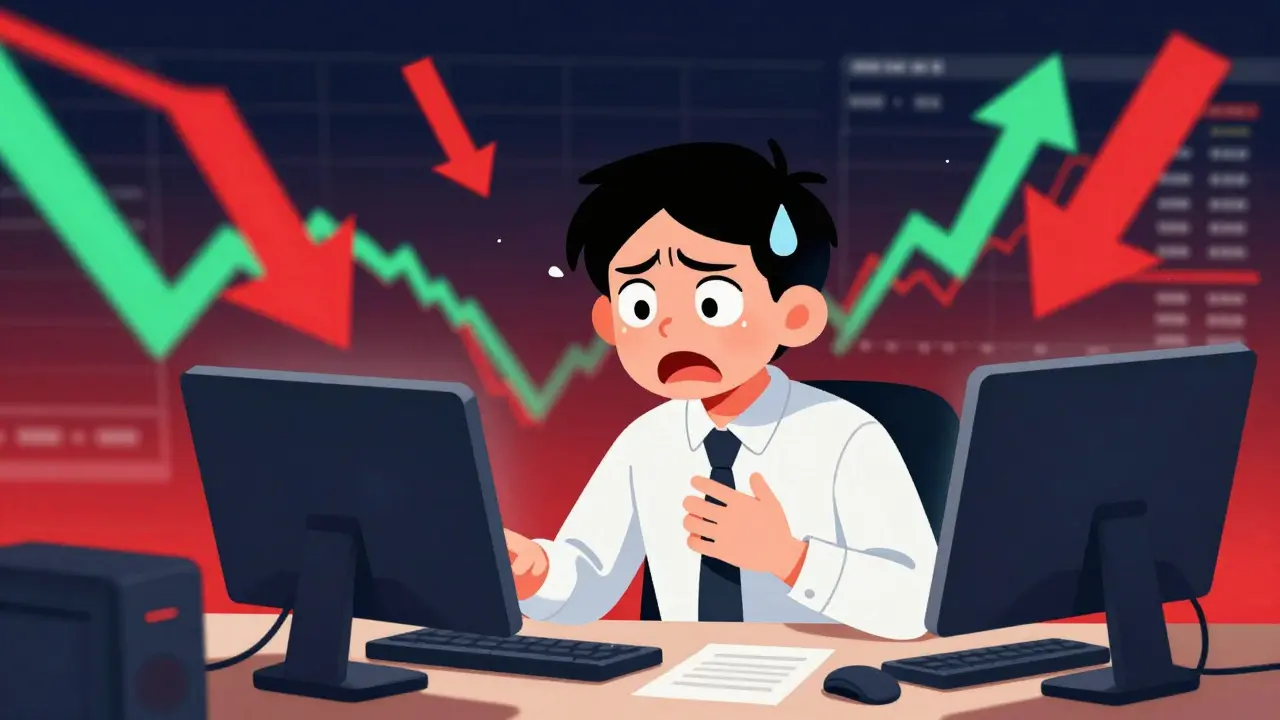
You’ve probably seen it happen before. You decide to buy Bitcoin, the price is high, you click buy, and then-crash. The market drops 20% overnight. You panic. Or maybe you waited too long, missed the dip, and bought at an all-time high only to watch it stagnate. Sound familiar?
This emotional rollercoaster is exactly why most retail investors lose money in cryptocurrency. The market is volatile, unpredictable, and designed to trigger fear and greed. But there is a strategy that has survived decades of traditional finance and works even better in the wild west of crypto: Dollar-Cost Averaging (DCA).
DCA isn’t about getting rich quick. It’s about staying sane while building wealth over time. In this guide, we’ll break down what DCA actually is, how the math works in your favor, and why experts like Cathie Wood and firms like Fidelity recommend it as the gold standard for new crypto investors.
What Is Dollar-Cost Averaging?
At its core, Dollar-Cost Averaging (DCA) is an investment strategy where you invest a fixed amount of money into an asset at regular intervals, regardless of the price. Instead of trying to time the perfect moment to buy (which is nearly impossible), you just show up consistently.
Imagine you want to invest $100 a month in Ethereum. With DCA, you set up an automatic purchase on the 1st of every month. If Ethereum is trading at $3,000, you get fewer tokens. If it crashes to $1,500, you get twice as many. You don’t change your plan. You don’t check the charts obsessively. You just let the system work.
This strategy dates back to the 1920s, popularized by Benjamin Graham in his classic book The Intelligent Investor. While it wasn’t created for crypto, it fits perfectly with digital assets. Cryptocurrencies can swing 20-30% in a single day. DCA smooths out those swings, turning chaos into a predictable routine.
How Does DCA Work Mathematically?
The beauty of DCA lies in simple arithmetic. When you invest a fixed dollar amount, you automatically buy more units when prices are low and fewer units when prices are high. Over time, this lowers your average cost per unit.
Here is the formula used by platforms like Binance:
Average Purchase Price = Total Investment Value / Total Amount Purchased
Let’s look at a real-world example. Say you invest $100 weekly in Bitcoin for four weeks:
- Week 1: BTC is $60,000. You buy 0.00166 BTC.
- Week 2: BTC drops to $50,000. You buy 0.00200 BTC.
- Week 3: BTC crashes to $40,000. You buy 0.00250 BTC.
- Week 4: BTC recovers to $55,000. You buy 0.00181 BTC.
Total invested: $400. Total BTC bought: 0.00797. Your average cost basis is roughly $50,188 per Bitcoin. Even though the price ended higher than the crash, you didn’t need to predict the bottom. You simply averaged out your entry point.
| Scenario | Investment Method | Avg. Entry Price | Risk Level |
|---|---|---|---|
| Bull Market Peak | Lump Sum ($400 at $60k) | $60,000 | High (Immediate loss if price drops) |
| Volatile Market | DCA ($100/week x 4) | $50,188 | Low (Smoothed entry) |
DCA vs. Lump-Sum Investing: Which Wins?
This is the biggest debate in crypto investing. Should you dump all your money in at once (lump-sum) or spread it out (DCA)? The answer depends on market conditions and your psychology.
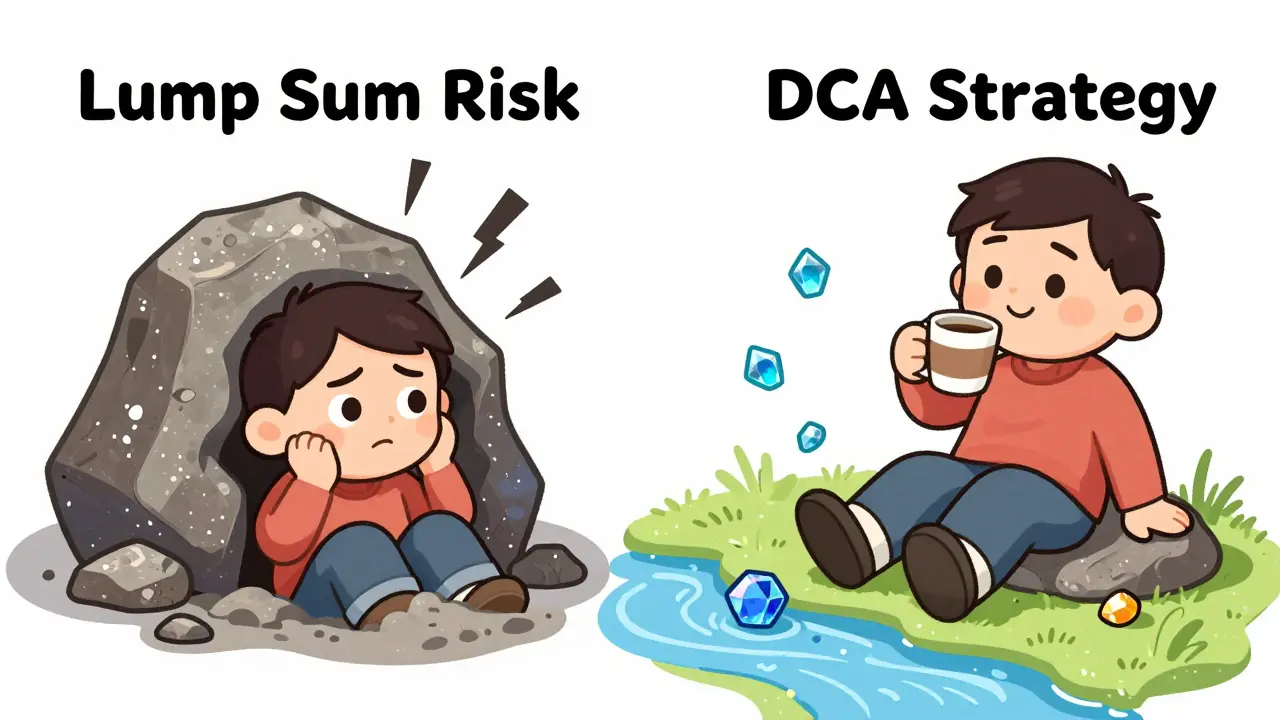
In a straight-up bull market, lump-sum investing usually wins on pure returns. For example, during Bitcoin’s run from March 2020 to November 2021, investors who went all-in early saw 850% returns, while monthly DCA users saw 620%. That’s a significant difference.
However, lump-sum investing carries massive risk. If you buy at the peak and the market crashes, you’re underwater immediately. A 2022 study by Kraken found that DCA reduced volatility by 58.7% compared to lump-sum investments. More importantly, during bear markets, DCA outperformed lump-sum by 22.4% because you were buying cheap assets while others were selling in panic.
Consider the psychological factor. Coinbase surveyed 15,000 users and found that 78% of DCA investors kept buying during downturns. Only 34% of non-DCA users did the same. Most people cannot handle the stress of watching their portfolio drop 50% after a lump-sum buy. DCA removes the emotion from the equation.

Why DCA Is Essential for Crypto Specifically
Cryptocurrency is not the stock market. Traditional equities might move 15-20% annually. Crypto can do that in a week. According to CoinMetrics data from late 2023, crypto exhibits 80-90% annualized volatility. This extreme fluctuation makes timing the market statistically improbable for most people.
Fidelity’s 2021 backtesting analysis showed that during Bitcoin’s crash from $68,789 to $15,739, DCA investors who continued purchasing achieved an average entry price 43% below the starting price. They turned a disaster into an opportunity.
Additionally, DCA protects you against "FOMO" (Fear Of Missing Out). When everyone is talking about crypto, prices are often near peaks. By sticking to a schedule, you avoid buying the hype. You buy the asset, not the narrative.
How to Set Up DCA on Major Exchanges
You don’t need to be a tech wizard to use DCA. Every major exchange offers automated tools. Here is how it looks on the big players:
- Coinbase: Offers recurring buys starting at $2 minimum. You can choose daily, weekly, or monthly intervals. Their data shows 63% of users prefer weekly schedules.
- Binance: The "Recurring Buy" feature supports over 200 cryptocurrencies with a $10 minimum. In Q2 2023 alone, this feature processed over $2.1 billion in transactions.
- Kraken: Allows higher limits, up to $50,000 per transaction on Kraken Pro, making it suitable for larger investors.
- Fidelity Digital Assets: Brings institutional-grade tools to retail, requiring a $10 minimum with bi-weekly or monthly options.
Setting it up takes less than three minutes. You select the asset, choose the frequency, link your payment method, and hit confirm. Then, you forget about it. Literally. The best part of DCA is that it requires zero active management.
Common Mistakes to Avoid
Even a simple strategy like DCA can fail if you misuse it. Here are the pitfalls that destroy portfolios:
- Stopping During Bear Markets: This is the #1 mistake. Coinbase data shows 41% of new DCA users pause their plans when prices drop more than 30%. Those who continued saw significantly better long-term results. Remember, dips are when you accumulate the most coins.
- Investing Money You Need Soon: DCA is a long-term game. Experts recommend a horizon of at least 3 years. If you need the cash next year, crypto’s volatility could wipe you out.
- Picking Bad Assets: As Nicholas Merten of Data Dash warned, DCA only works if the asset appreciates long-term. DCAing into a scam coin or a project with no utility will still result in total loss. Stick to established assets like Bitcoin and Ethereum unless you have deep research skills.
- Tax Negligence: Every DCA purchase is a taxable event in some jurisdictions. In the US, IRS Notice 2014-21 requires tracking the cost basis of each purchase. Use software or spreadsheets to keep records clean.
Expert Consensus and Future Trends
The industry leaders agree: DCA is the smartest move for 90% of retail investors. Cathie Wood of ARK Invest called it "the single most effective strategy for retail investors entering volatile asset classes." Michael Sonnenshein of Grayscale noted that 72% of their institutional clients use DCA strategies.
The future of DCA is getting smarter. Platforms are introducing conditional DCA, where you can increase your buy amount if the price drops below a certain threshold (e.g., buy 50% more if Bitcoin falls below $25,000). Others are integrating tax-loss harvesting directly into the DCA process. By 2025, AI-assisted tools may dynamically adjust your intervals based on market conditions, but the core principle remains the same: consistency beats timing.
Is DCA better than lump-sum investing?
It depends on the market cycle. In strong bull markets, lump-sum investing yields higher returns. However, in volatile or bear markets, DCA significantly reduces risk and emotional stress. For most beginners, DCA is safer because it prevents buying at market peaks.
How much should I invest with DCA?
Financial advisors generally recommend allocating 1-5% of your disposable income to high-risk assets like crypto. Start small enough that a 50% drop in value won’t affect your daily life. Consistency matters more than the amount.
Can I stop my DCA plan anytime?
Yes, you can cancel recurring buys on any major exchange. However, stopping during a market crash defeats the purpose of DCA. The strategy relies on buying low to lower your average cost. Pausing during dips often leads to worse long-term performance.
Does DCA work for altcoins?
DCA works for any asset that has long-term growth potential. However, altcoins are riskier than Bitcoin or Ethereum. Only DCA into projects you have thoroughly researched and believe in fundamentally. Avoid using DCA for meme coins or speculative trends.
What is the best frequency for DCA?
Weekly is the most popular choice, used by 63% of Coinbase investors. It balances the benefits of frequent averaging with manageable transaction fees. Monthly is also common, but daily DCA may incur unnecessary fees depending on your exchange.