- 10 Aug 2026
- Elara Crowthorne
- 0
Imagine logging into an app every morning and receiving free money just for being you. No work required. No survey to fill out. Just a daily drop of digital currency in your pocket. This isn't a scam email from a distant prince; it is the core promise of GoodDollar, a cryptocurrency project that aims to fund a global Universal Basic Income (UBI).
If you have seen ads for "free crypto" or heard whispers about a coin called G$, you are probably wondering if this thing is real. Is it worth your time? And more importantly, can it actually help you make money? Let's break down exactly what GoodDollar is, how its weird economic engine works, and whether joining this movement makes sense for you in 2026.
The Core Idea: Free Money as a Public Good
Most cryptocurrencies are designed for investors. You buy Bitcoin hoping the price goes up so you can sell it later. GoodDollar flips this script entirely. It was created by Yoni Assia, the co-founder of eToro, along with Tomer Bariach and others, who launched the protocol on the Ethereum blockchain in September 2020. Their goal wasn't to create the next speculative asset but to build a system that fights poverty using decentralized finance (DeFi).
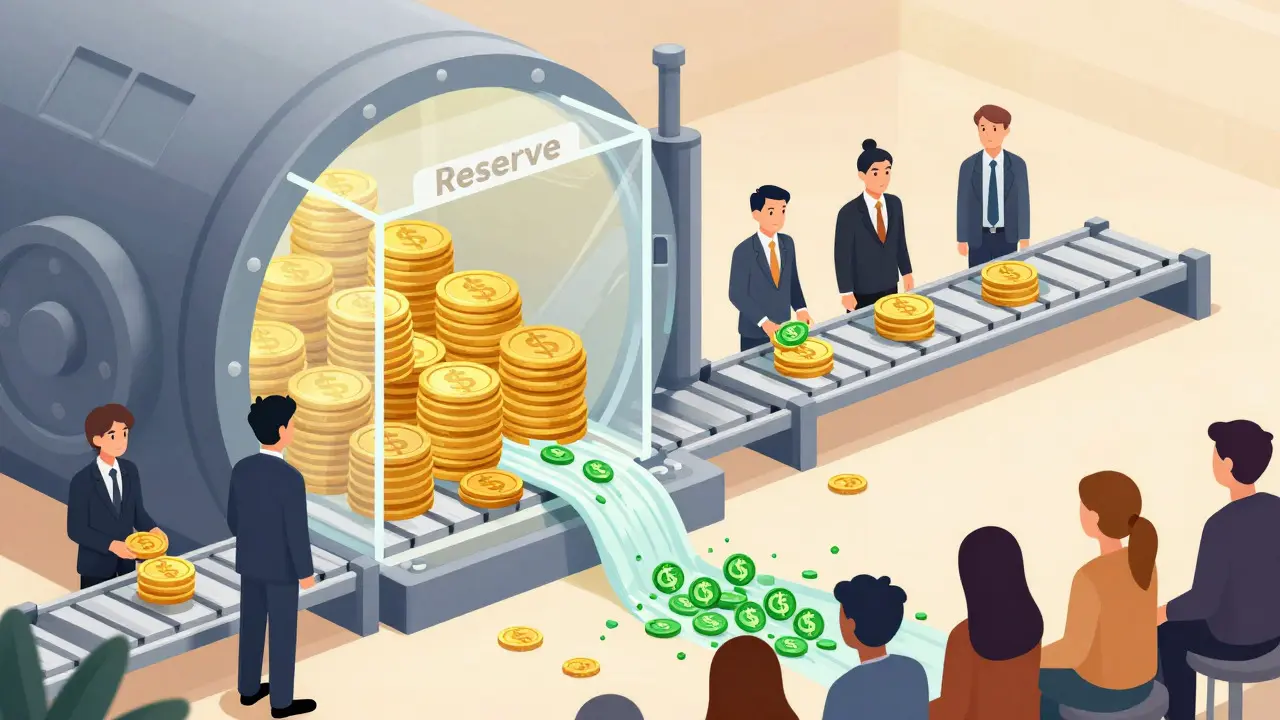
The concept is simple: everyone deserves a baseline income. In the traditional world, governments try to fund this through taxes. In the GoodDollar world, they use interest generated from staked crypto assets. Think of it as a trickle-up economy. Wealthy supporters stake their capital into protocols like Aave or Compound. The interest that accrues flows into the GoodDollar Reserve. That reserve then mints new G$ tokens and distributes them daily to regular users around the world.
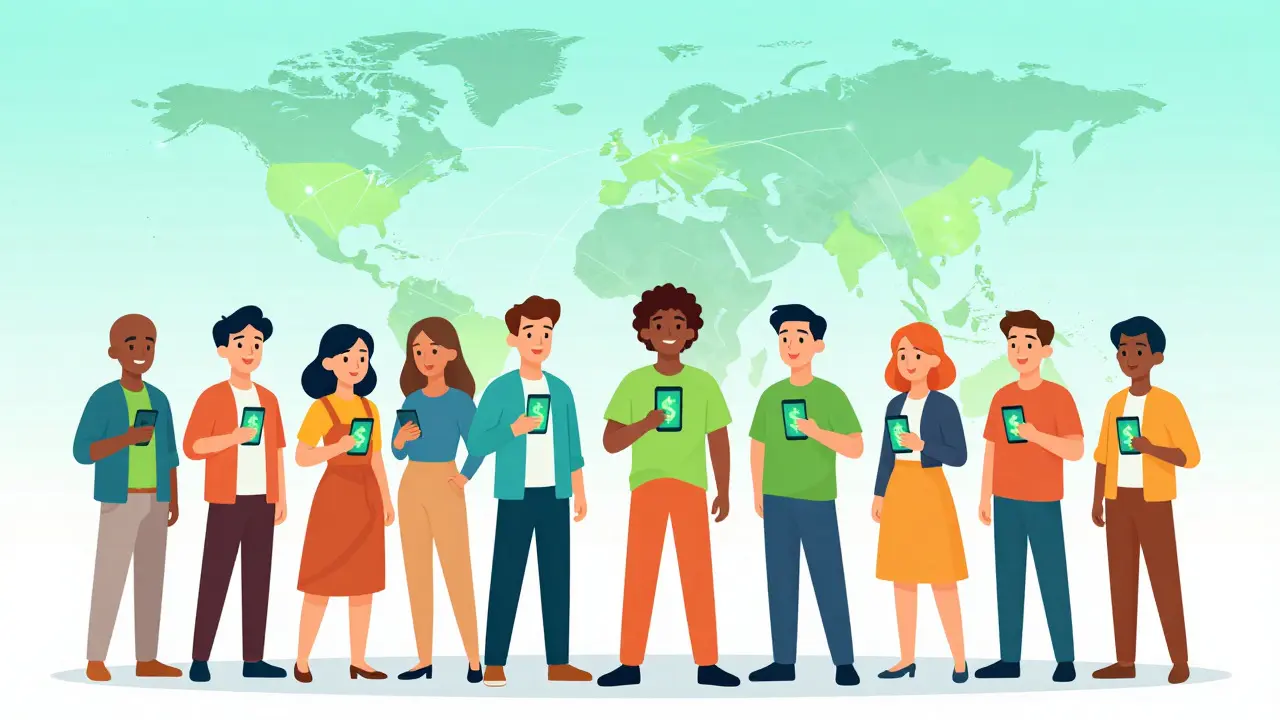
As of mid-2026, GoodDollar claims to be the largest crypto-based UBI project on the planet. They report over 800,000 onboarded members across more than 181 countries. While that sounds massive, only about 100,000 of those people actively claim their rewards every month. That gap tells us something important: getting people to show up every day is harder than just signing them up.
How Do You Actually Get the G$?
You don't need to be a tech wizard to use GoodDollar. The barrier to entry is low, which is part of the design. Here is the step-by-step process most users follow:
- Download the App: You grab the GoodDollar Wallet from the Google Play Store or use the web interface. It is built to look like a standard banking app, not a complex crypto dashboard.
- Create an Account: You sign up with an email address or social login. This creates your wallet address.
- Pass the Biometric Check: This is the big hurdle. To prevent bots from draining the system, GoodDollar uses FaceTec technology. You scan your face in 3D to prove you are a unique human being. Once verified, you get one account per person.
- Claim Daily: Every 24 hours, you open the app and click "Claim." The amount varies based on how many other people claimed that day and how much money is in the reserve.
The catch? You have to do this manually. If you forget to log in for three days, that money might go to someone else. This requirement keeps the active user count lower than the total registration number, but it also ensures the recipients are engaged humans, not scripts.
The Economics: Where Does the Value Come From?
This is where things get technical, but bear with me because it explains why the price of G$ is what it is. GoodDollar runs on multiple blockchains-Ethereum, Celo, Fuse, and XDC-to keep transaction fees low. The heart of the system is the GoodDollar Reserve.
The Reserve acts like an automated market maker (AMM). It holds backing assets (like DAI) and issues G$ tokens against them. The math behind this issuance uses a modified Bancor bonding curve. In plain English, this means the price of G$ adjusts dynamically based on supply and demand. If lots of people want to buy G$, the price goes up. If lots of people sell it back to the reserve, the price drops slightly, but the system takes a small fee (an "exit contribution") to keep the lights on.
There is a hard cap on the supply: 2.2 trillion G$ coins. All of them must be minted by the Reserve. Supporters who provide the initial capital earn interest (often fixed at around 5% APY), while the rest funds the UBI pool. It is a self-sustaining loop designed to last indefinitely without needing constant injections of cash.
| Feature | GoodDollar (G$) | Government UBI Proposals |
|---|---|---|
| Funding Source | DeFi yields & Staking interest | Taxes & National Budget |
| Distribution Method | Daily manual claim via App | Monthly bank transfer / Check |
| Eligibility | Any verified human worldwide | Citizens of specific countries |
| Governance | GoodDAO (Token holders) | Elected Officials / Parliament |
| Asset Type | Cryptocurrency (ERC-20) | Fiat Currency (USD, EUR, etc.) |
The Price Reality Check: Is G$ Worth Anything?
Let's talk numbers, because this is where expectations often crash into reality. If you are looking to get rich quick with GoodDollar, you will likely be disappointed. As of August 2026, the price of one G$ token hovers around $0.0001 USD.
Yes, that is less than one-tenth of a cent. When you claim your daily allowance, you might receive a few hundred G$. At current prices, that translates to fractions of a penny. Some early whitepaper calculations hinted at a future value of $1.00 per G$, which would be a 10,000-fold increase. But years later, we are nowhere near that.
Why is the price so low? Because liquidity is thin. GoodDollar trades mostly on decentralized exchanges (DEXs) with very low volume. On CoinGecko, the 24-hour trading volume is often under $3,000. Major centralized exchanges like Coinbase sometimes list the circulating supply as zero because the tokens aren't sitting in exchange wallets-they are in individual user pockets. This makes tracking the true market cap difficult, but the consensus is clear: G$ is not a high-value store of wealth right now.
However, the creators argue that the price doesn't matter as much as the utility. If enough merchants accept G$ for goods and services, the internal economy could thrive regardless of the USD conversion rate. It becomes a barter medium for its community rather than a speculator's dream.
Governance and Control: Who Runs the Show?
In most crypto projects, whoever holds the most tokens calls the shots. GoodDollar tries to be different. It uses a decentralized autonomous organization (DAO) called GoodDAO. To participate in governance, you need a non-transferable token called GOOD. You cannot buy GOOD on an open market; you earn it through participation and support of the protocol.
This structure prevents whales (rich investors) from buying up all the voting power and hijacking the mission. Holders of GOOD vote on critical parameters like the expansion rate of the reserve, the size of the exit fees, and updates to the smart contracts. It is an experiment in democratic control of a financial system, though critics point out that only the most dedicated users bother to vote.
Risks and Criticisms: What Could Go Wrong?
No system is perfect, and GoodDollar faces several significant hurdles that potential users should understand before diving in.
- Biometric Privacy: Using FaceTec means you are handing over sensitive biometric data. While the company claims this data is secure and used only for verification, storing facial templates for 800,000+ people creates a target for hackers. Data breaches in this space are terrifying.
- Smart Contract Risk: Like all DeFi projects, GoodDollar relies on code deployed on blockchains. If there is a bug in the Reserve contract or the distribution logic, funds could be lost or frozen. Audits happen, but no code is 100% immune to exploits.
- Regulatory Uncertainty: Governments are still figuring out how to handle crypto UBI. Will they classify G$ as a security? Will they restrict cross-border transfers? Regulatory crackdowns could limit access in certain countries overnight.
- Low Economic Impact: For someone living in New York or London, a daily payout of $0.05 does nothing to solve financial stress. The project's impact is arguably higher in developing nations with weaker currencies, but even there, inflation and purchasing power parity remain challenges.
Should You Join GoodDollar?
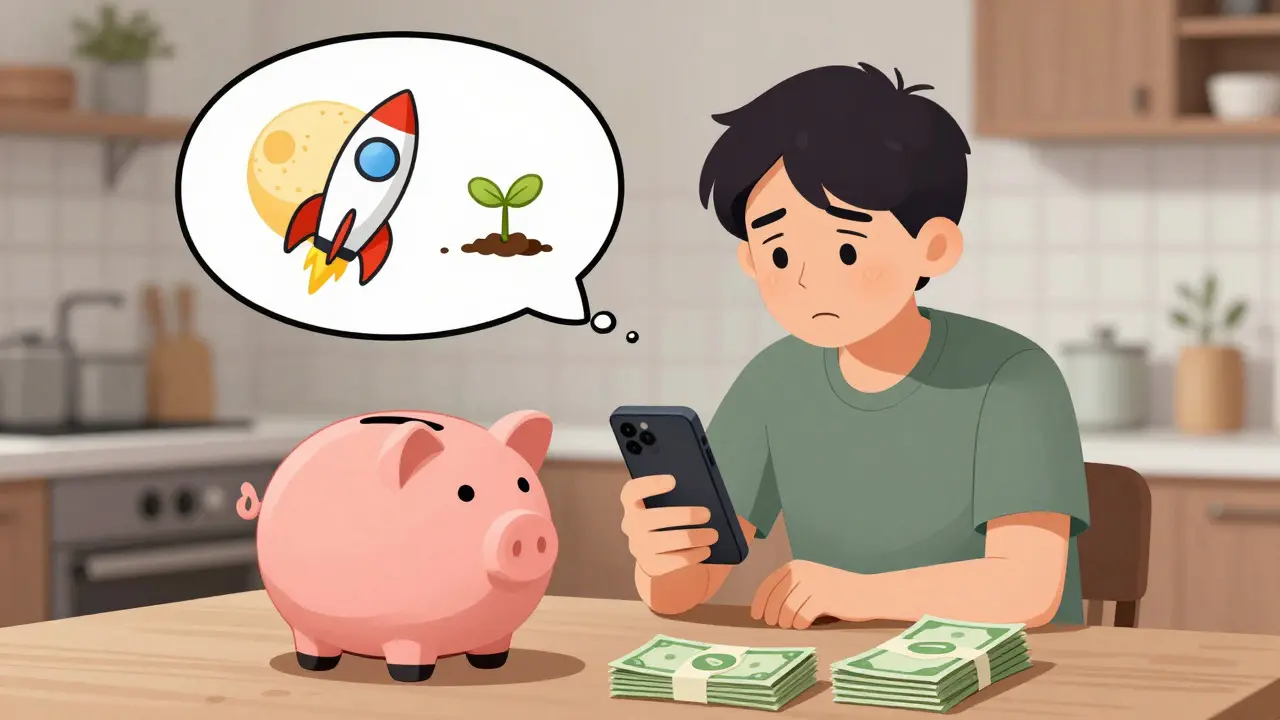
The answer depends entirely on your goals. If you are a trader looking for the next 100x moonshot, GoodDollar is probably not for you. The low liquidity and stable-but-low price action make it a poor vehicle for speculation.
However, if you believe in the concept of universal basic income and want to support a grassroots experiment in economic equality, it is worth trying. It costs nothing but your time and your face scan. You can treat it as a way to learn about DeFi, multi-chain wallets, and DAOs without risking any of your own capital. Plus, having a stash of G$ might give you access to community perks or local merchant discounts as the ecosystem grows.
Just manage your expectations. You won't pay your rent with it anytime soon. But you might just be part of building a new kind of financial safety net for the digital age.
Is GoodDollar (G$) a scam?
No, GoodDollar is not considered a scam in the traditional sense. It is a legitimate decentralized protocol backed by smart contracts on public blockchains like Ethereum and Celo. However, it is an experimental economic model. While the team is transparent and the code is open-source, the low token price and lack of guaranteed returns mean users should not expect to get rich quickly. It is best viewed as a social experiment rather than an investment opportunity.
How much G$ do I get every day?
The amount varies daily based on the size of the GoodDollar Reserve and the number of active claimers. Typically, users receive anywhere from a few dozen to a few hundred G$ per day. Given the current price of approximately $0.0001 USD per G$, this translates to fractions of a US cent. The exact figure is determined by the protocol's algorithm to ensure fair distribution among all verified participants.
Can I sell my GoodDollar for real money?
Yes, you can sell G$ on various decentralized exchanges (DEXs) or peer-to-peer platforms. However, liquidity is currently very low, meaning you might struggle to sell large amounts without affecting the price significantly. Most users hold their G$ to use within the GoodDollar ecosystem or wait for broader adoption. Always check current trading pairs and fees before attempting a sale.
Do I need to buy crypto to start using GoodDollar?
No, you do not need to spend any money to start claiming G$. The GoodDollar Wallet is free to download, and the daily UBI distribution is free for all verified users. You only need to pay gas fees (transaction costs) if you want to move your G$ to another wallet or swap it for other tokens, but simply claiming and holding requires zero upfront investment.
Is my biometric data safe with GoodDollar?
GoodDollar uses FaceTec for 3D facial recognition to prevent Sybil attacks (multiple fake accounts). FaceTec is a reputable security provider that processes data locally on your device whenever possible, sending only encrypted templates for verification. However, as with any service collecting biometric data, there is always some residual risk. Users should weigh the convenience of free daily income against the privacy implications of sharing facial data.