
- 24 Jul 2026
- Elara Crowthorne
- 0
You might have stumbled upon Onix (ONX) while scrolling through a list of old altcoins or checking your wallet for forgotten assets. It’s one of those projects that peaked during the late 2017 bull run and has since faded into the background. But what exactly is Onix today? Is it still alive, or is it just a ghost on the blockchain?
In short: Onix is a proof-of-work cryptocurrency that uses the X11 hashing algorithm. While the network technically still exists, it suffers from near-zero liquidity, negligible trading volume, and an all-time high price that feels like a distant memory. If you are wondering whether to buy, mine, or hold ONX, the answer requires looking past the hype of its early days and facing the cold reality of its current market status.
The Basics: What is Onix (ONX)?
To understand where Onix stands now, we first need to look at what it was built to be. Onix is a decentralized digital currency designed to operate as a peer-to-peer payment system. Like Bitcoin, it relies on a distributed ledger to record transactions. However, unlike Bitcoin’s SHA-256 algorithm, Onix utilizes the X11 hashing algorithm, which combines eleven different cryptographic hash functions to enhance security and resist specialized mining hardware dominance.
The project launched with the goal of providing a fast and secure alternative to major cryptocurrencies. The total supply of Onix is capped at approximately 112.1 million tokens. As of mid-2026, roughly 107 million of these coins are in circulation. This means the vast majority of the supply has already been mined, leaving very little room for new issuance.
| Attribute | Value |
|---|---|
| Ticker Symbol | ONX |
| Consensus Mechanism | Proof-of-Work (PoW) |
| Hashing Algorithm | X11 |
| Total Supply | ~112,119,457 ONX |
| Circulating Supply | ~107,072,780 ONX |
| Block Reward | 60 ONX per block |
Price History: From $0.55 to Near Zero
If you held Onix during its glory days, you know the pain of watching its value evaporate. Onix reached its all-time high of $0.55 USD on November 29, 2017. That was right in the middle of the massive crypto boom when every new token seemed to skyrocket overnight.
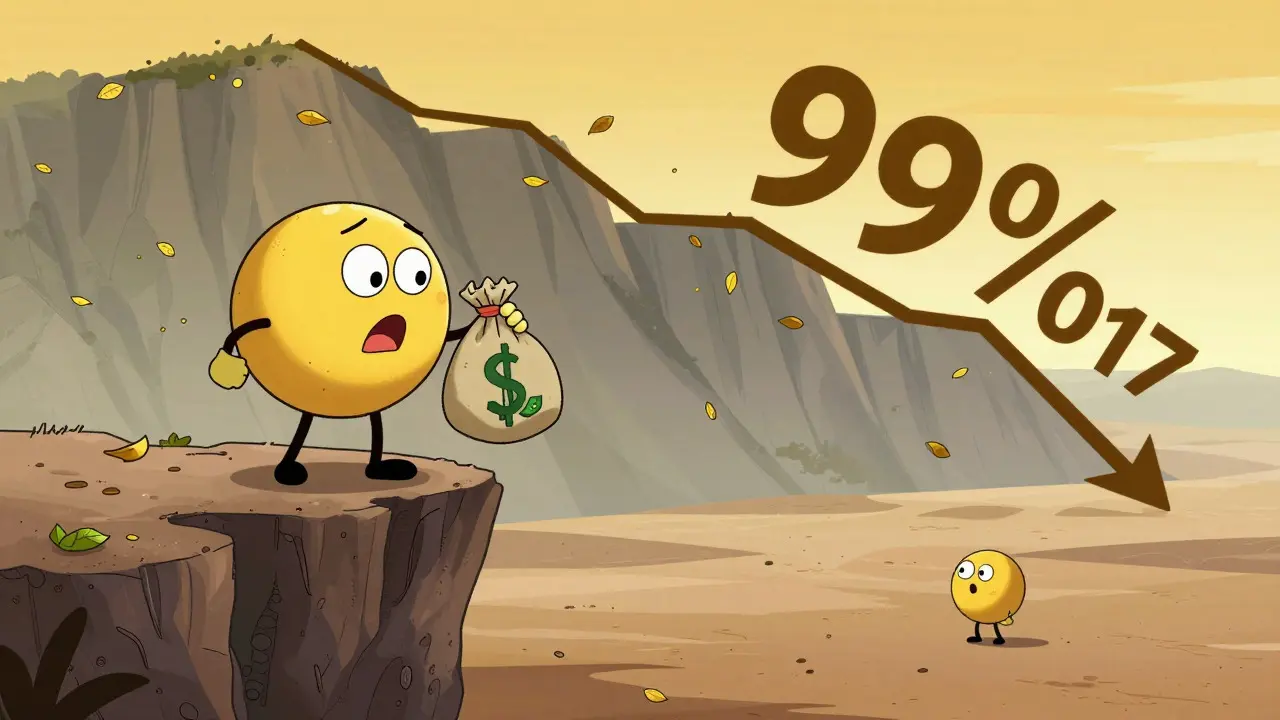
Fast forward to July 2026, and the picture looks drastically different. Recent data shows Onix trading at approximately $0.00098 USD. Some sources even report prices as low as $0.00028 USD. This represents a decline of over 99% from its peak. To put that in perspective, if you invested $1,000 in ONX at its all-time high, it would now be worth less than a dollar.
The volatility hasn’t stopped; it has just become irrelevant due to lack of volume. In many cases, the 24-hour trading volume is reported as $0. This isn’t a glitch-it means no one is actively buying or selling the coin on centralized exchanges. When there are no buyers, the price becomes a theoretical number rather than a real market rate.
Liquidity Crisis: Where Can You Buy ONX?
One of the biggest hurdles for any investor considering Onix is accessibility. Major centralized exchanges like Binance, Coinbase, and Kraken do not list ONX. Even platforms like Crypto.com report that ONX is not currently tradable on their main interface.
This leaves traders with two difficult options:
- Decentralized Exchanges (DEXs): You can attempt to trade ONX using a Web3 wallet connected to a DEX. However, without sufficient liquidity pools, swapping ONX for stablecoins or other majors often results in massive slippage-meaning you lose a significant portion of your value just by executing the trade.
- P2P Trading: Finding someone willing to accept ONX directly is nearly impossible due to its obscurity.
The lack of exchange listings is a strong indicator of market sentiment. Exchanges list coins that bring users and volume. When they delist or ignore a token, it signals that the asset no longer holds commercial interest.
Mining Onix: Is It Still Profitable?
Since Onix uses Proof-of-Work, miners can still generate new blocks. The network offers a block reward of 60 ONX. Sounds decent until you do the math.
With the current price hovering around fractions of a cent, the revenue from mining one block is negligible. Let’s say you mine a block every hour (which is optimistic given the network difficulty). That’s 60 ONX per hour. At $0.001 per ONX, that’s $0.06 per hour. Now factor in electricity costs. If your power bill averages $0.10 per kWh, your mining rig likely consumes more energy than the value of the coins it produces.
Most serious miners have moved on to more profitable algorithms or coins with higher market caps. The remaining mining activity is likely done by hobbyists or bots keeping the network alive out of habit rather than profit. For anyone thinking about starting an ONX mining operation in 2026, the economic viability is effectively zero.
Development Status: Abandoned or Dormant?
A healthy cryptocurrency needs active development. Regular updates, bug fixes, community engagement, and a clear roadmap are signs of life. Onix lacks most of these indicators.
There is no recent news from the original development team. The official website remains online, but detailed technical documentation, whitepapers, and future roadmaps are sparse or outdated. Social media channels associated with the project show minimal activity compared to thriving communities like Ethereum or Solana.
This silence raises red flags. In the crypto world, "quiet" often means "abandoned." Without developers pushing updates, the codebase may become vulnerable to bugs or security issues over time. Furthermore, without a community driving adoption, the use case for holding ONX diminishes further.
Risks of Holding Onix in 2026
If you already hold Onix, you face several risks:
- Liquidity Risk: You may find it impossible to sell your holdings without crashing the price or paying excessive fees on a DEX.
- Obsolescence Risk: As older technologies fade, wallets and software may stop supporting legacy coins like ONX.
- Opportunity Cost: Capital tied up in a dormant asset could be deployed elsewhere for potential growth.
Conversely, if you are looking to buy ONX hoping for a revival, proceed with extreme caution. Revivals are rare. Most coins that drop 99% from their highs never recover because the network effects-the users, developers, and investors-are gone.
Conclusion: What Should You Do?
Onix (ONX) serves as a classic example of how quickly the crypto landscape changes. Once a promising X11-based alternative, it is now a low-liquidity asset with minimal utility. For collectors or those with sentimental value attached to early crypto investments, holding ONX might make sense as a digital artifact. For investors seeking returns, however, the data suggests looking elsewhere.
The combination of zero trading volume, unprofitable mining, and lack of development activity paints a clear picture. Onix is surviving, but it is not thriving. Before making any moves with this asset, ensure you understand the high risk of illiquidity and the likelihood that the price may remain stagnant or continue to decay.
Is Onix (ONX) a good investment in 2026?
Probably not. With a 99% drop from its all-time high, zero trading volume on major exchanges, and no active development, Onix carries extremely high risk. It lacks the liquidity and community support needed for sustainable growth.
Can I mine Onix for profit?
No. The current price of ONX is so low that the electricity cost to mine a block exceeds the value of the 60 ONX reward. Mining is economically unviable for almost everyone.
Where can I buy Onix (ONX)?
ONX is not listed on major centralized exchanges like Binance or Coinbase. You may find it on some decentralized exchanges (DEXs) via Web3 wallets, but expect high slippage and low liquidity.
What is the X11 algorithm used by Onix?
X11 is a hashing algorithm that chains together 11 different cryptographic functions. It was designed to improve security and prevent ASIC dominance, similar to Litecoin. However, its relevance has diminished as newer consensus mechanisms emerged.
Is Onix dead?
Technically, the blockchain is still running, but commercially, it is largely dormant. With no trading volume and no development updates, it behaves like an abandoned project despite having a circulating supply.
