
- 15 May 2026
- Elara Crowthorne
- 17
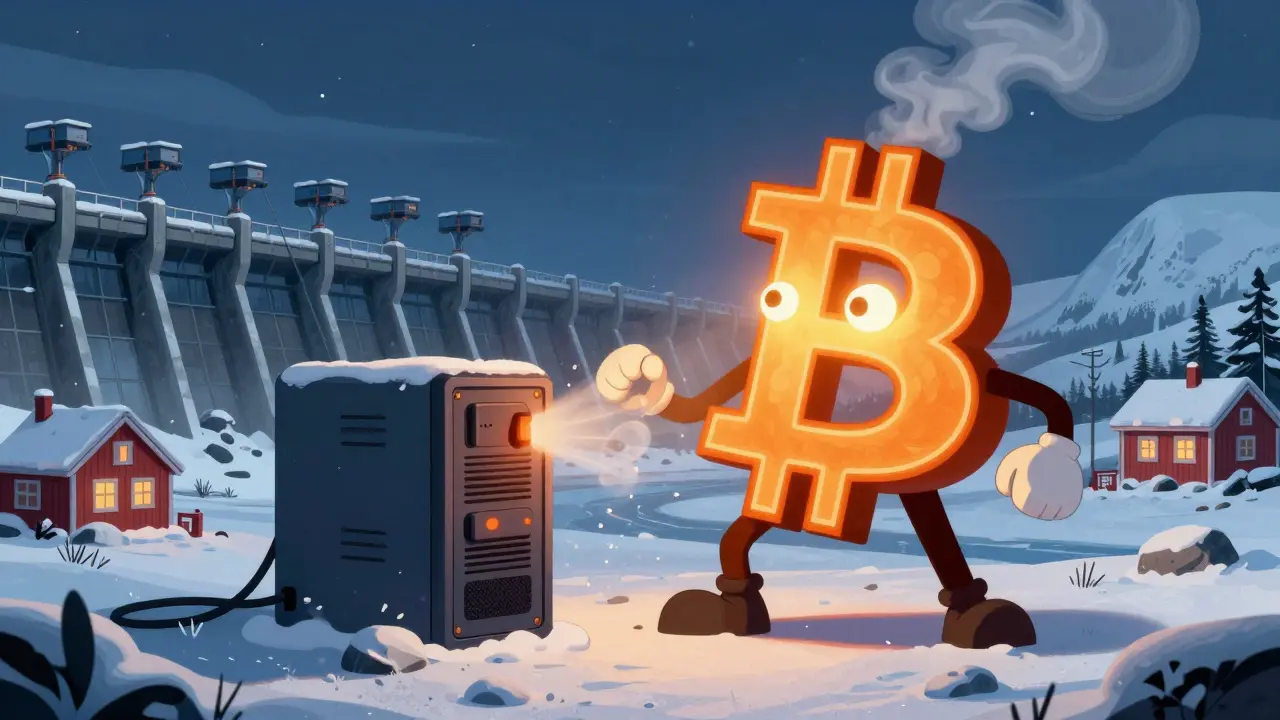
Sweden used to be a playground for cryptocurrency miners. With cheap hydroelectric power and cold weather that kept servers cool, it looked like the perfect spot to dig up Bitcoin. But something changed. Today, Sweden is one of the toughest places in Europe to run a mining operation. The reason isn't just about money-it’s about the planet.
If you’re wondering why your favorite crypto news feeds are talking about Swedish crypto restrictions, you’re not alone. The country has shifted from welcoming miners to actively pushing them out. This shift stems from a fierce debate over energy use, carbon emissions, and whether blockchain technology can survive under strict green laws. Let’s break down what’s happening, why it matters, and where things are heading.
The Spark: When Energy Use Became Too High
It started with numbers that scared regulators. In 2023, the Swedish Financial Supervisory Authority (FI) and the Financial Stability Council (FSC) dropped a bombshell. They claimed that crypto-assets at current market values release up to 120 million tonnes of CO2 annually. To put that in perspective, that’s equal to 100 million round-trip flights between Sweden and Thailand.
Erik Thedéen, Director General of FI, didn’t mince words. He called for an EU-wide ban on Bitcoin mining. Why? Because Bitcoin uses a system called Proof-of-Work (PoW). This method requires massive amounts of computing power to validate transactions. It’s secure, but it’s also incredibly hungry for electricity.
After China banned crypto mining in 2021, many operations moved north. Between April and August 2022, electricity consumption for Bitcoin mining in Sweden skyrocketed by several hundred percent. It reached about 1 TWh per year. That’s enough power to keep 200,000 Swedish households running. For a country committed to climate goals, this surge was unacceptable.
The Regulatory Hammer: What Changed?
Sweden didn’t just complain; they acted. While other European countries like Germany and France focused on registering service providers, Sweden went harder. They targeted the source: the mining itself.
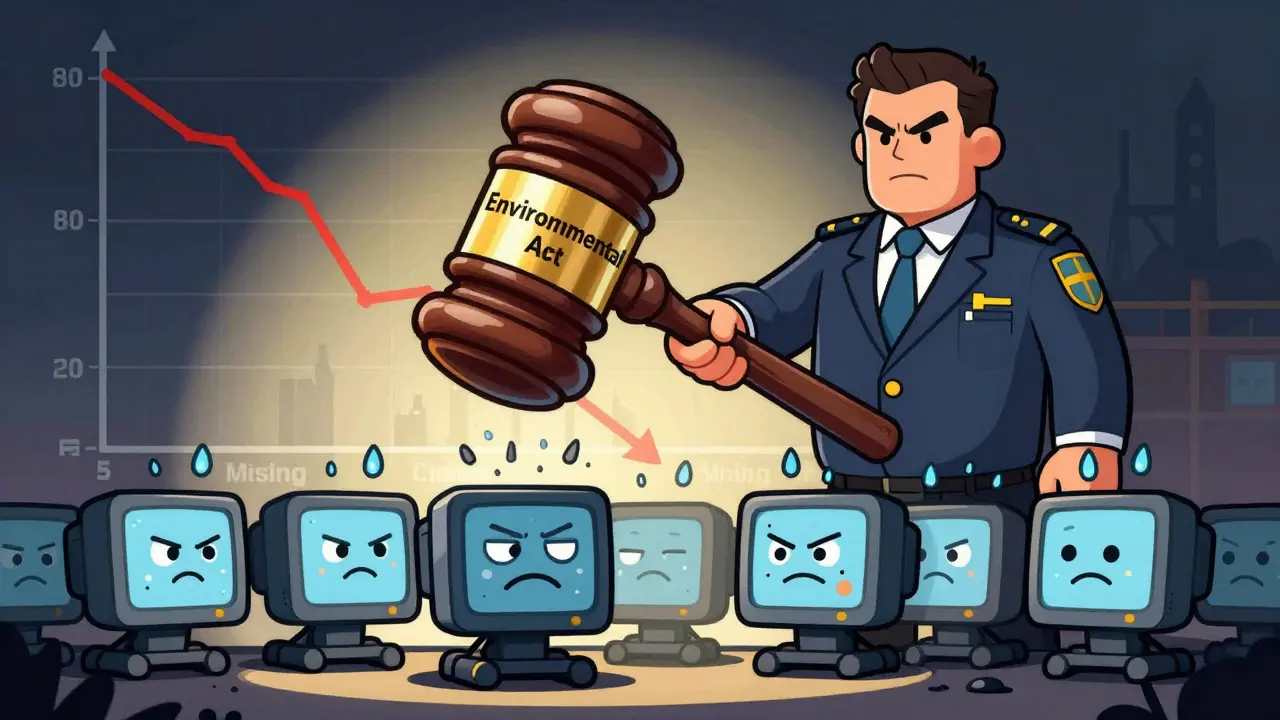
In January 2025, Sweden implemented the Crypto-Asset Environmental Transparency Act. This law requires all mining operations above 0.5 MW to publicly disclose real-time energy consumption and sources. It’s not a total ban yet, but it’s a heavy burden. Operators must submit detailed projections and quarterly sustainability reports.
The registration process with the FI now takes 120-180 days. Compare that to Portugal, where it might take 30-60 days. Add in strict Anti-Money Laundering (AML) rules requiring tracking of transactions over 10,000 SEK, and you have a maze that many smaller players can’t navigate.
Local governments joined in too. Boden Municipality capped new mining facilities at 5 MW. Kiruna demanded proof that 90% of energy comes from renewable sources. These aren’t small hurdles-they’re deal-breakers for many.
The Debate: Environment vs. Innovation
Not everyone agrees with Sweden’s approach. Critics argue that the math doesn’t add up. Dr. Per Jansson, an energy researcher at KTH Royal Institute of Technology, points out that mining rigs can actually help stabilize the grid. During peak demand, these facilities can cut their power use by 90% within 15 minutes. This flexibility is valuable for balancing renewable energy sources like wind and solar.
Christin Lindholm, CEO of the Swedish Blockchain Association, argues for regulation at the financial product level rather than banning the technology outright. She believes blockchain offers benefits beyond speculation, such as secure record-keeping and smart contracts. Banning PoW kills those potential innovations.
Then there’s the issue of "green" energy. Sweden gets about 54% of its power from hydroelectric sources, 30% from nuclear, and 15% from wind. Miners love this mix. But Sweden focuses on absolute consumption. Even if the energy is clean, using more of it means less for other industries or homes. This contrasts with the U.S., where Texas mines often use 50-70% renewable energy but face fewer restrictions because the focus is on the source, not the volume.
| Country | Primary Focus | Mining Status | Regulatory Friendliness Rank (2024) |
|---|---|---|---|
| Sweden | Absolute energy consumption & environmental impact | Legal but heavily restricted | 47th out of 50 |
| Norway | Minimal friction, high capacity | Welcome, hosts ~1.5% of global mining | High (Top Tier) |
| Germany | Registration of service providers | Legal, no specific mining bans | 18th |
| Switzerland | Technology-neutral innovation | Very friendly | 3rd |
The Exodus: Where Are Miners Going?
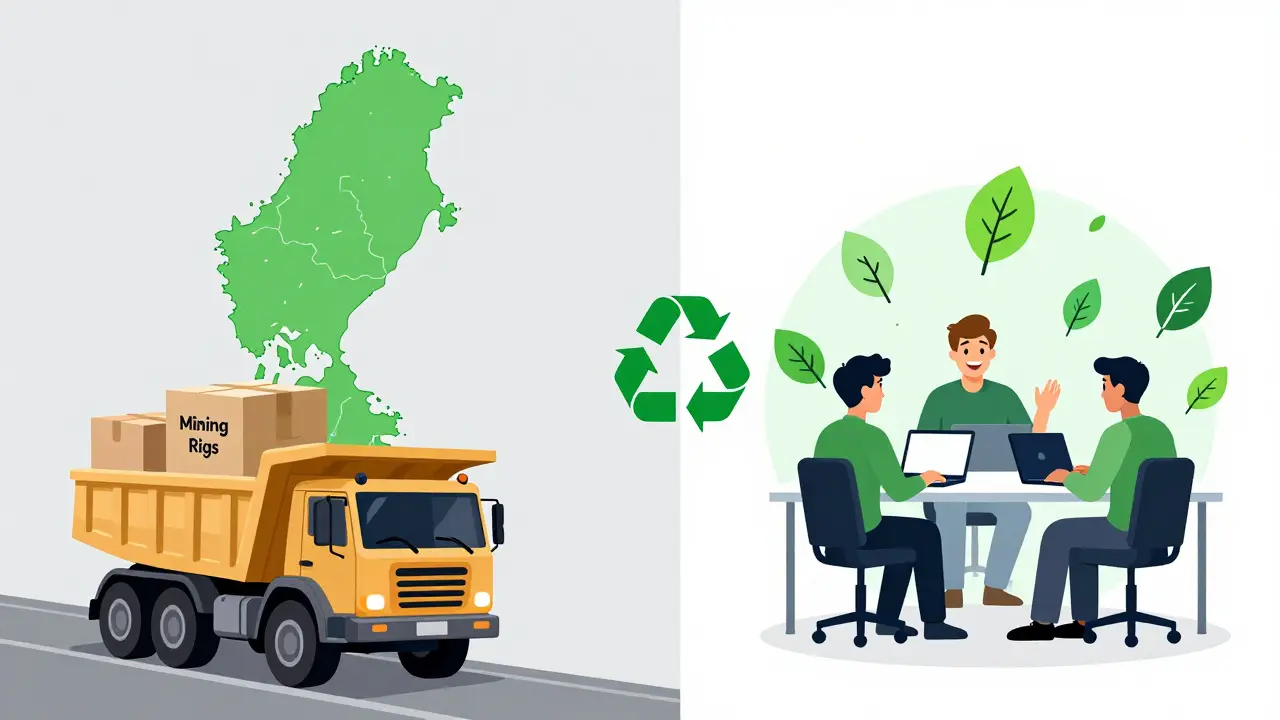
The pressure is working-or at least, it’s moving people. A 2024 survey by the Swedish Crypto Mining Association found that 68% of operational mining companies plan to leave Sweden by 2026. Norway is the top destination, taking 42% of those leaving. Germany and the United States follow with 28% and 19%, respectively.
User feedback paints a grim picture. On Reddit, operators describe losing banking relationships without explanation after FI issued guidance. One user reported losing services for a 2-megawatt facility in Norrbotten despite using 100% hydro power. Trustpilot ratings for Swedish exchanges dropped from 4.2 in 2022 to 2.8 in early 2025, citing difficult KYC processes and sudden withdrawal limits.
This exodus has hurt Sweden’s market share. Its portion of the Nordic crypto market value fell from 38% in 2022 to 27% in 2025. Meanwhile, Norway’s share grew from 22% to 34%. Sweden’s mining capacity has shrunk by 40% since 2022, while Europe’s overall capacity grew by 15%.
Pivoting to Proof-of-Stake
Some companies aren’t leaving; they’re changing. The biggest shift is away from Proof-of-Work toward Proof-of-Stake (PoS). PoS validates transactions based on the amount of cryptocurrency held, not computational power. It uses 99.95% less energy.
Ethereum made this switch in 2022, drastically cutting its footprint. Swedish startups are following suit. EcoChain, a Stockholm-based startup, pivoted to PoS validation. They maintained profitability through transaction fees while slashing energy use. This model is becoming the survival strategy for those who want to stay in Sweden.
The government is encouraging this transition. The Swedish Energy Agency allocated 150 million SEK ($13.8 million USD) for projects converting to PoS or developing waste heat recovery systems. In Luleå, a pilot project recovered 65% of mining waste heat for district heating. It’s a win-win if it scales.
What’s Next for Swedish Crypto?
Sweden isn’t done regulating. The Markets in Crypto-Assets (MiCA) regulation across the EU includes Sweden’s push for environmental disclosures. Starting July 2025, MiCA’s sustainability requirements will kick in. Sweden plans to implement these alongside its own laws.
However, the call for an outright ban is fading. The European Commission rejected a total mining ban in its December 2024 delegated regulation. Instead, Sweden is moving toward market-based mechanisms like carbon pricing for energy-intensive operations. Analysts predict Sweden will adopt a "Swiss model" by 2027-focusing on outcomes rather than banning specific technologies.
For now, Sweden remains a leader in enterprise blockchain development. Stockholm hosts 37% of Nordic blockchain startups focused on non-mining solutions. If you’re building apps, not digging coins, Sweden is still open for business.
Is Bitcoin mining illegal in Sweden?
No, Bitcoin mining is not illegal in Sweden as of 2025. However, it is heavily regulated. Operators must register with the Financial Supervisory Authority (FI), comply with strict environmental impact assessments, and disclose real-time energy usage. The regulatory burden is so high that many consider it effectively prohibitive for large-scale operations.
Why does Sweden hate crypto mining?
Sweden opposes energy-intensive mining due to its significant carbon footprint. Regulators estimate that crypto-assets release up to 120 million tonnes of CO2 annually globally. Sweden prioritizes absolute energy reduction to meet climate goals, viewing Proof-of-Work mining as incompatible with sustainable energy targets.
Where are Swedish crypto miners moving?
Most Swedish miners are relocating to Norway (42%), followed by Germany (28%) and the United States (19%). Norway offers abundant renewable energy with minimal regulatory friction, making it the preferred alternative for energy-intensive operations.
What is the difference between Proof-of-Work and Proof-of-Stake?
Proof-of-Work (PoW) requires computers to solve complex puzzles to validate transactions, consuming vast amounts of electricity. Proof-of-Stake (PoS) validates transactions based on the amount of cryptocurrency held by validators. PoS uses approximately 99.95% less energy than PoW, making it much more environmentally friendly.
Will Sweden ever lift its crypto restrictions?
Sweden is unlikely to lift restrictions entirely soon. Instead, it is shifting toward outcome-based regulation. By 2027, experts predict Sweden will adopt a model similar to Switzerland, focusing on environmental outcomes and carbon pricing rather than banning specific technologies. Low-energy consensus mechanisms like PoS will likely face fewer hurdles.

17 Comments
lol sweden is just scared of losing control over their grid again
The latency implications for cross-border arbitrage when you add that much regulatory overhead are actually quite significant. Most PoW miners operate on razor-thin margins, so the 120-day registration window effectively acts as a hard fork in their business continuity plans. It's not just about energy consumption metrics; it's about the opportunity cost of capital tied up in compliance rather than hash rate expansion. The shift toward Norway makes sense because they've optimized their grid infrastructure for variable load balancing without the bureaucratic friction seen here.
I honestly think everyone is missing the point. Why should we care if Sweden bans mining? Let them have their clean air and their high taxes. If they want to be the moral police of the crypto world, let them try to enforce it globally. It’s hilarious how they think one country can stop Bitcoin. It’s like trying to hold back the tide with a spoon. I bet they’ll regret this when they realize they’ve pushed all the innovation to places that don’t care about their feelings. But hey, at least they feel good about themselves.
This is such a pivotal moment for the industry! It really shows how much pressure the environment is putting on tech sectors. I feel for the miners who had to pack up and move everything. Imagine the stress of shutting down a facility that was running smoothly only to face these new hurdles. It takes a lot of courage to pivot to Proof-of-Stake, but it’s inspiring to see companies like EcoChain adapting instead of just giving up. We need more stories like this where people find creative solutions to tough problems!
Oh great, another article telling me my hobby is evil 🙄
Can we please stop pretending that burning coal in Texas is better than using hydro in Sweden? You’re just jealous because they’re trying to do something right. I’m sure the bankers love watching startups fail while they sip their lattes 😒💔
Well, well, well... look who decided to show up late to the party! 🎉🎊 So, you think Sweden is being too harsh? That’s an interesting take! I mean, who needs regulations anyway, right?! Just let the wild west run free! 🤠💼 But seriously, the data doesn’t lie. The energy spike was real. And yes, moving to Norway is smart. But don’t act like it’s easy! Good luck to those who stay! 🍀✨
one must consider the broader implications of such regulatory frameworks which seem to ignore the fundamental nature of decentralized networks as inherently resistant to centralized control mechanisms whether imposed by state actors or financial institutions alike thereby creating a paradoxical situation where attempts to suppress activity merely drive it underground or across borders thus failing to achieve the stated environmental objectives while simultaneously undermining the rule of law through arbitrary enforcement actions that lack clear legal precedent
i totally get why theyre doing this its scary how much power those rigs use right? i mean imagine if every house in your neighborhood had a supercomputer running 24/7 just to find numbers lol but also like its kinda sad for the small guys who cant afford the big reports maybe there could be a middle ground idk just feels like theyre pushing people away instead of helping them fix it hope things get better soon tho
typical green washing nonsense. they claim its about the planet but its really about control. bitcoin is digital gold and you cant ban it. sweden will end up with nothing but empty warehouses and angry taxpayers. the rest of the world is laughing at them right now. wake up sheeple.
The intellectual laziness displayed in equating all cryptocurrency operations with environmental degradation is profound. One must appreciate the nuance of grid stabilization provided by flexible loads during peak renewable generation periods. To dismiss this capability as mere 'energy hunger' reveals a fundamental misunderstanding of modern power systems. Furthermore, the suggestion that Proof-of-Work is obsolete ignores its security guarantees which are mathematically superior to the subjective trust models of Proof-of-Stake. This regulatory overreach is not environmental stewardship; it is economic vandalism disguised as virtue signaling.
You lot are pathetic. Think you can just waltz in and take our resources? Sweden is not your dumping ground for your dirty little secrets. Get out. All of you. We don't need your noise or your heat. Keep your digital rocks and go choke on your own emissions elsewhere. Disgusting.
Actually, let me correct a few misconceptions here. First, the CO2 figure cited includes indirect emissions from grid displacement, not just direct mining output. Second, the 1 TWh figure is accurate but represents less than 1% of total Swedish consumption. Third, the move to Norway isn't just about regulation; it's about cheaper electricity rates due to oversupply in certain seasons. Fourth, Proof-of-Stake doesn't solve the centralization issue entirely, as staking rewards tend to concentrate wealth among early adopters. Fifth, the waste heat recovery potential is often overstated because urban density limits where large facilities can be placed. Sixth, MiCA regulations will likely harmonize these standards across the EU, making national bans less effective. Seventh, the banking issues mentioned are likely due to internal risk assessments rather than explicit FI guidance. Eighth, the comparison to Thailand flights is a misleading metric that ignores the utility value of the transactions secured. Ninth, the timeline for registration delays is partly due to understaffing at the FI, not intentional obstruction. Tenth, the future outlook depends heavily on how carbon pricing mechanisms evolve under the EU ETS system.
It’s really important that we talk about this openly. I know some people feel left out when regulations get tough, but maybe we can learn from each other. If anyone has experience with switching to PoS, I’d love to hear how it went. We’re all in this together, and sharing knowledge helps everyone adapt. Let’s support the innovators who are finding ways to make blockchain greener!
I agree that the transition is tricky, but I think the focus on sustainability is necessary. It’s good to see companies trying to adapt rather than just leaving. Maybe there’s a way to balance both needs?
While the environmental concerns are valid, it is crucial to ensure that regulatory measures do not inadvertently stifle technological progress. A balanced approach that encourages innovation while maintaining strict environmental standards would be ideal. Perhaps incentives for green technology adoption could replace punitive measures, fostering a collaborative environment between regulators and industry participants.
It is truly heartening to witness the resilience of the community in the face of such challenges. The shift towards sustainable practices is not merely a regulatory requirement but a moral imperative for our collective future. I believe that through cooperation and shared vision, we can overcome these obstacles and emerge stronger. Let us continue to support one another in this journey towards a greener blockchain ecosystem.
think about this: what is money really? is it just paper or bits? sweden says no to bits because they burn energy. but is that energy wasted? or is it securing a global ledger? maybe the problem isnt the tech but our obsession with growth at all costs. we need to rethink value itself. not just coins but meaning. if we cant mine without hurting the earth, maybe we shouldnt mine at all. or maybe we need a new kind of proof. proof of care? proof of life? lets dig deeper than just hashes.