- 6 Oct 2026
- Elara Crowthorne
- 0
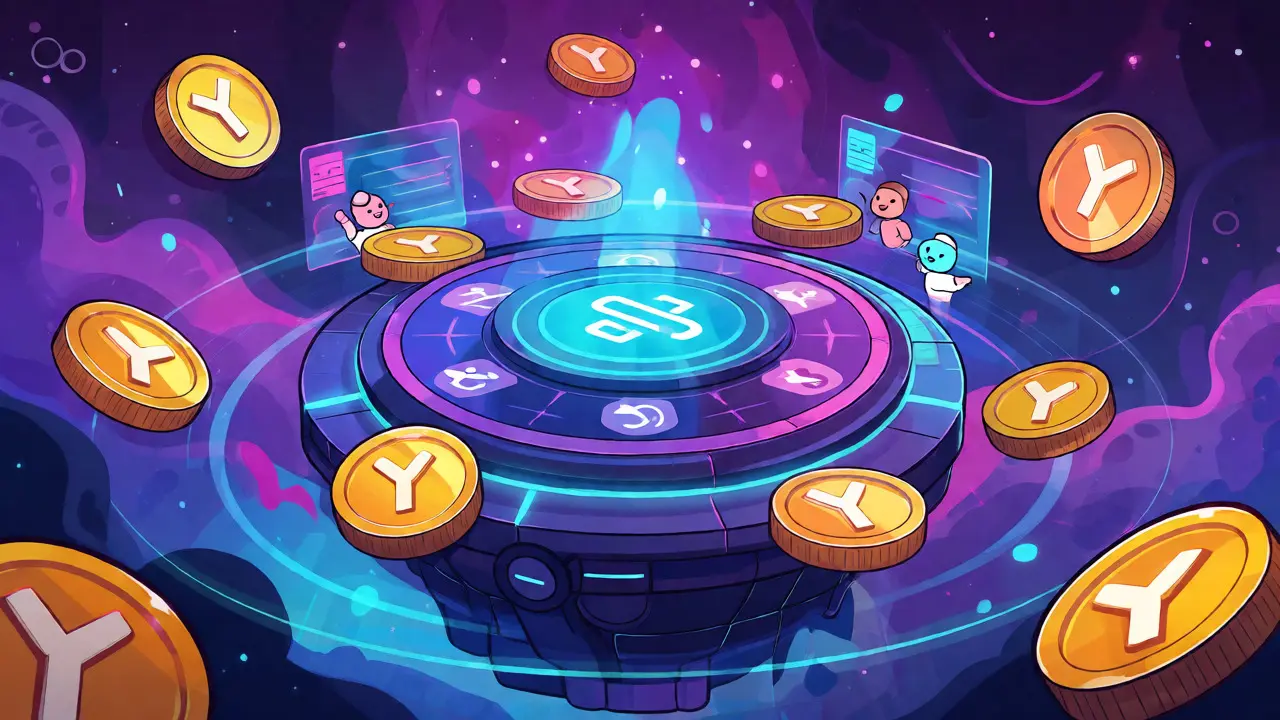
You probably haven't heard of YodeSwap (YODE) because it’s not on your favorite centralized exchange. It’s a niche automated market-making (AMM) decentralized exchange built specifically for the Dogechain Network. Think of it as an "all-in-one" DeFi hub where you can swap tokens, stake assets, and farm yields, all within the ecosystem tied to the meme-coin giant, Dogecoin. But here is the kicker: while the concept sounds promising for Doge enthusiasts, the hard data tells a story of extreme volatility, microscopic liquidity, and confusing tokenomics that should make any serious investor pause.
The Core Concept: An All-in-One DeFi Hub for Dogechain
YodeSwap is a decentralized exchange protocol designed to provide trading infrastructure for the Dogechain Network, a smart-contract blockchain associated with Dogecoin. Launched around mid-2022, it positioned itself as one of the first AMMs on this specific chain. Unlike major players like Uniswap or PancakeSwap that dominate Ethereum or BNB Chain, YodeSwap serves a much smaller, specialized audience. Its main selling point is integration. Instead of hopping between different apps, users could theoretically handle swaps, staking, yield farming, and even participate in launchpads for new Dogechain projects directly through the YodeSwap interface.
The native token, YODE, acts as the utility and incentive layer for this system. You use it to pay for gas fees on the platform, earn rewards for providing liquidity, and potentially vote on governance matters, though active governance participation seems minimal given the current state of the project. For early adopters who believed in the potential of Dogechain’s smart contract capabilities, YodeSwap offered a way to put their idle DOGE or wrapped DOGE (WWDOGE) to work. However, the reality of using such a niche protocol involves navigating a landscape with very few trading pairs and limited user support.
Tokenomics Chaos: Why the Numbers Don’t Add Up
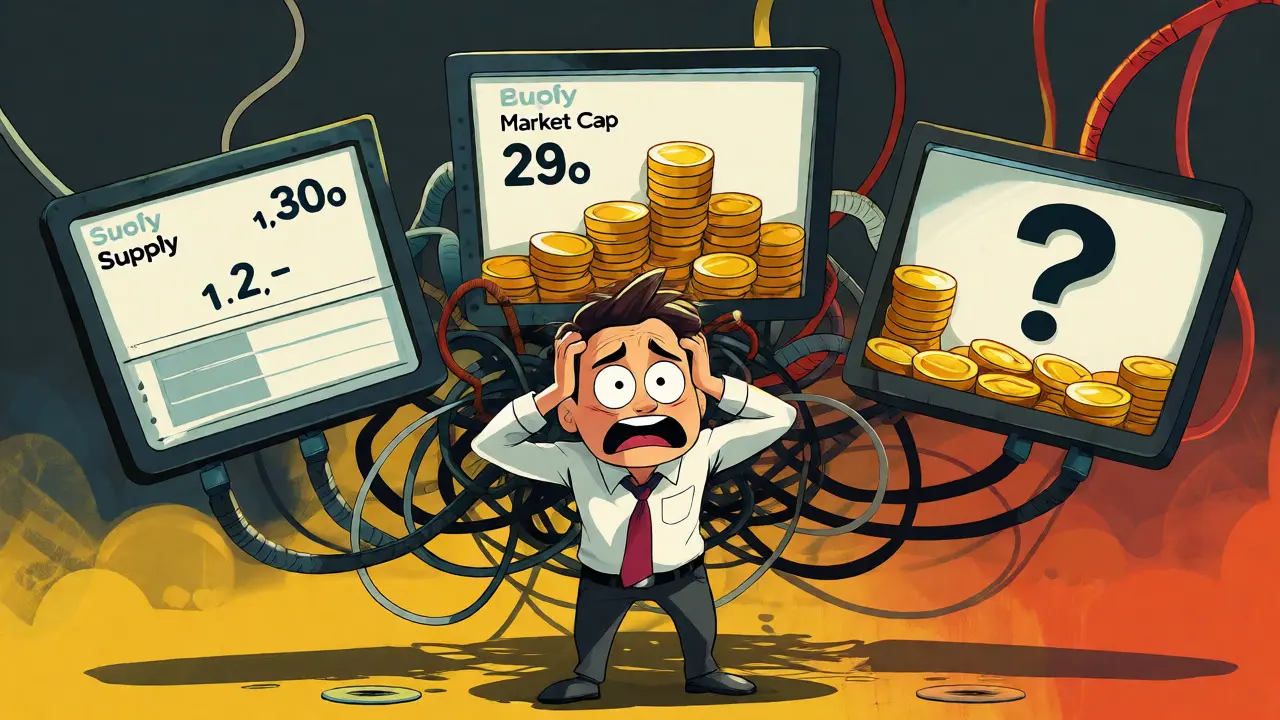
If you try to look up how many YODE tokens actually exist, you’ll hit a wall of contradictory data. This inconsistency is a massive red flag for anyone trying to value the asset. Different tracking services report wildly different figures for total supply, circulating supply, and maximum supply. For instance, CoinMarketCap lists a total supply of just 32,000 YODE, while CoinCarp claims a max supply of nearly 150 million. Another source might say there are only 39,000 coins in circulation, while yet another reports over 11 million.
Why does this matter? Because you cannot calculate a reliable market cap if you don’t know the supply. If the circulating supply is 32,000, a price of $0.07 gives a tiny market cap. If the supply is 12 million, that same price implies a completely different valuation. The table below illustrates the stark differences found across major aggregators as of late 2026:
| Data Source | Circulating Supply | Total/Max Supply | Reported Market Cap |
|---|---|---|---|
| CoinStats | ~11.7 Million | ~12.7 Million | $2,239 |
| CoinGecko | ~12 Million | N/A (Variable) | $2,239 |
| KuCoin | ~39,000 | ~150 Million | Varies |
| DropsTab | ~8.8 Million | N/A | $41,858 (March 2025) |
This lack of transparency suggests either poor communication from the development team or significant changes in the token distribution model that weren’t clearly documented. Some sources mention an initial allocation where 98.5% went to liquidity incentives and only 1.5% to the team, which is a fair structure, but without consistent supply data, verifying these claims is nearly impossible.
Price History: From Speculative Peaks to Micro-Cap Reality
Let’s talk about price action, because it’s brutal. YODE hit an all-time high (ATH) of approximately $14.31. If you bought at the peak, you are currently down roughly 99.96%. As of October 2026, the token trades for fractions of a cent-around $0.00019 to $0.0003 depending on the day. This isn’t just a dip; it’s a collapse typical of many micro-cap DeFi tokens that launched during hype cycles and failed to sustain interest.
The trading volume tells an even more concerning story. On some days, the 24-hour trading volume drops to under $5. Yes, five dollars. In September 2026, CoinGecko noted that YODE had effectively stopped trading on all listed exchanges for about a month. When daily volume is that low, buying or selling any meaningful amount causes massive slippage. You might intend to sell 1,000 YODE, but due to thin order books, you could end up dumping the price by 20% just to find a buyer. This illiquidity makes YODE unsuitable for anyone needing quick exits or stable entry points.

How to Buy and Use YODE (If You Still Want To)
Since YODE isn’t listed on Binance, Coinbase, or Kraken, you can’t just buy it with a credit card. You need to go DeFi-native. Here is the typical workflow for acquiring YODE on the Dogechain network:
- Set up a Compatible Wallet: Download MetaMask or a similar EVM-compatible wallet.
- Add the Dogechain Network: Manually configure the network details in your wallet settings.
- Fund Your Wallet: You need Dogechain’s native currency for gas fees and WWDOGE (Wrapped Dogecoin) or other supported tokens to trade.
- Bridge Assets: If your funds are on Ethereum or Polygon, you must bridge them to Dogechain.
- Swap on YodeSwap: Connect your wallet to the YodeSwap DEX interface and swap your WWDOGE for YODE.
Be warned: each step incurs transaction fees and requires careful attention to contract addresses. Scams are rampant in low-cap DeFi spaces, so always verify the official YODE contract address before swapping.
Is YodeSwap Dead or Just Sleeping?
As of late 2026, the signs point toward stagnation rather than growth. There are no recent roadmap updates, no announced partnerships with major entities, and no visible community engagement spikes on social media. The platform lists only three coins and three trading pairs, a fraction of what competitors offer. Without new listings or innovative features to attract users, the liquidity providers-who are essential for an AMM to function-have little incentive to stay.
For investors, YODE represents a high-risk, high-reward lottery ticket that has largely lost its winning streak. It serves as a case study in why due diligence matters. While the idea of a Dogechain-specific DEX was clever, the execution suffered from low adoption, unclear tokenomics, and fierce competition from broader multi-chain solutions. Unless the Dogechain ecosystem sees a massive resurgence in popularity, YodeSwap remains a peripheral player with negligible impact on the wider crypto market.
Is YodeSwap safe to use?
Safety is relative in DeFi. YodeSwap uses standard AMM mechanisms, but it lacks widely publicized security audits compared to larger protocols. Given its small size and low activity, the risk of smart contract bugs exists, but the bigger risk is economic: low liquidity means high slippage, and inconsistent tokenomics data creates uncertainty about true ownership and supply.
Can I buy YODE on Coinbase or Binance?
No. YODE is not listed on major centralized exchanges like Coinbase, Binance, or Kraken. You must purchase it via decentralized exchanges (DEXs) on the Dogechain Network, typically requiring a Web3 wallet like MetaMask and bridging assets from other chains.
Why do different sites show different supplies for YODE?
This discrepancy arises from poor documentation and potential changes in token distribution. Some trackers rely on self-reported data from the project team, while others estimate based on on-chain data. Until the project provides a unified, audited tokenomics report, treat all supply figures with skepticism.
What is the future outlook for YODE?
The outlook is cautious at best. With trading volumes dropping to single-digit dollars and prices falling over 99% from ATHs, YODE faces severe viability challenges. It may remain dormant unless the Dogechain network experiences significant growth or the YodeSwap team releases major updates to attract new users.
Does YodeSwap have a mobile app?
There is no dedicated, widely recognized mobile app for YodeSwap. Users typically access the DEX via a mobile browser using a Web3-enabled wallet extension or app, which can be less convenient than native apps offered by larger exchanges.
