
- 18 Jan 2026
- Elara Crowthorne
- 18
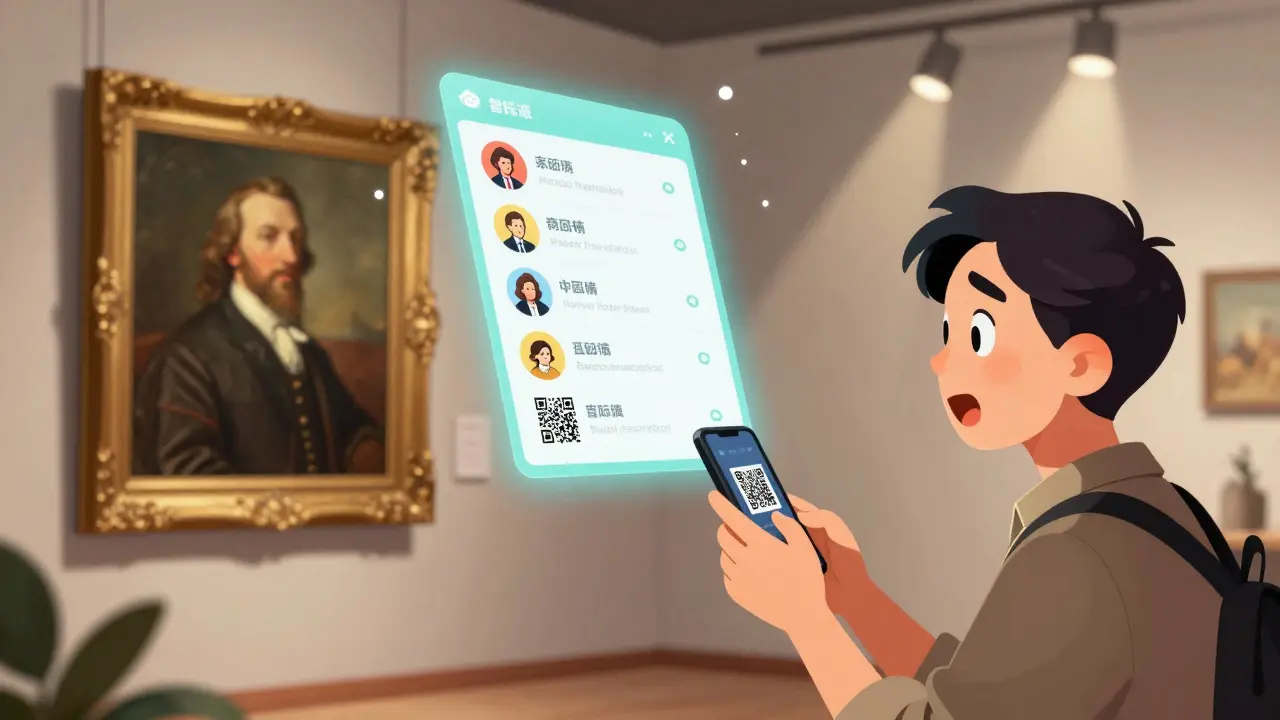
Imagine buying a painting at an auction, paying $50,000, and later finding out it’s a fake. Not a copy - a full forgery, complete with a forged certificate of authenticity. This isn’t science fiction. The global art market loses an estimated $6 billion every year to fraud, according to the FBI Art Crime Team. Now imagine a system where you can scan your phone against the frame of that painting and instantly see every owner since the artist created it - all recorded on a public, unchangeable ledger. That’s what NFTs do for digital and physical art today.
What NFTs Actually Do for Art
NFTs - Non-Fungible Tokens - aren’t just digital collectibles. They’re digital certificates of authenticity built on blockchain technology. Unlike Bitcoin, where every coin is identical and interchangeable, each NFT is unique. It’s like a one-of-a-kind serial number tied to a specific piece of art. That serial number doesn’t just say "this is real." It records who made it, who owned it, when it changed hands, and even how it was verified.
These tokens live on blockchains like Ethereum, Solana, and Polygon. Ethereum still leads the market, handling about 72% of art-related NFTs as of mid-2025. The key advantage? Once data is written to the blockchain, it can’t be erased or altered. That’s called immutability. It means no one can fake the ownership history. No one can slip in a fake signature or delete a previous owner. The record is permanent.
How Physical Art Gets Verified with NFTs
You might think NFTs only work for digital art. That’s not true anymore. Artists and galleries now embed physical verification into real-world pieces. Three methods have become standard:
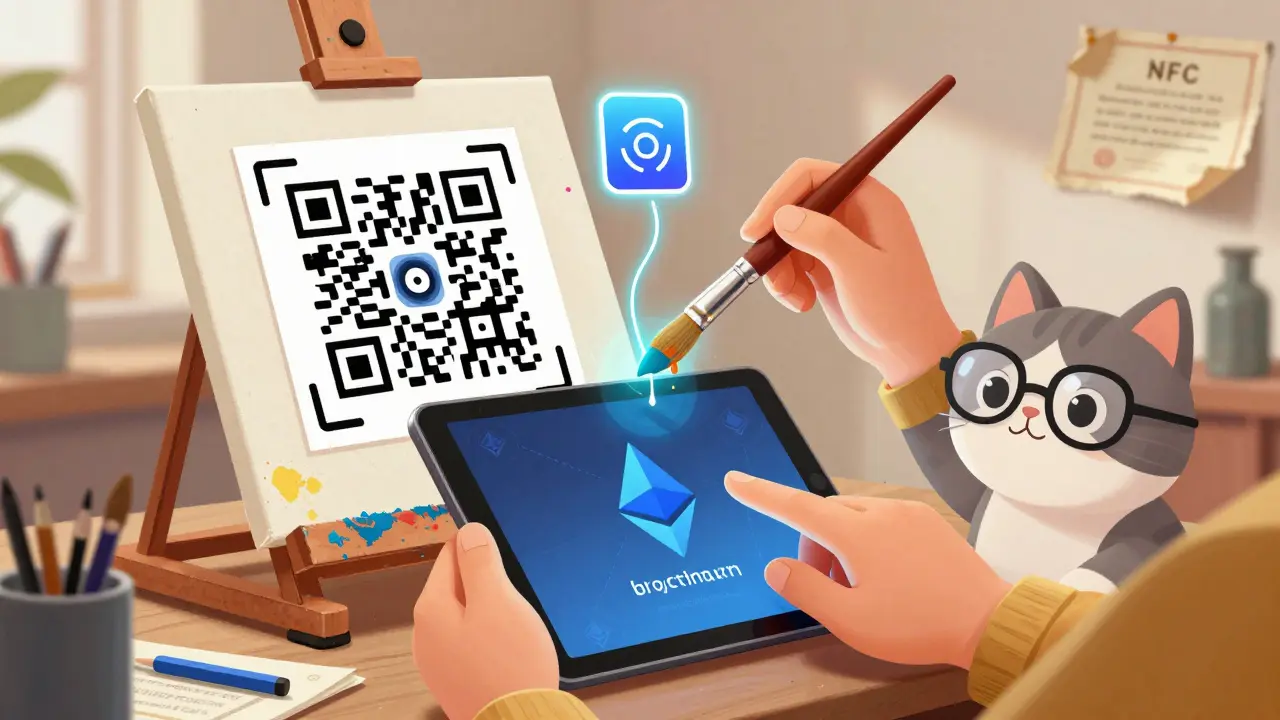
- QR codes - printed on the back of frames or canvas. Scan with your phone, and it pulls up the full NFT record - including the artist’s digital signature and all past sales.
- NFC chips - tiny, tamper-proof chips hidden inside the frame or backing. Tap your phone to it (no app needed), and it decrypts and displays the artwork’s blockchain history. VeriArt launched biometric-enabled NFC chips in March 2025, which can verify the physical condition of the artwork itself.
- Digital watermarks - invisible patterns embedded in the artwork’s image file. These can only be detected with special apps, making them hard to copy or remove. AI-enhanced versions now adapt to different mediums, like oil on canvas or digital prints.
These aren’t gimmicks. In a 2024 Verifyed.io survey, 92% of collectors said they felt more confident buying physical art with QR or NFC verification. One collector on Reddit, u/ArtCollector87, wrote: "I bought a piece at a gallery, tapped my phone to the frame, and saw it had been owned by three people before me - including the artist’s studio. That kind of transparency? It changed how I buy art."
Why Paper Certificates Are Dead
For decades, art authentication relied on paper certificates signed by galleries or experts. But those papers? They’re easy to forge. You can print one. You can steal one. You can even fake a signature. And there’s no way to prove it’s real unless you track down the original issuer - who might be retired, dead, or out of business.
NFTs solve this by removing the middleman. The blockchain doesn’t need a gallery to vouch for the art. It doesn’t need an expert to sign off. The system itself verifies. Every transfer is recorded publicly. Anyone can check it. That’s called decentralized authentication.
According to Meegle’s 2023 analysis, NFTs offer five clear advantages over paper:
- Decentralized - no single company controls the record
- Immutable - data can’t be changed
- Transparent - full ownership history visible to all
- Interoperable - works across different platforms
- Secure - protected by cryptography, not just ink
Forgeries still happen - but they’re far harder to pass off. A fake NFT might look real, but its metadata won’t match the blockchain record. And if someone tries to mint a copy of a famous artwork as an NFT, the original owner can prove ownership with the original token.
How Artists Set It Up
If you’re an artist, here’s how it works in practice:
- Create a digital wallet (like MetaMask or Phantom).
- Upload your artwork to an NFT platform (OpenSea, Foundation, or a gallery-specific platform).
- Pay a one-time fee (called a gas fee) to "mint" the NFT - turning your file into a unique token on the blockchain.
- Link the NFT to your physical piece using a QR code, NFC chip, or watermark.
- Include metadata: your name, creation date, medium, and any notes about the piece.
That’s it. The whole process takes 10 to 15 hours for someone already comfortable with tech. For traditional artists unfamiliar with digital tools, it can take 25 to 40 hours of training, according to the Art Authentication Institute’s 2024 study.
Big platforms like OpenSea offer detailed guides - 127 pages worth. Smaller platforms? Not so much. That’s why many artists join Discord communities or Reddit threads like r/NFT to learn from others. One top tip from verified expert u/NFTAuthSpecialist: "Always cross-check the metadata on at least two blockchain explorers. If the dates or signatures don’t match, something’s wrong."
The Hidden Challenges
NFT authentication isn’t perfect. It has real problems.
Wallet security is the biggest. Chainalysis reported in 2024 that 43% of NFT thefts happen because people lose their private keys or fall for phishing scams. If someone steals your wallet, they own your art - even if it’s a physical painting with an NFC chip. There’s no "forgot password" button on the blockchain.
Gas fees on Ethereum can spike unexpectedly. Minting an NFT might cost $5 one day and $50 the next. That’s why many artists now use Polygon or Solana, where fees stay under $0.10.
Compatibility is another issue. Not all smartphones can read NFC chips. Older models or budget phones might not support them. And if the chip gets damaged? The NFT still exists on the blockchain, but the physical link is broken.
Then there’s the human factor. Blockchain can prove who owns the NFT. But it can’t prove the painting under the frame is the original. A forger could swap the real canvas with a copy and keep the NFC chip. That’s why experts like Dr. Emily Watson from ArtForum warn: "Blockchain verifies digital ownership records but cannot confirm physical artwork authenticity without expert human verification."
How Experts Are Filling the Gaps
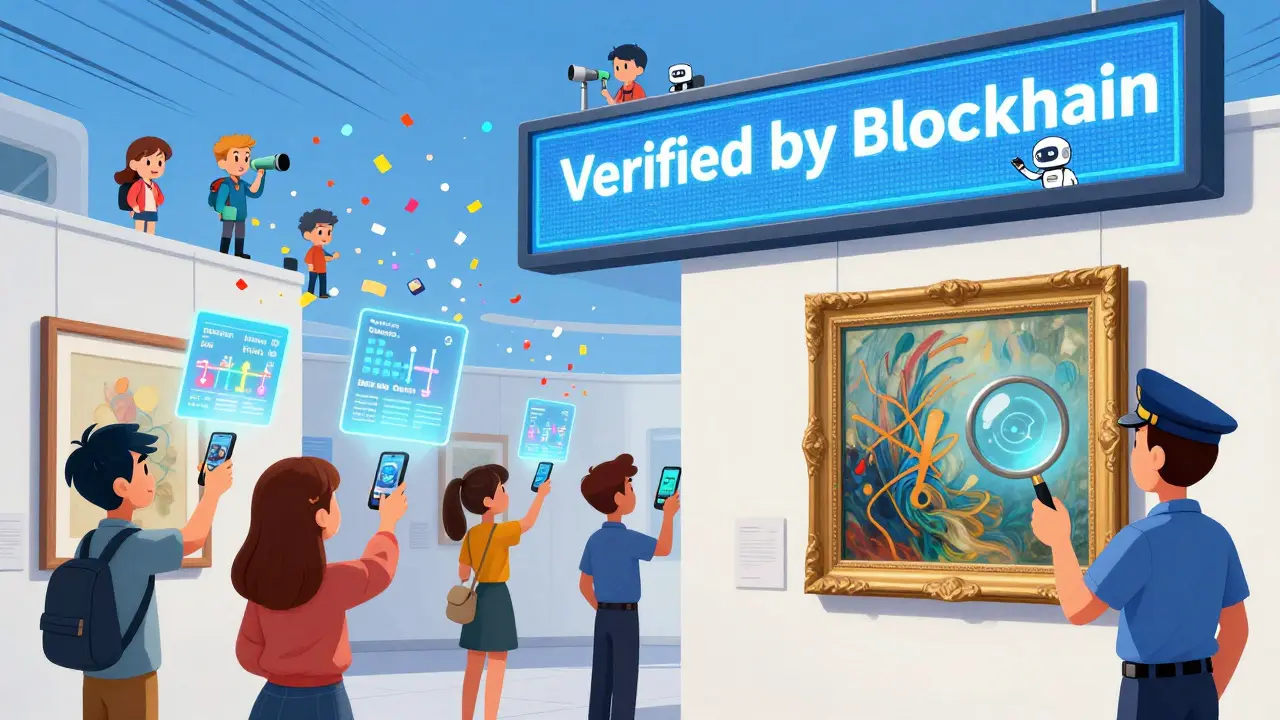
The smartest authentication systems now combine tech and human skill. Here’s what top galleries and collectors are doing:
- Metadata verification - checking creation dates, file formats, and embedded signatures for inconsistencies.
- Digital imaging - using infrared scans to reveal underdrawings or hidden signatures that don’t match the artist’s known style.
- X-ray analysis - detecting changes in materials, overpainting, or repairs that weren’t documented.
- Community validation - forums where experts discuss disputed pieces. As Ben Lau of Featured SEO Company says, "Peer validation adds a layer of scrutiny no algorithm can replace."
Companies like Christie’s and Sotheby’s are now part of the Universal Art Authentication Protocol (UAAP), launched in January 2025. This initiative aims to create one standard for NFT verification across all major galleries - so a piece verified in London can be trusted in Tokyo.
Who’s Using This Now?
NFT authentication isn’t just for indie artists. It’s going mainstream.
- 41 of the top 100 art galleries globally have adopted NFT verification by Q1 2025, according to ArtNews.
- Luxury brands like Louis Vuitton use NFC chips linked to Ethereum for their "LV Vault" collection - every handbag comes with a digital twin.
- 67% of NFT art creators are digital-native artists. The other 33% are traditional painters, sculptors, and photographers adding blockchain verification to physical works.
The market for NFT art authentication hit $4.5 billion in 2023, about 18% of the total NFT art sales. Gartner predicts 75% of high-value art transactions will use blockchain verification by 2027. That doesn’t mean paper certificates disappear overnight. But they’re becoming relics.
What’s Next?
The future of art authentication isn’t about replacing experts - it’s about empowering them. AI will help detect forgeries. Blockchain will prove ownership. Human eyes will still judge brushstrokes, style, and context.
Regulation is catching up too. The EU’s MiCA framework, effective December 2024, requires NFT marketplaces to verify users’ identities (KYC) and prevent money laundering (AML). That means platforms can’t just let anyone mint art. They have to know who they are.
Energy use used to be a concern. But Ethereum switched to a more efficient system in 2022. Its energy consumption dropped by 99.95%. Today, minting an NFT uses less power than sending an email.
Artists and collectors aren’t waiting. They’re adapting. The ones who embrace this blend of tech and tradition are the ones building trust - and value - in a world full of fakes.
Can NFTs prove that a physical painting is real?
NFTs prove who owns the digital certificate linked to the artwork - not that the physical object itself is authentic. A forger could swap the real painting and keep the NFC chip. That’s why experts still use infrared scans, X-rays, and historical analysis to confirm the physical piece matches the artist’s known technique. NFTs add a layer of digital trust, but they don’t replace human expertise.
Do I need cryptocurrency to buy NFT-authenticated art?
Not always. Many galleries now accept credit cards for NFT-linked art purchases. The NFT is still created on the blockchain behind the scenes - but you don’t need to manage a wallet or pay gas fees yourself. The gallery handles the technical side. However, if you’re buying directly from an artist or marketplace like OpenSea, you’ll need Ethereum or another crypto to complete the purchase.
What happens if I lose my phone with the NFC chip or QR code?
You don’t lose ownership. The NFT is stored on the blockchain, tied to your digital wallet - not your phone. The QR code or NFC chip is just a convenient way to access that record. If you lose your phone, you can still access your NFT through any other device by logging into your wallet. The physical verification method is just a bridge to the digital proof.
Can I resell NFT-authenticated art without the original certificate?
Yes - because the certificate is the NFT, not the physical object. When you sell the artwork, you transfer the NFT to the new owner. The QR code or NFC chip stays with the physical piece, so the buyer can scan it and see the full history. The NFT is the proof of ownership. The physical item is the vessel.
Are NFTs only for expensive art?
No. While high-value art gets the most attention, NFT authentication is now affordable for emerging artists. Minting on Polygon costs less than $0.10. Many artists use it to build trust with new buyers, even for $50 prints. The value isn’t in the price - it’s in the transparency. Buyers today want to know the story behind the art. NFTs give them that.
Can I verify an NFT artwork without a smartphone?
Yes. You can check any NFT’s ownership history using a blockchain explorer like Etherscan or Solana Explorer. Just paste the NFT’s unique token ID into the search bar, and you’ll see the full transaction history - who created it, who owned it, and when it was sold. You don’t need a phone - just internet access and the token number.

18 Comments
no more guessing if it's legit or not
who cares if the chain is unbreakable if the painting looks like my toddler's fingerpainting
weird to think we're at this point now
got the QR code on the back of a print from a local artist
scanned it and saw the artist signed it the day he finished it
so cool 😍
the real art world is still run by old men in suits who decide what's valuable
the blockchain doesn't change that it just makes the scam look fancy