
- 23 Jul 2026
- Elara Crowthorne
- 21
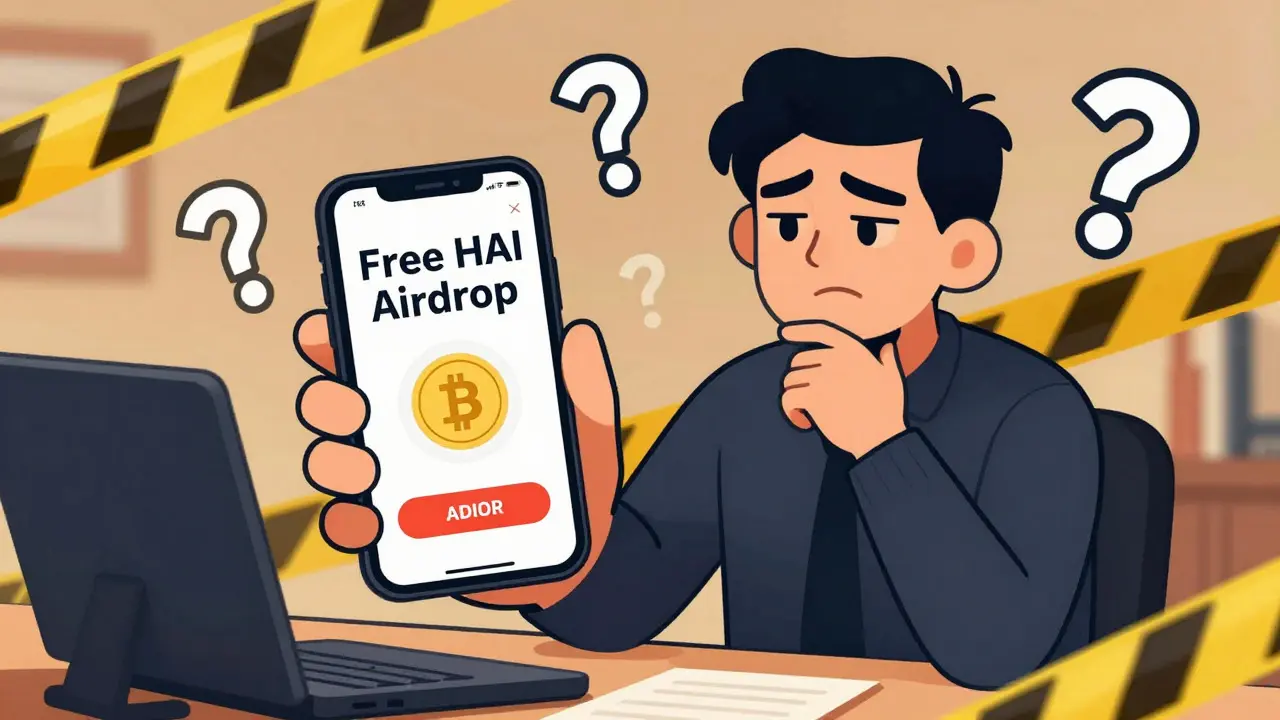
It feels like every week there’s another “free money” alert popping up in your crypto feeds. You see the logo of a well-known brand, maybe Hacken, and you think, “Finally, an easy win.” But before you connect your wallet to that shiny new landing page promising free HAI tokens, stop. Take a breath. Because right now, the most important thing you need to know about the Hacken HAI airdrop is this: there is no official airdrop happening.
In fact, Hacken has explicitly warned users that any posts or websites claiming otherwise are likely scams. This isn’t just cautionary advice; it’s a direct response to a chaotic period for the project involving a massive security breach and a near-total collapse in token value. If you’re searching for details on how to claim HAI tokens, you’ve landed in the right place to separate fact from fiction. We’ll break down what actually happened to the HAI token, why scammers are using its name, and how you can protect your assets while navigating the current state of the Hacken ecosystem.
The Truth About the HAI Token Airdrop
Let’s get straight to the point. As of mid-2026, Hacken has not announced any public airdrop for its native cryptocurrency, HAI. The confusion stems from two main sources: the lingering excitement around past community rewards and the opportunistic nature of cybercriminals who thrive on hype.
Hacken is primarily known as a Web3 cybersecurity auditing platform. Their business model revolves around securing blockchain projects through smart contract audits and on-chain monitoring. The HAI token was designed to support this ecosystem by enabling staking, governance via their decentralized autonomous organization (hDAO), and access to exclusive security products. While Hacken has historically used small token distributions to reward members of their "Trust Army"-a group of users who help collect data and test security protocols-these were targeted incentives, not open-ended giveaways.
Recently, however, the narrative shifted dramatically. Following a severe security incident, Hacken issued clear statements warning the community. They stated that no airdrops are currently planned. Any website, Telegram channel, or social media post claiming you can “claim your HAI rewards” is almost certainly a phishing attempt. These scams often mimic the official Hacken branding, using similar logos and color schemes to trick users into connecting their wallets. Once connected, the malicious script drains your existing assets rather than depositing new ones.
Why are scammers targeting Hacken specifically? It’s simple. After a major news event-like a hack or a price crash-search volume spikes. People look for information, and scammers create fake sites optimized for those search terms. By positioning themselves as the source of “compensation” or “emergency airdrops,” they prey on the anxiety and hope of affected holders.
The Security Breach That Changed Everything
To understand why the airdrop rumors are so dangerous, you have to look at what actually happened to the HAI token. In a twist of irony, Hacken-a company built on selling security services-suffered a catastrophic internal breach. This wasn’t a minor glitch; it was a fundamental failure in their own infrastructure.
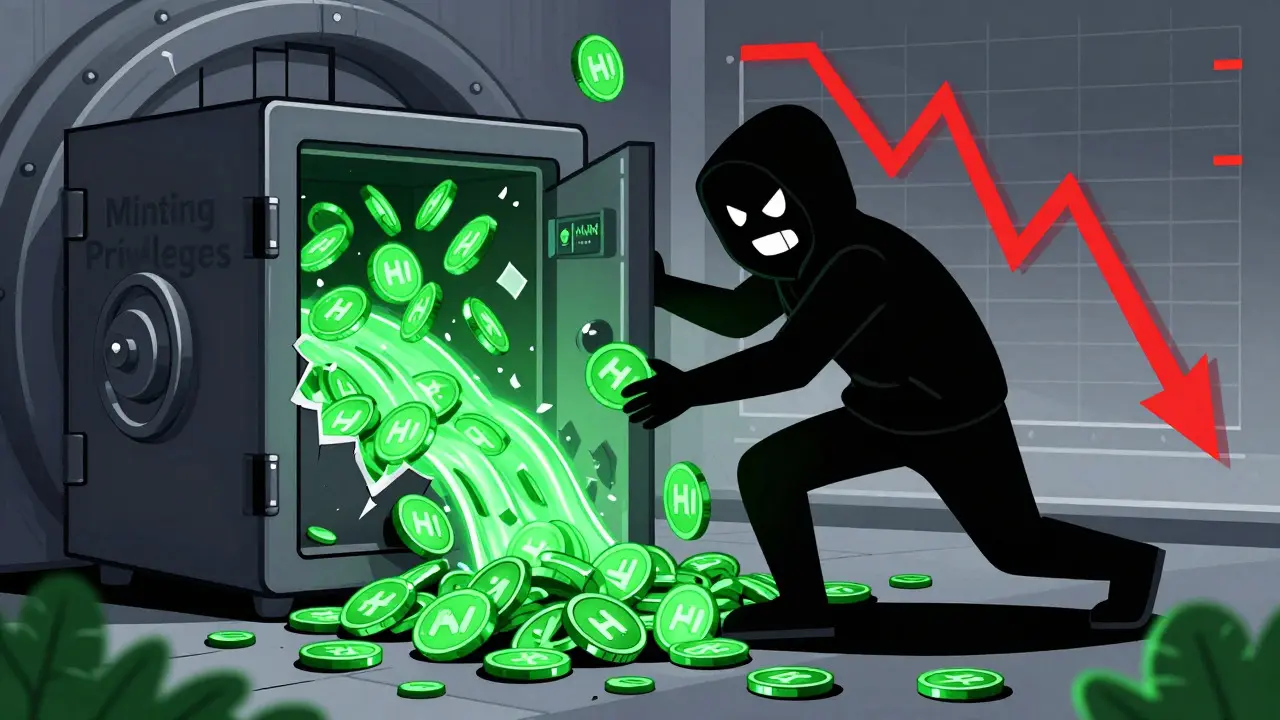
The incident centered on a private key leak. Specifically, the private key associated with an account that had minting privileges was compromised. In blockchain terms, minting means creating new tokens out of thin air. Normally, this power is locked away in multi-signature wallets or hardware cold storage. In this case, during architectural changes to Hacken’s cross-chain bridge (the system that connects Ethereum and Binance Smart Chain), the keys were exposed.
A malicious actor discovered these keys and immediately began minting millions of HAI tokens. Reports indicate that approximately 900 million HAI tokens were minted in total. The attacker then moved roughly $253,000 worth of these newly created tokens into the BNB ecosystem, swapping them for other cryptocurrencies before the team could react. The speed of the attack highlights how quickly exploits can unfold in decentralized finance (DeFi).
The impact on the market was devastating. The price of HAI plummeted by 99%, dropping from around $0.015 to a fraction of a cent ($0.000056). Although the price later stabilized slightly around $0.00026, the damage to holder confidence was immense. For many investors, the value of their holdings effectively vanished overnight. This context is crucial because it explains why legitimate compensation discussions are being twisted into scam bait. Holders are desperate for relief, making them vulnerable to false promises.
How to Spot a Fake HAI Airdrop
Since the official door is closed, the black market of scams is wide open. Here is how you can identify if an “HAI Airdrop” offer is real or fake. Keep this checklist handy whenever you click on a link from Twitter, Discord, or an email.
- Check the URL carefully: Scammers love typos. Look for subtle differences like
hacken-airdrop.cominstead of the official domain. Even one extra letter can mean disaster. - Verify the Source: Go directly to Hacken’s official verified social media accounts. Do not rely on retweets or quotes. If the official account hasn’t posted about it, it doesn’t exist.
- No Wallet Connection Required: Legitimate airdrops usually require you to prove eligibility through on-chain history, not by signing arbitrary transactions in your wallet. If a site asks you to “approve” a transaction to receive tokens, close the tab.
- Too Good to Be True: If they promise hundreds of dollars in free tokens for clicking a button, it’s a lie. Real airdrops are rarely this generous without significant prior interaction with the protocol.
- Urgency Tactics: Phrases like “Claim within 24 hours or lose your spot” are psychological triggers used to bypass your critical thinking. Real projects give ample time.
One specific red flag to watch for is the request to interact with a “bridge” or “swap” interface. Since Hacken’s bridge functionality was paused indefinitely after the breach, any site claiming to let you bridge HAI tokens is technically impossible and likely a trap.
Understanding the HAI Token Utility
Beyond the drama of the breach and the noise of scams, it helps to understand what HAI is supposed to do. Knowing the utility helps you evaluate whether holding the token makes sense for your portfolio, independent of short-term price action.
| Utility Type | Description | Current Status |
|---|---|---|
| Governance | Allows holders to vote on proposals within the hDAO, influencing future development and fund allocation. | Active, but participation may be low due to price volatility. |
| Staking | Users lock HAI tokens to earn rewards or secure network operations. | Available, though yields depend on treasury health post-breach. |
| Service Access | Discounts or exclusive access to Hacken’s cybersecurity audit services and tools. | Operational for enterprise clients. |
| Cross-Chain Bridge | Facilitates movement of assets between Ethereum and Binance Smart Chain. | Paused Indefinitely following the security breach. |
The HAI token operates on both Ethereum and Binance Smart Chain (BSC) networks. This dual-chain presence was intended to increase liquidity and accessibility. However, the bridge connecting these two chains is currently offline. This means if you hold HAI on Ethereum, you cannot easily move it to BSC, and vice versa, until Hacken resolves the technical and security issues surrounding the bridge architecture. This fragmentation further complicates the trading landscape and reduces the token’s overall utility in the short term.
What Happened to the Stolen Funds?
A common question among concerned holders is whether the stolen funds will be recovered. In the world of DeFi, once tokens are swapped and mixed through decentralized exchanges (DEXs), recovery is incredibly difficult. The attacker managed to swap approximately $253,000 worth of HAI before containment measures were implemented. Hacken revoked the compromised minter account from the token contract, which stopped the bleeding of new tokens, but it did not reverse the damage already done.
While some companies purchase insurance policies to cover such losses, details regarding Hacken’s specific insurance coverage remain unclear. What is clear is that the financial burden of the breach falls heavily on the token holders, as evidenced by the 99% price drop. The company has emphasized that their core infrastructure-separate from the HAI token contract-remained secure. This distinction is vital: the hack was isolated to the token’s minting function, not the entire company’s operational backbone. However, reputational damage is harder to quantify and repair.

Protecting Your Crypto Assets in 2026
The Hacken incident serves as a stark reminder that even established players in the Web3 space are vulnerable. Whether you are a long-time holder of HAI or a curious observer, adopting robust security habits is non-negotiable. Here are practical steps to safeguard your assets against both external hacks and internal project failures.
- Use a Hardware Wallet: Never keep significant amounts of crypto on an exchange or in a hot wallet connected to your computer. Devices like Ledger or Trezor keep your private keys offline, making them immune to remote exploits.
- Enable Multi-Factor Authentication (MFA): Use authenticator apps (like Google Authenticator or Authy) rather than SMS verification for all your exchange and email accounts. SMS can be intercepted via SIM-swapping attacks.
- Revoke Unnecessary Permissions: Regularly check your wallet permissions using tools like Revoke.cash. If you interacted with a suspicious dApp, revoke its access immediately to prevent future draining.
- Diversify Your Holdings: Don’t put all your eggs in one basket. The volatility seen in HAI demonstrates how quickly a single asset can lose value. Spreading risk across different sectors (e.g., DeFi, NFTs, Infrastructure) can mitigate individual project failures.
- Stay Informed via Primary Sources: Follow official project announcements directly. Avoid relying solely on influencers or secondary news outlets, which may lag behind or misinterpret events.
Additionally, consider the concept of “trust but verify.” Just because a project has a strong reputation doesn’t mean it’s immune to error. Always read the whitepapers, check the audit reports (ironically, Hacken provides these for others), and understand the tokenomics before investing. High minting privileges, for example, are a red flag if not properly secured by multi-sig wallets.
Future Outlook for Hacken and HAI
So, where does this leave Hacken? The immediate crisis has been contained, but the road to recovery is long. The company faces the dual challenge of restoring technical functionality (specifically the cross-chain bridge) and rebuilding community trust. Without a working bridge, the HAI token’s liquidity is fragmented, reducing its attractiveness to traders and investors.
Hacken has indicated that future developments will focus on enhanced security protocols. This likely involves more rigorous testing of bridge architectures, potentially moving towards zero-knowledge proofs or other advanced cryptographic methods to ensure privacy and security during transfers. However, no specific timeline has been released for these upgrades. Investors should expect a period of uncertainty as the team works behind the scenes to patch vulnerabilities.
For the average user, the lesson is clear: patience and skepticism are your best friends. Until Hacken announces concrete steps toward bridge restoration and transparent communication about the breach’s aftermath, treat any HAI-related opportunity with extreme caution. The absence of an airdrop is not a loss; it’s a protection mechanism against losing everything else in your wallet.
Is there an official Hacken HAI airdrop happening right now?
No. Hacken has officially stated that no airdrops are currently planned. Any website or social media post claiming otherwise is likely a scam designed to steal your crypto assets.
Why did the HAI token price drop by 99%?
The price crashed due to a security breach where a malicious actor accessed a private key with minting privileges. They minted 900 million new HAI tokens and dumped them on the market, causing hyperinflation and a subsequent price collapse.
Can I still bridge HAI tokens between Ethereum and BSC?
No. The cross-chain bridge functionality has been paused indefinitely following the security breach. Users cannot currently transfer HAI tokens between the Ethereum and Binance Smart Chain networks via the official Hacken bridge.
How can I tell if an HAI airdrop link is a scam?
Check the URL for typos, verify the announcement on Hacken’s official verified social media channels, and never connect your wallet to a site asking for approvals to “receive” tokens. Legitimate airdrops rarely require wallet connections for claiming.
What happened to the stolen HAI tokens?
Approximately $253,000 worth of HAI tokens were swapped by the attacker through the BNB ecosystem. While the minting privilege was revoked, the stolen funds were dispersed through decentralized exchanges, making recovery extremely difficult.
Is Hacken still a reliable security provider despite the breach?
Hacken’s core infrastructure remained separate from the compromised HAI token contract. While the breach damaged their reputation, the company continues to operate its cybersecurity auditing services. However, users should monitor their progress in implementing new security measures.

21 Comments
hey everyone just wanted to add that i checked revoke.cash today and saw a bunch of old approvals still active from back in 2023 so yeah definitely do that step mentioned in the article its super easy and takes like two minutes just connect wallet click revoke on anything you dont use anymore saves headaches later
Oh please 🙄 another day another crypto disaster because everyone is too stupid to read the whitepaper. You people flock to these projects like moths to a flame and then cry when you get burned. It’s absolutely pathetic. I’ve been saying since 2021 that centralized teams with decentralized dreams are a scam waiting to happen. Hacken? More like Hack-N-Run. 😂💸
the concept of ownership is an illusion especially in web3 where code is law but the coders are fallible humans driven by greed and fear this breach is merely the physical manifestation of our collective spiritual bankruptcy we seek security in digital ledgers while ignoring the chaos within ourselves
man i mean sure they lost money but like its crypto right thats the whole point its high risk high reward kinda thing ppl just gotta learn to handle the volatility instead of whining about it every time something goes wrong its not like they stole your house keys or whatever
Facts are facts. The bridge is down. The token is diluted. Stop pretending this is a 'learning opportunity' for retail investors. It’s a failure of governance. If you’re holding HAI right now, you’re either delusional or hoping for a miracle. Neither exists in DeFi. Move on.
It really is tragic how quickly things can unravel isn’t it? One moment everything seems secure, the next, millions are gone. But maybe there’s beauty in the resilience of the community coming together to warn each other. Let’s focus on healing rather than blaming. We are all in this chaotic journey together. 🌿
I actually know someone who works at Hacken, lowkey. They’re scrambling internally. The CEO hasn’t slept in three days. It’s not just ‘corporate negligence’ as some of you elitists claim. Real people are losing their jobs over this. So before you type your hot takes, remember there are humans behind the screen. 😔📉
Indeed, the situation underscores the paramount importance of rigorous due diligence prior to any financial commitment within the volatile cryptocurrency ecosystem. It is imperative that stakeholders remain vigilant and adhere strictly to verified sources of information thereby mitigating the risks associated with fraudulent schemes which proliferate during times of market uncertainty and distress.
Look, I’m not here to sugarcoat it. This was a massive fail. But let’s be real, most of these audits are rubber stamps anyway. Hacken audited half the scams in 2022. Now they got bit by their own dog. Karma is a bitch. But yeah, check your revokes. Good advice in the post though.
You guys are missing the bigger picture! The scammers aren't just after your tokens, they're after your soul! Every time you connect to a fake site, you surrender a piece of your digital identity to the shadowy cabal controlling the blockchain narrative. Wake up sheeple! 👁️🗨️😡
Typical. Another ‘security firm’ gets hacked. Irony is dead. I told my friends last year that multi-sig wallets were the only way to go, but no, they wanted ‘yield farming’ and ‘airdrops’. Now they’re crying about rug pulls. It’s always the same story. Greed blinds you to the obvious red flags. Pathetic.
This is literally why I stick to blue chips. 🚀 These altcoin projects are built on sand. Hacken had such potential, such hype, and now look at them. Crumbled like a dry biscuit. Sad but true. Keep your bags safe, folks. Don’t be a hero. 💎🙌
The loss of value is not just a number on a screen it represents the erosion of faith in human systems we place our trust in code because we believe it is pure but code is written by flawed minds and thus the system is flawed from the start perhaps the crash is necessary to strip away the illusions of wealth and power
I’ve been tracking the transaction hashes since the breach occurred and it’s fascinating to see how quickly the attacker moved the funds through multiple DEXs to obscure the trail. Most people don’t realize that once those tokens hit Uniswap or PancakeSwap, they’re practically untraceable without significant blockchain forensics expertise. It’s a masterclass in obfuscation.
Please, everyone, take a deep breath!!! It is incredibly important to stay calm and verify all information through official channels!!! Scammers thrive on panic!!! If you feel overwhelmed, step away from the screen!!! Your mental health is more valuable than any token!!! 💖✨
Absolutely predictable. The technical architecture was flawed from day one. Anyone with basic knowledge of zero-knowledge proofs could have seen this coming. The fact that they used a simple private key for minting privileges is amateur hour. Disgraceful. I expected better from a company positioning itself as a leader in Web3 security.
its just so frustrating how nobody learns these lessons we keep making the same mistakes over and over again connecting to random sites believing in free money its like we are programmed to be exploited maybe we need to slow down and think before we click
Don’t give up hope!!! There is always a silver lining!!! This experience will make us stronger and more savvy investors!!! Just remember to use hardware wallets and double-check URLs!!! You’ve got this!!! 💪😊
It is quite unfortunate what has happened to the project. However, the advice provided in the article regarding security practices is sound. Utilizing hardware wallets and revoking permissions are prudent steps for any investor. One should proceed with caution and conduct thorough research before engaging further.
The systemic vulnerability lies in the centralized control of the minting function within a supposedly decentralized protocol. This centralization of authority creates a single point of failure (SPOF) that adversaries inevitably exploit. The lack of immutable governance mechanisms exacerbates the risk profile significantly.
Yeah, it’s a rough spot for sure. But hey, at least we’re learning. I’ve started using a ledger for everything now. Makes me feel a bit safer. Thanks for the heads up on the bridge being paused, didn’t realize that part. Good info.