
- 3 Jun 2026
- Elara Crowthorne
- 0
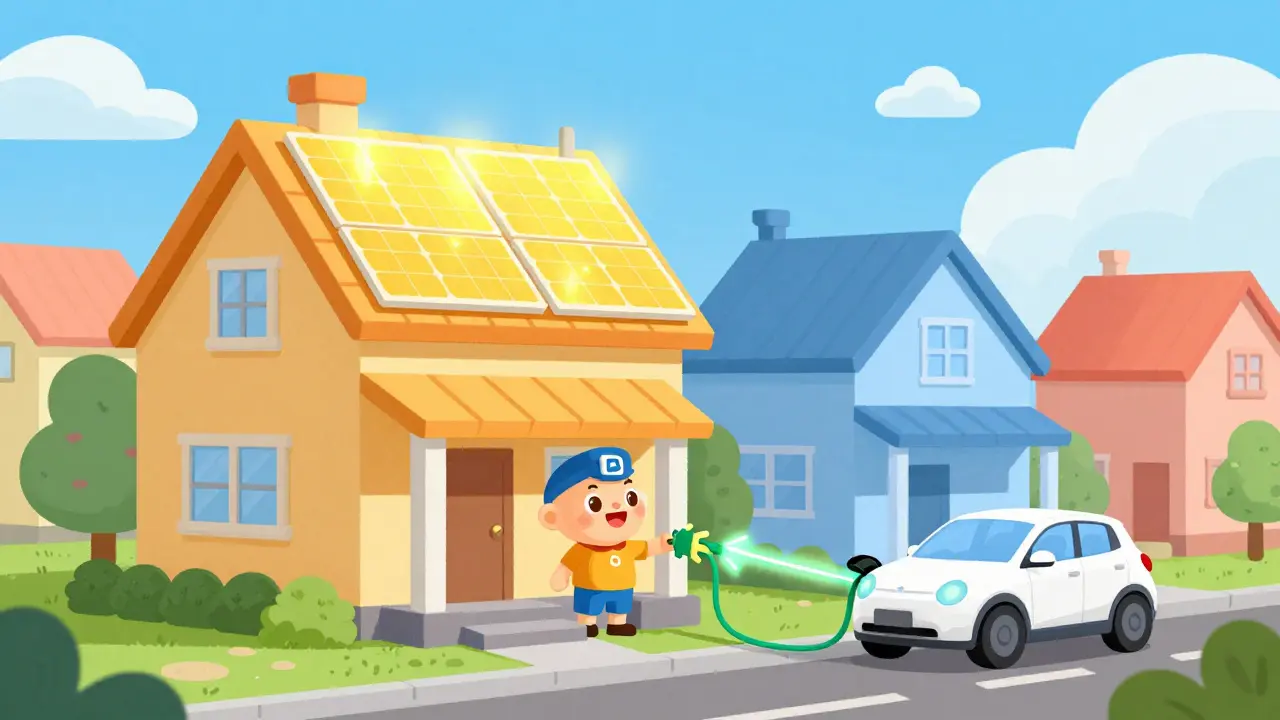
You flip a switch, and the lights come on. It feels simple, right? But behind that action is a century-old system built for one-way flow: big power plants send electricity through massive grids to your home. You pay the utility company, and they decide what you get and how much it costs. What if you could skip the middleman entirely? What if you could sell the extra solar power from your roof directly to your neighbor, instantly and securely?
This isn't science fiction anymore. It’s peer-to-peer energy trading, and it’s happening now. By using blockchain technology, communities are turning their neighborhoods into mini-electricity markets. You produce power, you sell it locally, and you keep more of the value. This guide breaks down how this works, why it matters for your wallet and the planet, and what you need to know before joining the movement.
What Is Peer-to-Peer Energy Trading?
Traditional energy systems are centralized. Utilities generate power in large batches, transmit it over long distances, and distribute it to consumers. In this model, you are just a buyer. Even if you have solar panels, you usually sell excess power back to the utility at a low, fixed rate (feed-in tariff) and buy it back later at a higher retail price. It’s a lose-lose for many homeowners.
Peer-to-peer (P2P) energy trading is a decentralized market where individuals with renewable energy sources can sell surplus electricity directly to other consumers within their local community. Instead of going through the main grid operator as a broker, transactions happen between neighbors. The "prosumer"-someone who both produces and consumes energy-sells to another consumer nearby.
Think of it like Airbnb for electricity. Just as homeowners rent out spare rooms directly to travelers, P2P platforms let solar owners rent out spare kilowatt-hours to neighbors. The key difference? Electricity can’t be stored easily in homes, so it must be traded in real-time. This requires a system that can track production, match buyers and sellers, and handle payments instantly. That’s where blockchain steps in.
Why Blockchain Is the Engine Behind P2P Energy
You might wonder why we need complex tech like blockchain for something as simple as selling power. The answer lies in trust and automation. In a traditional bank transfer, the bank acts as the trusted third party. In P2P energy, there is no central authority. If I say I sent you 5 kWh, how do you know I didn’t lie? And how does the payment happen automatically without me having to invoice you?
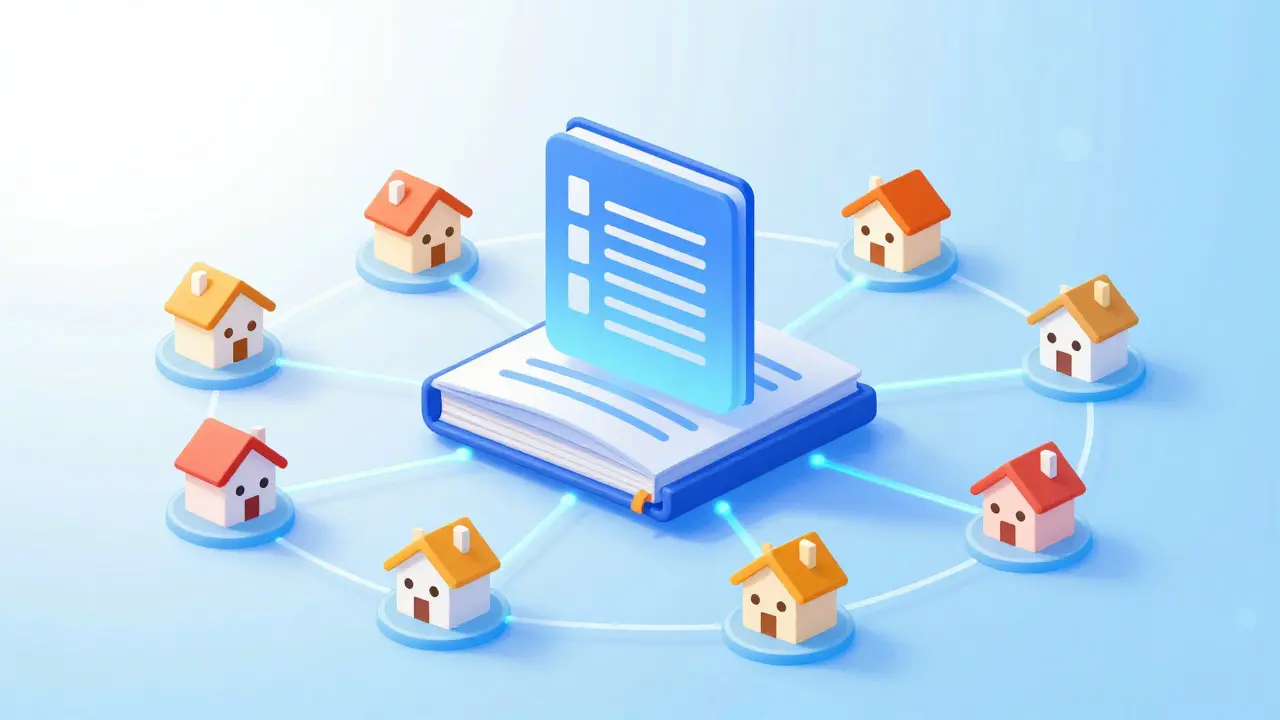
Blockchain solves this by providing an immutable ledger. Every transaction is recorded publicly and cannot be altered. More importantly, it enables Smart Contracts are self-executing contracts with the terms of the agreement between buyer and seller being directly written into lines of code. These digital agreements trigger actions when conditions are met. For example:
- Condition: My solar panels produce 10 kWh, and I only use 4 kWh.
- Action: The smart contract identifies my neighbor Alice needs 6 kWh.
- Execution: The system records the transfer of energy credits and automatically sends payment from Alice’s account to mine.
No paperwork. No billing delays. No human error. According to data from the International Renewable Energy Agency (IRENA), this automation can reduce transaction costs for electricity trading by 30-45% compared to traditional utility methods. That savings goes straight to you and your neighbor.
How the System Actually Works: Step-by-Step
The magic doesn’t happen in the cloud alone; it relies on physical hardware working together with digital software. Here is the typical journey of a single unit of peer-traded energy:
- Generation & Measurement: Your rooftop solar panels generate electricity. An IP-enabled Smart Meter is a digital device that measures electricity consumption and generation in real-time, typically recording data every 15 to 60 minutes. records exactly how much you produced versus how much you used. If you have surplus, it registers as available inventory.
- Listing on the Platform: Your energy management system (EMS) connects to the blockchain marketplace. It lists your surplus energy at a price you set or based on an algorithm (e.g., slightly cheaper than the grid rate to attract buyers).
- Matching: The platform’s matching engine scans local demand. If your neighbor Bob has an electric vehicle charging and needs power, the system matches your supply with his demand.
- Transaction Execution: The smart contract executes the trade. It updates the blockchain ledger to show that Bob consumed energy from your specific source. Simultaneously, it triggers a micro-payment from Bob’s digital wallet to yours.
- Grid Balancing: Physically, the electrons still flow through the existing neighborhood wires. The local grid operator ensures the voltage stays stable, but financially, the transaction is private and direct between you and Bob.
This process happens continuously, often in intervals as short as five minutes. It turns your home into a tiny power plant that participates in a local economy.
Real-World Success Stories and Data
This isn’t just theory. Several projects around the world are proving that P2P energy trading works in practice. Let’s look at some concrete examples.
| Project Name | Location | Key Technology | Outcome / Impact |
|---|---|---|---|
| Brooklyn Microgrid | New York City, USA | Ethereum Blockchain | Connected 500+ participants; users reported 12-18% bill savings. |
| Power Ledger Trial | Fremantle, Australia | Hyperledger Fabric | 97% user satisfaction; prosumers earned AUD$220-350 monthly from surplus. |
| Sonderborg Community | Denmark | Custom Blockchain Solution | Reduced grid dependency by 37% during winter months. |
| BMW-Siemens V2G Pilot | Munich, Germany | Vehicle-to-Grid Integration | Connected 200 EVs to local energy market for bidirectional trading. |
The Brooklyn Microgrid, launched in 2016, was the pioneer. It showed that neighbors could trade solar power using the Ethereum blockchain. Today, similar models are expanding globally. In Fremantle, Australia, residents found that selling surplus solar power locally was not only easier but more profitable than selling back to the utility. The European Union has also pushed hard, with its Clean Energy Package establishing rules for "renewable energy communities," making it legal for citizens to form these trading groups.
Benefits Beyond Saving Money
While saving money on your electricity bill is a great motivator, P2P energy trading offers broader benefits for society and the environment.
- Reduced Transmission Losses: When electricity travels long distances from power plants to homes, energy is lost as heat. Studies suggest conventional grids lose 5-8% of energy in transit. Local P2P trading keeps energy close to where it’s generated, cutting these losses significantly-by about 6.2% on average.
- Grid Resilience: Centralized grids are vulnerable. A storm can knock out a substation and leave thousands in the dark. In a P2P microgrid, if the main grid fails, local producers and consumers can continue trading among themselves, keeping critical lights on.
- Accelerated Renewable Adoption: When homeowners can earn real money from their solar panels by selling to neighbors, the return on investment improves. This encourages more people to install renewables, speeding up the transition away from fossil fuels.
- Transparency: Because every transaction is on the blockchain, you can verify exactly where your energy comes from. Want to ensure you’re buying 100% green power? The ledger proves it.
Challenges and Limitations to Watch Out For
It’s not all smooth sailing. If P2P energy is so great, why isn’t everyone doing it yet? There are significant hurdles.
Regulatory Red Tape: Most electricity laws were written for monopolies, not peer-to-peer markets. In some US states, utilities argued that P2P trading violated their franchise rights, leading to stalled projects. While regulations are improving (like FERC Order 2222 in the US and EU directives), navigating local laws remains complex.
Technical Scalability: Blockchain networks vary in speed. Early versions of Ethereum could only handle 15-30 transactions per second. Visa handles 24,000. While newer solutions and layer-2 technologies are faster, handling millions of simultaneous household trades requires robust infrastructure. However, Ethereum’s shift to proof-of-stake in 2022 reduced its energy consumption by 99.95%, addressing earlier environmental criticisms.
User Experience: Setting up a P2P system isn’t plug-and-play. It requires compatible smart meters, internet connectivity, and understanding of the app interface. Reports indicate that first-time users spend 3-5 hours onboarding. For non-tech-savvy seniors, this barrier is high.
Grid Stability Concerns: Grid operators worry that uncoordinated P2P trading could cause voltage fluctuations. If too many people sell power at once, it can overload local transformers. This is why most successful pilots operate under strict oversight from local distribution companies.
Who Should Join a P2P Energy Market?
P2P energy trading isn’t for everyone yet. It makes the most sense if you fit certain profiles:
- Solar Prosumers: If you have rooftop solar and frequently export excess power to the grid at low rates, P2P lets you capture more value by selling directly to neighbors at market rates.
- EV Owners: Electric vehicles are massive batteries. With Vehicle-to-Grid (V2G) technology, you can sell power from your car back to the grid or neighbors when parked. Trials in Munich are already testing this.
- Community Members: Living in a building with shared solar or a neighborhood with high renewable penetration makes P2P viable. You need enough local supply and demand to make the market active.
- Tech-Enthusiasts: You should be comfortable managing apps, monitoring dashboards, and troubleshooting connectivity issues.
If you live in an apartment without solar access, or in a region with cloudy weather and low renewable infrastructure, the benefits may be minimal. Check your local regulations first-some areas still prohibit direct energy sales between individuals.
The Future of Decentralized Energy
The trajectory is clear. The global P2P energy trading market is projected to grow from $1.27 billion in 2023 to $8.43 billion by 2028. As battery storage becomes cheaper and AI-driven forecasting improves, these markets will become smarter and more efficient. Imagine your home battery automatically selling power when prices spike and buying when they drop, all without you lifting a finger.
We are moving from a passive energy consumer to an active participant in a resilient, local, and green energy network. The tools are here. The technology is proven. The question is no longer if P2P energy will arrive, but how quickly your neighborhood will join in.
Do I need special equipment to participate in P2P energy trading?
Yes, you generally need an IP-enabled smart meter that can record generation and consumption data in real-time (every 15-60 minutes). Standard analog meters won’t work. You also need a reliable internet connection and a device (smartphone or computer) to access the trading platform’s app or web portal.
Is peer-to-peer energy trading legal in my country?
Legality varies widely. The European Union has strong legal frameworks supporting renewable energy communities. In the US, states like New York and California have approved pilot programs, while others remain restrictive. Always check with your local energy regulator or utility provider before investing in P2P-compatible hardware.
How much money can I realistically save or earn?
Savings depend on your local electricity rates and solar production. In trials like the one in Fremantle, Australia, prosumers earned an additional AUD$220-350 per month. In Brooklyn, participants saw 12-18% reductions in overall energy bills. The key is selling surplus at a premium compared to standard feed-in tariffs.
Does blockchain consume too much energy for this to be eco-friendly?
Early concerns focused on Proof-of-Work blockchains like Bitcoin, which are energy-intensive. However, major platforms used for energy trading, such as Ethereum, switched to Proof-of-Stake in 2022, reducing energy consumption by 99.95%. Other enterprise blockchains like Hyperledger Fabric are permissioned and highly energy-efficient, making them suitable for green energy applications.
Can I trade energy if I don’t have solar panels?
Yes, but primarily as a buyer. You can purchase cheaper, green energy directly from neighbors instead of relying solely on the utility grid. Additionally, if you own an electric vehicle with V2G capabilities, you can store energy and sell it back to neighbors when your car is plugged in, effectively acting as a mobile battery.
