
- 28 Jul 2026
- Elara Crowthorne
- 0
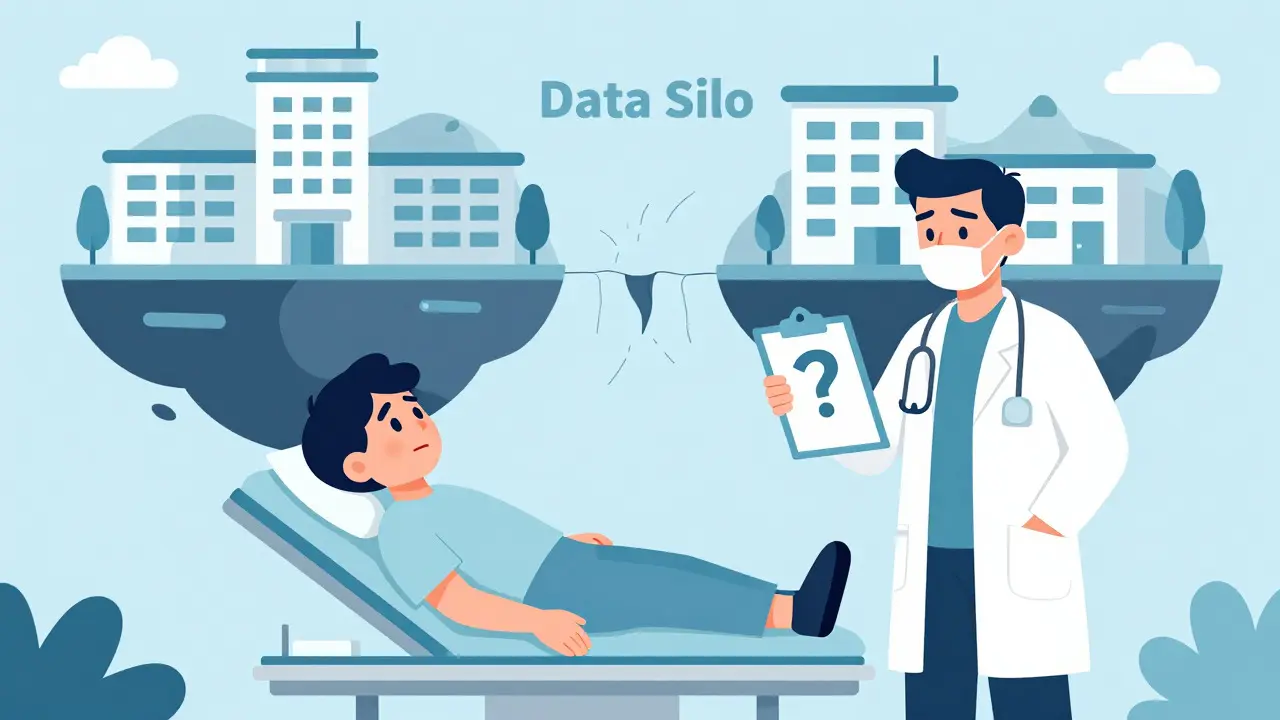
Imagine walking into an emergency room in a city where you’ve never been. You’re conscious but groggy from pain. The doctor needs to know your allergies, current medications, and surgical history immediately. Instead of getting answers, you get a blank stare because the hospital’s system doesn’t talk to the clinic down the street. This isn’t just an inconvenience; it’s a dangerous gap in care that happens every day.
This is the core problem blockchain medical records aim to solve. By moving patient data management onto a decentralized ledger, healthcare providers can create a unified, secure, and patient-controlled system. It’s not about storing your entire MRI scan on the blockchain-that would be inefficient-but rather using the technology to manage access, verify authenticity, and ensure that your health data travels with you seamlessly.
The Interoperability Crisis in Healthcare
To understand why blockchain matters here, we have to look at the mess we currently live in. In the United States alone, there are thousands of different Electronic Health Record (EHR) systems. Take Boston as an example. The healthcare network there uses 26 different EHR systems. Each one speaks its own language, uses different data formats, and has its own security protocols.
When you switch doctors or hospitals, your data gets stuck. Traditional data exchange relies on three models: Push (sending data), Pull (requesting data), and View (accessing another provider’s system). All three require complex, expensive integrations between specific companies. If Hospital A uses Epic and Hospital B uses Cerner, they need a custom bridge to share data. If that bridge breaks, your history disappears.
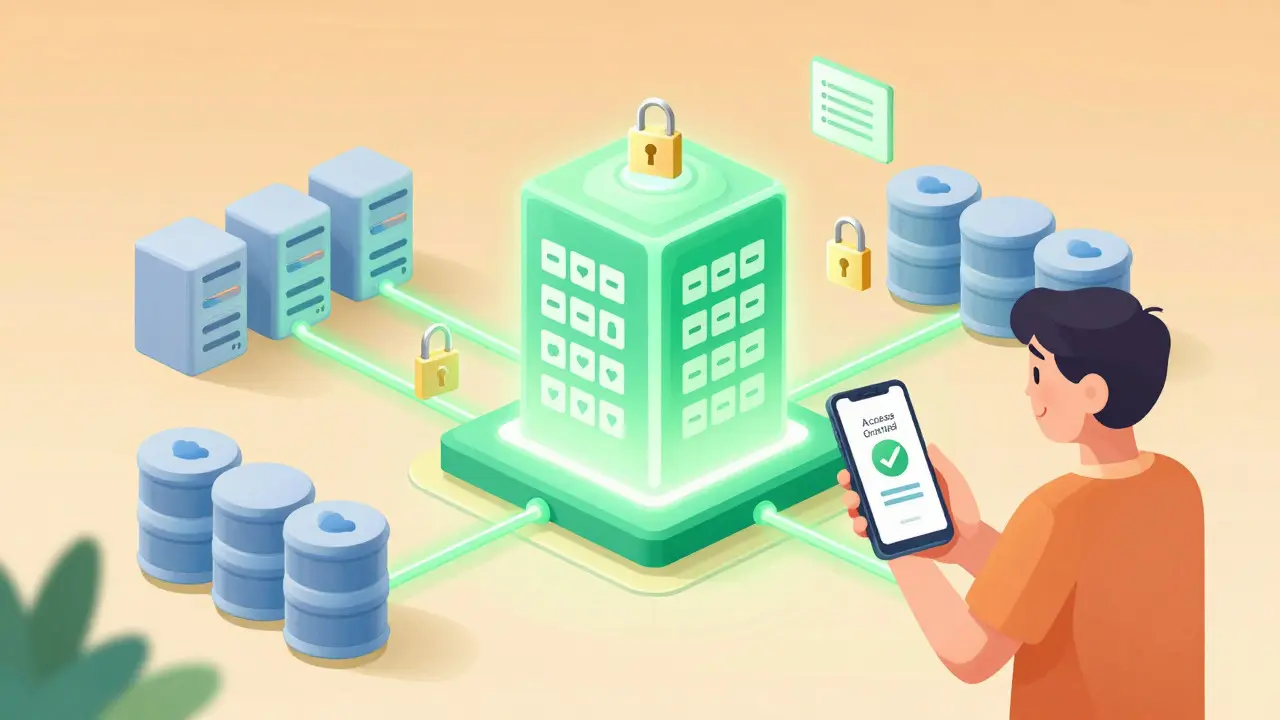
Blockchain technology introduces a fourth model: a shared, immutable ledger. Think of it like a public library catalog. The books (your actual medical files) stay in their respective storage facilities (hospital servers or cloud storage), but the catalog entry-who owns what, who has permission to read it, and when it was updated-is recorded on the blockchain. Everyone agrees on the catalog. No two systems need to integrate directly with each other; they only need to interact with the blockchain.
How Blockchain Secures Patient Data
Security is often cited as the biggest fear in healthcare IT. Hackers love medical data because it’s rich, permanent, and valuable on the black market. Blockchain addresses this through cryptography and decentralization.
In a traditional database, if a hacker breaches the server, they can steal or alter millions of records without anyone knowing until it’s too late. In a blockchain system, data is encrypted and distributed across many nodes. To tamper with a record, a hacker would need to control more than 51% of the entire network simultaneously-a near-impossible feat for large networks.
Let’s look at a specific implementation: MeDShare. This framework uses smart contracts to track exactly how patient data is used. If a researcher requests access to anonymized heart disease data, the smart contract logs the request, grants temporary access, and revokes it after the study period. If someone tries to steal data outside these rules, the system detects the anomaly and alerts the patient. This shifts power from the institution to the individual.
Another innovative approach involves Soulbound Tokens (SBTs). Unlike tradable crypto tokens, SBTs are non-transferable digital badges tied to your identity. Imagine having an SBT that proves you are vaccinated against measles or that you have Type 1 diabetes. These tokens are cryptographically signed by authorized entities (like your doctor) and stored in your digital wallet. When you visit a new clinic, you present the token. The clinic verifies its authenticity on the blockchain instantly, without needing to call your old doctor.
Real-World Benefits Beyond Security
While security gets the headlines, the operational benefits are where the real money-and time-is saved. Approximately 25% of U.S. healthcare spending is considered wasteful. Much of this waste comes from redundant tests. Because doctors can’t easily see what tests were done elsewhere, they order them again to be safe. This costs hundreds of billions annually.
A unified blockchain ecosystem allows a specialist in New York to see the blood work ordered by a general practitioner in Ohio. This leads to:
- Faster Diagnoses: Complete medical histories reduce diagnostic errors.
- Reduced Administrative Costs: Automated verification reduces manual paperwork.
- Better Patient Engagement: Patients own their data and can grant/revoke access instantly.
Consider Avaneer, a consortium backed by major players like Aetna, CVS Health, and Cleveland Clinic. They use blockchain to streamline claims processing and provider directories. By creating a single source of truth for provider credentials, they eliminate the days-long wait times for verifying if a doctor is licensed and in-network. This efficiency trickles down to faster reimbursements and lower overhead.
The Challenges Holding Us Back
If blockchain is so great, why isn’t everyone using it? The answer lies in complexity, regulation, and human behavior.
1. Scalability and Speed Blockchains are slower than centralized databases. Ethereum, one of the most popular platforms for healthcare apps, processes fewer transactions per second than Visa. While side-chains and Layer-2 solutions are improving this, high-volume hospitals generating terabytes of data daily still struggle with throughput limits.
2. Regulatory Hurdles In the U.S., the HIPAA (Health Insurance Portability and Accountability Act) sets strict rules on data privacy. Blockchain’s immutability conflicts with the "Right to be Forgotten" concept found in some international laws (like GDPR). If a patient demands their data be deleted, you can’t easily delete it from a blockchain. Solutions involve storing data off-chain and burning the decryption key on-chain, but this adds technical layers that complicate compliance audits.
3. Integration Costs Implementing a blockchain system takes 6-24 months. Hospitals aren’t tech startups; they’re conservative institutions focused on patient care. Training staff to understand digital wallets, private keys, and smart contracts is a massive cultural shift. Many organizations partner with specialized firms like ProCredEx to handle credentialing, but full-scale adoption requires industry-wide standards that don’t fully exist yet.
| Feature | Traditional EHR | Blockchain Medical Records |
|---|---|---|
| Data Ownership | Hospital/Provider | Patient (via private keys) |
| Interoperability | Low (requires custom APIs) | High (standardized ledger) |
| Security Model | Centralized Firewall | Distributed Cryptography |
| Audit Trail | Mutable (can be edited) | Immutable (permanent log) |
| Implementation Time | Months (for upgrades) | 6-24 Months (full deployment) |
The Role of IoT and Future Trends
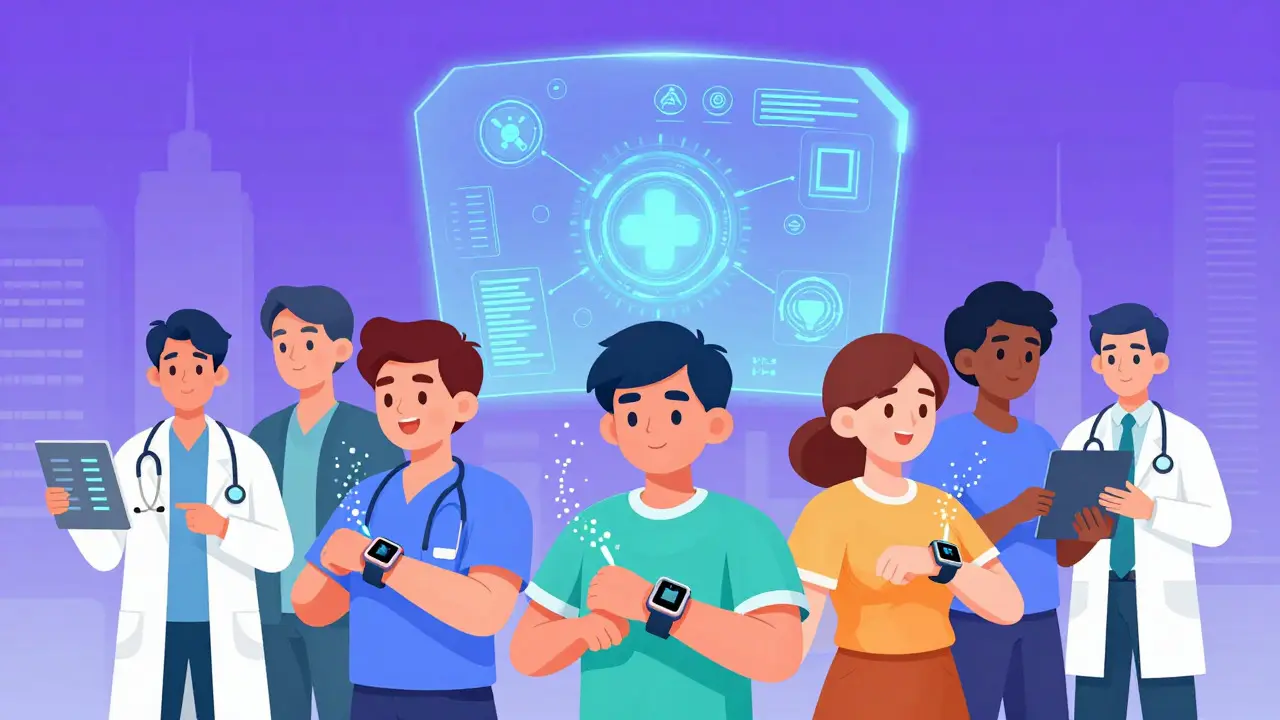
The future of medical records isn’t just about static files; it’s about continuous data streams. The Internet of Medical Things (IoMT) includes wearables, insulin pumps, and remote monitoring sensors. These devices generate massive amounts of real-time data.
Integrating IoMT with blockchain creates a powerful feedback loop. For instance, a diabetic patient’s glucose monitor could automatically upload encrypted readings to the blockchain. A smart contract could analyze this data and alert the patient’s endocrinologist if levels drop dangerously low. This automation reduces human error and enables proactive care rather than reactive treatment.
By 2027, the global healthcare blockchain market is projected to reach $55.8 billion. This growth is driven by the need for better supply chain transparency (tracking drug authenticity) and improved clinical trial data integrity. However, mainstream adoption depends on solving the "cold start" problem: a blockchain is only useful if everyone is on it. Until major hospital systems agree on a common protocol, silos will persist.
What Should You Do Now?
For patients, the immediate step is to take ownership of your existing records. Most hospitals allow you to download your data in PDF or CCDA format. Store these securely. As blockchain tools become more consumer-friendly, expect apps that let you import these files into a personal health wallet.
For healthcare providers, the advice is cautious experimentation. Start with low-risk applications like credential verification or supply chain tracking before touching sensitive patient data. Partner with established consortia rather than building proprietary blockchains from scratch.
The technology is ready. The infrastructure is evolving. The only thing left is the willingness to change how we think about data ownership. Your health data is yours. Blockchain ensures it stays that way.
Is blockchain secure enough for sensitive medical data?
Yes, blockchain offers higher security than traditional centralized databases due to encryption and decentralization. However, the security depends on how well the endpoints (like patient devices) are protected. If a patient loses their private key, access to their data can be permanently lost unless recovery mechanisms are built in.
Does blockchain violate HIPAA regulations?
Not necessarily. HIPAA focuses on protecting patient privacy. Blockchain can comply with HIPAA if personal identifiable information (PII) is stored off-chain and only hashed references are kept on the ledger. Smart contracts can also automate consent management, ensuring data is only shared with authorized parties.
Can I delete my medical records from a blockchain?
Technically, no, because blockchains are immutable. However, practical solutions exist. Most systems store the actual data in a secure cloud server and only keep a pointer (hash) on the blockchain. To "delete" the record, the system deletes the data from the cloud and burns the decryption key, rendering the blockchain pointer useless.
What is a Soulbound Token in healthcare?
A Soulbound Token (SBT) is a non-transferable NFT that represents a verified attribute, such as a medical degree, vaccination status, or diagnosis. Unlike regular tokens, SBTs cannot be sold or transferred, making them ideal for immutable identity verification and credentialing in healthcare systems.
How long does it take to implement a blockchain medical record system?
Basic implementations can take 6-12 months, while complex systems integrating IoT devices and legacy EHRs may require 12-24 months. The timeline depends on the size of the organization, the complexity of the smart contracts, and the level of staff training required.
