- 14 May 2026
- Elara Crowthorne
- 0
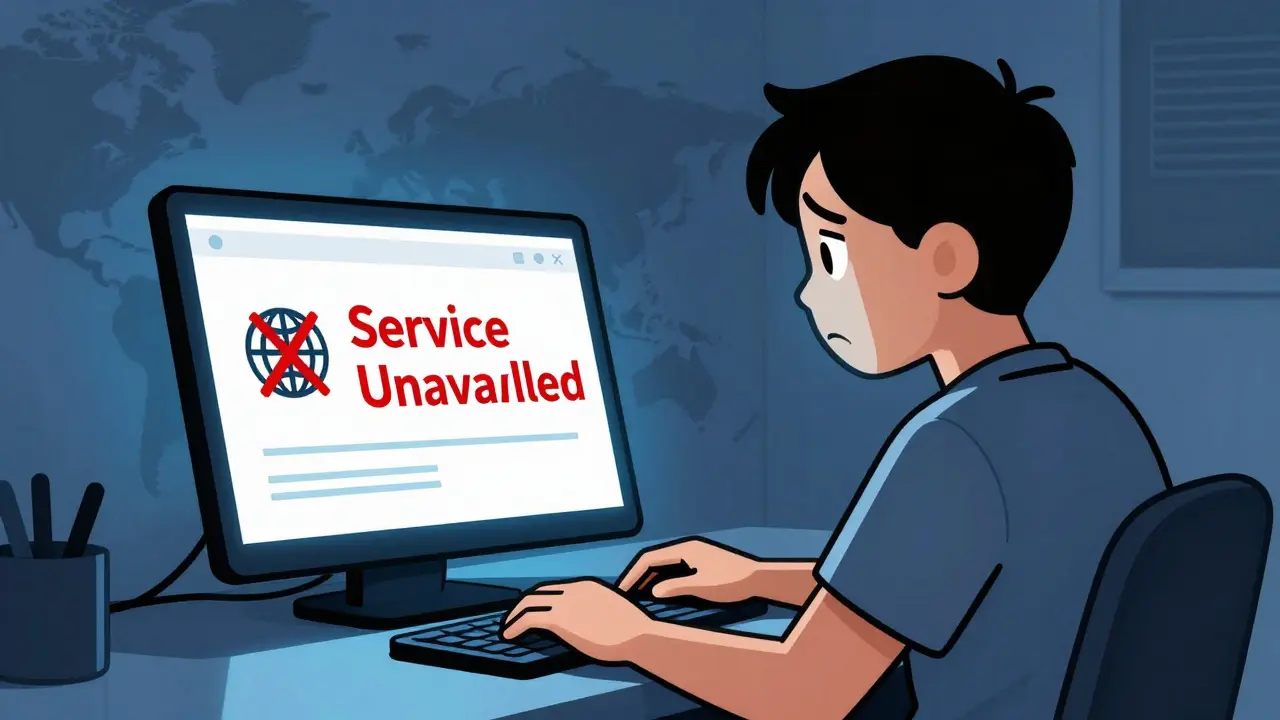
Imagine logging into your favorite crypto app only to see a stark message: "Service unavailable in your region." For millions of users, this isn't a hypothetical scenario-it's the daily reality with Coinbase, a publicly traded cryptocurrency exchange known for its strict regulatory compliance and fiat on-ramps. While competitors like Binance or Kraken might offer broader access in emerging markets, Coinbase has carved out a different path. It prioritizes legal safety over global reach, meaning its doors are firmly shut in many countries.
If you're trying to figure out whether you can buy Bitcoin, Ethereum, or Solana on Coinbase from your location, the answer depends on more than just having an internet connection. It hinges on complex international laws, specifically those enforced by the U.S. Treasury's Office of Foreign Assets Control (OFAC) and regional frameworks like Europe's Markets in Crypto-Assets (MiCA) regulation. This guide breaks down exactly where Coinbase works, where it doesn't, and why these restrictions exist-so you don't waste time trying to sign up in a blocked zone.
Why Does Coinbase Block Certain Countries?
The short answer is liability. Unlike decentralized wallets that operate outside traditional banking systems, Coinbase acts as a financial intermediary. It connects your local bank account to the crypto world. Because it handles fiat currency (dollars, euros, pounds), it must adhere to anti-money laundering (AML) laws and counter-terrorism financing regulations.
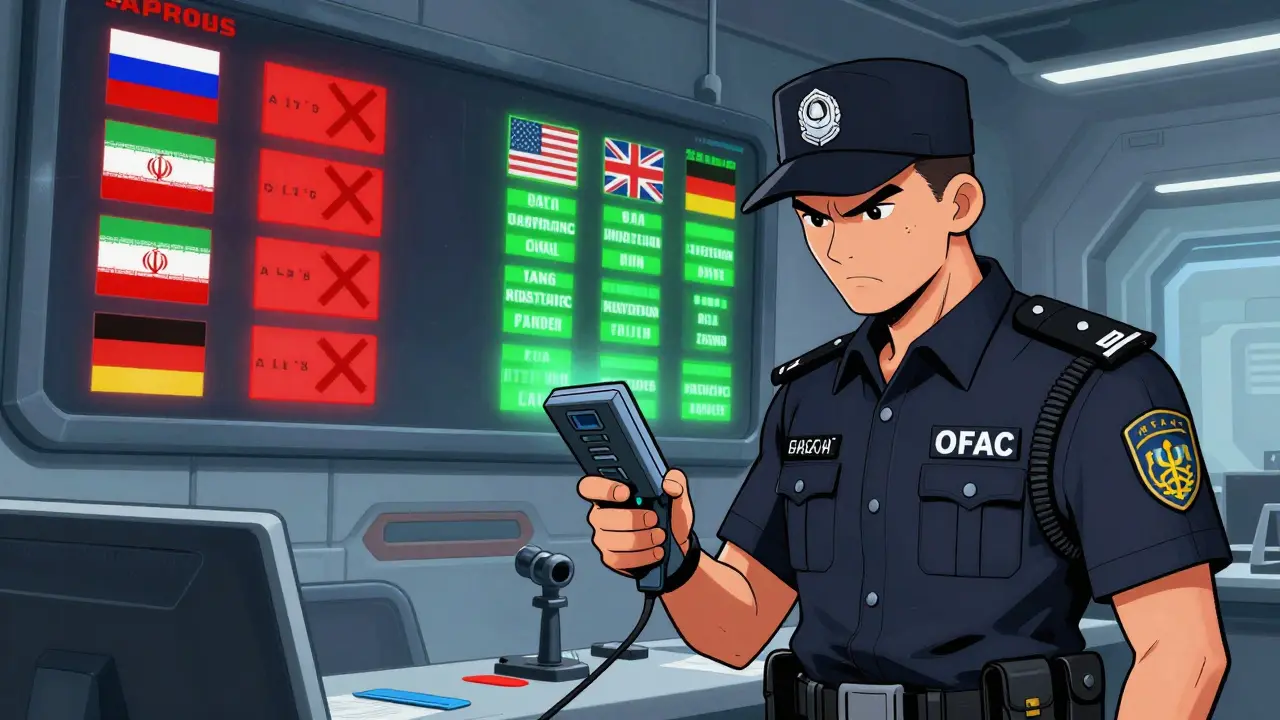
The primary driver behind most blocks is the Office of Foreign Assets Control (OFAC), a U.S. government agency that administers economic and trade sanctions based on U.S. foreign policy and national security goals. Since Coinbase is a U.S.-based company listed on NASDAQ, it must strictly enforce OFAC sanctions. If a country appears on the SDN List (Specially Designated Nationals), Coinbase cannot process transactions involving residents or entities from that region. This includes nations like Russia, Iran, North Korea, Syria, and Crimea.
However, it's not just about sanctioned states. Coinbase also restricts access in jurisdictions where local regulators have banned crypto exchanges or imposed impossible licensing requirements. For instance, while some countries allow personal crypto ownership, they prohibit centralized exchanges from operating within their borders. In these cases, Coinbase pulls its services entirely to avoid legal penalties. As Ryan Straus, Head of Policy at Chainalysis, noted in early 2025, Coinbase’s restrictions align precisely with OFAC guidelines, reflecting real-time compliance adaptation rather than arbitrary exclusion.
The Difference Between Coinbase App and Coinbase Wallet
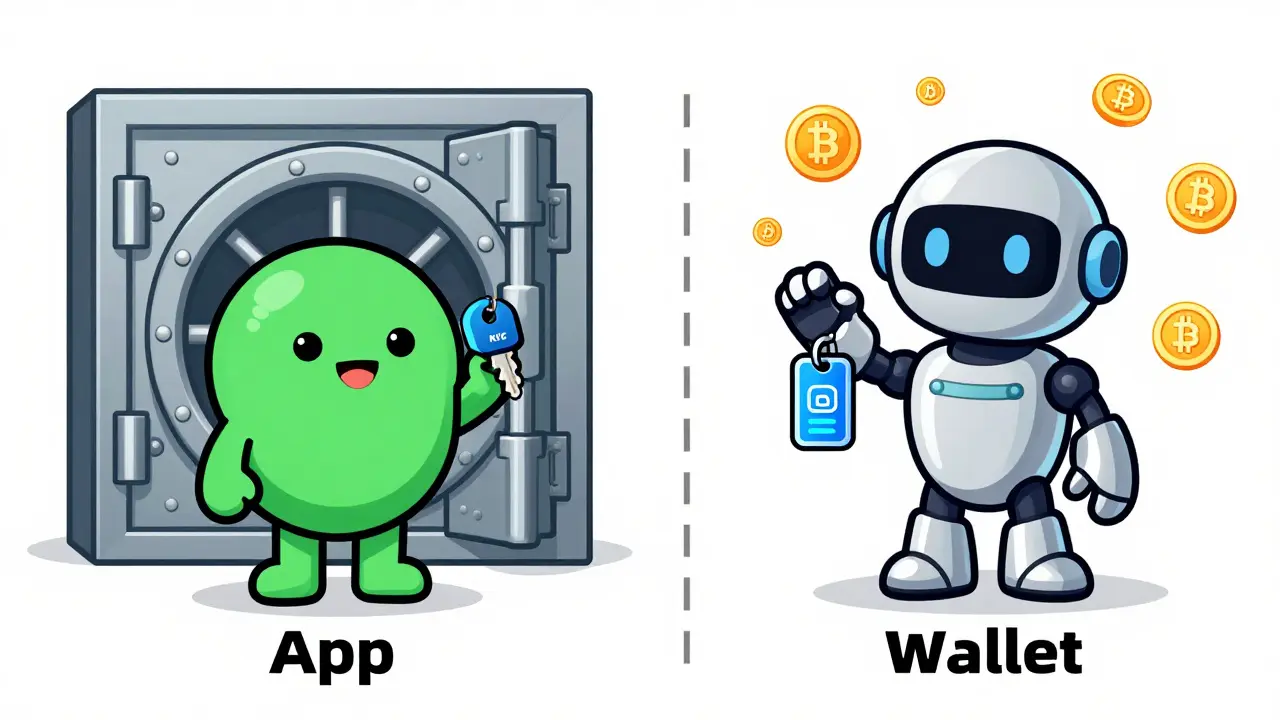
One of the biggest points of confusion for new users is the distinction between the Coinbase App, the centralized trading platform requiring identity verification and offering fiat deposits and the Coinbase Wallet, a non-custodial self-custody wallet allowing users to manage private keys without KYC. Understanding this difference is crucial because your geographic location affects them differently.
- Coinbase App: This is the main trading interface. You deposit money via bank transfer, credit card, or Apple Pay, then buy/sell crypto. Access here is heavily restricted. As of 2025, full fiat services are available in roughly 48 countries, including the U.S., U.K., Germany, France, Canada, and Singapore. If you live outside these regions, you likely cannot deposit fiat currency.
- Coinbase Wallet: This is a standalone mobile application that stores your private keys. It does not require Know Your Customer (KYC) verification for basic use. Consequently, it operates globally in almost every country except those under direct OFAC sanctions. You can download it in Pakistan, India, or Nigeria, but you won't find any built-in buttons to buy crypto with local currency.
This split creates a unique situation for users in partially restricted countries. For example, a user in the UAE can download the Wallet and interact with decentralized apps (dApps), but if they try to open the App to buy Bitcoin using a bank transfer, they will be blocked. The Wallet allows you to hold assets; the App allows you to acquire them legally through regulated channels.
Countries Where Coinbase Is Fully Available
In supported regions, Coinbase offers a seamless experience with high transaction limits and multiple payment methods. These countries typically have clear regulatory frameworks for digital assets. Here is what defines a "fully available" market:
- Fiat On-Ramps: Direct integration with local banking systems. In Europe, this means SEPA transfers; in the U.S., ACH wires; in the UK, Faster Payments.
- High Limits: Verified users can often transact up to $50,000 daily, depending on their trust level and jurisdiction.
- Customer Support: Access to 24/7 chat support and dedicated help centers.
Key markets include the United States, where Coinbase holds a dominant 56% market share according to Bitwise reports. Other major hubs include Germany, where the platform holds full BaFin licensing, ensuring legal protection for investors. France, Italy, Spain, and the Netherlands also enjoy full access due to the implementation of MiCA, which standardized crypto rules across the European Economic Area (EEA).
In Asia, Singapore stands out as a fully compliant hub. Users there can trade freely with SGD deposits. Japan and South Korea have seen fluctuating policies, but Coinbase generally maintains presence where local licenses are held. Australia and New Zealand are also strongholds, offering robust fiat support and low fees compared to peer-to-peer alternatives.
Countries With Partial or No Access
For users living outside the core Western markets, the landscape becomes fragmented. Some countries fall into a "gray zone" where limited features work, while others are completely blacklisted.
| Region/Country | Coinbase App (Fiat Trading) | Coinbase Wallet (Self-Custody) | Key Restriction Reason |
|---|---|---|---|
| Russia / Belarus | No | Limited* | OFAC Sanctions |
| Pakistan | No | Yes | Local Regulatory Ban |
| India | No** | Yes | Tax/Licensing Uncertainty |
| Nigeria | No | Yes | Central Bank Bans |
| United Arab Emirates | Limited | Yes | Partial Fiat Support Only |
| China | No | No | Total Crypto Ban |
*Note: While the Wallet may technically load, all fiat-related functions and certain dApp interactions are often disabled or risky due to IP detection.
**Note: Coinbase previously operated in India but scaled back operations due to Reserve Bank of India (RBI) pressure and tax complexities.
In countries like Pakistan and Nigeria, users frequently turn to Binance P2P or local exchanges because Coinbase refuses to offer fiat pairs. This forces them to pay higher premiums. For instance, Pakistani users report paying an 8% premium on Binance P2P to acquire USDT, whereas Coinbase would have offered near-market rates if accessible. Similarly, in India, despite a massive user base, the lack of official fiat on-ramps pushes traders toward platforms like WazirX or CoinDCX, which navigate local tax laws more aggressively.
How Coinbase Enforces Geo-Restrictions
You might wonder if you can bypass these blocks using a Virtual Private Network (VPN). The short answer is: don't try it. Coinbase employs sophisticated geo-fencing technology that goes beyond simple IP address checking.
The platform uses a multi-layered approach: 1. IP Geolocation: Detecting your physical server location. 2. KYC Verification: Requiring government-issued ID and proof of address. The data from your ID must match your IP location. 3. Device Fingerprinting: Analyzing hardware identifiers to detect spoofing tools. 4. Behavioral Analysis: Monitoring login patterns for inconsistencies.
If Coinbase detects a mismatch-for example, your ID says you live in London, but your IP address shows Moscow-they will flag your account. In severe cases, they freeze funds and terminate the account. A Reddit user reported losing $2,300 after attempting to access the App via a VPN from a restricted region. Coinbase’s User Agreement explicitly states that violating these terms results in immediate termination without refund. Therefore, using VPNs to trick the system is not only ineffective but financially dangerous.
Coinbase vs. Competitors: A Global Comparison
If Coinbase isn't available in your country, what are your options? Comparing Coinbase to other major exchanges highlights the trade-off between security/compliance and accessibility.
- Binance: Operates in significantly more countries than Coinbase, including parts of Africa, Southeast Asia, and Latin America. However, it faces its own bans in countries like Canada and the Netherlands. Its P2P marketplace fills the gap where fiat rails are missing.
- Kraken: Offers fiat services in over 55 countries, making it one of the most globally accessible regulated exchanges. It is often preferred by privacy-conscious users who still want fiat support.
- META Mask: As a non-custodial wallet similar to Coinbase Wallet, MetaMask has no geographic restrictions. However, it lacks built-in fiat on-ramps, meaning you must bridge crypto from another source first.
Coinbase’s advantage lies in its legitimacy. For institutional investors and retail users in regulated markets, the peace of mind provided by SEC registration (despite ongoing litigation) and MiCA compliance is invaluable. In contrast, exchanges operating in gray zones carry higher risks of sudden shutdowns or frozen assets.
Future Outlook: Will Restrictions Ease?
The regulatory landscape is shifting rapidly. The implementation of MiCA in Europe has actually expanded Coinbase’s footprint, allowing it to operate seamlessly across 30 EEA nations under a single license. Conversely, the U.S. Securities and Exchange Commission (SEC) lawsuit filed in 2023 continues to cast a shadow. If Coinbase loses key arguments regarding its status as an unregistered securities exchange, it may face stricter limitations even in friendly jurisdictions.
Experts predict a bifurcated future. By 2030, DeFi researcher Hasu warns that geographic fragmentation could reduce Coinbase’s total addressable market by 40%. Meanwhile, JPMorgan suggests Coinbase has a "5-7 year compliance runway" thanks to its substantial capital reserves ($6.2 billion as of Q4 2024). For now, expect few changes in sanctioned regions, but potential expansions in emerging markets like India or Brazil if local regulators clarify their stance on centralized exchanges.
Can I use Coinbase in Russia?
No. Due to OFAC sanctions following the 2022 geopolitical events, Coinbase has completely blocked access for users residing in Russia and Belarus. Both the App and Wallet functionalities are severely restricted or non-functional for Russian IPs and IDs.
Is Coinbase available in India?
Currently, no. While you can download the Coinbase Wallet, the main Coinbase App does not support fiat deposits or withdrawals for Indian residents. This is due to ongoing regulatory uncertainty with the Reserve Bank of India and strict tax reporting requirements.
What happens if I move to a restricted country?
If you relocate to a sanctioned or restricted country, you must update your address in your account settings. Coinbase may suspend your ability to make new trades or deposits until you withdraw your remaining funds. Continuing to use the service from a prohibited location violates their Terms of Service and can lead to account closure.
Why is Coinbase Wallet available in more countries than the App?
The Wallet is a non-custodial tool, meaning Coinbase does not hold your funds or process payments. It simply helps you store keys. Since it doesn't involve fiat currency conversion or banking integrations, it falls outside many AML/KYC regulations, allowing global distribution except in directly sanctioned territories.
Can I use a VPN to access Coinbase from a blocked country?
It is strongly advised against. Coinbase uses advanced detection methods including device fingerprinting and KYC data matching. If caught, your account will be terminated, and any funds inside may be frozen or forfeited. There is no guarantee you will recover your money.
Which countries have the best Coinbase experience?
Users in the United States, United Kingdom, Germany, France, and Singapore enjoy the most comprehensive features, including instant fiat deposits, high transaction limits, and full customer support. These regions benefit from clear regulatory frameworks like MiCA in Europe.
