

- 22 May 2026
- Elara Crowthorne
- 14
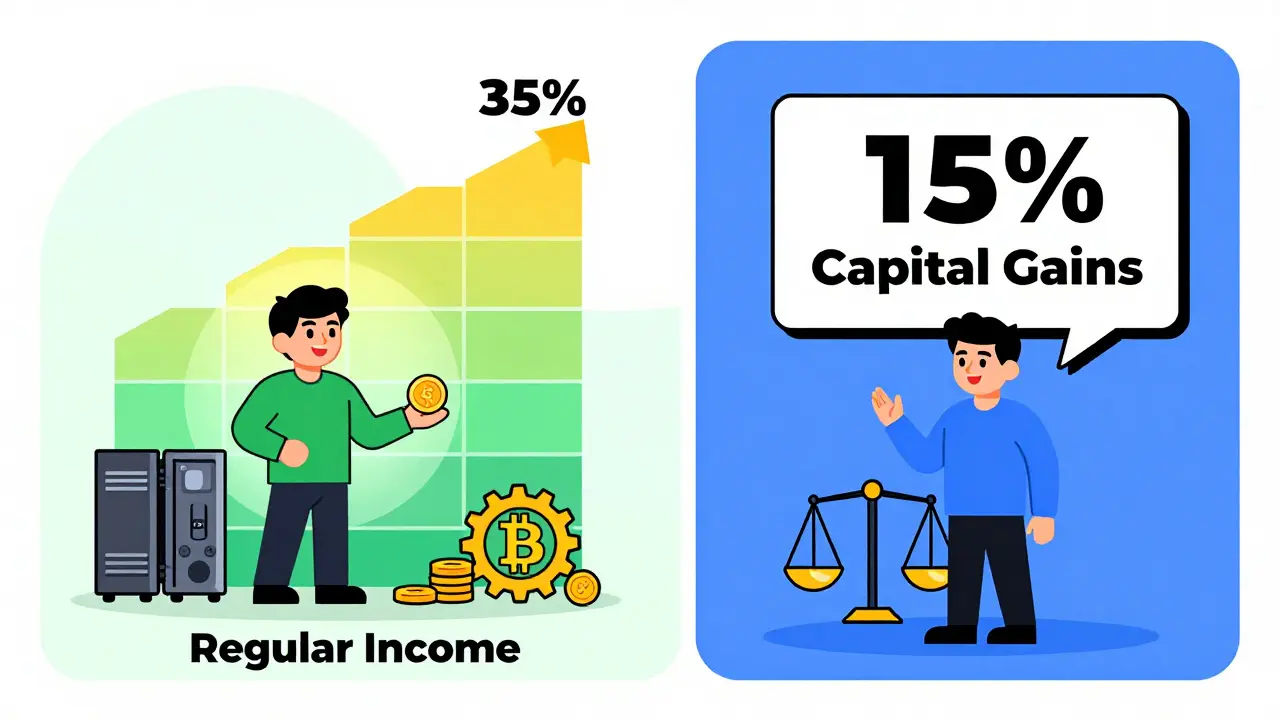
You might have heard a rumor floating around social media feeds and Telegram groups: that Pakistan is slashing its cryptocurrency taxes from 15% down to zero percent. It sounds like a dream scenario for every trader hoping to keep their profits intact. But here is the hard truth you need to know before you make your next move. As of May 2026, there is no official policy reducing the capital gains tax on crypto to 0%. In fact, the current law enforces a flat 15% rate on all profits made from selling digital assets.
This confusion often stems from a mix of wishful thinking, misinterpreted draft proposals, and comparisons with other countries that do offer tax-free zones. Understanding the actual rules set by the Federal Board of Revenue (FBR) and the Pakistan Digital Assets Authority (PDAA) is crucial. Getting this wrong doesn't just mean paying less than you should; it can lead to penalties, frozen accounts, or worse.
The Real Numbers: What You Actually Pay
Let’s cut through the noise and look at the numbers established under the Virtual Assets Ordinance promulgated in July 2025 to formalize cryptocurrency regulation in Pakistan. This ordinance marked a massive shift from the previous era of ambiguity and outright bans. Instead of ignoring crypto, the government decided to regulate and tax it. The headline figure everyone needs to memorize is 15%.
When you sell Bitcoin, Ethereum, or any other altcoin for Pakistani Rupees (PKR) at a profit, you owe 15% of that profit to the state. This is a flat rate. Unlike traditional stock markets where holding an asset longer might lower your tax bill, Pakistan currently treats short-term flips and long-term holds the same way. If you bought $1,000 worth of crypto and sold it for $1,500, your taxable gain is $500. You pay 15% of that $500. Simple, but strict.
| Income Source | Tax Treatment | Rate / Bracket |
|---|---|---|
| Selling Crypto for Profit (Capital Gains) | Flat Capital Gains Tax | 15% |
| Mining Rewards | Taxed as Regular Income | Progressive (5% - 35%) |
| Staking Yields | Taxed as Regular Income | Progressive (5% - 35%) |
| Crypto-to-Crypto Swaps | No Immediate Tax Event | 0% (until converted to fiat) |
| Business Corporate Activity | Corporate Tax | 29% |
Notice something important in that table? Mining and staking are treated differently. If you run mining rigs or stake coins to earn rewards, those earnings count as regular income. They get added to your yearly salary or business income and taxed according to Pakistan’s progressive brackets. That means if you’re already in a high income bracket, your effective tax rate on mining could be much higher than 15%, potentially hitting up to 35% for incomes over ₨12 million. This distinction trips up many beginners who assume everything related to crypto is just 15%.
Where Did the "0%" Rumor Come From?
If the rate is firmly 15%, why does everyone think it’s dropping to zero? Part of the confusion comes from looking at neighboring jurisdictions. Countries like the United Arab Emirates (UAE) and Dubai have become popular hubs because they offer 0% personal income tax and specific exemptions for crypto capital gains. Traders in Karachi or Lahore often compare their situation to friends operating out of Dubai, leading to assumptions that Pakistan will follow suit to stay competitive.
Another source of the rumor is the ongoing debate within the Pakistan Digital Assets Authority (PDAA), the regulatory body overseeing digital assets since May 2025. In late 2025, draft regulations were discussed that hinted at potential incentives for long-term holders. Some analysts speculated these incentives might eventually mirror global trends, including reduced rates. However, speculation is not law. As of mid-2026, no legislation has been passed to introduce a tiered system or a zero-rate exemption. The International Monetary Fund (IMF), which heavily influenced Pakistan’s initial framework, recommended a stable revenue stream from crypto, making a sudden drop to 0% highly unlikely without significant economic restructuring.
Additionally, there is a small exemption threshold that gets misreported. Transactions under ₨50,000 may face fewer scrutiny hurdles or simplified reporting, but this is not a blanket 0% tax rate. It’s a minor administrative relief for casual users, not a loophole for serious investors.
How to Calculate Your Liability Correctly
Knowing the rate is only half the battle. The real headache for most Pakistani traders is calculating exactly how much they owe. The FBR requires you to report your gains annually via Form IT-1, with a deadline usually falling on September 30. To do this accurately, you need to track your "cost basis."
Your cost basis is the original value of your crypto when you acquired it. When you sell, you subtract this cost from the sale price to find your gain. Here is the tricky part: if you bought Bitcoin in 2023, Ethereum in 2024, and Solana in 2025, each purchase has a different entry price. You cannot just average them out unless you use a specific accounting method consistently.
- Record Every Transaction: Keep a spreadsheet or use software to log every buy, sell, swap, and transfer. Include dates, amounts, and the PKR value at the time of transaction.
- Determine Cost Basis: Identify which specific coins you sold. If you bought 1 BTC at ₨20 million and another at ₨25 million, and you sell one now, which one did you sell? Most experts recommend using the First-In, First-Out (FIFO) method unless you have a good reason not to.
- Calculate the Gain: Sale Price minus Cost Basis equals Taxable Gain.
- Apply the Rate: Multiply the Taxable Gain by 0.15 (15%).
- File Form IT-1: Report this amount during your annual tax filing.
Many users complain that manual tracking takes 15-20 hours a year. That’s why third-party tools like Koinly and CoinTracker have gained popularity in Pakistan since mid-2025. These platforms connect to your exchange APIs (like Binance or local exchanges such as Rain) and automate the calculation process. While they cost money, they save you from costly errors and provide audit-ready reports.

Compliance Risks and Reporting Requirements
Ignoring the tax because you think it might drop to 0% is a dangerous game. The regulatory net is tightening. Starting in mid-2025, cryptocurrency exchanges operating in or serving Pakistan began sharing transaction data directly with the Federal Board of Revenue. This means the FBR knows if you’ve made significant profits, even if you haven’t reported them.
The consequences of non-compliance can be severe. Beyond back-taxes, you could face penalties and interest charges. More importantly, your banking channels could be flagged. Pakistan has strict anti-money laundering (AML) laws. Unexplained large deposits of PKR resulting from crypto sales can trigger investigations. By paying your 15% CGT, you legitimize your funds, making it easier to deposit into banks or use for property purchases without raising red flags.
Furthermore, businesses engaging in crypto activities must pay corporate tax at 29%. If you’re running a trading firm or a mining operation registered as a company, the 15% individual rate doesn’t apply to your entity’s profits. Mixing personal and business crypto wallets is a common mistake that leads to audits. Keep them separate.
Future Outlook: Will Rates Change?
While today’s rate is 15%, the landscape is dynamic. The Pakistan Digital Assets Authority has acknowledged feedback from the community regarding the lack of long-term incentives. Dr. Ayesha Siddiqa, a senior fellow at Quaid-i-Azam University, noted that the current flat rate is a "pragmatic middle ground." However, industry experts predict changes.
Deloitte Pakistan’s market report from late 2025 suggested that a tiered system could emerge by 2027. This might see rates drop to 10% for holdings over one year and 5% for holdings over two years. This would align Pakistan more closely with jurisdictions like Germany, which exempts gains after one year. Until such a law is explicitly passed and published in the official gazette, however, you must operate under the assumption that the 15% flat rate applies to all transactions, regardless of how long you held the asset.
For now, the strategy isn’t to wait for a mythical 0% rate. It’s to optimize your compliance. Use tax-loss harvesting strategies where possible (selling losing positions to offset gains), keep meticulous records, and consult with a chartered accountant who specializes in digital assets. The FBR has started training accountants across major cities to handle these cases, so professional help is more accessible than ever.
Is cryptocurrency legal in Pakistan in 2026?
Yes. Following the Virtual Assets Ordinance of 2025, cryptocurrencies are legally recognized as virtual assets. Trading, holding, and investing in crypto are permitted, provided you comply with the taxation and reporting requirements set by the Federal Board of Revenue (FBR).
Do I pay tax on crypto-to-crypto swaps?
Generally, no immediate tax is triggered when you swap one cryptocurrency for another (e.g., Bitcoin for Ethereum). The tax event occurs only when you convert your crypto into fiat currency (PKR) or use it to purchase goods and services. However, you must still record these swaps for accurate cost basis tracking.
What happens if I don't declare my crypto gains?
Failure to declare crypto gains can result in penalties, interest charges, and potential legal action. Since exchanges share data with the FBR, undeclared income is easily detectable. Additionally, unreported large deposits in bank accounts can trigger anti-money laundering investigations.
Are there any exemptions for small traders?
There is a simplified approach for very small transactions, typically those under ₨50,000, which may face less stringent reporting burdens. However, this is not a complete tax exemption. All profits above certain thresholds must be declared. Consult a tax advisor to determine if your specific volume qualifies for simplified filing.
How is mining income taxed?
Mining income is not taxed at the flat 15% capital gains rate. Instead, it is treated as regular business or employment income. It is added to your total annual income and taxed according to Pakistan's progressive tax brackets, which range from 5% to 35% depending on your total earnings.
Will the tax rate definitely drop to 0% in the future?
There is no official confirmation that the rate will drop to 0%. Current rumors are speculative. While some experts predict a tiered system with lower rates for long-term holders, the IMF's influence and the government's need for revenue make a complete elimination of crypto taxes unlikely in the near term. Always rely on official FBR announcements rather than social media rumors.


14 Comments
It is absolutely vital that we demystify these regulations for the broader community because misinformation spreads faster than any blockchain transaction. Many of my friends in Mumbai and Karachi are still operating under the assumption that crypto exists in a legal vacuum, which is dangerously incorrect. The distinction between capital gains and income tax for mining is a nuance that often gets lost in translation on social media platforms. We must encourage everyone to consult with local tax professionals rather than relying on Telegram group chats for financial advice. This ordinance marks a significant step toward legitimacy, even if the rates feel steep to some traders. Let us support each other by sharing verified resources and official FBR links instead of rumors.
Great breakdown here! 🧵 The part about FIFO accounting is crucial because so many people just average their buys and end up owing way more or less than they should. I’ve been using Koinly since mid-2025 and it literally saved me from an audit nightmare last year. If you’re doing serious volume, manual spreadsheets are a recipe for disaster. Also, don’t forget that staking rewards are taxed as income, not gains! That trips up so many folks who think they can hide those yields under the table. Stay compliant, stay safe! 🙌💸
one must consider the broader economic implications of such rigid taxation structures which inevitably stifle innovation and drive capital flight to more lenient jurisdictions like Dubai or Singapore where the regulatory environment is far more conducive to growth and prosperity for all stakeholders involved in this nascent yet transformative industry sector
typo alert but seriously this is bs. nobody pays 15% flat unless they want to be a doormat for the gov. most pros use offshore entities or mixers to avoid this dragnet. its only fools who report everything honestly. the system is rigged against the little guy anyway so why play fair?
Ah yes, the classic 'break the law because it's unfair' argument. How original. 🙄 You know what else is illegal? Speeding. Do you speed? Probably. But at least you have a license. Crypto isn't a free-for-all anymore, buddy. The FBR has your data. Your bank has your deposits. Trying to outsmart them with 'mixers' is just painting a target on your back for AML investigations. It’s not brave, it’s stupid. And eventually, the hammer drops. Just pay the 15% and sleep at night. Or don’t. Your funeral.
You absolute peasant. You think you can lecture me on compliance? I have lawyers in London and Zurich who handle my affairs while you’re worrying about a spreadsheet error. The 15% rate is a joke for those of us with actual wealth. Keep whining about fairness while I move millions through legitimate corporate structures you couldn’t comprehend. Your ignorance is pathetic.
I believe it is important to maintain a respectful discourse here. While Mr. Wonnacott’s perspective highlights the advantages of high-net-worth strategies, it is not applicable to the average trader. We should focus on actionable advice for those navigating the current regulatory framework. Compliance is not optional; it is a civic responsibility. Let us steer the conversation back to practical steps for accurate reporting.
I really appreciate the calm approach here. It’s easy to get heated when money is on the line, but staying informed is the best defense. I’m still learning the ropes myself, so thank you for clarifying the difference between mining income and capital gains. It makes sense that mining is treated like a business operation. I’ll definitely look into the progressive brackets mentioned earlier.
Stop overthinking it. Just track your trades. Use a tool. Pay the tax. Done. Life goes on.
Oh, look at us, playing accountants! 🤓 Seriously though, the variable sentence length of my comment mirrors the chaotic nature of crypto markets themselves. One minute you’re up, the next you’re down. But hey, at least the tax rate is consistent. Unlike my mood swings. 😂 Just kidding. Sort of. The point stands: automate your tracking. Don’t be that person crying about lost records in September.
i think the real question is why we let governments control our money at all. but thats a deep philosophical rabbit hole for another day. meanwhile we gotta pay the piper. sucks to suck i guess. but hey at least its not 30%. progress right?
the silence regarding the small exemption threshold is deafening. many casual users believe they are invisible but the fbr sees everything. do not assume that transactions under 50k are completely off the radar. they may face less scrutiny but they are still recorded. keep your records straight regardless of amount. it is better to be safe than sorry.
Let me educate you all since clearly no one understands the macro picture. The IMF’s influence is the key driver here. They demand revenue stability. Pakistan needs every rupee. Expecting a drop to 0% is delusional. In fact, I predict rates might go UP if the economy worsens. Stop listening to influencers selling courses on 'tax-free crypto.' It’s a scam. The 15% is your reality. Deal with it. I’ve been trading since 2017 and I’ve seen regimes change. This one is sticking around. Adapt or die.
Actually, I disagree with the doom and gloom. Look at Germany. They exempt gains after one year. Why can’t Pakistan? It’s not rocket science. The PDAA is young. Regulations evolve. Maybe in 2027 we’ll see changes. Being too rigid in your thinking limits your potential. I’m holding long-term precisely because I believe the landscape will soften. Plus, the 0% rumor started somewhere. There’s usually smoke before fire. Stay hopeful!