- 15 Aug 2026
- Elara Crowthorne
- 16
Remember the days when getting into crypto meant just buying Bitcoin and hoping for the best? Those days are long gone. Today, you have to be strategic, especially when it comes to projects like Bit.Country, which operates as a Metaverse-as-a-Service (MaaS) platform allowing users to create personalized metaverses in approximately 12 seconds. If you’ve been hearing about the NUUM airdrop or wondering how MNet (Metaverse.Network) distributes its tokens, you’re not alone. The landscape is complex because it involves two networks, two different tokens, and a history of crowdloans that can confuse even seasoned investors.
This guide cuts through the noise. We will break down exactly how the NUUM token works, what happened with the earlier NEER airdrops on Kusama, and where things stand today in mid-2026. Whether you held KSM during the auction era or are looking at NUUM for the first time, understanding these mechanics is crucial before you commit any capital.
Understanding the Dual Network Structure
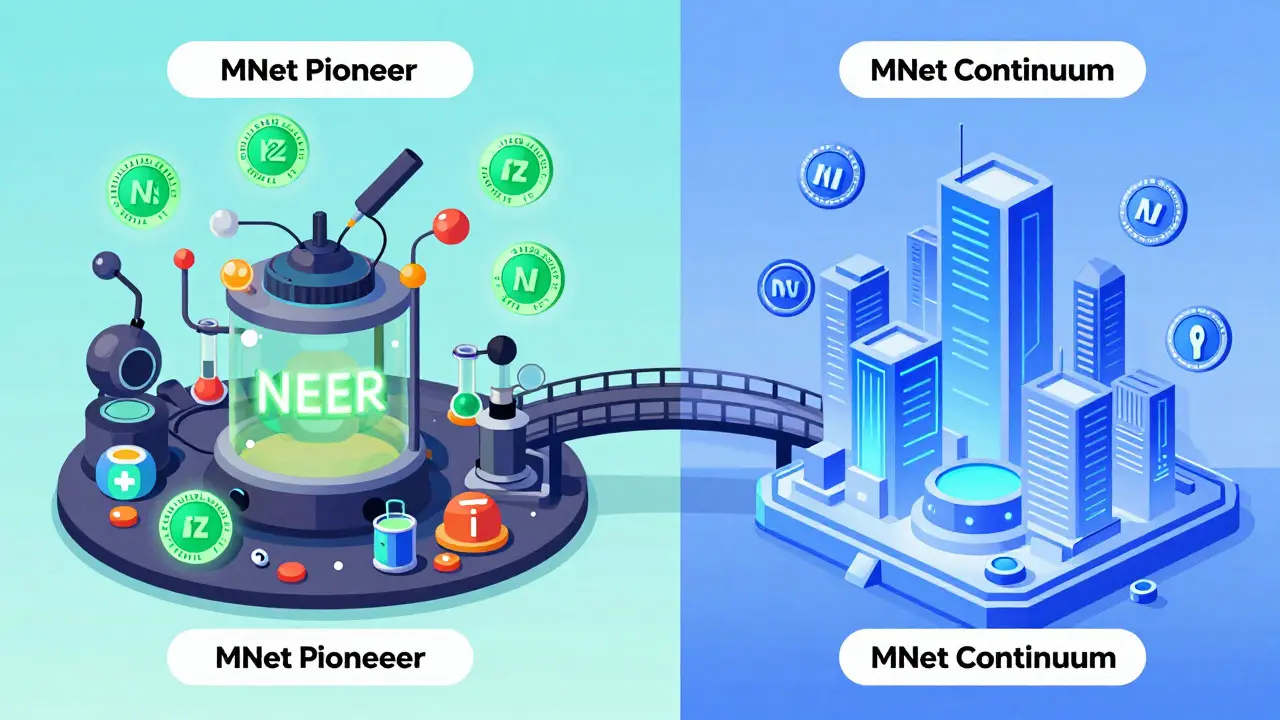
To understand the airdrop details, you first need to understand the architecture. Bit.Country doesn’t just run on one chain; it uses a dual-network strategy common in the Polkadot ecosystem. This setup allows them to test features safely before deploying them to the main production environment.
MNet Pioneer runs on the Kusama network. Think of Kusama as "Polkadot Canary." It’s where developers go to test risky innovations without breaking the main system. On this network, the native utility token was NEER. Most of the early community engagement, including the famous crowdloan rewards, happened here.
Then there is MNet Continuum, which lives on the Polkadot network. This is the production-ready version. The native token here is NUUM. When people talk about the "NUUM airdrop" today, they are usually referring to the distribution mechanisms tied to this mainnet launch, but the roots go back to the Pioneer phase.
| Feature | MNet Pioneer | MNet Continuum |
|---|---|---|
| Underlying Network | Kusama | Polkadot |
| Native Token | NEER | NUUM |
| Purpose | Testing & Innovation (Canary) | Production & Main Utility |
| Airdrop/Crowdloan Era | Nov 2021 - Oct 2022 | TGE Feb 2024 onwards |
| Smart Contract Support | EVM & WASM | EVM & WASM |
The Original Airdrop: NEER and the Kusama Crowdloan
If you are looking for a direct "claim NUUM now" button based on holding an old wallet, you might be disappointed. The primary distribution event that most people associate with Bit.Country’s early success was actually the Kusama Auction #13. This wasn’t a simple snapshot airdrop; it was a competitive bidding war using a mechanism called a crowdloan.
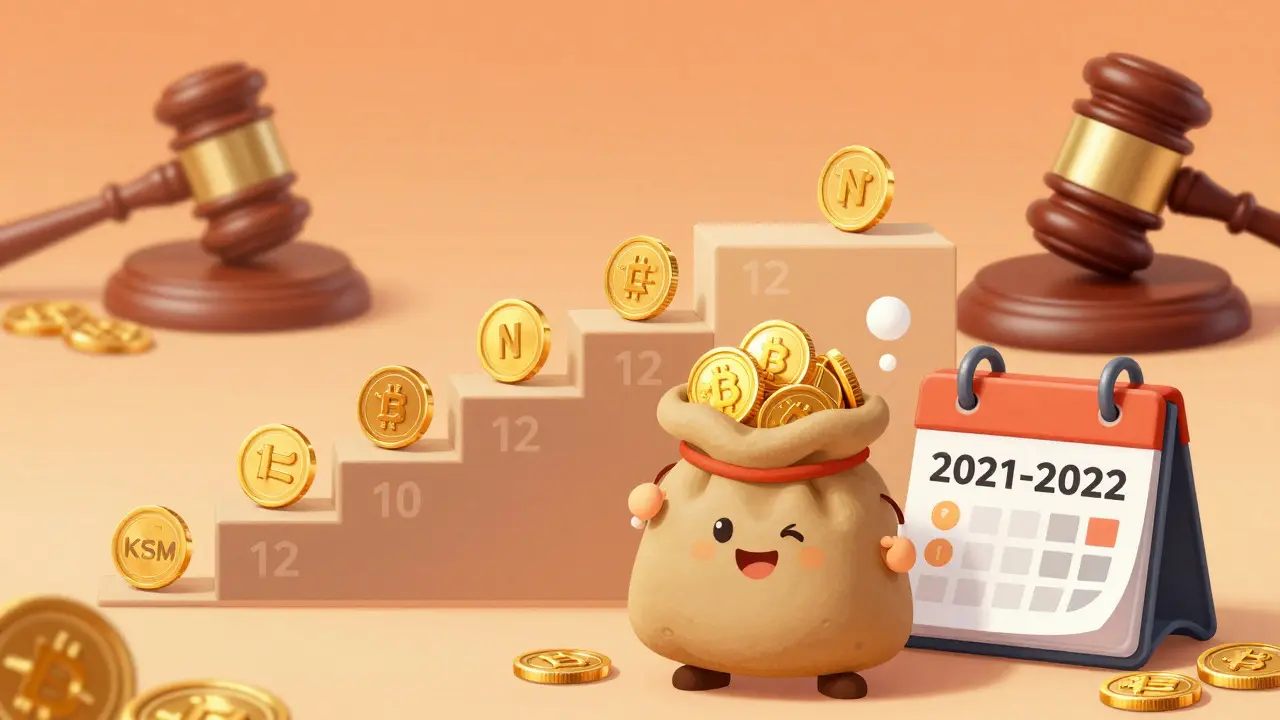
Between November 27, 2021, and October 31, 2022, participants locked up KSM tokens to help MNet win the right to lease a slot on the Kusama blockchain. They won big, raising over $3.1 million worth of KSM. In return, contributors received NEER tokens. The reward rate was aggressive: roughly 72+ NEER tokens for every 1 KSM contributed.
Here is how the distribution worked:
- Immediate Release: 30% of the total rewards were distributed immediately at the Token Generation Event (TGE).
- Vesting Schedule: The remaining 70% was locked and released linearly over 12 months. This means if you claimed your rewards in 2022, you were still receiving NEER tokens monthly well into 2023.
- Referral Bonuses: There was a 5% bonus structure split between referrers and new participants, encouraging community growth.
For many users, this NEER airdrop was their entry point. However, NEER is distinct from NUUM. While they serve similar purposes within their respective networks, they are separate assets. NEER trades exclusively on exchanges like Gate.io, while NUUM has its own market dynamics on Polkadot.
NUUM Tokenomics and Current Distribution
So, where does NUUM fit in? The NUUM token officially launched with its Token Generation Event (TGE) on February 29, 2024. Unlike the crowdloan model used for Pioneer, the NUUM distribution relied heavily on initial exchange offerings (IEOs), private investment rounds, and ecosystem incentives.
The total supply of NUUM is capped at 1 billion tokens. As of mid-2026, the circulating supply sits around 132.43 million NUUM. This relatively low circulation compared to the max supply suggests that significant portions of the token are still vested or reserved for future development.
Key aspects of the current NUUM economic model include:
- Developer Incentives: A portion of the supply is reserved to attract builders who want to create 3D worlds, NFTs, and play-to-earn games on the platform.
- Employee Vesting: Approximately 30 million NUUM tokens are reserved for employee incentives. These typically come with lock-up periods (e.g., 12-month locks followed by 24-month linear releases) to align team interests with long-term project health.
- Community Treasury: Funds are set aside to support ongoing community engagement and marketing efforts.
If you are asking whether there is a current active airdrop for NUUM holders, the answer is generally no, unless specified in recent governance proposals. Most "free NUUM" opportunities now come from participating in the ecosystem-creating a Bit Country, staking, or engaging in specific promotional campaigns rather than a blanket historical claim.
Market Performance and Liquidity Realities
Let’s talk numbers, because sentiment often drifts far from reality. NUUM has experienced extreme volatility since its inception. The token hit an all-time high of $0.6046 in March 2024. Fast forward to mid-2026, and the price hovers around $0.001958. That represents a decline of nearly 99.7% from its peak.
Why such a drop? Several factors contribute:
- Liquidity Constraints: With a daily trading volume of only about $8,840, moving large amounts of NUUM can cause significant slippage. Low liquidity makes the token vulnerable to sharp price swings.
- Broad Market Conditions: The entire altcoin sector faced headwinds post-2024 bull run, and smaller cap tokens like NUUM often bear the brunt of sell-offs.
- Vesting Releases: As vesting schedules unlock, new supplies enter the market. If demand doesn’t match this influx, prices naturally correct downward.
However, it’s worth noting that NUUM has recovered significantly from its all-time low of $0.0009996 recorded in April 2025. A 95.91% recovery from the bottom shows there is still active interest and buying pressure at these levels.
How to Participate in the Ecosystem Today
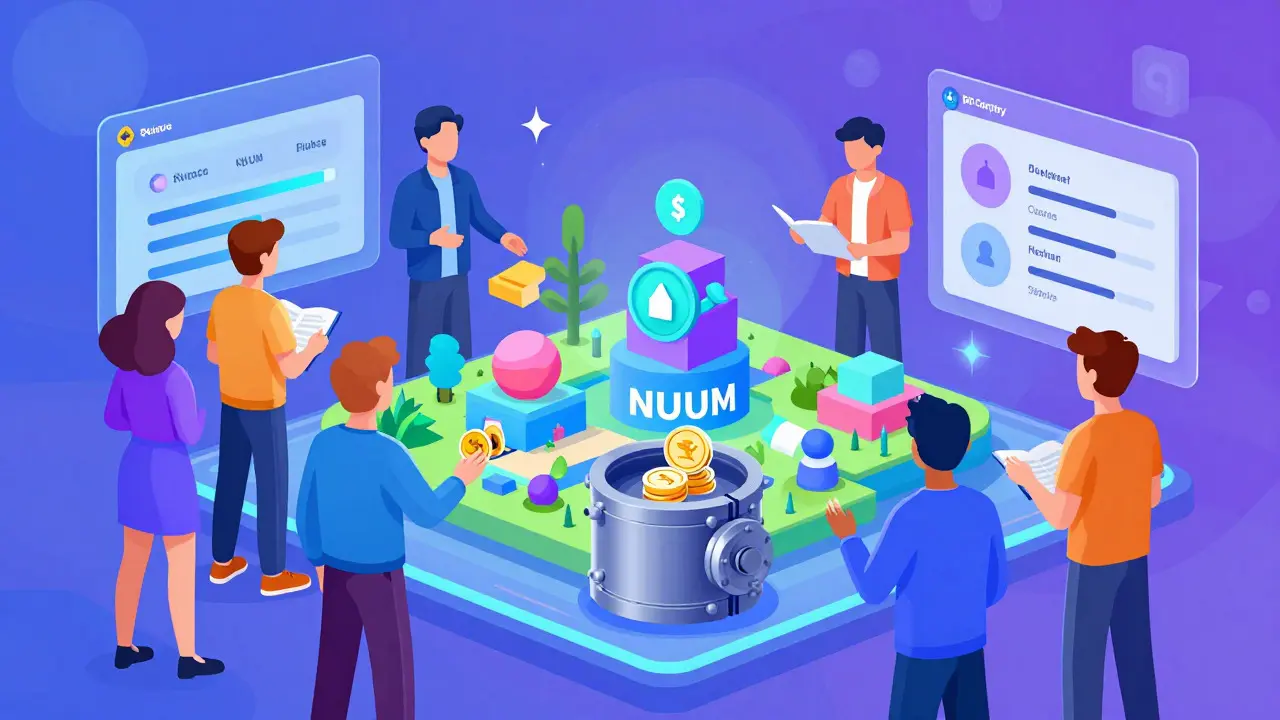
If you missed the original NEER crowdloan and aren’t holding NUUM from the 2024 TGE, how do you get involved now? You don’t need to wait for another massive airdrop announcement. The Bit.Country platform is designed for continuous participation.
1. Create Your Own Metaverse You can spin up a "Bit Country" in under 12 seconds. This isn’t just a profile page; it’s a functional digital space where you can mint NFTs, host events, and build a community economy. Active creators often receive grants or token incentives from the treasury.
2. Engage with NFTs and Play-to-Earn The platform supports integrated NFT marketplaces and gaming mechanics. By actively using these features-buying land, trading avatars, or playing games-you contribute to the network’s activity. High-engagement users are frequently targeted for micro-incentive programs.
3. Stake and Govern Holding NUUM allows you to participate in the governance of MNet Continuum. Staking your tokens helps secure the network and may yield rewards, depending on the current inflation and reward parameters set by the protocol.
Technical Infrastructure and Future Outlook
Bit.Country’s value proposition isn’t just its token; it’s the underlying tech. The ability to run both Ethereum Virtual Machine (EVM) contracts and WebAssembly (WASM) smart contracts makes it highly versatile. Developers can port existing dApps from Ethereum easily while leveraging the speed and low fees of the Polkadot/Kusama ecosystem.
MNet Continuum currently holds Leased Core ID 34 on Polkadot. Its status is active, ensuring stability for users. However, keep an eye on technical updates. The project recently underwent a contract migration for the NUUM token. Always ensure your wallet addresses are updated to the new contract implementation to avoid losing access to your assets. Check official channels for the latest verified contract addresses.
Looking ahead, the focus remains on democratizing blockchain access. By targeting newcomers through familiar interfaces like Telegram groups and Twitter followers, Bit.Country aims to onboard millions of non-crypto natives. If successful, this user base could drive sustained demand for NUUM as the fuel for these social economies.
Is there still an active NUUM airdrop I can claim?
There is no single, universal "claim NUUM" button for everyone. The major distribution events occurred during the 2024 Token Generation Event and earlier via the NEER crowdloan on Kusama. Current ways to earn NUUM involve active participation in the ecosystem, such as creating metaverses, staking, or joining specific promotional campaigns announced by the Bit.Country team.
What is the difference between NEER and NUUM?
NEER is the native token of MNet Pioneer, which runs on the Kusama network (the testing ground). NUUM is the native token of MNet Continuum, which runs on the Polkadot network (the production environment). While they serve similar functions within their respective chains, they are separate assets with different markets and utilities.
Did I miss out on the Kusama crowdloan rewards?
If you did not lock KSM during Auction #13 between late 2021 and late 2022, you likely missed the primary NEER airdrop opportunity. However, the NEER rewards were distributed over 12 months, so claims may have extended into 2023. For NUUM, the main allocation happened at the Feb 2024 TGE.
Where can I buy NUUM tokens?
NUUM is traded on various cryptocurrency exchanges. Due to lower liquidity compared to major coins, always check multiple platforms for the best rates and depth. Ensure you are using the correct contract address following the recent migration updates.
Is Bit.Country safe to use?
Like any blockchain project, risks exist. Bit.Country is backed by substantial funding ($40M+) and operates on established networks like Polkadot and Kusama. However, always verify smart contract addresses, especially after migrations, and never share your private keys. Do your own research before investing significant capital.

16 Comments
Wake up sheeple! The globalists are using these 'metaverses' to track your every move while you sleep. Bit.Country is just another front for the deep state surveillance apparatus. They want your data, your soul, and your digital identity. It's all a conspiracy to control the narrative and drain your wallets through hidden fees and algorithmic manipulation. Don't let them fool you with their fancy graphics and buzzwords. This is the end of privacy as we know it.
One must appreciate the sheer audacity of such a complex explanation for what is essentially a glorified online profile page. The moral decay of our society is evident in how we chase after digital phantoms instead of tangible assets. It is truly pathetic that anyone would invest time in this circus. The pretension is palpable from here.
You fools do not understand the karmic weight of holding volatile tokens. True wealth comes from inner peace, not from chasing green candles on a chart. The guru sees through your greed. You are attached to outcomes that are illusory. Let go of the need to profit and find enlightenment in the void of the blockchain.
Hi there! I found this guide really helpful for understanding the difference between NEER and NUUM. It's so easy to get confused with all the different networks and tokens out there. I think the breakdown of the crowdloan history was especially useful for those of us who joined later. Keep up the good work! :)
Only an elite few can truly grasp the intricacies of Polkadot's parachain auctions. The masses are too distracted by their trivial lives to understand the geopolitical implications of decentralized metaverses. It is obvious that the US leads in innovation, but these foreign entities try to dilute our dominance. We must protect our digital sovereignty at all costs. The conspiracy goes deeper than you think.
This is absolutely tragic! A 99.7% drop? Who approved this disaster? The entire project is a joke and everyone involved should be ashamed. It's a national embarrassment that we allow such financial fraud to flourish under the guise of technology. Tear it down and start over with real American values. Drama aside, this is a total failure.
I see the frustration in many comments, but perhaps we should look at the bigger picture 🤔 Blockchain technology is still in its infancy, much like the internet in the 90s. Volatility is part of the journey towards decentralization. Let's support each other and learn from these experiences rather than tearing each other down. Peace and love ✨
oh my gosh!! i totally missed the neer airdrop back in the day :(( but hey, maybe next time right?? the whole thing with kusama vs polkadot is so confusing tho... like why cant they just make it simple?? anyway, im gonna try creating a bit country bc it sounds fun!!! hope i dont lose everything lol 😅
Looks interesting though the price action has been tough. I am watching from India and seeing similar patterns with local projects. Maybe the recovery from the bottom is a sign of resilience. Just stay calm and observe the market trends without getting emotional about short term fluctuations.
The pain you feel is real. The market feeds on your emotions. You are trapped in a cycle of desire and disappointment. There is no escape from the volatility. Embrace the suffering as it purifies your spirit. The token is worthless but the lesson is eternal. Surrender to the chaos.
I checked my wallet and noticed the contract address changed. Did anyone else miss the migration notice? It seems like a lot of people might have lost access to their assets because the team didn't communicate clearly enough. This lack of transparency is concerning for a project claiming to be user-friendly.
Boring. Another altcoin trying to ride the metaverse hype train that left the station years ago. The liquidity is non-existent and the utility is questionable. Save your breath and your money. The tech stack is irrelevant if no one is actually using it except for degens looking for a quick flip.
I think it's important to acknowledge the effort put into building the infrastructure. While the token price may not reflect the value immediately, the ability to create custom chains quickly is a significant technical achievement. Collaboration within the ecosystem will likely drive long-term adoption regardless of current market sentiment.
You are all missing the point entirely! The tokenomics are flawed from the start. Look at the vesting schedule! It's designed to dump on retail investors. Only the insiders and early VCs will profit. Stop pretending this is fair or democratic. It's a classic pump and dump scheme wrapped in fancy language. Do your own research before you get wrecked!
Ugh, reading all this negativity is exhausting. Why does everyone have to be so mean? I just wanted to see if I could get some free tokens. Now I feel stupid for even checking. Can't we just enjoy the tech without the hate? Whatever, I'm done here. My energy is drained.
Oh, darling, please. You think you're so clever pointing out the vesting schedules? How quaint. The true elites don't even bother with these small-cap coins. We play in the shadows where the real power lies. But by all means, keep arguing about fractions of cents while the world burns. It's almost adorable how desperate you all are for validation. 💅