- 5 Oct 2026
- Elara Crowthorne
- 0
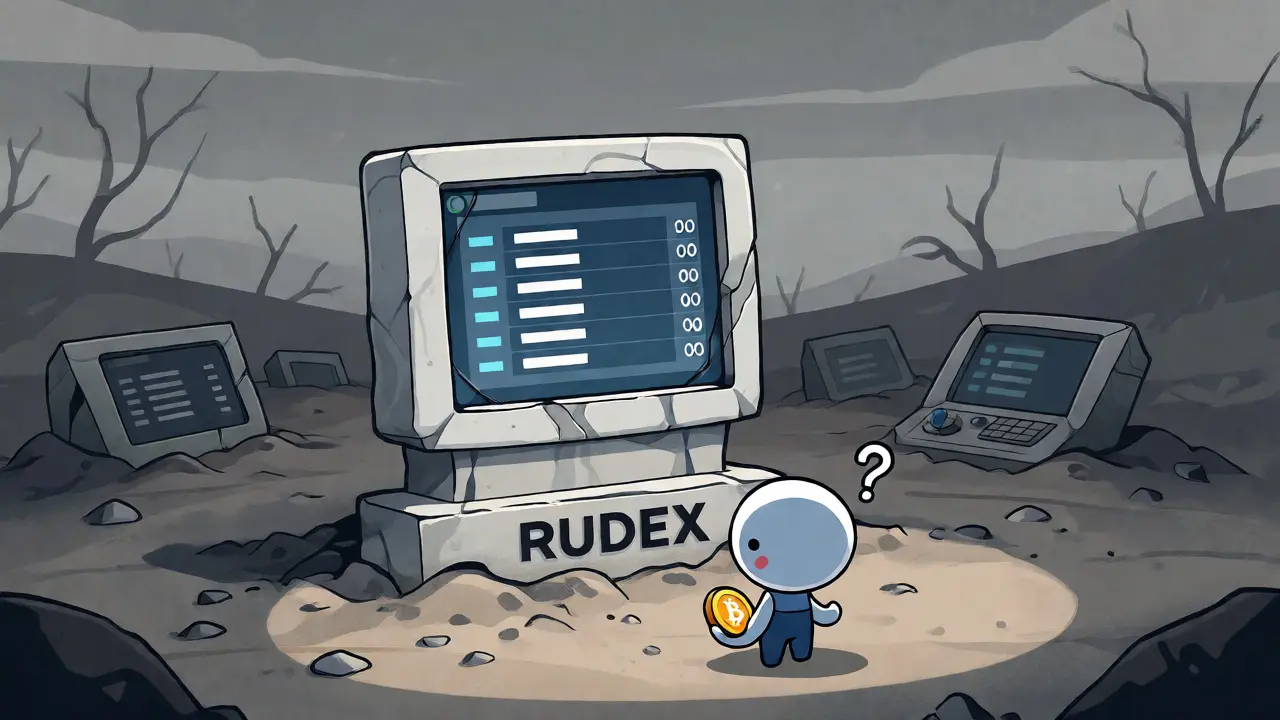
Imagine logging into a crypto exchange you haven't touched in years, expecting to trade Bitcoin or Ethereum, only to find the order books are empty. That is the current reality for anyone checking RuDEX. Launched back in April 2017, this Russia-based platform once promised ultra-low fees and niche access to smaller coins. But today, in October 2026, it sits firmly in the "Exchange Graveyard." If you are looking for a place to trade your crypto now, RuDEX is likely not it. However, understanding why it failed-and what replaced it-can save you from making similar mistakes with other low-volume platforms.
The Rise and Fall of a Niche Player
RuDEX wasn't always dead. For a while, it carved out a specific space in the crowded crypto market. It operated as a centralized exchange but built its infrastructure on the BitShares blockchain network. This technical choice was clever at the time. By leveraging BitShares' gateway services, RuDEX could offer incredibly fast transactions and minimal costs. The target audience? Primarily Russian-speaking traders who wanted to avoid high fees on major global exchanges, though US investors were also welcomed.
The appeal was simple: money. While giants like Binance charged around 0.10% per trade, RuDEX offered rates as low as 0.05% for major pairs like BTC/USD or ETH/BTC. For some altcoins, fees dropped to nearly zero, costing users only the negligible network fees. In 2017 and 2018, when the market was booming and every coin seemed to have value, this pricing model attracted users looking to maximize their margins on volatile assets.
Why Liquidity Matters More Than Fees
Here is the hard truth about crypto trading: low fees mean nothing if you cannot buy or sell your asset. By March 2023, data from Cryptowisser showed RuDEX's daily trading volume had plummeted to just $1,196.71. To put that in perspective, major exchanges handle billions in daily volume. With such thin liquidity, placing a large order would move the price drastically against you, effectively erasing any savings from the low trading fees.
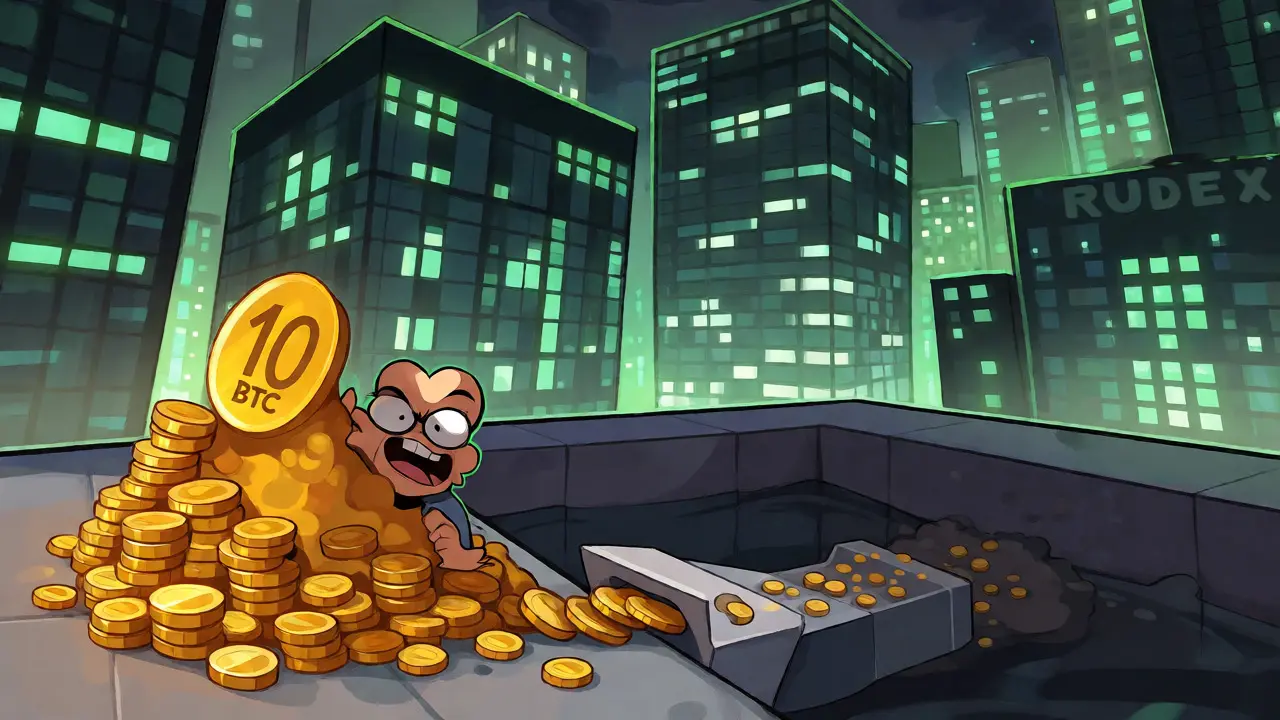
This phenomenon is known as "slippage," and it kills profitability. Imagine trying to sell 10 Bitcoin on an exchange where only one person wants to buy. You might have to accept a price 5% lower than the market rate just to exit your position. That 5% loss dwarfs the 0.05% fee you saved. As the market matured, traders flocked to exchanges with deep order books, leaving low-volume platforms like RuDEX stranded.
Technical Limitations and User Experience
Beyond liquidity, RuDEX faced structural hurdles that alienated new users. First, it was a crypto-only exchange. There were no fiat deposits. You couldn't link a bank account or use a credit card to buy Bitcoin directly. You needed to already own cryptocurrency to trade on the platform. This created a barrier to entry for beginners who found the process of moving crypto from a wallet to an exchange confusing.
The interface itself reflected its origins. It relied heavily on BitShares mechanics, which meant users often had to understand two layers of technology: the RuDEX website and the underlying BitShares network. Wallets, gateways, and memo fields added complexity. For a casual trader, this was frustrating. Reviews from the era noted that while security features like Multi-Factor Authentication (MFA) were present, the overall user experience felt dated compared to sleek competitors like Coinbase or Kraken.
| Feature | RuDEX (Peak Era) | Binance | Coinbase |
|---|---|---|---|
| Trading Fee | 0.00% - 0.05% | 0.10% | Variable (High) |
| Fiat Support | No | Yes (Multiple) | Yes (Extensive) |
| Supported Assets | ~14-30 Coins | 350+ Coins | 200+ Coins |
| Liquidity Volume | Very Low (<$2k/day) | Billions ($) | High ($) |
| Regulatory Status | Unspecified | Varies by Region | Heavily Regulated |
The Pivot: From Exchange to Swap Aggregator
If you visit rudex.org today, you won't see the old trading terminal. Instead, you'll encounter "RUDEX swap." This isn't a return to form; it's a pivot. The original exchange engine has been retired due to lack of activity. What remains is an aggregator service that helps users swap over 1,600 cryptocurrencies across various decentralized exchanges (DEXs).
This shift highlights a broader trend in the crypto industry. Centralized exchanges with poor liquidity are dying out, while aggregation tools that route orders to better venues are thriving. RUDEX swap doesn't hold your funds in custody the same way the old exchange did. It acts more like a broker, finding the best rate for your swap. While useful, it serves a completely different purpose than the original RuDEX trading platform.
Security and Regulatory Red Flags
One of the biggest concerns with RuDEX during its active years was its regulatory ambiguity. WikiBit reviews explicitly noted that the "regulatory authority was not specified." In the post-2020 world, operating without clear oversight is a massive risk. Without a license, there is no guarantee that customer funds are segregated properly, nor is there a legal recourse if the exchange fails or misbehaves.
Security-wise, they implemented standard encryption and MFA. However, security protocols don't protect against insolvency or operational failure. When the volume dried up, support quality reportedly degraded. Some users complained of slow responses or unhelpful tickets. For a small team running a niche exchange, maintaining 24/7 support becomes unsustainable when revenue collapses.

Should You Use RuDEX in 2026?
If you are asking whether you should create an account on the old RuDEX trading platform to buy Bitcoin, the answer is a hard no. The exchange is effectively defunct for trading purposes. Attempting to deposit significant funds into a platform with near-zero volume risks getting stuck in illiquid positions or dealing with withdrawal delays.
However, if you are using the new RUDEX swap aggregator, it might be worth testing for small, non-critical swaps. Always start with a tiny amount to verify the routing works as expected. But for serious trading, stick to established players with proven liquidity and regulatory compliance.
Alternatives for Low-Fee Trading
If you liked RuDEX for its low fees, look at these modern alternatives:
- Kraken: Offers competitive maker/taker fees and high liquidity. Great for those who want a balance of cost and reliability.
- Bybit: Known for low fees and a robust derivatives market, suitable for experienced traders.
- Decentralized Exchanges (DEXs): Platforms like Uniswap or PancakeSwap allow direct swaps without custodial risk, though gas fees can vary.
Is RuDEX still active for trading?
No, the original RuDEX centralized exchange is considered inactive. Trading volume dropped to negligible levels by 2023, leading experts to classify it as part of the "Exchange Graveyard." The website now operates primarily as a swap aggregator service.
What happened to my funds on RuDEX?
If you held funds on the exchange before it ceased active trading operations, you should contact their support immediately via the current website. Many users reported difficulties withdrawing assets as the platform wound down. Since it was based on BitShares, some assets may still be accessible through BitShares wallets, but this requires technical knowledge.
Does RuDEX charge fees for swaps now?
The current RUDEX swap service charges a spread or service fee on top of network transaction costs. These fees are generally competitive but vary depending on the specific pair and the underlying DEX liquidity providers. Always check the estimated output before confirming a swap.
Was RuDEX a scam?
Most credible sources do not label RuDEX as a scam in the traditional sense of stealing funds. Instead, it suffered from business failure due to low liquidity and competition. However, the lack of regulatory oversight and poor customer support led some users to describe it as unreliable. It failed to adapt to market changes rather than disappearing with user money overnight.
Can I deposit fiat currency into RuDEX?
No. Historically, RuDEX was a crypto-only exchange, meaning you could not deposit USD, EUR, or RUB directly. You had to transfer cryptocurrency from another wallet or exchange. The current swap service also typically operates on a crypto-to-crypto basis.