
- 10 May 2026
- Elara Crowthorne
- 0
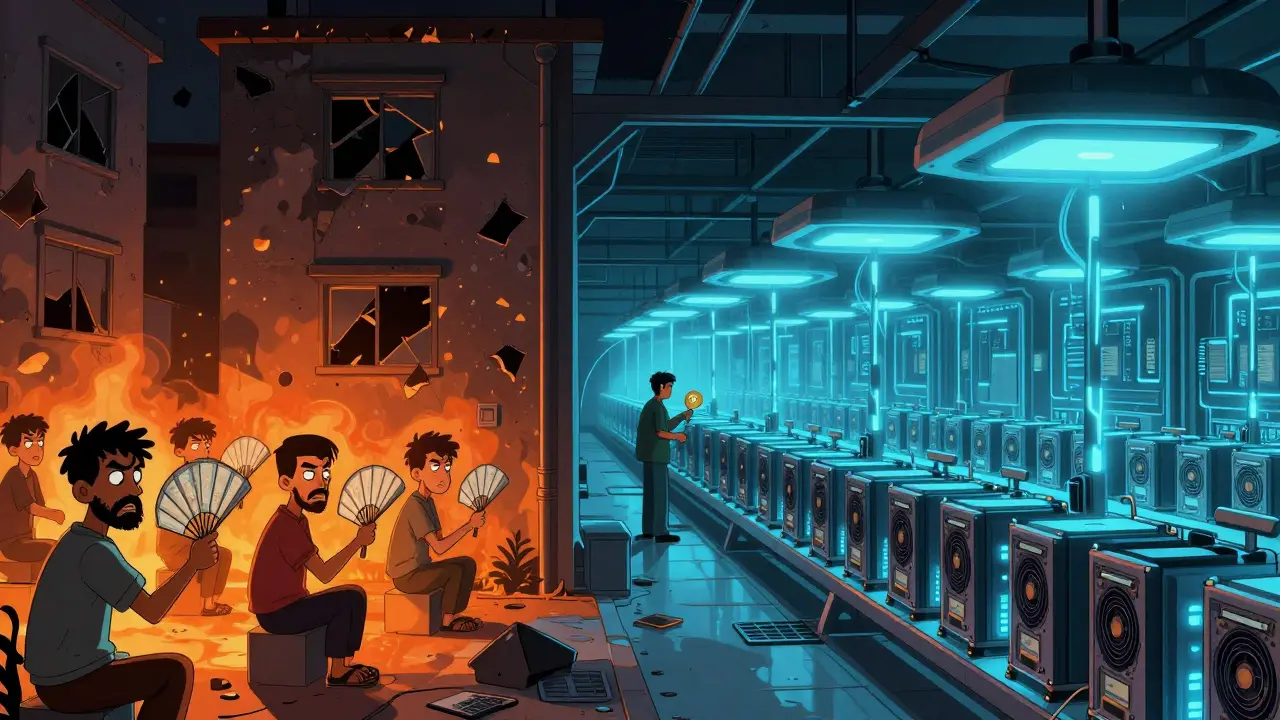
Imagine running a business where your biggest expense-electricity-costs you less than a penny per kilowatt-hour. For cryptocurrency miners in Iran, this isn't a hypothetical scenario; it is the daily reality of an industry built on heavily subsidized power. While households in Tehran endure hours-long blackouts during sweltering summers, industrial-scale mining farms operate around the clock, fueled by some of the cheapest electricity in the world. This stark contrast has turned Iran into one of the most profitable-and controversial-hubs for Bitcoin mining globally.
The intersection of economic survival and energy policy has created a unique ecosystem. The Iranian government, facing international sanctions and a struggling currency, sees crypto mining as a vital source of foreign exchange. However, this strategy comes at a steep price for the national grid and ordinary citizens. Understanding how these subsidies work, who benefits from them, and why they persist requires looking beyond simple economics into the heart of Iran’s political and infrastructural challenges.
The Economics of Subsidized Power
To understand why Iran dominates certain aspects of the global mining landscape, you first need to look at the numbers. In most countries, electricity is the primary barrier to entry for mining. In the United States, average commercial rates hover between $0.08 and $0.12 per kWh. In Europe, prices can spike significantly higher during peak demand. In Iran, licensed miners pay industrial tariffs ranging from just $0.04 to $0.07 per kWh. Household rates are even lower, often dipping below $0.02 per kWh.
This pricing structure creates a massive competitive advantage. According to data from Bitcoin Magazine in July 2025, the cost to mine a single Bitcoin in Iran is approximately $1,300. Compare that to Italy, where the same process can cost upwards of $306,000 due to high energy prices and regulatory hurdles. Even when compared to other mining hubs like Kazakhstan, where costs sit around $5,000 per coin, Iran remains exceptionally cheap. This 235-fold difference with Italy allows Iranian operators to maintain profit margins that are nearly impossible to replicate elsewhere, even when factoring in risks like equipment seizures or sudden regulatory changes.
However, this profitability is not evenly distributed. The system relies on a complex web of licenses and connections. Those with access to industrial tariffs enjoy stable, albeit regulated, operations. Others turn to illegal methods, tapping into household grids or stealing power directly from transmission lines, further distorting the market and straining infrastructure.
Who Really Controls the Mines?
If cheap energy is the fuel, then political power is the engine driving Iran’s crypto sector. The narrative that this is a free-market boom driven by individual entrepreneurs misses the bigger picture. Reports from the National Council of Resistance of Iran (NCR-Iran) and analysis by the Mackenzie Institute suggest that the Islamic Revolutionary Guard Corps (IRGC) plays a dominant role in the industry.
Estimates indicate that the IRGC controls between 55% and 65% of all mining operations in the country, either directly or through affiliated front companies. These state-backed entities generate an estimated $400-$500 million in annual revenue. They have access to dedicated power lines, priority maintenance, and protection from the crackdowns that frequently target smaller, independent miners. Dr. Saeed Laylaz, an economic advisor to former President Khatami, described this dynamic in February 2025 as a "parallel economy" where the military bypasses central bank oversight to control both energy supply and cryptocurrency output.
This concentration of power raises serious questions about fairness and sustainability. When a small elite group captures the bulk of the profits from subsidized resources, the broader population bears the cost. The IRGC’s involvement also means that mining operations are rarely shut down permanently, even during severe crises, because they serve strategic financial goals for the regime.
The Human Cost: Blackouts and Public Anger
The abstract concept of "energy imbalance" translates into very real suffering for millions of Iranians. During the summer months, when air conditioning demand surges by 30-40%, the national grid struggles to cope. Tavanir, Iran’s power generation company, reported in July 2025 that cryptocurrency mining consumes nearly 2,000 megawatts (MW) of electricity. While this represents only about 5% of total consumption, it accounts for 15-20% of the country’s electricity deficit-the gap between supply and demand that causes outages.
In mid-2025, a nationwide internet outage linked to regional conflicts led to a temporary drop in power usage of 2,400 MW. Officials attributed this to the shutdown of over 900,000 illegal mining devices. This single event highlighted the sheer scale of the operation: illegal miners alone consume up to two gigawatts of power daily, equivalent to the entire electricity usage of Tehran, a city of 9 million people.
For ordinary residents, the result is relentless instability. Social media platforms buzz with frustration. On Twitter, users documented weeks with 21 hours of blackouts while mining farms in locations like the Ahvaz Stadium tunnels ran uninterrupted. A sentiment analysis by the Mackenzie Institute found that 92% of comments in online forums blamed crypto mining for their power cuts. One Telegram channel administrator noted a direct correlation: every time Bitcoin prices surge, blackouts increase by 30-40% within 48 hours as miners ramp up activity to maximize profits.
Regulatory Tightrope: Bans, Licenses, and Crackdowns
The Iranian government walks a precarious line between encouraging mining for its economic benefits and curbing it to protect the grid. Since legalizing crypto mining in 2018, the state has implemented a series of contradictory measures. On one hand, they offer subsidies and authorize crypto use for cross-border trade to bypass sanctions. On the other, they impose strict licensing requirements and periodic bans.
Obtaining a license is no easy feat. Miners must secure approval from the Ministry of Industry for equipment imports, register with the Iran Power Generation Company for electricity quotas, and receive authorization from the Central Bank of Iran (CBI) for exporting mined coins. The process takes 3-6 months, and approval rates fall below 40%. Successful applicants face industrial tariffs and mandatory use of state-approved mining pools, which take a 15-20% commission.
When the grid becomes too stressed, the government pulls the plug. Temporary bans were enforced during summer peaks in 2021, 2022, and 2023. To combat illegal operations, the government launched a bounty program in early 2025, offering citizens 10% of recovered electricity costs for reporting unlicensed miners. This led to 8,432 reports and 2,157 shutdowns in just six months. Yet, despite these efforts, illegal mining persists because the potential profits far outweigh the risks.
Global Context and Future Outlook
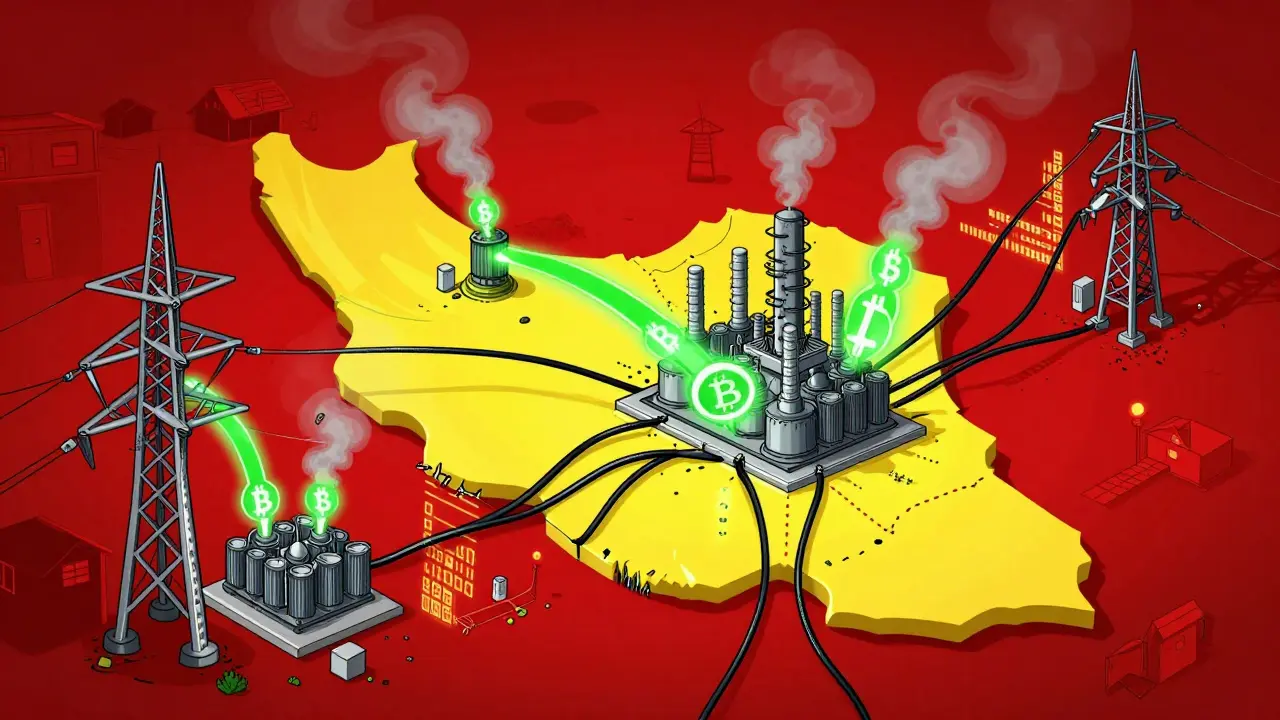
Iran’s situation does not exist in a vacuum. It is part of a broader global trend where nations with cheap energy seek to capitalize on the crypto boom. Kazakhstan has emerged as a key regional competitor, though its higher costs make it less attractive than Iran. Meanwhile, countries like the United States and Canada rely on renewable energy sources but face much higher operational expenses.
Looking ahead, the sustainability of Iran’s model is questionable. The Carnegie Endowment warned in June 2025 that without significant grid upgrades, power shortages could worsen by 25-30% by 2027. The International Energy Agency echoes this concern, noting that the current trajectory prioritizes short-term economic gains over long-term infrastructure health. As climate change intensifies summer heatwaves, the strain on the grid will only increase, forcing the government to choose between its mining ambitions and basic public services.
Despite these challenges, the sector continues to grow. Projections estimate $1.5 billion in annual revenue by 2025, representing 0.8% of Iran’s GDP. With 1.2 million participants and millions of ASIC devices in operation, crypto mining has become deeply embedded in the country’s economic fabric. Whether this integration leads to innovation or collapse depends on how well the government can balance its competing priorities.
| Country | Avg. Electricity Cost ($/kWh) | Est. Cost to Mine 1 BTC | Key Regulatory Feature |
|---|---|---|---|
| Iran | $0.04 - $0.07 (Industrial) | $1,300 | State-controlled subsidies; periodic bans |
| Kazakhstan | $0.05 - $0.08 | $5,000 | Dedicated mining zones; renewable focus |
| United States | $0.08 - $0.12 | $15,000+ | Decentralized regulation; high competition |
| Italy | $0.15+ (Peak) | $306,000 | High taxes; strict environmental rules |
Frequently Asked Questions
How much does electricity cost for crypto miners in Iran?
Licensed industrial miners in Iran pay between $0.04 and $0.07 per kilowatt-hour. Household rates, often used by illegal miners, are even lower, typically under $0.02 per kWh. This is significantly cheaper than global averages, making Iran one of the most cost-effective places to mine Bitcoin.
Why does Iran subsidize cryptocurrency mining?
The Iranian government uses crypto mining to generate foreign exchange earnings, which help offset the impact of international sanctions. By allowing miners to sell their coins for cross-border trade, the state creates a parallel financial channel that bypasses traditional banking restrictions.
Does crypto mining cause power outages in Iran?
Yes. Cryptocurrency mining consumes nearly 2,000 MW of electricity, accounting for 15-20% of Iran’s electricity deficit. During peak summer months, this demand exacerbates grid instability, leading to frequent blackouts for residential users while mining operations often continue.
Who controls most of the mining operations in Iran?
Reports suggest that the Islamic Revolutionary Guard Corps (IRGC) controls 55-65% of mining operations. These state-backed entities benefit from preferential treatment, including reliable power access and protection from regulatory crackdowns, generating hundreds of millions in annual revenue.
Is it legal to mine cryptocurrency in Iran?
Mining is legal if you obtain the proper licenses from the Ministry of Industry and the Central Bank of Iran. However, the licensing process is difficult, with approval rates below 40%. Many operators resort to illegal methods, such as using household electricity, which the government actively cracks down on.
How does Iran compare to other mining hubs like Kazakhstan?
Iran offers much lower electricity costs than Kazakhstan, where mining costs around $5,000 per Bitcoin compared to Iran’s $1,300. However, Iran’s infrastructure is less reliable, with frequent shutdowns during peak demand, whereas Kazakhstan has invested more in dedicated mining zones and renewable energy.
