
SOHO19 Crypto District

Crypto Payments: How Real-World Use Cases Are Changing How We Spend Digital Money

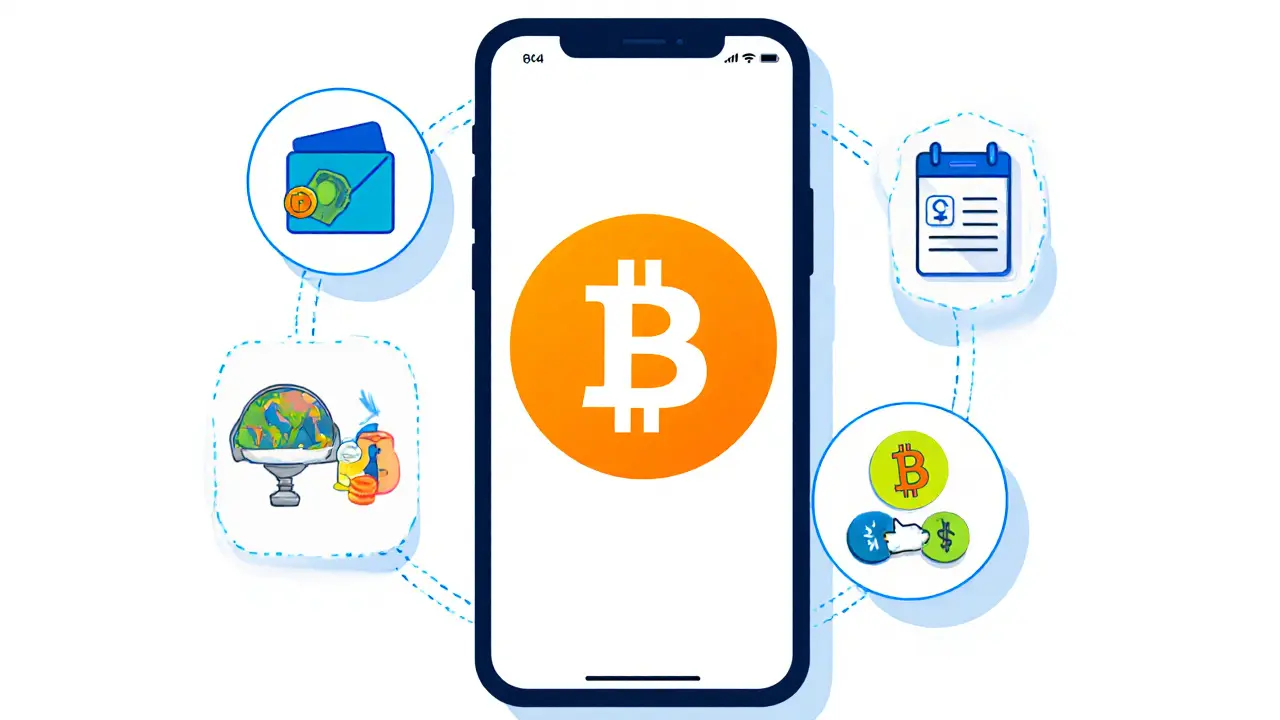
When you think of crypto payments, the direct use of digital currencies like Bitcoin or Ethereum to buy goods and services. Also known as blockchain payments, it’s not just about sending money between wallets—it’s about replacing banks, payment processors, and even credit card networks with open, permissionless systems. Most people still see crypto as something you trade, not spend. But that’s changing. From small businesses in Vietnam accepting Bitcoin for coffee to freelancers in Russia getting paid in stablecoins because their banks are blocked, crypto payments are solving real problems people face every day.

It’s not about hype. It’s about access. In countries with unstable currencies or limited banking, crypto payments let people receive money instantly, with no middlemen taking a cut. In the U.S., companies use crypto to pay international contractors without waiting days for wire transfers. Even in places where it’s legally gray—like Russia or Vietnam—people are using crypto payments because it works better than the alternatives. And it’s not just Bitcoin. Stablecoins like USDT and USDC are the real workhorses here, holding their value so merchants don’t lose money when the price swings.

But here’s the catch: crypto payments aren’t magic. They need infrastructure. You can’t just send Bitcoin to a store unless they have a way to receive and convert it. That’s why tools like Lightning Network for Bitcoin or Layer 2 solutions on Ethereum matter—they make transactions faster and cheaper. And if you’re trying to use crypto to pay for groceries, you’re still likely using a third-party app that converts it to fiat behind the scenes. True peer-to-peer crypto payments? Still rare. But growing.

Some projects claim to be the future of payments, but most fail. They’re either too slow, too expensive, or too confusing for everyday users. Others, like the ones built on Solana or Base, are quietly gaining traction because they’re fast, cheap, and work with wallets people already use. Meanwhile, governments are pushing back. Australia banned privacy coins on exchanges. China outright outlawed crypto payments. The U.S. is watching closely, with FBAR penalties for unreported foreign crypto accounts. So while crypto payments are spreading, they’re doing it under pressure.

What you’ll find below isn’t a list of the next big coin. It’s a collection of real stories—some success, some cautionary tales. You’ll see how a fake exchange called Yum Yum tricks people into thinking they can pay with crypto. You’ll learn why a token like FLOT, once marketed as a blockchain lottery, faded into obscurity. You’ll read about how people in Russia use crypto payments to bypass sanctions, and how a token like MIRA is being used in healthcare systems to verify AI outputs—something that could one day tie into automated payment verification. Some of these are niche. Some are dead. But they all show how crypto payments are being tested, abused, and slowly adopted in the real world—not in whitepapers, but in people’s wallets and bank accounts.

Strike Finance Crypto Exchange Review: Best for Bitcoin Payments, Not Trading
  • 16 Nov 2025
  • Elara Crowthorne
  • 24

Strike Finance Crypto Exchange Review: Best for Bitcoin Payments, Not Trading

Strike Finance is a Bitcoin-focused payments app that lets you buy, send, and get paid in Bitcoin with low fees and instant transfers. Perfect for freelancers and global users, but not for trading altcoins.

View More

Popular Categories

  • Cryptocurrency Guides (163)
  • Cryptocurrency (56)
  • Cryptocurrency Trading (46)
  • Blockchain (34)
  • DeFi (32)

Latest News

Block Reward Economics: How Blockchain Networks Stay Secure

Block Reward Economics: How Blockchain Networks Stay Secure

5/Feb/2026
Ariva (ARV) x CoinMarketCap Airdrop: Truth, Risks, and How to Verify

Ariva (ARV) x CoinMarketCap Airdrop: Truth, Risks, and How to Verify

28/Apr/2026
OXYLON (OXL) Explained: Specs, Utility, and How to Get Started

OXYLON (OXL) Explained: Specs, Utility, and How to Get Started

26/Jul/2025
What is Fusaka (FUSAKA) Crypto Coin? The Truth Behind the Meme Token

What is Fusaka (FUSAKA) Crypto Coin? The Truth Behind the Meme Token

31/Jan/2026
Bitnomial Review: The First Regulated U.S. Crypto Derivatives Exchange (2025)

Bitnomial Review: The First Regulated U.S. Crypto Derivatives Exchange (2025)

25/Mar/2025

Popular Tags

cryptocurrency decentralized exchange crypto exchange Binance Smart Chain crypto exchange review blockchain crypto airdrop guide DeFi smart contracts CoinMarketCap airdrop Proof of Work blockchain gaming crypto exchange safety crypto security crypto scam warning Bitcoin AI blockchain ERC-20 meme coin Proof of Stake
SOHO19 Crypto District

About

Cryptocurrency Guides

Menu

  • About Us
  • Terms of Service
  • Privacy Policy
  • CCPA
  • Contact Us
© 2026. All rights reserved.