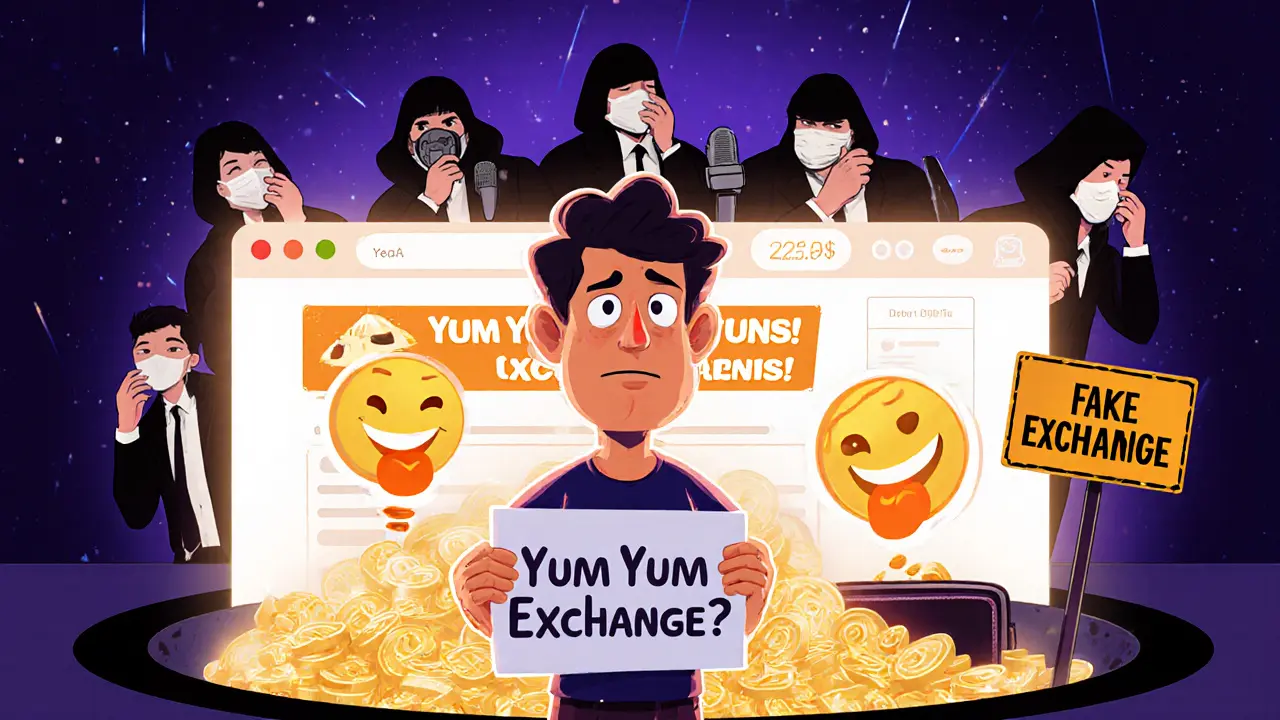
Yum Yum crypto exchange is not real-it's a scam. Learn how fake exchanges trick users, how to spot them, and which safe platforms to use instead. Protect your crypto from fraud.

When you hear Yum Yum crypto exchange, a name that sounds like a snack brand, not a financial platform. Also known as YumYum Exchange, it’s not a real crypto trading platform—it’s a ghost name used in scams to trick people into sending crypto to fake wallets. There’s no website, no team, no liquidity, and no record of it ever operating on any blockchain explorer or exchange listing. If you see ads, tweets, or Telegram groups pushing "Yum Yum" as a new exchange, close the tab. This isn’t a startup—it’s a trap.
Scammers love names like this because they feel harmless, even fun. They copy the style of real platforms like Binance or Kraken but swap in silly branding to slip past your guard. The goal? Get you to connect your wallet to a fake site that looks real, then drain your funds in seconds. This isn’t rare. In 2024, over 12,000 fake exchange names were reported to crypto fraud databases—most with names that sound like food, pets, or pop culture references. Crypto scams, fraudulent schemes designed to steal assets under false pretenses. Also known as rug pulls, they thrive on urgency and fake legitimacy. Yum Yum fits the pattern: no documentation, no support, no history. If you Google it, you’ll find nothing but forum posts asking, "Is Yum Yum legit?" and replies saying, "Don’t touch it."
Real exchanges don’t hide. They publish team members, audits, license numbers, and customer support channels. If you want to trade, use platforms with clear track records—like BitMEX for derivatives, or LFJ v2 for low-fee DeFi trading. If you’re new, start with regulated names like Coinbase or Kraken. Even if they’re not perfect, they have legal obligations and user protections. Unlisted exchange, a platform that doesn’t appear on any official directory or blockchain analytics tool. Also known as phantom exchange, it’s a major red flag—no one builds a real business without leaving a trace. Yum Yum has zero trace. That’s not a bug—it’s the whole point.
Behind every fake exchange is a pattern: fake testimonials, bots pretending to be users, and pressure tactics like "limited-time deposit bonuses." You won’t find those on legitimate platforms. They don’t need to lie. They’re already trusted. If you’re seeing a name you’ve never heard of, especially one that sounds like a cartoon character or dessert, assume it’s a scam until proven otherwise. Check CoinGecko, CoinMarketCap, or even just search "[name] + scam"—you’ll usually find the truth fast.
The posts below cover real exchanges that shut down, fake airdrops that stole millions, and tokens that vanished overnight. Yum Yum isn’t one of them—it never existed. But the lessons here? They’re all real. You’ll learn how to spot the next one before you lose money. And you’ll find actual platforms you can trust—ones with volume, history, and people who’ve been burned before and won’t let it happen again.
Yum Yum crypto exchange is not real-it's a scam. Learn how fake exchanges trick users, how to spot them, and which safe platforms to use instead. Protect your crypto from fraud.