

- 24 Apr 2026
- Elara Crowthorne
- 18
For a long time, Brazil was a bit of a wild west for crypto investors, with lenient rules and plenty of exemptions. Those days are officially over. Since June 12, 2025, the game has changed completely. The government has scrapped the old tiered systems and exemptions, replacing them with a straightforward but strict 17.5% flat tax on capital gains. If you're trading digital assets in Brazil, you're now playing by the same rules as traditional financial investors.
The goal here is tax equity. Finance Minister Fernando Haddad has been clear: cryptocurrencies are now treated as equivalent to traditional financial instruments. While this brings a level of legitimacy to the asset class, it also means the Brazilian cryptocurrency tax burden is now a mandatory part of every trader's strategy. Whether you're a casual holder or a high-frequency trader, the taxman is now watching very closely.
The Core Rules of the 17.5% Flat Tax
The most critical thing to understand is that the tax is a flat rate. There is no longer a sliding scale based on how long you've held your assets or the size of your profit. If you make money, you owe 17.5% of that gain to the state.
This tax applies to several different scenarios:
- Selling crypto for Brazilian Reais (BRL).
- Trading one cryptocurrency for another (crypto-to-crypto).
- Earnings from staking rewards or mining.
- Profits generated within Decentralized Finance (DeFi) protocols.
Unlike some other countries, there is no "long-term" holding benefit. Whether you held your Bitcoin for two days or ten years, the rate remains 17.5% upon disposal. This eliminates the headache of complex tiered calculations but removes the incentive for long-term holding from a tax perspective.
Reporting Thresholds and Deadlines
You can't just wait until the end of the year to think about your taxes. The Receita Federal do Brasil (RFB) is the federal tax authority responsible for enforcing these rules. They've set a specific threshold for reporting: if your transactions and holdings exceed BRL 5,000 in a single month, you must report them.
The fiscal year follows the calendar year, from January 1 to December 31. The deadline for reporting is the last business day of April the following year. For example, for the 2025 tax year, the deadline was April 30, 2026. Missing this date or filing inaccurate data isn't just a minor mistake; the RFB is known for imposing significant fines and penalties for non-compliance.
| Attribute | Value / Detail |
|---|---|
| Tax Rate | 17.5% Flat |
| Reporting Threshold | > BRL 5,000 / month |
| Annual Deadline | Last business day of April |
| Reporting Tool | eCac Online Portal |
| Regulator | Central Bank of Brazil (BCB) |
How Brazil Compares to the Global Stage
When you look at the global map, Brazil's 17.5% sits right in the middle. It's not a tax haven, but it's not the most punitive environment either. For instance, Portugal shifted its stance in 2023, implementing a 28% tax on assets held for less than a year. Compared to that, Brazil's uniform rate is much more palatable for short-term traders.
On the other hand, Germany is far more generous. In Germany, if you hold your crypto for more than a year, your gains are generally tax-free. The UK also provides a capital gains allowance (though it was slashed from £6,000 to £3,000 in 2023). Brazil has completely removed these "safe harbors," meaning every single cent of profit is taxable from the first real.
This shift reflects a global trend. Governments are realizing that crypto is no longer a niche hobby but a massive revenue stream. With Brazilian transaction volumes hitting over $43.5 billion in the first three quarters of 2024, the government saw a golden opportunity to plug budget holes.
Compliance and the Practical Struggle
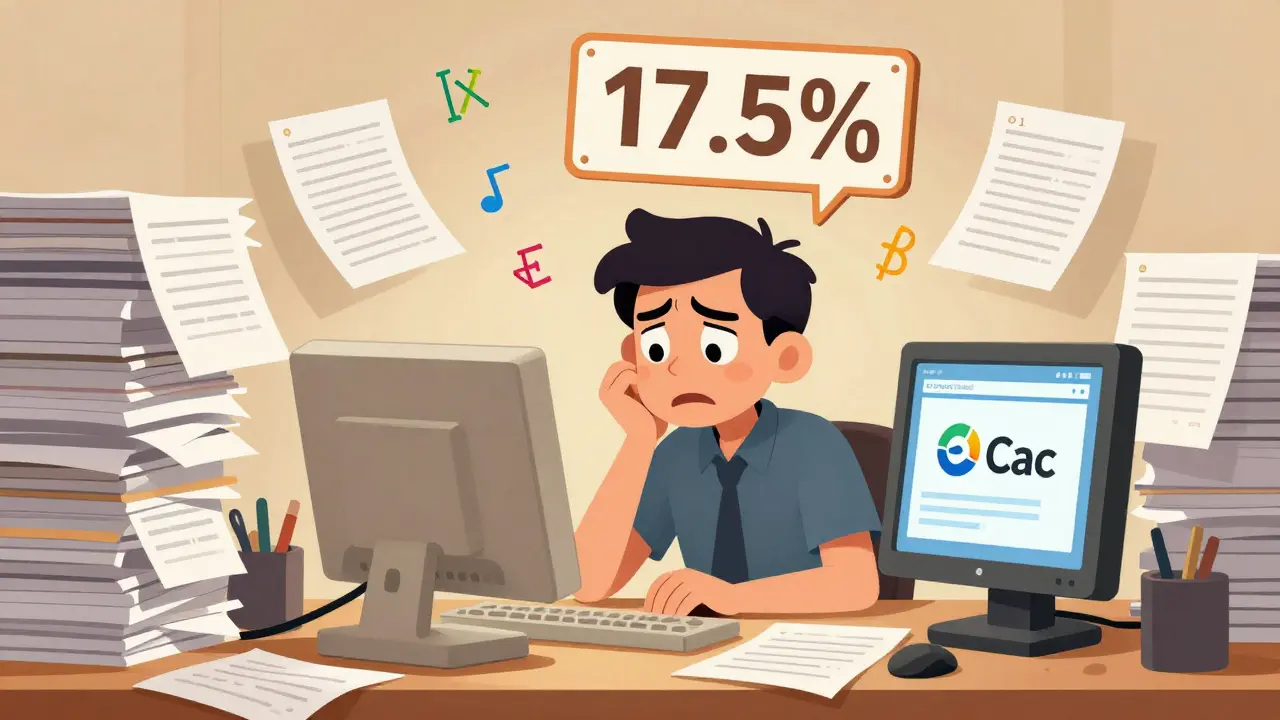
If you're an active trader, the administrative burden is the real nightmare. Imagine tracking 500 different trades across three different exchanges and a hardware wallet, all while trying to calculate the exact cost basis for each transaction. This is where many retail investors are struggling.
The government expects you to use the eCac portal, which is the official electronic center for tax services. However, many users find the portal clunky and lacking specific guidance for complex scenarios like DeFi liquidity pools or airdrops. This gap has led to a surge in the use of third-party tools like Koinly, which help automate the calculation of gains and losses.
To stay safe, you need to keep a meticulous ledger. You'll need records of:
- The date and price of every acquisition.
- The date and price of every sale or swap.
- The exact amount of staking rewards received and their value at the time of receipt.
- Wallet addresses and exchange CSV exports.
The Bigger Picture: Regulation and the Future
Taxation is only one piece of the puzzle. The Virtual Assets Act (Law 14,478/2022) established the legal ground for this entire system. Under this law, the Central Bank of Brazil (BCB) acts as the primary regulator for Virtual Asset Service Providers (VASPs). They ensure that exchanges aren't just collecting taxes but also following anti-money laundering (AML) rules.
Meanwhile, the CVM (Securities and Exchange Commission of Brazil) steps in if a cryptocurrency is deemed a security. If you're investing in a token that looks more like a stock than a currency, the CVM's rules apply. Adding another layer of oversight is COAF, the financial intelligence unit that tracks suspicious transactions.
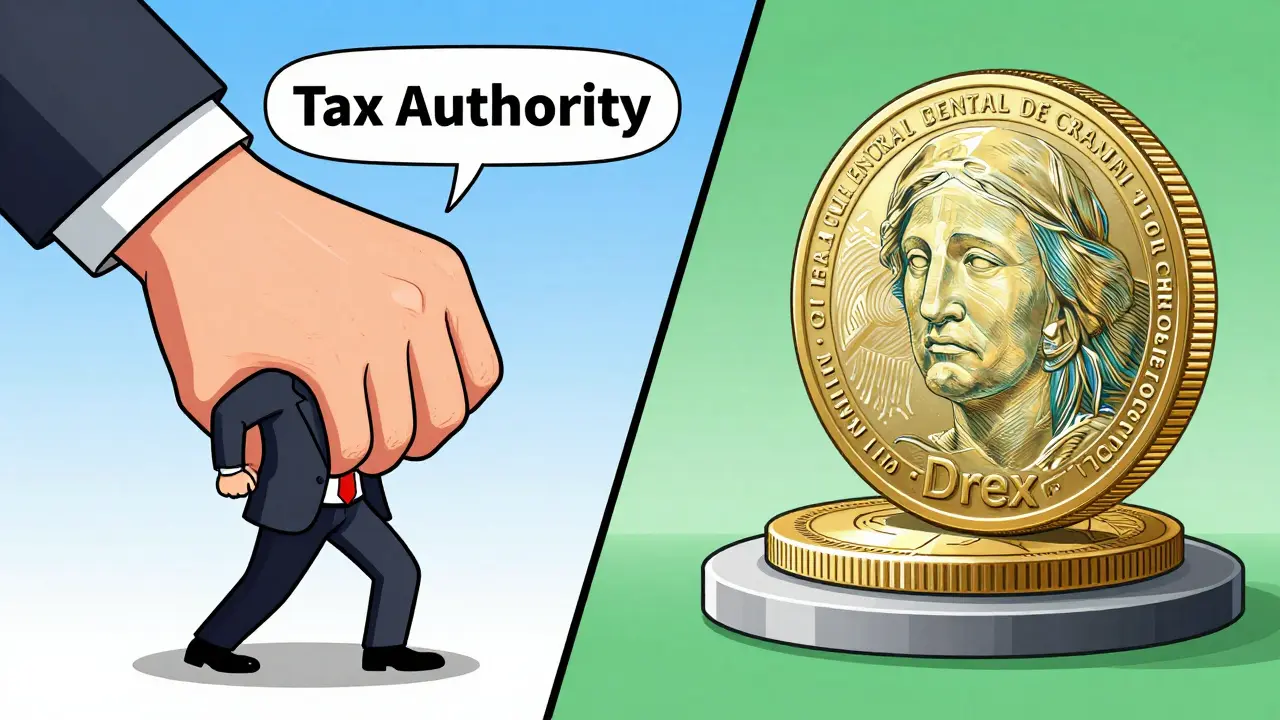
Interestingly, while the government is taxing private crypto, they are building their own. The Drex, Brazil's Central Bank Digital Currency (CBDC), is currently in pilot phases. It's a bit ironic: the state is making it harder (and more expensive) to use decentralized assets while simultaneously creating a state-controlled digital version of the Real.
Common Pitfalls to Avoid
The biggest mistake investors make is ignoring "crypto-to-crypto" trades. Many think that as long as they don't withdraw BRL to their bank account, the tax doesn't apply. That is wrong. Swapping Ethereum for Solana is a taxable event in Brazil. You must calculate the gain in BRL at the moment of the swap.
Another trap is the "average cost" error. When you buy an asset at different prices over time, you need a consistent method to calculate your cost basis. Using a haphazard method can lead to under-reporting, which the RFB will eventually spot through the mandatory reporting required from VASPs. Remember, exchanges share data with the government; they know what you're trading.
Is there any tax-free limit for monthly crypto trades?
No. While there is a reporting threshold of BRL 5,000 per month (meaning you must report your activity if you exceed this amount), there is no longer a tax-free exemption for the profits themselves. All gains are subject to the 17.5% rate regardless of the amount.
Do I pay tax on staking rewards and mining?
Yes. Staking rewards and income from mining are considered taxable earnings. You must report the value of these assets at the time they are received and apply the 17.5% tax rate to those gains.
What happens if I forget to report my crypto gains?
The Receita Federal do Brasil (RFB) can impose heavy fines and interest on unpaid taxes. Because most exchanges (VASPs) are required to report transaction data to the government, the likelihood of the RFB discovering unreported gains is very high.
Does the 17.5% tax apply to DeFi activities?
Yes. Profits from decentralized finance (DeFi), such as providing liquidity or earning yield, are treated as capital gains and are subject to the same 17.5% flat tax rate.
How do I actually pay the tax?
Most taxpayers use the eCac online portal provided by the RFB to report their gains and calculate the amount owed. It is highly recommended to keep detailed CSV exports from all your exchanges to ensure the numbers are accurate.
Next Steps for Investors
If you've been ignoring your taxes, now is the time to start. First, gather every single trade history file from every exchange you've ever used. If you use a cold wallet, try to reconstruct your transaction history using blockchain explorers.
For those with high trade volumes, don't try to do this in a spreadsheet. Look into crypto tax software that supports Brazilian regulations to avoid costly manual errors. Finally, consider consulting a tax professional who specializes in digital assets; the cost of a consultant is far lower than the cost of an RFB audit penalty.



18 Comments
The timing of this policy is far too convenient for the current administration. It is blatantly obvious that the Brazilian government is utilizing this 17.5% flat tax to fund a digital surveillance state under the guise of "tax equity." By forcing all traders into the eCac portal, they are essentially creating a centralized database of every dissident who attempted to opt out of the legacy financial system. This is not about budget holes; it is about the total eradication of financial privacy. The integration of the Drex CBDC is the final nail in the coffin, allowing the state to not only tax your gains but to potentially freeze your assets based on a social credit score. The mathematical precision of this tax grab is honestly impressive, if you ignore the moral bankruptcy of the architects. We are witnessing the blueprint for a global financial panopticon where the state owns the rails and you are merely a tenant paying rent to exist.
Stop whining and just pay the tax! If you actually made a profit, you should be happy to contribute to your own country. Get your records in order and stop acting like the world is ending because you have to follow the law! Just do it!
There is a certain poetic irony in the state claiming to legitimize a decentralized asset by shackling it to a centralized tax code. It's like putting a leash on a hurricane and calling it a pet. Who cares about the 17.5%? The real comedy is the belief that a clunky government portal can track the ethereal dance of DeFi liquidity pools. It is a gorgeous collision of archaic bureaucracy and futuristic finance. Truly a kaleidoscopic disaster!
The comparison to Germany is quite interesting. It seems different nations are taking very divergent paths toward integrating digital assets into their legal frameworks. It would be worth looking into how the Central Bank of Brazil manages the interplay between the private market and the Drex pilot.
wow that is a lot of paperwork for some crypto trades lol.’ just use those automation tools and keep your head up everyone we can handle this together
It is simply the right thing to do. Everyone should pay their fair share for the infrastructure of the country they live in. It is not a complex issue.
I totally get why people are stressed about this. Transitioning to a strict tax regime is always scary, but staying organized is the best way to find some peace of mind.
USA is way better than this garbage 🇺🇸🇺🇸 Why are we even talking about Brazil when we have the best system here? Total joke! 🤡💸
One must emphasize that the failure to report crypto-to-crypto trades is a frequent point of contention during audits. It is highly advisable to maintain a comprehensive ledger of all swaps to avoid the severe penalties mentioned.
Let's just stay positive! This is actually a great chance for the whole industry to grow up and get professional!
The reporting threshold of BRL 5,000 is quite low for active traders. This will likely drive many users toward non-custodial solutions to maintain some level of autonomy.
I've seen this movie before and it always ends with the government taking everything. I'm just way smarter than the average retail trader and I know exactly how to pivot around these rules.
Oh my god this is just so heartbraking for the little guys who just want to save money... the goverment is truly merciless in its pursuit of wealth!! 😭
It's a learning curve for everyone. I suggest starting with the CSV exports as the post mentioned; it's the friendliest way to begin the process.
It is a tough spot for retail investors. The shift from a "wild west" to a strict regime happens fast, but the infrastructure to comply usually lags behind. Take it one step at a time.
who actually believes the eCac portal works lol its probably just a front for the government to steal your passwords
It's a flat tax. That means everyone pays the same percent. It's not that hard to understand.
Love seeing the global crypto community discuss these things! 🌍 It's all about finding a balance that works for everyone 🚀✨