- 10 Sep 2026
- Elara Crowthorne
- 0
Imagine a cryptocurrency that promises to let you earn rewards by playing games inspired by Money Heist, but one so small it barely registers on major exchanges. That is the reality of BIT GAME VERSE TOKEN (BGVT). Launched in late 2022, this token aims to merge gamified experiences with peer-to-peer trading, yet as of September 2026, it remains a highly speculative, micro-cap asset with limited liquidity and significant volatility.
If you are here because you saw BGVT flash across your screen or heard whispers about its potential, you need clear facts, not hype. This article breaks down exactly what BGVT is, how its ecosystem works, where you can actually buy it, and the serious risks involved in holding such a tiny slice of the crypto market.
The Core Concept: Gamified Trading Meets P2P Marketplace
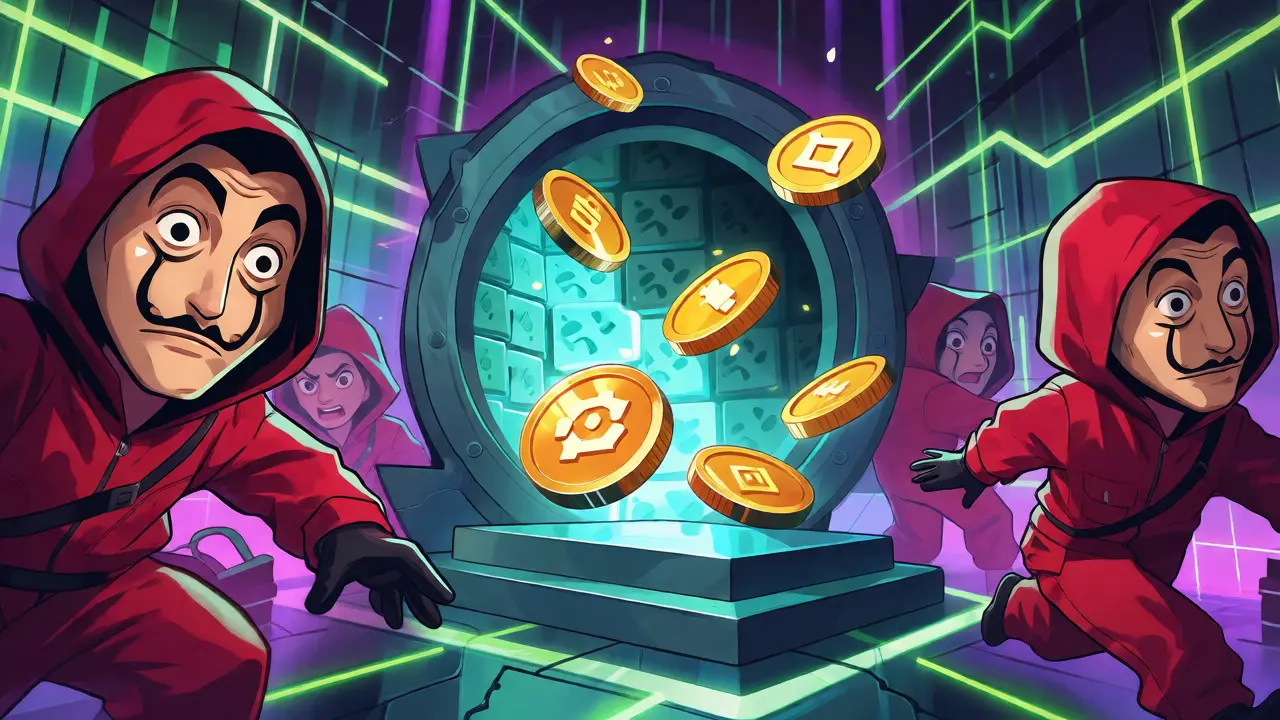
BIT GAME VERSE TOKEN (BGVT) is a BEP-20 utility token designed to power the Bit Game Verse platform, which combines a "Money Heist" themed gaming environment with a direct peer-to-peer cryptocurrency marketplace. Unlike traditional exchanges that act as intermediaries, Bit Game Verse markets itself as a space where users trade directly with each other. The idea is simple: no system involvement, just user-to-user transactions linked directly on the blockchain.
The project leans heavily on pop culture aesthetics. Players engage in tasks within a virtual "central bank" setting, interacting with characters like the Professor, Tokyo, and Berlin. The goal? Complete missions to earn BGVT rewards. While the concept sounds fun, the technical execution relies entirely on the BNB Smart Chain infrastructure, meaning BGVT does not have its own independent blockchain consensus mechanism.
Tokenomics: Supply, Price, and Market Cap Reality
Understanding the numbers is critical when dealing with micro-cap tokens. BGVT has a fixed maximum supply of 70 billion tokens. However, data sources disagree on how many are actually circulating. Some aggregators report a circulating supply of around 31.2 billion, while others list it as zero, leading to wildly different market cap calculations.
| Metric | Value / Status | Source Note |
|---|---|---|
| Total & Max Supply | 70,000,000,000 BGVT | Fixed cap confirmed by CMC/KuCoin |
| Circulating Supply | ~31.2 Billion (Disputed) | Binance/Yahoo Finance report 0 |
| All-Time High (ATH) | $0.000371 USD | Recorded Nov 8, 2022 |
| Current Price Range | $0.000015 - $0.000035 USD | Varies by aggregator |
| Market Cap | <$1 Million USD | Micro-cap classification |
| Network | BNB Smart Chain (BEP-20) | Low fees, fast blocks |
The price history tells a sobering story. After launching in October 2022, BGVT hit an all-time high of approximately $0.000371 in November 2022. By early 2026, the token had suffered a drawdown of over 94%. This massive drop is typical for low-liquidity tokens that experience initial hype followed by a lack of sustained buying pressure.
Where to Buy and Trade BGVT
Here is the catch: you cannot buy BGVT on the biggest exchanges. As of 2026, neither Binance nor KuCoin lists BGVT for direct spot trading. They track the price, but they do not offer order books for it. Crypto.com also marks it as "not tradable yet."
So, where is the liquidity? It exists in fragmented pockets:
- KoinBX: An Indian exchange that offers BGVT pairs against INR and USDT.
- P2P Platforms: Services like Symlix allow for direct peer-to-peer buys and sells.
- DEXs on BSC: Decentralized exchanges on the BNB Smart Chain may have small liquidity pools.
- Wallet Swaps: Interfaces like Coinbase Wallet or Atomic Wallet can facilitate swaps via integrated DEX routers.
Because volume is extremely low-sometimes dropping to under $2 USD in daily trades on some trackers-slippage is a major issue. If you try to buy $100 worth of BGVT, you might pay significantly more than the quoted price due to thin order books.

Security and Audits: What We Know
Safety is paramount in crypto. The Bit Game Verse team claims that BGVT is CertiK audited. CertiK is a reputable blockchain security firm, and their audit suggests the smart contract was reviewed for vulnerabilities. However, the public listing does not provide a detailed score or date for this audit. Without accessible technical reports, investors must rely on the claim alone.
Being a BEP-20 token means BGVT inherits the security model of the BNB Smart Chain. It benefits from the chain's speed and low transaction costs, typically costing cents per transfer. But remember, an audit of the token contract does not guarantee the success of the gaming platform or prevent rug pulls if the development team abandons the project.
Risks and Red Flags
If you are considering adding BGVT to your portfolio, weigh these factors carefully:
- Liquidity Risk: With market caps often reported under $1 million, exiting a position without crashing the price is difficult.
- Data Discrepancies: Major platforms disagree on circulating supply. Is it 31 billion or 0? This uncertainty makes valuation hard.
- Lack of Adoption: There is little evidence of widespread active user engagement or new exchange listings since 2022.
- Volatility: The token has fallen over 94% from its peak. Micro-caps can go to zero just as easily as they can spike.
Community sentiment is also sparse. Unlike major projects with active Reddit threads or YouTube deep dives, BGVT has limited organic discussion. The rating on CoinMarketCap sits at 3.9 out of 5, but without knowing the number of voters, this metric lacks weight.
How to Acquire BGVT: A Step-by-Step Guide
If you decide to take the risk, here is the practical path to owning BGVT:
- Set up a BNB-compatible wallet: Download MetaMask, Trust Wallet, or Atomic Wallet. Ensure it supports BNB Smart Chain.
- Fund your wallet: Buy BNB or USDT on a major exchange and withdraw them to your personal wallet address.
- Find a venue: Go to KoinBX for centralized trading or use a BSC DEX aggregator like PancakeSwap if a pool exists.
- Execute the swap: Connect your wallet, select BGVT as the output token, and confirm the transaction. Watch out for slippage settings; set them higher (e.g., 1-2%) to ensure the trade goes through.
- Store securely: Keep your seed phrase offline. Since BGVT is a standard BEP-20 token, any hardware wallet supporting BSC will work.
The Future Outlook
As of September 2026, there is no publicly detailed roadmap for major upgrades or partnerships. The project continues to operate quietly. For BGVT to regain relevance, it needs tangible proof of gameplay activity and user retention, not just marketing copy about "Money Heist" themes. Until then, it remains a speculative play for those willing to navigate low liquidity and high risk.
Is BIT GAME VERSE TOKEN (BGVT) listed on Binance?
No, BGVT is not listed for direct trading on Binance. While Binance tracks its price, users cannot execute spot trades for BGVT on the Binance exchange interface. You must use other platforms like KoinBX or decentralized exchanges on the BNB Smart Chain.
What network does BGVT run on?
BGVT runs on the BNB Smart Chain (BSC) as a BEP-20 token. This means it uses the same infrastructure as Binance Coin (BNB), offering fast transaction times and low fees compared to Ethereum-based tokens.
Is BGVT safe to invest in?
Investing in BGVT carries high risk. It is a micro-cap asset with low liquidity and has declined over 94% from its all-time high. While the team claims a CertiK audit, the lack of widespread adoption and transparent circulating supply data adds to the uncertainty. Only invest what you can afford to lose.
How do I store BGVT tokens?
Since BGVT is a BEP-20 token, you can store it in any wallet that supports the BNB Smart Chain. Popular options include MetaMask, Trust Wallet, Atomic Wallet, and Coinbase Wallet. Hardware wallets like Ledger or Trezor also support BSC assets.
Why is the circulating supply of BGVT disputed?
Different data aggregators report conflicting information. CoinMarketCap and KuCoin cite a circulating supply of approximately 31.2 billion, while Binance and Yahoo Finance report 0. This discrepancy usually stems from whether the aggregators recognize locked tokens or vesting schedules, making market cap calculations inconsistent.
