

- 7 Aug 2026
- Elara Crowthorne
- 0
Have you ever seen a token ticker like JUICE and assumed it was just another meme coin? You might be wrong. In the fast-moving world of decentralized finance (DeFi), names can be deceiving. While there are several tokens with similar names on the Solana blockchain, the specific project known as Juice Finance is a specialized cross-margin lending protocol built on the Blast Layer-2 network. It isn't designed for viral hype; it’s built for aggressive yield farming.
If you’re looking to understand what this protocol actually does, how it differs from standard lenders like Aave, and whether the JUICE token is worth your attention in 2026, you’ve come to the right place. We’ll break down the mechanics, the risks, and the critical distinction between this project and its lookalikes.
How Juice Finance Works: The Core Mechanism
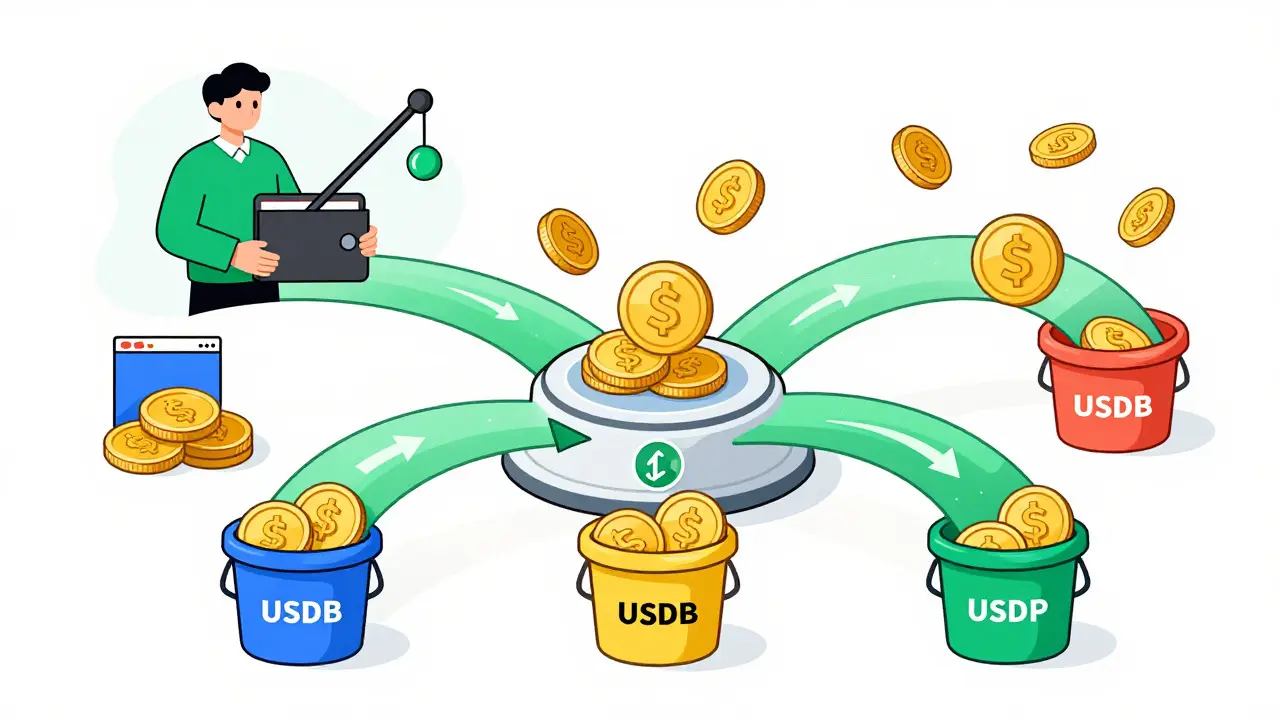
To get straight to the point, Juice Finance is a tool for leveraging your assets. Most DeFi protocols allow you to deposit collateral and borrow against it. Juice Finance takes this a step further by offering cross-margin lending with up to 3x leverage.
Here is the typical workflow:
- Deposit Collateral: You connect an EVM-compatible wallet and deposit ETH onto the Blast network.
- Borrow Assets: You can borrow up to 300% of your collateral value in USDB (Blast’s native stablecoin) or additional ETH.
- Deploy Capital: Instead of holding these borrowed funds idle, you deploy them into whitelisted, high-performing dApps within the Blast ecosystem.
- Farm Rewards: Your goal is to maximize yields, protocol points, and potential airdrops using both your own capital and the borrowed funds.
The term "cross-margin" is crucial here. Unlike isolated margin systems where each position is separate, cross-margin manages your risk at the portfolio level. This means your entire account balance acts as collateral for all open positions. It allows for more efficient capital use but introduces a higher systemic risk: if one leveraged position suffers significant losses, it can threaten the stability of your entire account.
The Role of the Blast Network
You cannot talk about Juice Finance without talking about Blast is an Ethereum Layer-2 scaling solution that automatically rewards users with yield on their ETH and stablecoins. Juice Finance is deeply integrated into this ecosystem.
Blast uses rebasing tokens. When you hold ETH or USDB on Blast, the balance in your wallet adjusts periodically to reflect accumulated yield. Juice Finance leverages this feature. By borrowing USDB and ETH through Juice and deploying them into partner dApps, users aim to capture:
- Native Blast Yield: The automatic interest generated by holding Blast-native tokens.
- Protocol Points: Incentives distributed by the dApps where the capital is deployed.
- Airdrop Eligibility: Potential future token distributions from new projects launching on Blast.
This tight coupling means Juice Finance’s utility is heavily dependent on the health and incentive structure of the Blast network. If Blast’s incentives dry up, the primary value proposition of Juice Finance diminishes significantly.
JUICE Tokenomics and Market Status
As of mid-2026, the JUICE token has a 1 billion total supply and a 171.77 million circulating supply. This means roughly 17.2% of the tokens are currently in circulation, with the majority likely locked or vested.
In terms of market presence, Juice Finance sits in the long tail of cryptocurrency rankings. Throughout 2025 and early 2026, it ranked between #2800 and #3600 on major aggregators like CoinMarketCap. This indicates it is a low-cap asset with relatively thin liquidity compared to top-tier DeFi giants. For traders, this means higher volatility and potentially larger slippage when entering or exiting large positions.
| Metric | Value |
|---|---|
| Total Supply | 1,000,000,000 JUICE |
| Circulating Supply | 171,770,000 JUICE |
| Network | Blast (Layer-2) |
| Max Leverage | 3x (300%) |
| Primary Use Case | Leveraged Yield Farming |
Don’t Get Confused: Juice Finance vs. Solana JUICE Tokens
This is perhaps the most important section for any investor. There is significant ticker confusion in the crypto space. Several unrelated tokens on the Solana blockchain also use the ticker JUICE. They have nothing to do with Juice Finance.
For example, there is a Solana token called "the juice" with nearly 1 billion tokens circulating, focused on automated liquidity provision. Another variant, "Cat Juice," operates as a meme coin. These Solana-based assets often trade on platforms like PumpSwap or Raydium and have completely different risk profiles, mechanisms, and communities.
If you buy a Solana JUICE token thinking you are investing in the Blast lending protocol, you will lose money. Always verify the contract address. Juice Finance is exclusively an Ethereum Virtual Machine (EVM) project on the Blast network. If a platform asks you to interact with it via a Solana wallet like Phantom, double-check your source.

Risks and Considerations
While the promise of 3x leverage on yield farming sounds attractive, it comes with substantial risks. Here is what you need to watch out for:
- Liquidation Risk: With 3x leverage, a price drop of roughly 33% in your underlying collateral can wipe out your equity and trigger liquidation. Cross-margin amplifies this because losses in one strategy affect your whole account.
- Smart Contract Risk: As with any DeFi protocol, bugs in the code can lead to exploits. Always check if the protocol has undergone independent security audits.
- Ecosystem Dependency: Juice Finance relies on Blast’s incentive model. If Blast changes its reward structure or loses popularity, the returns on Juice strategies may plummet.
- Liquidity Constraints: Being a lower-ranked token means fewer buyers and sellers. Exiting large positions quickly without impacting the price can be difficult.
Who Is Juice Finance For?
Juice Finance is not for beginners who want passive, safe savings. It is designed for experienced DeFi users who:
- Understand leverage and liquidation mechanics.
- Are already active in the Blast ecosystem.
- Want to optimize capital efficiency for points and airdrop farming.
- Can monitor their positions closely to avoid margin calls.
If you fit this profile, Juice Finance offers a powerful tool for stacking rewards. If you are new to crypto, stick to simpler, unleveraged staking options until you grasp the complexities of cross-margin lending.
Is Juice Finance safe to use?
Like all DeFi protocols, Juice Finance carries smart contract risk. While it operates on the secure Blast Layer-2 network, users should always verify current audit status and start with small amounts. The high leverage (3x) also introduces significant financial risk if markets move against you.
What is the difference between Juice Finance and Solana JUICE tokens?
They are completely different projects. Juice Finance is a lending protocol on the Blast (Ethereum L2) network. Solana JUICE tokens are typically meme coins or liquidity tools on the Solana blockchain. Never confuse the two; always check the contract address.
How much leverage does Juice Finance offer?
Juice Finance offers up to 3x (300%) leverage on ETH collateral. This allows users to borrow three times the value of their deposited collateral in USDB or ETH.
What is the total supply of the JUICE token?
The total and maximum supply of the JUICE token is capped at 1 billion tokens. As of mid-2026, approximately 171.77 million tokens were in circulation.
Do I need KYC to use Juice Finance?
No. Juice Finance is a permissionless DeFi protocol. You only need an EVM-compatible wallet connected to the Blast network. There are no identity checks or credit scores involved.