
- 12 Aug 2026
- Elara Crowthorne
- 0
Have you ever watched your savings lose value overnight because a popular stablecoin lost its peg? It happened in May 2022 when TerraUSD (UST) collapsed, wiping out billions of dollars. It happened again in March 2023 when banking troubles caused USDC to dip below $1. If you are tired of wondering if your digital dollar is actually backed by real cash, TrueUSD might be the answer you have been looking for.
TrueUSD (TUSD) is a fiat-backed cryptocurrency stablecoin that maintains a strict 1:1 peg to the U.S. dollar through daily, independent audits of its reserves. Unlike many competitors that rely on monthly reports or opaque reserve structures, TUSD provides proof every single day that there is one real dollar in the bank for every token in circulation. Created by TrustToken and now managed by Archblock, it was designed from the ground up to solve the transparency crisis in the crypto market.
How TrueUSD Works: The Daily Attestation Model
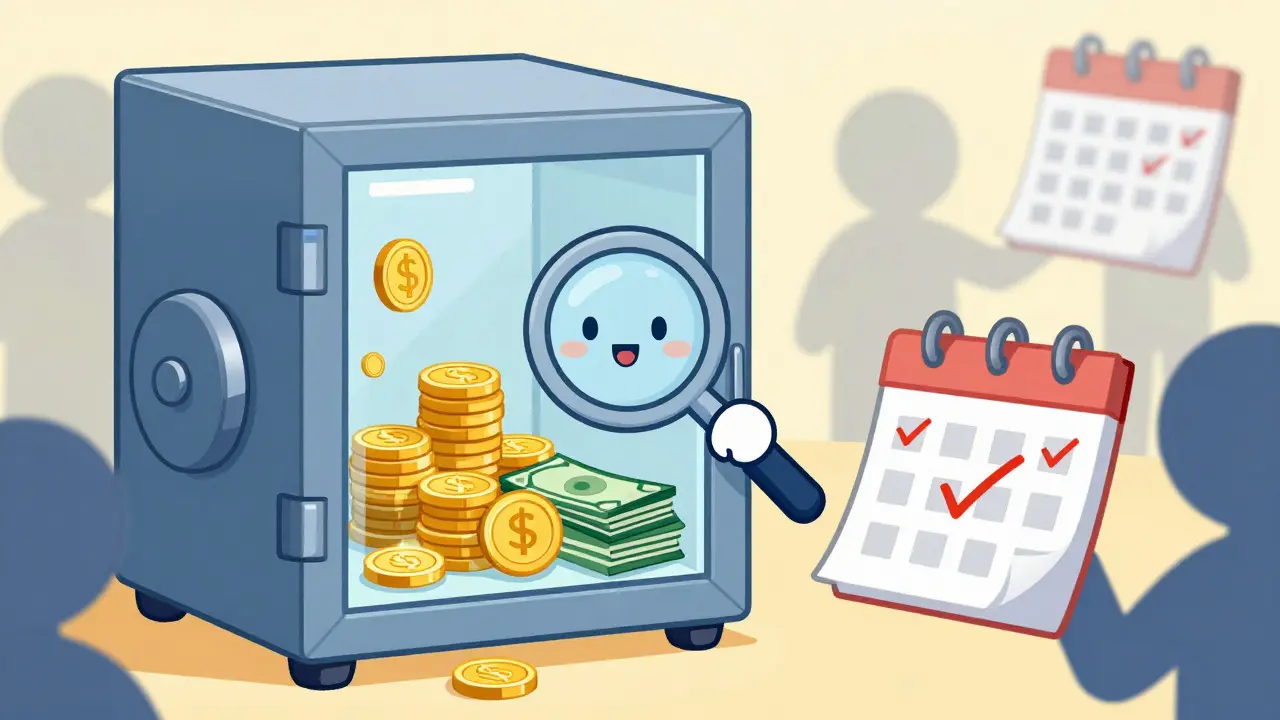
The core difference between TUSD and other major stablecoins lies in verification. Most stablecoins publish attestation reports once a month or even quarterly. That means for weeks at a time, you are trusting their word that they have enough money to cover all the tokens people hold. With TUSD, an independent accounting firm, Moore Hong Kong, verifies the reserves every 24 hours.
Here is how the process works in practice:
- Minting: You deposit U.S. dollars into a designated escrow account managed by Archblock’s regulated banking partners. Within one business day, an equivalent amount of TUSD is generated and sent to your wallet.
- Redemption: You send your TUSD back to a unique redemption address. After verification, the banking partner sends the USD to your bank account via wire transfer, usually within one business day.
- Verification: Chainlink’s Proof of Reserves technology connects the blockchain data with the bank records, ensuring the numbers match in real-time.
This daily check creates a safety net. If a sudden wave of redemptions hits the market, you can look at the latest report and know exactly how much liquidity is available. This structure helped TUSD maintain a perfect $1.00 peg during the March 2025 market crash, while other stablecoins briefly dipped due to panic selling.
TUSD vs. The Competition: Why Choose It?
You probably know about USDT (Tether) and USDC (Circle). They dominate the market, but they have different strengths and weaknesses. Understanding these differences helps you decide which coin fits your needs.
| Feature | TrueUSD (TUSD) | USDC (Circle) | USDT (Tether) |
|---|---|---|---|
| Audit Frequency | Daily | Monthly/Quarterly | Quarterly |
| Reserve Composition | 100% Cash Equivalents | Cash & Short-term Treasuries | Mixed (Commercial Paper, Cash, etc.) |
| KYC Requirement | Required for Redemption | Required for Large Amounts | Minimal/Anonymous |
| Market Cap (Jan 2026) | $1.2 Billion | $35 Billion | $110 Billion |
TUSD stands out because its reserves are held entirely in FDIC-insured accounts as cash equivalents. In contrast, USDT has historically held a portion of its reserves in commercial paper and other corporate debt, which carries slightly higher risk. While USDC offers robust regulation, its larger size makes it more susceptible to systemic banking risks, as seen in 2023. TUSD’s smaller size ($1.2 billion market cap) is often criticized for lower liquidity, but its transparency is unmatched.
Technical Architecture and Multi-Chain Support
TUSD started as an ERC-20 token on the Ethereum network. However, Ethereum transaction fees (gas) can get expensive during busy periods. To make TUSD practical for everyday use, Archblock expanded it to several other blockchains.
As of early 2026, you can use TUSD on:
- Ethereum
- TRON
- Avalanche
- BNB Chain
- Fantom
- Polygon
This multi-chain approach allows for faster and cheaper transfers. For example, moving TUSD on TRON or BNB Chain costs fractions of a cent, compared to potentially dollars on Ethereum. Users report that cross-chain transfers between Ethereum and BNB Chain using TUSD are 78% faster than similar moves with USDC, thanks to optimized bridge protocols.
The minting and redemption processes are automated via smart contracts, but human oversight remains crucial. Each transaction incurs a minimal fee of $0.01, making it highly cost-effective for cross-border payments compared to traditional banking wires, which can charge $20-$50 per transfer.
Regulatory Landscape and Future Outlook
Regulation is the biggest factor shaping the future of stablecoins. In June 2024, the European Union implemented MiCA (Markets in Crypto-Assets) regulations, which require stablecoins to maintain 1:1 backing and provide regular attestations. Because TUSD already had this infrastructure in place, it gained a competitive advantage in European markets almost immediately.
In the United States, the proposed STABLE Act is currently under review. If passed, it could impose stricter capital requirements on issuers. However, industry analysts believe TUSD’s current model aligns well with these potential rules. Moody’s assigned TUSD an A2 reliability rating in October 2025, the highest in the industry, citing its transparent reserve structure.
Looking ahead, Archblock plans to expand TUSD to Solana, Cardano, and Polkadot in 2026. They are also integrating zero-knowledge proof technology to enhance privacy for institutional transactions without sacrificing auditability. Additionally, the integration with the FedNow instant payment system, announced in late 2025, connects TUSD reserves directly to the Federal Reserve’s payment infrastructure, further reducing settlement risk.

Pros and Cons of Using TrueUSD
No financial tool is perfect. Before you move your funds, consider these practical points based on user feedback and expert analysis.
Advantages:
- Unmatched Transparency: Daily audits provide peace of mind that monthly reports cannot offer.
- Stability: Maintained its peg perfectly during recent market crashes.
- Regulatory Compliance: Approved by the New York Department of Financial Services and compliant with EU MiCA.
- Low Fees: Minimal transfer costs make it suitable for frequent transactions.
Disadvantages:
- Liquidity Depth: Order book depth is about 35% of USDC’s, which can lead to slippage during large trades.
- KYC Friction: You must complete identity verification to redeem TUSD for fiat, which takes 1-3 business days. This is slower than anonymous options like USDT.
- Smaller Ecosystem: Fewer DeFi protocols support TUSD compared to USDC or DAI.
How to Get Started with TUSD
If you decide to use TrueUSD, here is the step-by-step process:
- Create a Wallet: Use a compatible wallet like MetaMask or Trust Wallet. Ensure it supports the specific blockchain you want to use (e.g., Ethereum or BNB Chain).
- Complete KYC: Register on the Archblock platform or a supported exchange (like Binance or Coinbase). Upload your ID documents. Expect this to take 1-3 business days.
- Deposit Funds: Wire USD to the provided bank account details or buy TUSD directly on an exchange.
- Receive TUSD: Once verified, your TUSD will be minted and sent to your wallet address.
- Transact: Use TUSD for trading, payments, or saving. Remember to select the correct network when sending to avoid losing funds.
For beginners, the learning curve is moderate. CoinDesk rated the usability at 3.2/5, noting that the multi-chain aspect can be confusing at first. However, after 2-3 transactions, most users find the process intuitive.
Is TrueUSD safe to hold?
Yes, TUSD is considered one of the safest stablecoins due to its daily independent audits and 100% cash-equivalent reserves held in FDIC-insured accounts. It received an A2 reliability rating from Moody's in 2025.
Can I use TUSD anonymously?
You can transact with TUSD anonymously on the blockchain, but redeeming it for U.S. dollars requires completing KYC (Know Your Customer) verification. This is stricter than USDT but more secure.
Which blockchains does TUSD support?
As of 2026, TUSD operates on Ethereum, TRON, Avalanche, BNB Chain, Fantom, and Polygon. Expansions to Solana, Cardano, and Polkadot are planned later in the year.
Why is TUSD less popular than USDT or USDC?
TUSD has a smaller market share because it entered the market later and enforces stricter KYC requirements for redemptions. However, it is growing rapidly in regions prioritizing regulatory compliance, such as Europe and Asia-Pacific.
How long does it take to redeem TUSD for cash?
Redemption typically takes 1 business day after the tokens are verified. The initial KYC verification process may take 1-3 business days for new users.
