
- 27 Aug 2026
- Elara Crowthorne
- 0
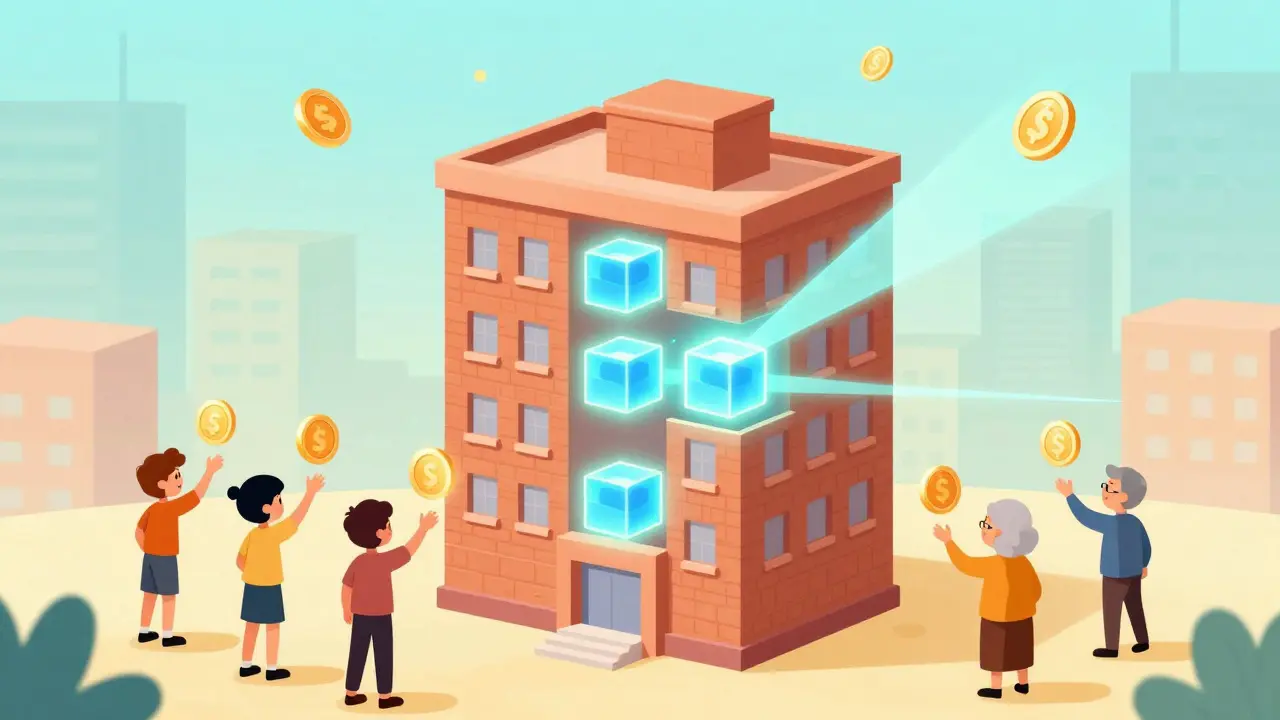
Imagine owning a slice of a high-end commercial building in New York or an apartment complex in Los Angeles without needing a six-figure down payment. That is the core promise of real estate tokenization, which converts physical property rights into digital tokens on a blockchain ledger. This process allows for fractional ownership and streamlined transactions, fundamentally shifting how investors access property markets. While the concept emerged around 2017-2018, it has matured significantly, with the market projected to reach $5.5 billion by 2026 according to PwC. The main draw? Turning historically illiquid assets into liquid, tradable securities while keeping the underlying value of the brick-and-mortar asset intact.
How It Works: From Brick to Byte
To understand the benefits, you first need to see the machinery behind the scenes. Real estate tokenization isn't just putting a picture of a house on a website; it involves a specific legal and technical stack. The property is typically held within a Special Purpose Vehicle (SPV), a legal entity created solely to own the asset. Licensed appraisers value the property, and then that value is divided into digital tokens. These tokens are often compliant with standards like ERC-1400 on Ethereum or native standards on Hedera Hashgraph. Each token represents a specific fraction of ownership, backed by smart contracts that automate processes like dividend distribution and voting rights.
The technology stack usually includes blockchain infrastructure, oracle networks for bringing real-world data onto the chain, and digital wallets for custody. For most implementations, Ethereum remains the dominant network, though Polygon and Hedera are gaining traction for their lower fees and speed. The result is a system where settlement times drop from the traditional 30-90 days to near real-time-about 15 seconds on Ethereum-based systems. This speed is not just a tech flex; it changes the operational rhythm of real estate investing entirely.
Unlocking Liquidity and Lowering Barriers
The biggest pain point in traditional real estate has always been liquidity. If you buy a house, you are locked in until you find a buyer, a process that can take months. Tokenization solves this by creating a secondary market. Investors can sell their tokens on dedicated platforms, increasing transaction velocity by approximately 300%. You might receive quarterly dividends, but if you need cash in Q3, you don't have to wait for the next quarter's payout cycle or sell the whole building. You can liquidate your specific stake quickly.
Equally important is the drop in entry barriers. Traditional commercial real estate often requires minimum investments of $100,000 or more. With tokenization, this threshold drops dramatically. A common model involves dividing a $10 million commercial property into 10,000 tokens at $1,000 each. This means a student, a small business owner, or a retiree can participate in institutional-grade deals. Data from Mantra Chain shows that this structure allows for broader participation, with average individual investments ranging from $5,000 to $17,000 in recent case studies, such as the $22 million Los Angeles apartment complex tokenized by RealT in 2022.
Cost Efficiency and Operational Speed
Money saved is money earned. In traditional real estate transactions, you pay hefty fees to lawyers, brokers, title companies, and notaries. Deloitte’s analysis indicates that tokenization reduces these transaction costs from 5-10% of the property value down to 1-3%. How? By eliminating intermediaries. Smart contracts handle the transfer of ownership and the distribution of revenue automatically. There is no need for a manual check-writing process or a paper trail that gets lost in a filing cabinet.
Ernst & Young noted that the notary visit and land transfer tax become technically obsolete through tokenization. This efficiency extends beyond just the purchase. Property management systems now integrate directly with tokenization platforms. About 78% of major tokenization platforms connect with standard management software like Yardi or Buildium. This means rent collection, expense tracking, and profit distribution happen seamlessly. For issuers, this means less administrative overhead; for investors, it means transparent, automated income streams.

Risks and Regulatory Realities
No financial innovation is without its caveats, and real estate tokenization is no exception. The primary risk is regulatory fragmentation. In the United States, 47 states have varying securities laws that affect how tokens are treated. Some states view them as securities, others as commodities, and some haven't decided yet. This creates a patchwork of compliance requirements that can be confusing for both issuers and investors. Globally, 68% of markets still face significant regulatory uncertainty, according to the World Economic Forum.
There is also the issue of technological risk. Smart contracts are code, and code can have bugs. Between 2017 and 2023, smart contract vulnerabilities led to $2.6 billion in losses across various blockchain platforms. While rare in well-audited real estate projects, it is a risk factor to keep in mind. Furthermore, tokenization does not eliminate systemic market risk. Professor Susan Athey of Stanford pointed out that during the 2022 downturn, tokenized real estate returns had an 87% correlation with traditional real estate. If the housing market crashes, your tokens will likely fall in value too. Tokenization repackages the asset; it doesn't make it immune to economic cycles.
| Feature | Traditional Real Estate | Tokenized Real Estate |
|---|---|---|
| Minimum Investment | $100,000+ | $1,000 - $5,000 |
| Liquidity | Low (Months to sell) | High (Daily/Weekly trading) |
| Transaction Costs | 5-10% of value | 1-3% of value |
| Settlement Time | 30-90 days | Near real-time (~15 seconds) |
| Ownership Structure | Full unit ownership | Fractional via SPV |
Who Is This For?
This approach suits specific investor profiles best. It is ideal for those seeking passive income with higher liquidity than traditional REITs (Real Estate Investment Trusts) but who want direct exposure to specific properties rather than a diversified fund. It also appeals to younger investors entering the market with smaller capital bases. However, it may not be the right fit for those who prefer full control over property decisions, such as choosing paint colors or approving major renovations, unless they hold a majority stake or vote actively in the token holder assembly.
Institutional players are watching closely. BlackRock filed a tokenized real estate fund with the SEC in August 2023, and J.P. Morgan launched its Onyx platform for commercial real estate tokenization. Their involvement signals growing confidence in the space's long-term viability. Gartner predicts mainstream adoption between 2027 and 2030, suggesting we are currently in the early adopter phase.

Getting Started: Practical Steps
If you are considering diving in, here is what the process looks like from an investor's perspective. First, you need a digital wallet compatible with the network used by the platform (usually Ethereum or Polygon). Next, you must complete KYC (Know Your Customer) checks, as most reputable platforms use services like Chainalysis or Elliptic for AML (Anti-Money Laundering) verification. Once verified, you can browse available tokenized properties, review the underlying asset documents, and purchase tokens using stablecoins or fiat currency integrated via payment processors.
Education is key. Novice users should spend 15-20 hours learning about wallet management and token trading mechanics. Be aware of cross-border tax complications, which 63% of international investors report as a challenge. Always check the regulatory status of the token in your jurisdiction. For issuers, the journey is longer, requiring 80-120 hours to navigate legal structuring, valuation, and compliance, with total setup costs ranging from $70,000 to $165,000 depending on complexity.
Frequently Asked Questions
Is real estate tokenization safe?
It is generally safe when using regulated platforms with audited smart contracts. However, risks include regulatory changes, smart contract bugs, and platform insolvency. Always verify that the platform holds proper licenses and uses reputable custodians for the underlying assets.
What are the taxes on tokenized real estate?
Tax treatment varies by country and jurisdiction. In many places, tokens are treated as securities or capital assets, meaning capital gains tax applies upon sale. Dividends received are typically taxed as ordinary income. Consult a tax professional familiar with digital assets to avoid surprises.
Can I sell my tokens easily?
Yes, that is one of the main benefits. Most platforms offer a secondary market where you can list your tokens for sale. Liquidity depends on the specific property and demand, but it is significantly faster than selling physical real estate. Some tokens may have lock-up periods initially, so check the terms before buying.
Do I get voting rights as a token holder?
Usually, yes. Most security tokens come with governance rights proportional to your ownership stake. You can vote on major decisions like selling the property, refinancing debt, or changing the management company. However, day-to-day operations are handled by the professional management team.
Which blockchains are best for real estate tokenization?
Ethereum is the most common due to its large ecosystem and established standards like ERC-1400. Polygon is popular for its low transaction fees and fast speeds. Hedera Hashgraph is also gaining ground for its enterprise-grade stability and energy efficiency. The choice often depends on the platform you are using.