- 13 Apr 2026
- Elara Crowthorne
- 15
Imagine waking up to find your digital assets locked and the platform you trusted to trade them vanished overnight. For thousands of users tied to certain Russian-operated exchanges, this isn't a nightmare-it's a recurring reality. The battle between international regulators and sanctioned entities has turned the crypto world into a high-stakes game of cat-and-mouse, where the prize is billions of dollars and the penalty is total financial isolation.
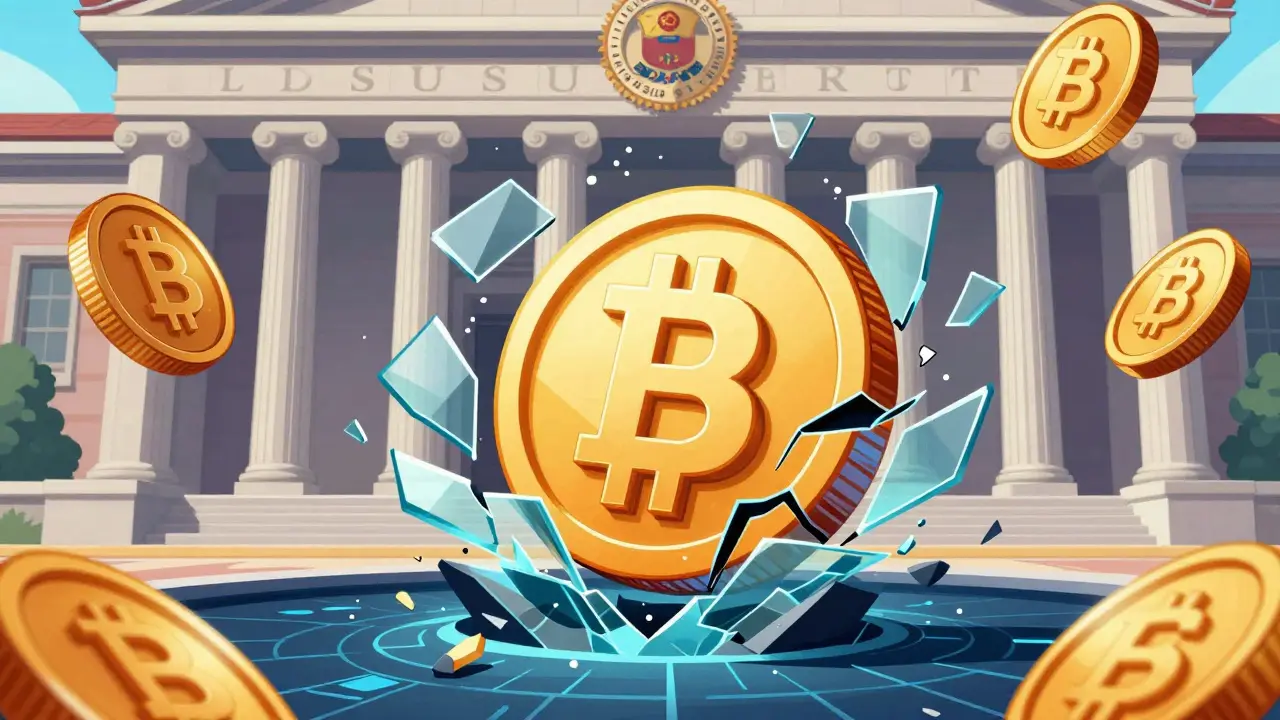
The Targeted Collapse of Garantex
For a long time, Garantex is a Russian-operated cryptocurrency exchange that became a primary hub for bypassing international financial restrictions. Founded by figures like Sergey Mendelev and Aleksandr Mira Serda, it offered a way for users to move money when traditional banks were shut out of the global system. However, the U.S. Treasury's Office of Foreign Assets Control ( OFAC) decided this was too dangerous to ignore. In April 2022, the exchange was first hit with sanctions under Executive Order 14024.
The situation peaked in March 2025. The U.S. Secret Service didn't just send a warning letter; they launched a global operation that seized domains and froze over $26 million in crypto. One of the co-founders, Aleksej Besciokov, was arrested while on vacation in India. This wasn't just a legal slap on the wrist-it was a systematic dismantling of the exchange's infrastructure. By August 2025, OFAC re-designated Garantex, alleging it had processed over $100 million in illicit transactions linked to cybercriminals since 2019.
The Pivot to Grinex and the A7 Network
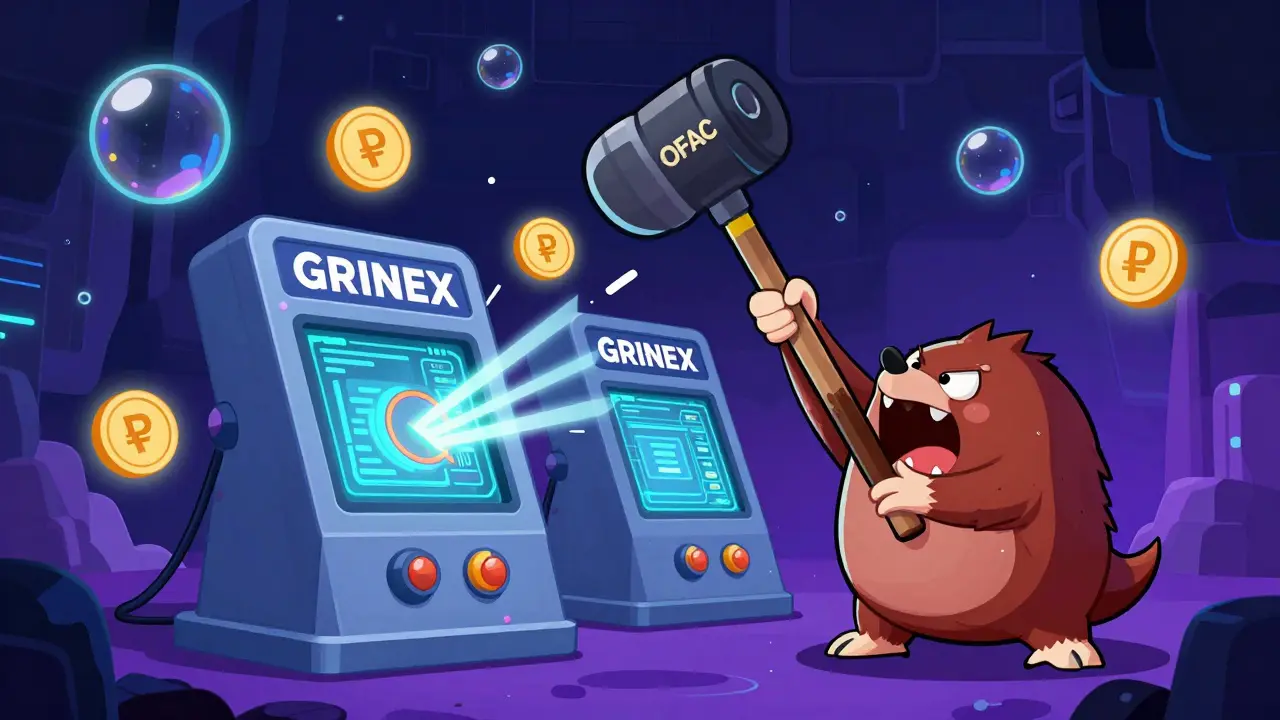
When Garantex went dark, the people running it didn't just give up. They immediately launched Grinex, a successor exchange specifically designed to circumvent sanctions and allow Garantex users to recover their funds. This is a classic example of "whack-a-mole" in the digital age: as soon as one entity is banned, a mirrored version pops up under a different name.
To keep the money moving, they introduced the A7A5 token, a ruble-backed digital asset issued by a Kyrgyzstani firm. Think of this as a specialized tool for evasion. Because Russian sanctions make using standard US-dollar stablecoins like USDT risky-since the companies issuing them can freeze wallets at the request of the U.S. government-the A7A5 token provided a ruble-pegged alternative that felt safer for local users.
The scale of this operation is staggering. According to data from Elliptic, a leading blockchain analytics firm that tracks illicit crypto flows, the broader "A7 network" (which includes entities like InDeFi Bank and Old Vector) has handled roughly $8 billion in transactions since early 2024. That is a massive amount of capital moving through shadows to avoid detection.
Comparing Sanction-Evasion Tools
Users in restricted zones have to choose between stability and safety. While USDT is the global standard, it comes with a "kill switch." The A7A5 token tried to offer a workaround, but as we've seen, no one is truly invisible on a public ledger.
| Feature | USDT (Tether) | A7A5 Token |
|---|---|---|
| Pegged Value | US Dollar | Russian Ruble |
| Control | Centralized (Tether Ltd) | Kyrgyzstani-linked entities |
| Risk Factor | High (Wallets can be frozen) | High (Subject to OFAC tracking) |
| Primary Use Case | Global Liquidity | Bypassing SWIFT bans |
The Tech War: Analytics vs. Obfuscation
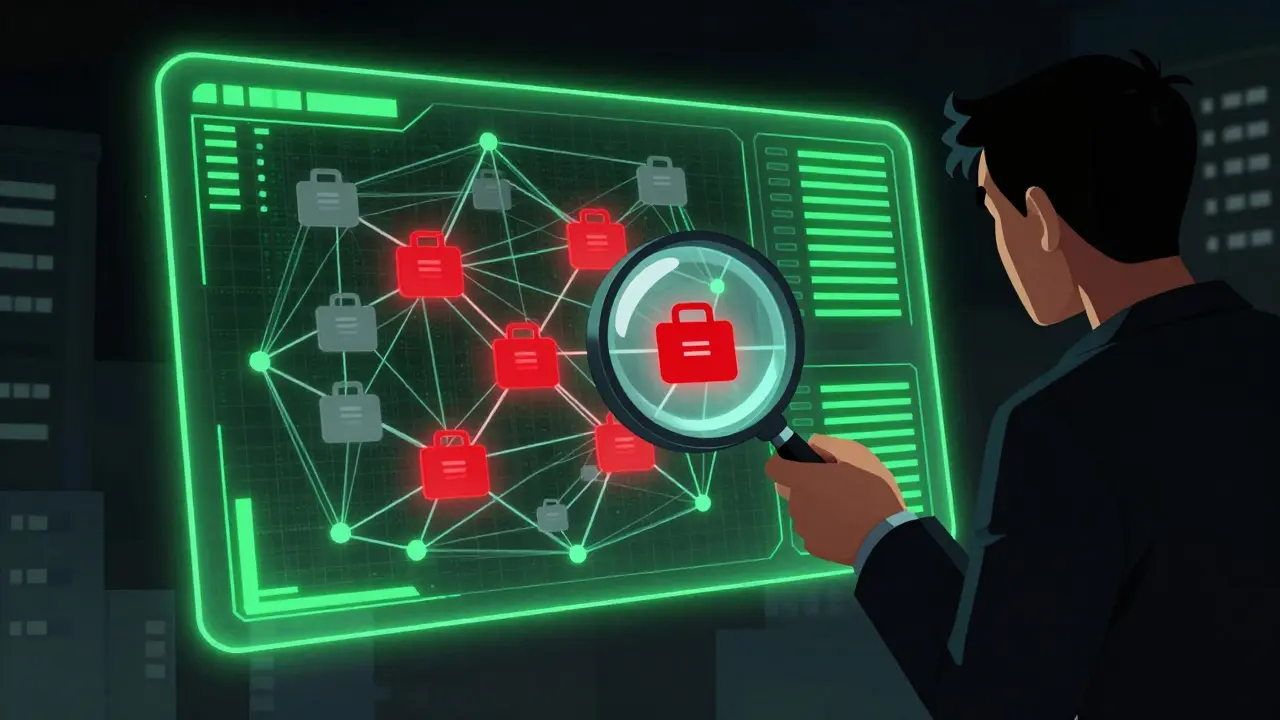
The fight over these exchanges isn't just about laws; it's about software. Garantex used sophisticated wallet obfuscation-basically digital smoke and mirrors-to hide where money was going. They thought they were safe, but blockchain analytics have evolved. By analyzing patterns and utilizing "leaked" data from the A7 network in mid-2025, investigators were able to link anonymous wallets back to the sanctioned companies.
This means that even if you use a "private" exchange, your transaction history is written in stone on the blockchain. When Elliptic integrated A7A5 screening for the TRON and Ethereum blockchains, the "secret" token became a beacon for enforcement agencies. The very thing that made the token attractive-its ability to bypass traditional banks-also made it a primary target for those trying to track the flow of ransomware proceeds.
What This Means for Regular Users
If you're a trader in a sanctioned region, the lesson here is clear: the "safe haven" of crypto is shrinking. The U.S. Department of State is now offering rewards-up to $6 million-for information leading to the arrest of these exchange leaders. This creates an environment of paranoia where insiders are incentivized to flip on their partners.
The move from sectoral sanctions (targeting industries) to targeted sanctions (targeting specific people and their successor companies) shows that the net is tightening. If you move your funds from a sanctioned exchange like Garantex to a "safe" alternative like Grinex, you might actually be moving your money directly into another target's crosshairs. The government isn't just blocking the front door anymore; they're mapping every side exit and basement tunnel.
Why can't Russian users just use any crypto exchange?
Most major global exchanges have strict KYC (Know Your Customer) and AML (Anti-Money Laundering) policies. Because of international sanctions, many of these platforms block accounts linked to Russian IP addresses or passports to avoid facing massive fines from regulators like OFAC.
What exactly is the A7A5 token?
A7A5 is a stablecoin pegged to the Russian ruble. It was created as a way for users to avoid the centralized control of USDT, which can be frozen by the issuer if a wallet is linked to a sanctioned person or entity.
Is Grinex a safe alternative to Garantex?
No. The U.S. Treasury has explicitly designated Grinex as a successor to Garantex, meaning it is also sanctioned. Using the platform carries a high risk of asset seizure and legal scrutiny.
Can sanctions really stop cryptocurrency?
While they can't stop the blockchain itself, sanctions target the "on-ramps" and "off-ramps"-the exchanges where crypto is converted to cash. By blocking these gateways and using blockchain analytics to track funds, authorities can make it incredibly difficult to use crypto for large-scale sanctions evasion.
What happens if my funds are on a sanctioned exchange?
Your funds may be frozen by the exchange itself or seized by law enforcement. In the case of Garantex, millions of dollars in USDT were frozen during international operations led by the U.S. Secret Service.
Next Steps and Risk Mitigation
For those navigating these waters, the strategy is shifting. Relying on a single "sanction-proof" exchange is a failing strategy. Instead, professionals are looking toward truly decentralized protocols, although even these are under increasing scrutiny. If you find yourself using a platform that explicitly claims to "bypass sanctions," realize that you are likely using a target. When the infrastructure changes-like the unusual wallet activity seen around August 14, 2025-it's often a sign that the platform has been compromised or is reacting to an imminent seizure. The smartest move is to diversify and avoid any asset that relies on a centralized entity in a high-risk jurisdiction.


15 Comments
About time the US stepped in and crushed these guys. We can't let criminals hide behind some fancy code and rubles while they fund chaos globally.
the digital world is just a mirror of the physical one where we try to hide from truth but the ledger always remembers everything in the end
Uhm, it's laughably obvious that anyone using these exchanges was just beggining to be scammed. Like, please, if you think a ruble-backed token from Kyrgyzstan is "safe" you're basically asking for your money to vanish. I've been in the space long enough to know that the real alpha is in privacy coins, not some clunky successor site that's basically a honey pot for OFAC. It's honestly embarrassng that people still fall for this basic stuff.
Where are you hiding your coins?
That's a bit too personal, maybe stick to the topic :)
im literally shaking right now thinking about people losing everything... its just so cruel how the gov does this and leaves regular people in the dust its honestly heartbreaking
USA wins again! 🇺🇸 These losers thought they could cheat the system 🤡 Total failure! 📉
Super dazzling breakdown of the A7 network! Using decentralized protocols is the golden ticket to avoid these traps!
Ive seen some of these tools in action and the obfuscation tech is actually pretty clever even if it doesnt work in the long run. Most people dont realize that the on-ramps are the real weak point in the whole setup not the blockchain itself.
money is just energy and it always finds a way to flow even when walls are built
everyone knows the TRON network is basically a playground for this kind of stuff anyway
The liquidity fragmentation here is intense. Transitioning from centralized CEXs to purely peer-to-peer atomic swaps is the only way to maintain a non-custodial hedge against these geopolitical volatility spikes.
I'm just chilling and watching this unfold. It's wild how fast the game changes, but I'm sure there's a middle ground where people can just trade without being caught in a political war!
It is quite sad to see how people are caught in the middle of these sanctions, but protecting the global financial system is also necessary for stability.
Still hopeful that a better, more fair system will emerge for everyone eventually!