
- 9 Jul 2026
- Elara Crowthorne
- 0
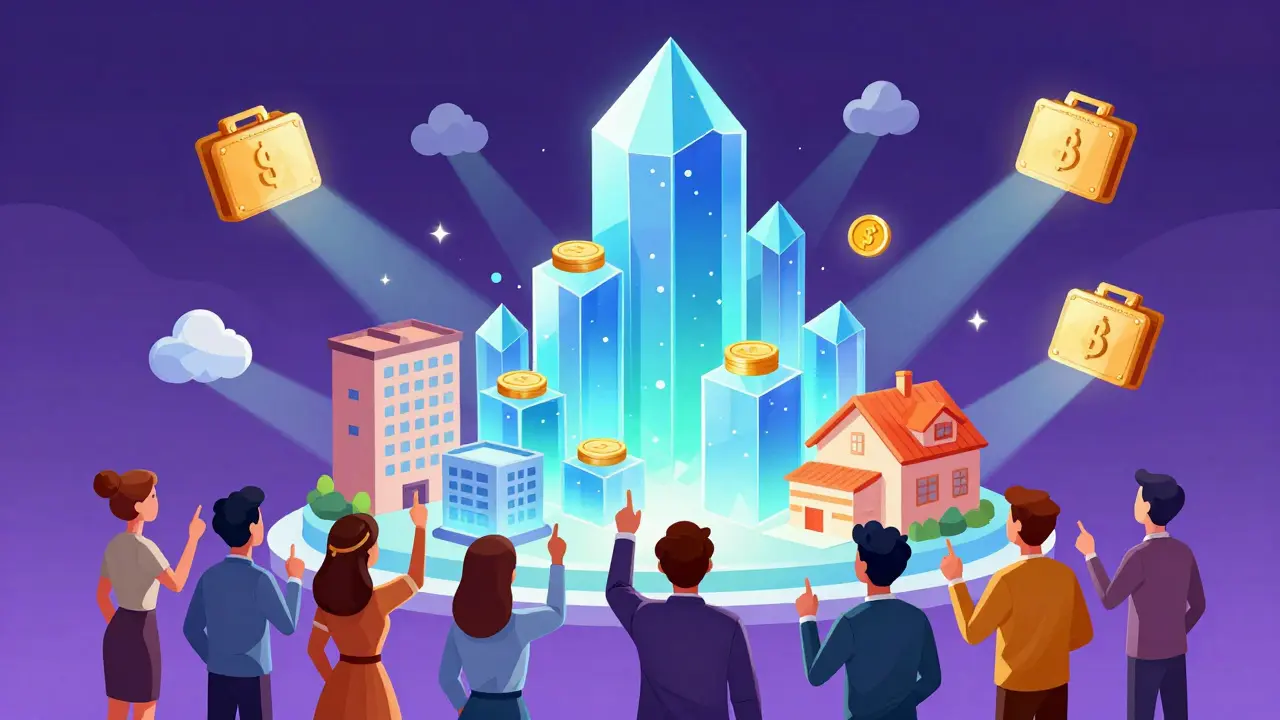
Imagine buying a slice of a luxury hotel in Aspen or a commercial building in London with just $50. For decades, this was impossible unless you were part of an exclusive club of ultra-wealthy investors. Today, thanks to tokenized real estate, which is the process of converting physical property rights into digital tokens on a blockchain, that barrier has crumbled. This technology isn't just a buzzword anymore; it’s reshaping how we think about property ownership, liquidity, and wealth building.
By July 2026, the landscape of real estate investment has shifted dramatically. What started as experimental pilots eight years ago is now a multi-trillion-dollar pipeline. Deloitte predicts that by 2035, US$4 trillion worth of real estate will be tokenized, up from less than US$0.3 trillion in 2024. That’s a compound annual growth rate of 27%. But what does this actually mean for you? Why should you care about digital tokens representing bricks and mortar?
What Is Tokenized Real Estate?
At its core, tokenization takes a physical asset-like an apartment complex, a warehouse, or even undeveloped land-and represents ownership shares as digital tokens on a blockchain. Think of it like stock market trading, but instead of shares in a company, you own a fraction of a specific property.
Each token corresponds to a precise percentage of ownership. If a building is valued at $10 million and is divided into 100,000 tokens, each token represents $100 of equity. When the property generates rental income, those profits are distributed automatically to token holders via smart contracts, which are self-executing code stored on a blockchain that enforces agreements without intermediaries. No lawyers needed for every transaction, no waiting weeks for bank transfers. The system handles it all.
This model relies on three key components:
- Fractional Ownership: You don’t need to buy the whole house. You can buy one token, ten tokens, or a thousand.
- Blockchain Ledger: All ownership records are stored immutably, meaning they can’t be altered or forged.
- Smart Contracts: Automated programs that handle rent distribution, voting rights, and resale protocols.
Platforms like Propy and Maticz have already enabled global investors to access premium markets in New York, Dubai, and London with modest budgets. The result? A democratization of an industry that was historically closed off to everyone except the wealthy elite.
Key Benefits of Investing in Tokenized Property
Why are high-net-worth individuals and institutions flocking to this space? A May 2023 EY survey revealed that 80% of high-net-worth investors and 67% of institutional investors are either already investing in or planning to invest in tokenized assets. By 2026, these groups expect to allocate 8.6% and 5.6% of their portfolios respectively to tokenized assets. Here’s why they’re making the switch.
1. Lower Entry Barriers
Traditional real estate requires massive upfront capital. Even if you get a mortgage, you still need a down payment, closing costs, and reserves. With tokenization, some platforms allow investments starting at just $50. This opens the door for retail investors who previously had no way to participate in commercial real estate or luxury residential developments.
2. Enhanced Liquidity
Real estate has always been notoriously illiquid. Selling a house can take months, involving agents, inspections, negotiations, and legal paperwork. Tokenized properties, however, can often be traded on secondary markets almost instantly, similar to stocks. While not all tokens trade 24/7 yet, many platforms offer near-instant settlement times compared to the 30-90 day cycles of traditional sales.
3. Reduced Transaction Costs
Smart contracts eliminate many middlemen. Brokers, title companies, escrow agents, and notaries all charge fees. In tokenized transactions, these roles are largely automated. Studies show that blockchain-based processes can reduce transaction costs by up to 30% compared to conventional methods. That savings goes straight back into your pocket.
4. Global Accessibility
You’re no longer limited to local markets. An investor in Wellington, New Zealand, can easily buy into a property in Berlin, Tokyo, or Miami. Cross-border restrictions fade away because the infrastructure is digital. KYC (Know Your Customer) checks are digitized and streamlined, allowing faster onboarding across jurisdictions.
5. Transparency and Security
Every transaction is recorded on an immutable ledger. There’s no room for hidden fees, under-the-table deals, or fraudulent title claims. Anyone involved can verify ownership history, revenue streams, and token issuance details. This level of transparency builds trust in a sector where opacity has long been a problem.
| Feature | Traditional Real Estate | Tokenized Real Estate |
|---|---|---|
| Minimum Investment | $50,000+ (down payment) | As low as $50 |
| Liquidity | Months to sell | Hours to days (on active platforms) |
| Transaction Costs | High (agents, lawyers, taxes) | Up to 30% lower due to automation |
| Geographic Reach | Limited by location and regulations | Global access via digital platforms |
| Ownership Record | Paper-based, prone to error/fraud | Immutable blockchain ledger |
| Rent Distribution | Manual, delayed payments | Automated via smart contracts |

How Does It Actually Work? Step-by-Step
If you’re curious about getting started, here’s what the process looks like in practice:
- Choose a Platform: Select a reputable tokenization platform such as Propy, RealT, or Elevated Returns. Ensure it complies with financial regulations in your jurisdiction.
- Complete KYC Verification: Upload identification documents. Most platforms use automated identity verification systems to speed this up.
- Browse Available Properties: Look through listings filtered by location, asset type (residential, commercial, industrial), expected yield, and risk profile.
- Purchase Tokens: Use fiat currency or cryptocurrency to buy tokens. Each purchase grants you proportional ownership rights.
- Receive Passive Income: Rental income is collected and distributed automatically to your wallet according to your share of tokens.
- Sell or Hold: You can hold tokens long-term for appreciation or sell them on secondary markets when liquidity allows.
For example, Elevated Returns raised $18 million by tokenizing equity in the St. Regis Aspen Colorado resort over two years. Individual investors could participate in a high-end hospitality asset that would have been inaccessible otherwise.
Types of Tokenized Real Estate Assets
Not all tokenized properties are created equal. Deloitte identifies three main categories within the ecosystem:
- Tokenized Private Real Estate Funds: Pooled investments managed by professional teams. These offer diversification but may come with management fees.
- Tokenized Loans and Securitisations: Debt instruments backed by real estate collateral. Investors earn interest rather than equity gains. This segment currently holds the largest market share.
- Tokenized Undeveloped Land or Construction Projects: Early-stage opportunities with higher risk but potentially greater rewards upon completion.
Understanding which category fits your goals is crucial. Equity tokens give you ownership stakes and potential capital appreciation. Debt tokens provide steady returns but limit upside growth.
Risks and Considerations Before Investing
While the benefits are compelling, tokenized real estate isn’t without risks. Being informed helps you make smarter decisions.
Regulatory Uncertainty
The legal framework around tokenized assets varies widely by country. Some regions treat tokens as securities, requiring strict compliance. Others haven’t clarified their stance yet. Always check whether the platform operates under recognized regulatory bodies like the SEC in the U.S. or FCA in the UK.
Market Volatility
Although real estate itself is relatively stable, the secondary markets for tokens can experience price swings based on demand, sentiment, and broader crypto trends. Don’t assume instant exit at fair value.
Platform Risk
You’re relying on the technology provider. If a platform suffers a hack, shuts down, or fails to maintain proper custody of underlying assets, your investment could be jeopardized. Research the team behind the platform, audit reports, and insurance coverage.
Liquidity Constraints
Despite improved liquidity, not all tokens trade actively. Niche properties might have fewer buyers, leading to longer holding periods than anticipated.
Future Outlook: Where Is This Going?
The trajectory points toward massive adoption. As institutional players enter the space, infrastructure improves, and regulations mature, we’ll see more seamless integration between traditional finance and decentralized assets.
By 2035, the projected $4 trillion in tokenized real estate suggests that this won’t remain a niche alternative-it will become mainstream. Developers will increasingly turn to tokenization to raise capital faster, bypassing bureaucratic hurdles associated with banks and venture capital firms.
We may also see hybrid models emerge, combining tokenized equity with traditional financing structures. Imagine taking out a mortgage secured partly by tokenized assets. Or using NFTs (non-fungible tokens) to represent unique architectural features tied to specific units within a larger development.
One thing is clear: the era of gatekept real estate investment is ending. Whether you’re looking to diversify your portfolio, generate passive income, or simply gain exposure to international markets, tokenized real estate offers tools that didn’t exist five years ago.
Is tokenized real estate safe?
Safety depends on several factors including platform security, regulatory compliance, and asset quality. Blockchain technology provides strong protection against fraud and tampering, but users must choose regulated platforms with audited smart contracts and insured custodial services.
Can I lose money investing in tokenized real estate?
Yes. Like any investment, there’s risk of loss. Property values can decline, rental income may drop, and secondary market prices fluctuate. Diversification and thorough due diligence help mitigate these risks.
Do I pay taxes on tokenized real estate income?
In most jurisdictions, yes. Rental income distributed via tokens is typically treated as ordinary income. Capital gains apply when selling tokens for profit. Consult a tax advisor familiar with digital assets in your region.
What happens if the blockchain platform goes offline?
Reputable platforms store token data on public blockchains (like Ethereum or Polygon), so even if the website goes down, your tokens remain accessible through compatible wallets. However, customer support and dispute resolution may be affected temporarily.
Are there minimum age requirements to invest?
Most platforms require investors to be at least 18 years old due to legal contract obligations. Some may impose additional restrictions depending on local laws regarding securities trading.