
- 12 Apr 2026
- Elara Crowthorne
- 21
Medical records are a mess. We've all been there-filling out the same ten-page history form at a new specialist because the clinic down the street can't "talk" to the hospital across town. It's frustrating, slow, and in some cases, dangerous. But as we move through 2026, we're finally seeing a shift. The industry is moving away from clunky, centralized databases and toward a world where your health data actually belongs to you.
The big story right now isn't just blockchain alone, but how it's teaming up with artificial intelligence. While AI does the heavy lifting of analyzing massive data sets to spot diseases, blockchain in healthcare is the secure layer that ensures the data being analyzed hasn't been tampered with and is accessed only by people you've authorized. It's the difference between trusting a random digital file and trusting a mathematically verified record.
Giving Patients the Keys to Their Own Data
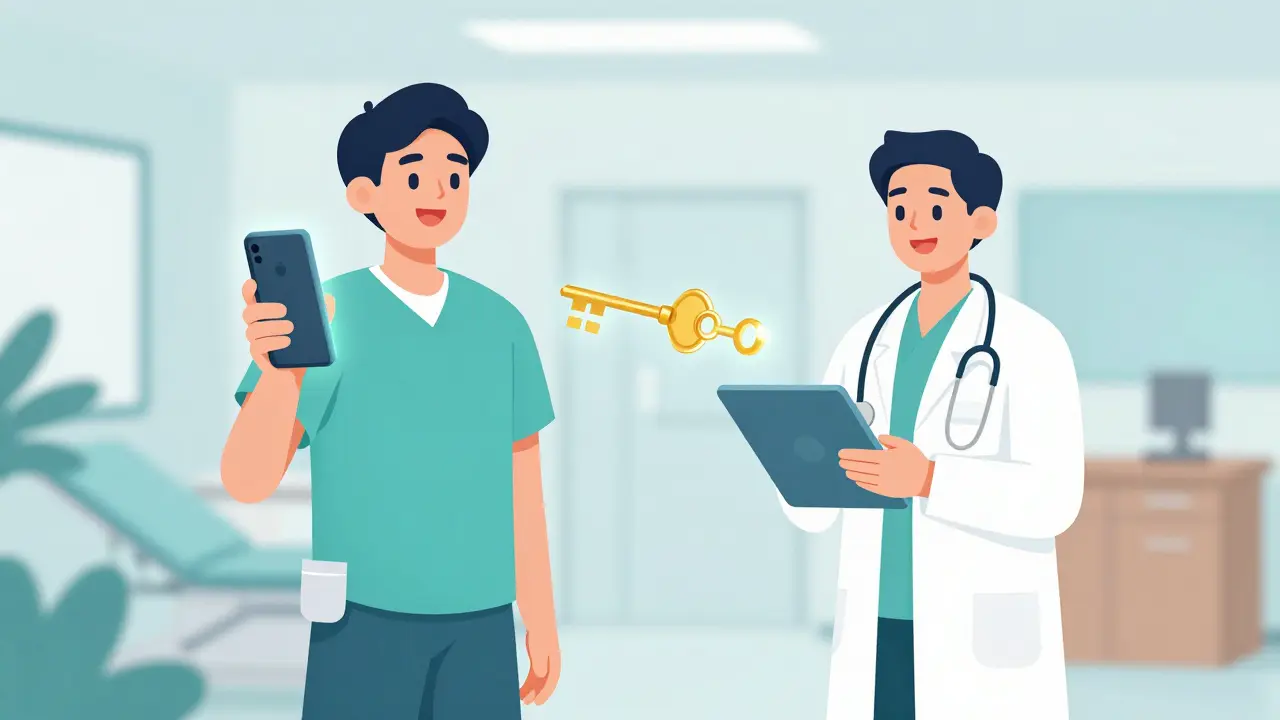
For decades, hospitals have acted as the gatekeepers of your medical history. If you wanted your records, you had to jump through hoops. That's changing with the rise of self-sovereign identities. Imagine having a digital health wallet on your phone. Instead of a hospital owning your record, you own it, and you simply grant the doctor a temporary "key" to view your history during an appointment.
This isn't just a dream. Institutions like the Mayo Clinic have already piloted decentralized data initiatives. By using Decentralized Identifiers (or DIDs), patients can now manage specific permissions. You could, for example, let a nutritionist see your glucose levels but keep your mental health records private. Every time someone accesses your data, it's logged on an immutable ledger, meaning there's a permanent, unchangeable audit trail of who saw what and when.
Fixing the Pharmaceutical Supply Chain
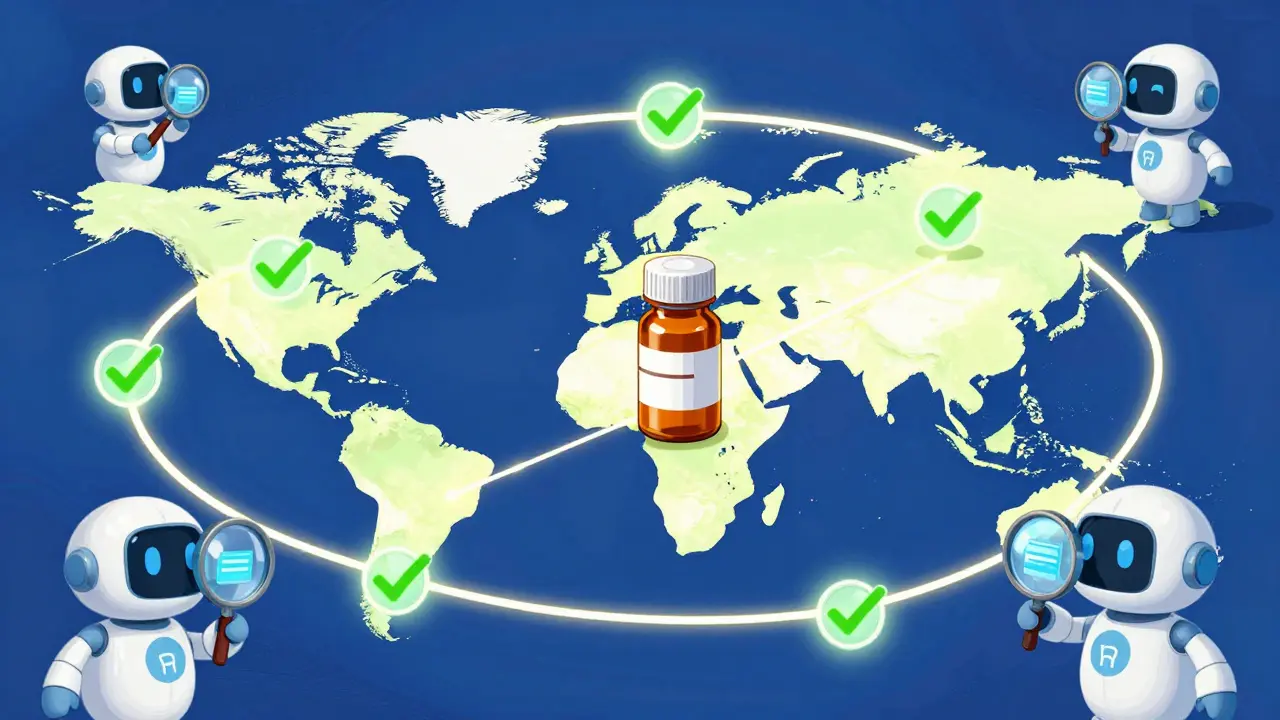
Counterfeit drugs are a silent killer, and traditional supply chains are often full of blind spots. When a medication moves from a factory in India to a pharmacy in New Zealand, it passes through dozens of hands. Blockchain creates a transparent, end-to-end map of that journey. Because every hand-off is recorded on a distributed ledger, it's nearly impossible to sneak fake meds into the system without it being noticed immediately.
When you pair this with AI, it gets even smarter. AI algorithms can now look at the blockchain data to predict where shortages might happen or flag a shipment that's taking a weirdly long route, which could indicate a temperature excursion or a theft. It turns a passive record of "where the drug is" into an active system of "how to keep the drug safe."
| Feature | Legacy Systems | Blockchain-AI Systems |
|---|---|---|
| Data Ownership | Hospital/Clinic owned | Patient-owned (Self-Sovereign) |
| Interoperability | Fragmented silos | Unified, interoperable networks |
| Security | Centralized (Single point of failure) | Decentralized (Tamper-resistant) |
| Payment Speed | Slow insurance claims cycles | Instant via Smart Contracts |
| Credentialing | Manual, region-specific verification | Global Verifiable Credentials |
The Convergence of IoMT and Real-Time Care
We're moving away from "episodic care"-the idea that you only see a doctor when something is already wrong. With the Internet of Medical Things (IoMT), we have wearables and implants constantly streaming data. But how does a doctor trust a heart rate reading from a watch? That's where blockchain comes in.
By anchoring IoMT data to a blockchain, we guarantee the integrity of the stream. Companies like Philips Healthcare are leveraging this to move toward continuous monitoring. If a device flags a critical event, the data is verified on-chain, triggering an immediate response. This reduces hospital readmissions because clinicians can trust the remote data enough to intervene before a patient ends up in the ER.
Cutting the Red Tape with Smart Contracts
If you've ever dealt with health insurance, you know it's a nightmare of paperwork and delays. Smart Contracts are essentially self-executing agreements where the terms are written into code. In a blockchain-powered system, as soon as a doctor logs a completed procedure and the patient's insurance verifies the coverage, the payment can be triggered automatically.
This eliminates the "billing department" lag and reduces administrative overhead. We're also seeing the use of programmable stablecoins for cross-border payments. If a patient in New Zealand receives specialized remote consulting from a doctor in Germany, the payment happens instantly without the usual three-day bank delay and heavy currency conversion fees.
A New Era for Research: Decentralized Science (DeSci)
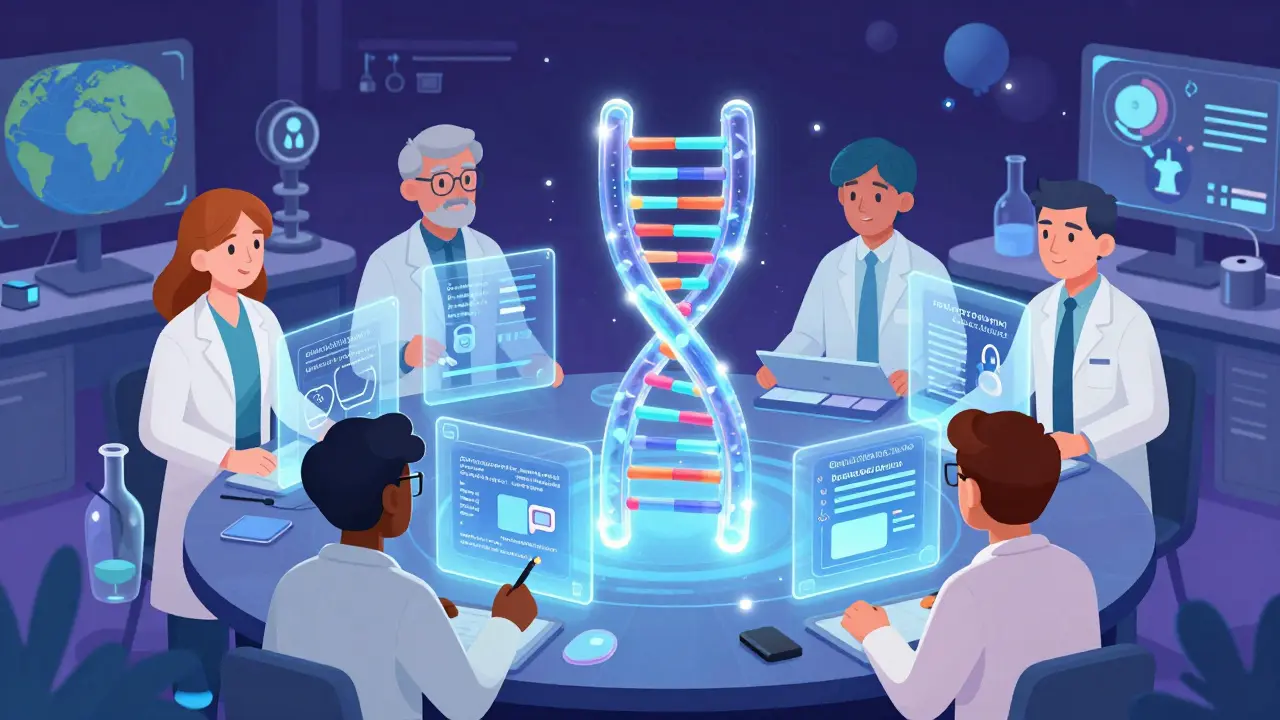
Medical research has long been plagued by the "reproducibility crisis" and skewed funding. Decentralized Science, or DeSci, is trying to fix this. By using blockchain, researchers can share their raw data and methodology in a way that is transparent and immutable. Other scientists can verify the results without worrying that the data was "massaged" to fit a specific outcome.
DeSci also introduces new funding models. Instead of relying solely on government grants or big pharma, researchers can use tokenized funding mechanisms to get support directly from communities interested in a specific cure. It democratizes science and speeds up the transition from the lab to the patient's bedside.
Tackling the Hard Truths: Challenges in 2026
It's not all smooth sailing. The biggest hurdle is the "legacy inertia." Many hospitals are still running on software from the early 2000s. Trying to plug a cutting-edge blockchain network into a 20-year-old server is a technical nightmare. There's also the issue of regulatory fragmentation. A system that satisfies GDPR in Europe might not automatically comply with HIPAA in the US.
Then there's the looming threat of quantum computing. Current encryption could be cracked by a quantum computer in the future. To fight this, the industry is shifting toward post-quantum cryptography to ensure that a medical record secured today doesn't become an open book in ten years. The rollout has to be disciplined; if a system fails or leaks data due to a rushed implementation, it could destroy patient trust for a generation.
Does blockchain replace electronic health records (EHRs)?
No, it doesn't replace the record itself, but rather the way the record is managed and accessed. Instead of a single hospital owning the EHR, blockchain acts as the indexing and permission layer that allows different EHR systems to talk to each other securely while giving the patient control over the access keys.
Is blockchain-based healthcare actually secure?
It is generally more secure than centralized databases because it eliminates the "single point of failure." In a traditional system, one successful hack of a central server exposes millions of records. In a decentralized system, an attacker would have to compromise a majority of the network nodes simultaneously, which is computationally nearly impossible with current tech.
How does AI help blockchain in medicine?
Blockchain provides the "truth" (verified, untampered data), and AI provides the "insight." AI can scan thousands of verified blockchain records to find patterns for a rare disease or predict a supply chain break, knowing that the data it's analyzing is accurate and hasn't been forged.
Will this make healthcare more expensive?
Initially, the setup costs for hospitals are high. However, the long-term goal is to lower costs by removing administrative middlemen, reducing redundant tests (since records are easily shared), and preventing expensive counterfeit drug errors.
What is the role of stablecoins in this system?
Programmable stablecoins allow for instant, low-cost payments between healthcare providers, insurers, and patients, especially across international borders. They avoid the volatility of Bitcoin and the slowness of traditional bank transfers.


21 Comments
Solid breakdown. Implementing a decentralized identity layer is definitely the way to go for patient autonomy.
idk why ppl think this actually works... like just imagine losing ur private key and boom, ur medical history is gone forever lol. totaly impractical for old ppl who cant even use a ipad.
That point about the supply chain is really interesting. It would be such a relief for patients to know their meds are legit. :)
The discourse surrounding the synergistic integration of heuristic AI and immutable ledgers is fundamentally reductive. One must acknowledge the systemic latency inherent in Byzantine Fault Tolerance when scaled to a global healthcare infrastructure, not to mention the asymptotic complexity of post-quantum cryptographic migration. It is an exercise in futility to propose such a paradigm shift without addressing the ontological gap between centralized institutional trust and algorithmic verification. The sheer audacity to suggest that 'smart contracts' can bypass the bureaucratic inertia of the insurance industrial complex without a total socio-economic reconfiguration is laughable at best. We are merely swapping one set of gatekeepers for another, albeit a more opaque, silicon-based variety that lacks the nuanced empathy required for clinical triage. The technical specifications mentioned are mere window dressing for a fragile ecosystem that will inevitably succumb to a black swan event in the network's consensus mechanism. Truly, a naive interpretation of distributed systems.
Classic tech-bro solution. Just put it on a blockchain and suddenly everything is fixed, right? It's just a fancy way to pretend we're solving a human problem with a database.
i think its cool how it helps patients own there stuff. makes sense to me.
WAKE UP!!! You think the government wants you to OWN your data??!! This is just another way for them to TRACK us via the "blockchain"... total surveillance state move!!! They'll just use the AI to predict who to lock up next!!! ABSOLUTE MADNESS!!!!
While the author's premise is sound, there is a slight oversight regarding the latency of sharding in large-scale networks. However, the implementation of DIDs is a masterstroke for privacy. I've seen similar models in fintech and they are incredibly robust, though the interoperability with legacy HL7 standards will be the real bottleneck here.
Let's focus on the positive here! Getting rid of those insurance delays would be a huge win for everyone. Let's make it happen! :D
I agree that patient control is a priority, but we must ensure that the transition is handled with a high degree of sensitivity to existing data laws.
I just want to say that I am so incredibly proud of everyone who is working toward this vision because the idea of a patient finally having the agency to decide who sees their most intimate health struggles is just so empowering. It's not just about the tech, but about the dignity of the human person being restored in a system that often feels cold and mechanical. If we can just support each other through the learning curve of using digital wallets and keep encouraging the older generation to embrace these changes, I truly believe we are on the cusp of a healthcare revolution that will save countless lives. Let's keep pushing for this transparency and kindness in the way we handle medical data, because when we prioritize the person over the paperwork, that's when the real healing begins for all of us across the globe.
Utter rubbish. This is just American-style hype for tech that doesn't work. Our NHS is struggling because of management, not because we don't have a 'digital wallet'. Waste of time.
Pretty chill idea. I'm down for whatever makes the doctor's office less of a headache.
Only in America do we need this much tech to fix a basic system 🙄 Just use common sense! 🇺🇸💪
I love how this integrates the IoMT side of things! 🚀 It's all about creating a more inclusive way to monitor health remotely. Great stuff! 😊
The supply chain part sounds nice on paper, but we all know the 'trusted nodes' are just controlled by the same big pharma companies they're supposed to be monitoring. It's a closed loop designed to keep us in the dark.
omg imagine the drama when a doctor accidentally sees a private record they weren't supposed to lol
Such an optimistic look at the future! Can't wait to see these wallets in use.
It's a great start. I think the biggest thing will be the mental shift for the providers, but if we coach them through it, the efficiency gains will be massive for everyone involved.
Oh sure, because nothing says "efficiency" like adding a layer of blockchain to a system that's already crashing. I'm sure the 'smart contracts' will be just great when the network congestion hits a peak. Pure genius!
As long as the tech is developed here in the US and not outsourced, I'm for it. Keep the medical data on American soil.