- 14 Jun 2026
- Elara Crowthorne
- 0
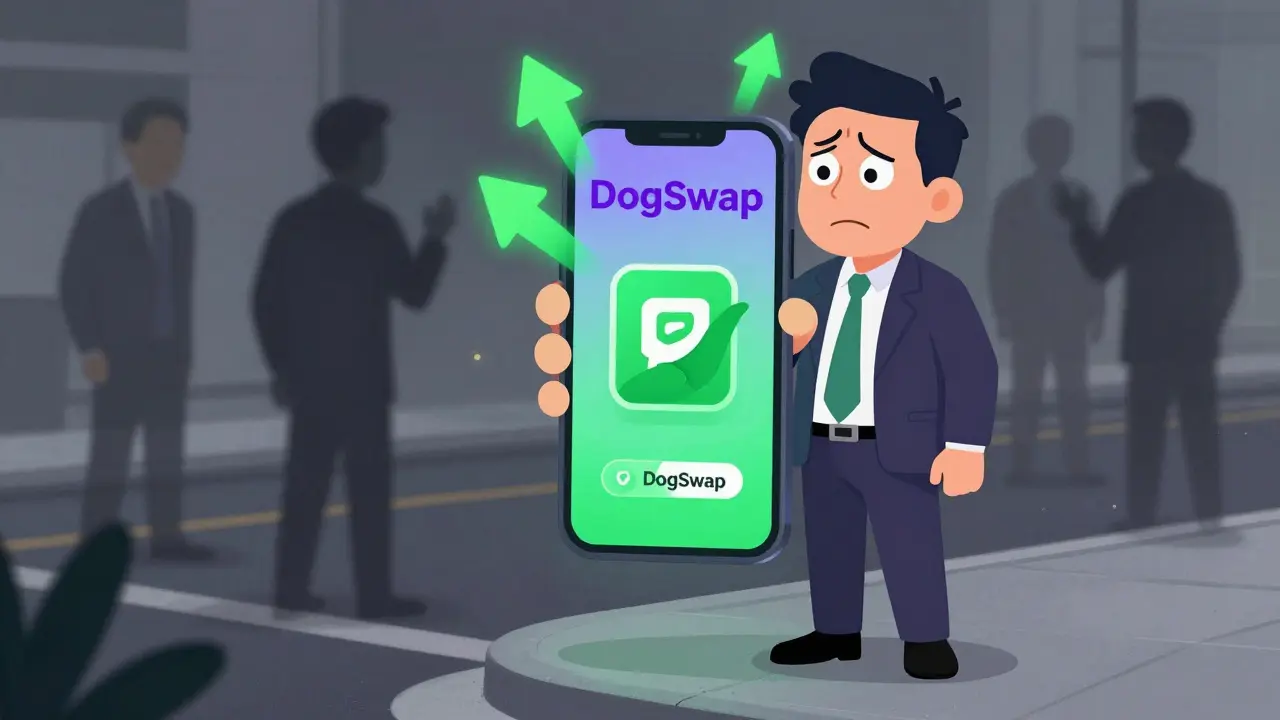
You’ve seen the ads. Maybe it was a flashy video on social media promising insane returns from DogSwap, or perhaps a friend mentioned this new platform where you can trade dog-themed tokens with zero fees. The name sounds familiar-like Dogecoin or Shiba Inu-but is it actually a legitimate place to put your money? Here is the hard truth that most promotional articles won’t tell you: as of mid-2026, there is no major, reputable centralized cryptocurrency exchange operating under the exact brand name "DogSwap" that appears in any credible financial ranking.
If you are looking for a safe, regulated spot to buy Bitcoin or Ethereum, DogSwap is likely not it. If you are hunting for high-risk, high-reward meme coins on a decentralized network, you might be looking at a small, unverified clone. This distinction matters because one path leads to standard banking protections, while the other can lead to losing everything if the code has a bug or the developers decide to vanish. Let’s break down exactly what DogSwap is, why it’s missing from every major review list, and how to check if the specific version you found is safe to use.
What Exactly Is DogSwap?
The first problem with reviewing DogSwap is identity. In the crypto world, names are cheap. Anyone can register a domain like `dogswap.finance` or `dogswap.io`. Unlike traditional banks or established exchanges like Coinbase or Binance, which have strict legal requirements to operate, decentralized platforms can launch overnight. Based on current market data, DogSwap does not appear in the top 100 decentralized exchanges by volume, nor does it hold licenses in the US, EU, or Asia.
This suggests one of two things. First, it could be a tiny, niche project focused entirely on meme coins, possibly running on a blockchain like Binance Smart Chain (BSC) or Polygon. These projects often copy the code from bigger players like Uniswap or PancakeSwap but change the logo to a dog. Second, it could be a defunct project-a "ghost chain" where the website still loads, but the liquidity (the actual money in the pools) has been drained. Without a clear, verifiable contract address and a history of audits, calling it a "crypto exchange" is generous. It is more accurately described as an experimental Automated Market Maker (AMM) with unknown risks.
Why You Won’t Find DogSwap in Major Reviews
I checked the usual suspects. I looked at the 2026 guides from major personal finance outlets, the editor’s choice lists from global business publications, and even software review aggregators like G2. Guess what? DogSwap isn’t there. Not once. This absence is a massive red flag for anyone seeking safety. Reputable exchanges spend millions on compliance, customer support, and security audits to get listed in these guides. Their absence means DogSwap has neither the user base nor the regulatory standing to be considered a mainstream option.
| Feature | Top-Tier CEX (e.g., Coinbase) | Niche DEX (e.g., DogSwap Clone) |
|---|---|---|
| Regulation | Licensed in multiple jurisdictions | None / Anonymous team |
| Funds Custody | Exchange holds your keys | You hold your keys (Self-custody) |
| Audits | Regular third-party security audits | Rarely audited or unaudited |
| Liquidity | Billions in daily volume | Low; high slippage risk |
| Recovery Options | Customer support may help | No recovery if you make a mistake |
When a platform doesn’t show up in these databases, it implies zero enterprise adoption and zero structured user reviews. You aren’t just missing out on a rating; you’re missing out on the basic proof that other people are using it safely. For a retail investor, this uncertainty is the biggest cost.
How DogSwap Likely Works (The Tech Side)
If you do find a working DogSwap interface, it probably functions as a Decentralized Exchange (DEX). This means there is no company behind the scenes matching buyers and sellers. Instead, you trade against a pool of funds provided by other users. This model uses smart contracts-self-executing code on the blockchain-to handle the swap. Typically, these clones use the "constant product formula" ($x \cdot y = k$), similar to early versions of Uniswap.
To use it, you wouldn’t create an account with an email and password. Instead, you’d connect a digital wallet like MetaMask, Trust Wallet, or Rabby. You pay transaction fees (gas) in the native token of the blockchain it runs on (like BNB for Binance Smart Chain or ETH for Ethereum). While this sounds efficient, it introduces technical hurdles. If you don’t understand concepts like slippage tolerance or token approvals, you can accidentally send your funds into a black hole. There is no "undo" button in crypto.
Security Risks: What Could Go Wrong?
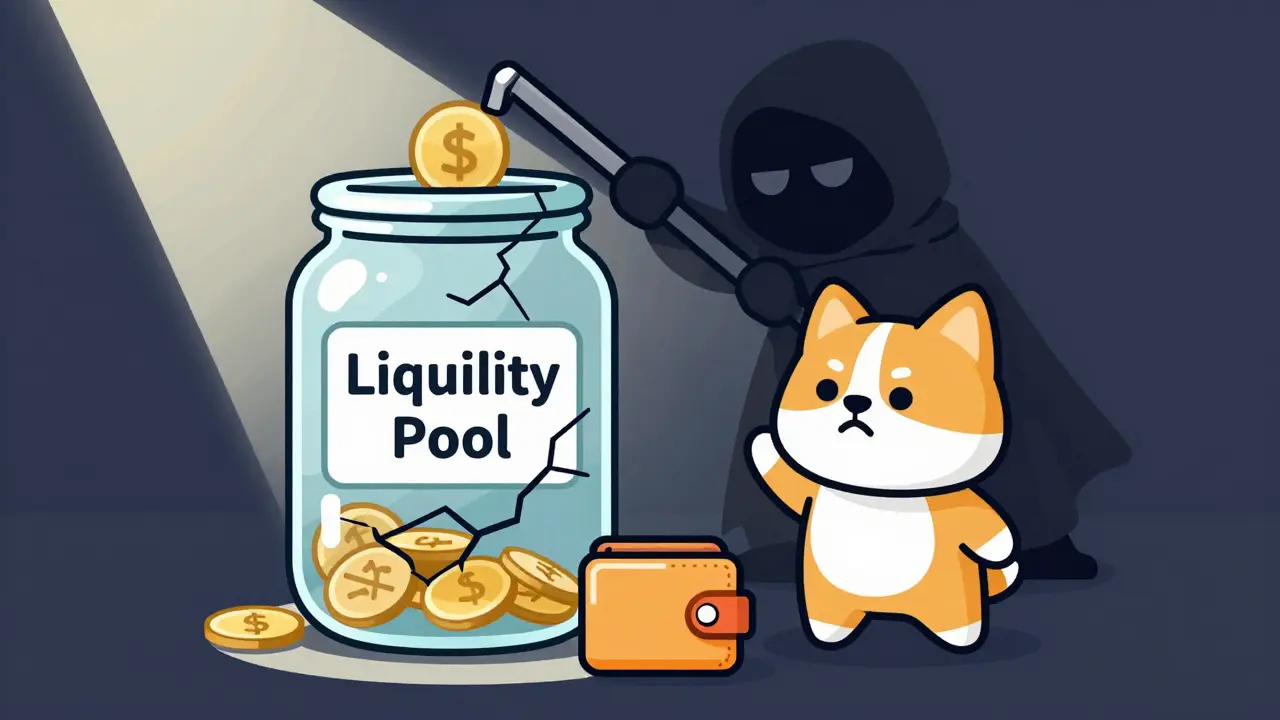
Let’s talk about the scary stuff. Because DogSwap is likely a fork of existing code, its security depends entirely on whether the developers changed anything critical. In the past, we’ve seen countless "fork" projects fail due to simple coding errors. For example, in 2021, Uranium Finance lost $50 million because of a bug in their fee logic. Many smaller DEXes suffer from "rug pulls," where the creators withdraw all the liquidity, leaving traders with worthless tokens.
Before you connect your wallet to any site claiming to be DogSwap, you need to perform three checks:
- Check the Contract Address: Never trust the link in an ad. Go to a trusted block explorer (like Etherscan or BscScan) and verify the official contract addresses published by the project’s verified social channels. Look for a "Verified Source Code" badge.
- Look for Audits: Has a reputable firm like CertiK, Trail of Bits, or Quantstamp audited this specific code? If the answer is no, or if the audit is from an unknown company, assume the code is vulnerable.
- Inspect Admin Privileges: Use tools like De.Fi Scanner to see if the developers have "owner" privileges that allow them to pause trading, blacklist your address, or mint infinite tokens. If they can pull the rug, they will eventually.
The lack of public incident reports for DogSwap cuts both ways. It hasn’t been hacked yet, but it also hasn’t been tested by the harsh reality of large-scale attacks. Silence is not safety; it’s often invisibility.
Fees and Trading Costs
On paper, DEXes often boast low fees. A typical swap fee on a Uniswap-style fork is around 0.30%. However, this number is misleading. On a platform with low liquidity like DogSwap, the real cost comes from slippage. Slippage happens when your trade is so large relative to the pool size that you get a worse price than expected. If you try to swap $1,000 worth of tokens on a pool that only has $5,000 in total value, you might lose 5% to 10% of your value instantly to the market impact.
Additionally, you must pay gas fees. During busy times on networks like Ethereum, gas fees can exceed $50 per transaction. If DogSwap operates on a cheaper chain like BSC or Polygon, gas might be pennies, but the liquidity is usually thinner, increasing slippage. Always calculate the total cost: Swap Fee + Gas Fee + Slippage. Often, the hidden slippage makes niche DEXes far more expensive than big centralized exchanges for anything other than micro-trades.
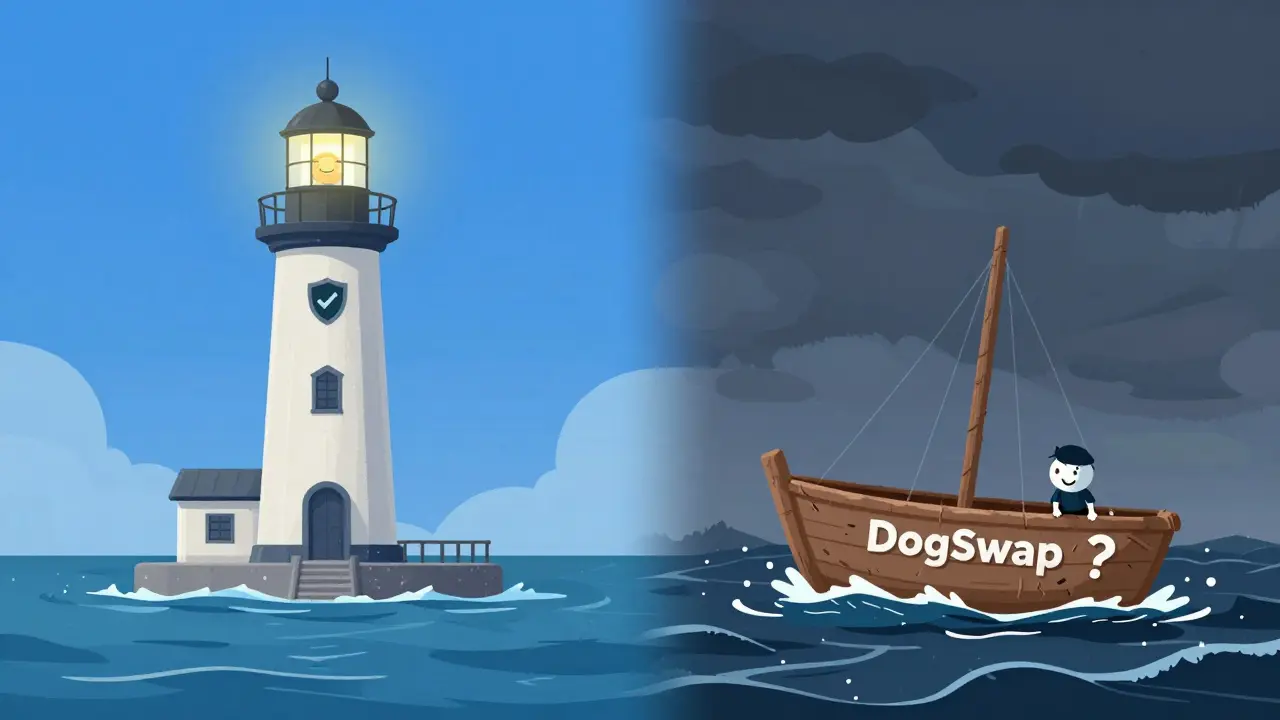
Who Should Actually Use DogSwap?
For the average person wanting to invest in crypto, DogSwap is not recommended. The risks outweigh the benefits. You should stick to established, regulated exchanges that offer insurance on custodial assets and have proven track records. However, there is a specific group of users who might interact with platforms like this: advanced degens and meme-coin hunters.
If you are an experienced trader looking for brand-new, unlisted meme tokens before they hit major exchanges, you might use a niche DEX. But even then, you should treat it as gambling, not investing. Limit your exposure to amounts you can afford to lose completely. Use a separate "burner" wallet with minimal funds, never your main savings wallet. Assume that any interaction with an unaudited smart contract carries a non-zero chance of total loss.
Better Alternatives for 2026
If your goal is to trade safely, look elsewhere. For beginners, centralized exchanges like Coinbase, Kraken, or Binance offer fiat on-ramps, customer support, and regulatory oversight. If you want the decentralization and privacy of a DEX without the extreme risk of a clone, stick to the giants. Uniswap, SushiSwap, and PancakeSwap have billions in locked value, rigorous audits, and active governance communities. They are boring, yes, but in crypto, boring means secure.
Don’t let the cute branding fool you. In the financial world, familiarity breeds comfort, but verification breeds safety. DogSwap lacks the verification needed to earn your trust. Until it publishes transparent audits, reveals its team, and builds significant, deep liquidity, it remains a speculative experiment rather than a reliable exchange.
Is DogSwap a scam?
While there is no definitive proof that DogSwap is a coordinated scam, it exhibits many characteristics of high-risk, unaudited projects. The lack of regulatory licensing, absence from major review sites, and potential anonymity of its developers make it unsafe for mainstream investors. Treat it as potentially fraudulent until proven otherwise through independent audits.
Can I recover my funds if DogSwap fails?
No. If DogSwap is a decentralized exchange (DEX), you control your own funds via your wallet. If you interact with a malicious smart contract, your funds are gone forever. There is no customer support, no insurance, and no chargeback process in decentralized crypto protocols.
What is the difference between DogSwap and Dogecoin?
Dogecoin is a standalone cryptocurrency created in 2013. DogSwap is likely a trading platform (exchange) that may allow you to trade various tokens, including dog-themed ones. They are completely different entities. Dogecoin is widely accepted and traded on major exchanges; DogSwap is a niche, unverified platform.
Is it safe to connect my MetaMask to DogSwap?
Only if you have verified the contract addresses and used a burner wallet. Connecting your primary wallet to an unaudited site exposes you to phishing risks and potential smart contract exploits. Never approve unlimited spending limits for unknown tokens.
Why isn't DogSwap listed on CoinMarketCap or CoinGecko?
Major tracking platforms require strict criteria for listing, including transparency, liquidity depth, and community verification. DogSwap’s absence suggests it does not meet these standards, indicating very low trading volume or a lack of legitimacy.