
- 14 Mar 2026
- Elara Crowthorne
- 22
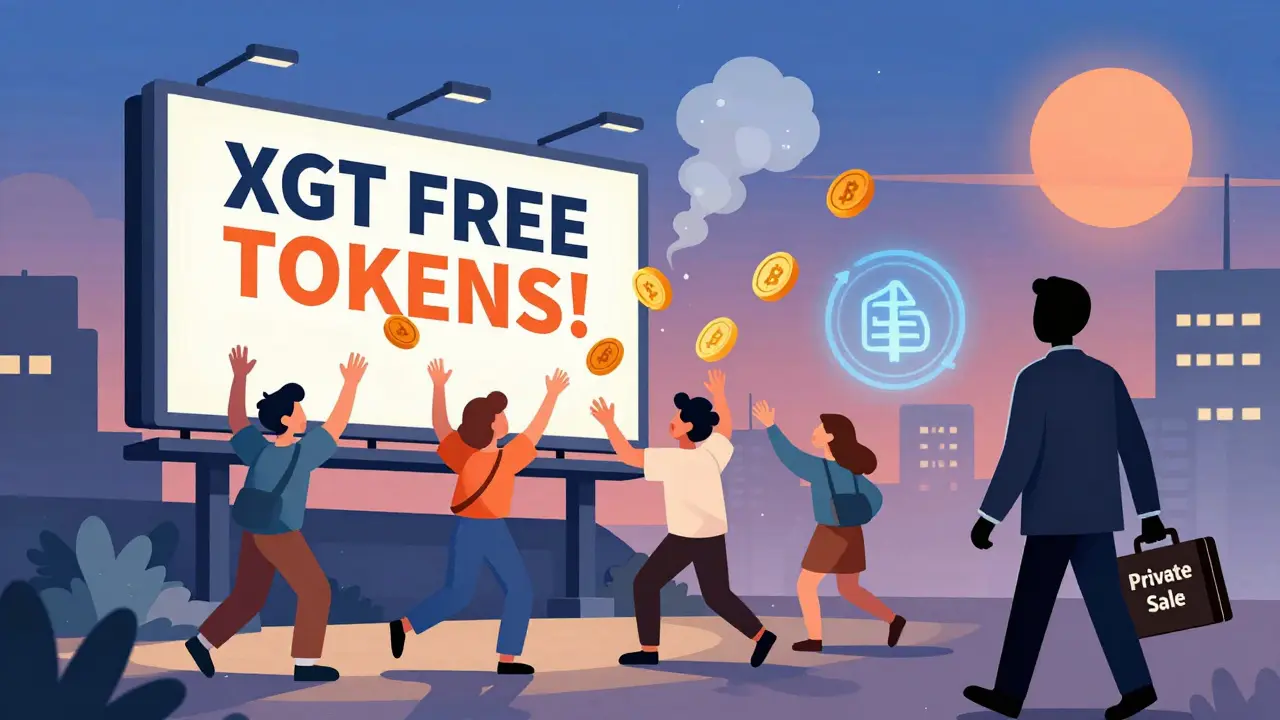
The XGT airdrop by Xion Finance was never what it seemed. If you're reading this because you think you missed out on free tokens, you're not alone. Many people assumed Xion Finance launched a community-driven airdrop like other DeFi projects in 2021. But the truth? XGT didn't distribute a single token through any public airdrop.
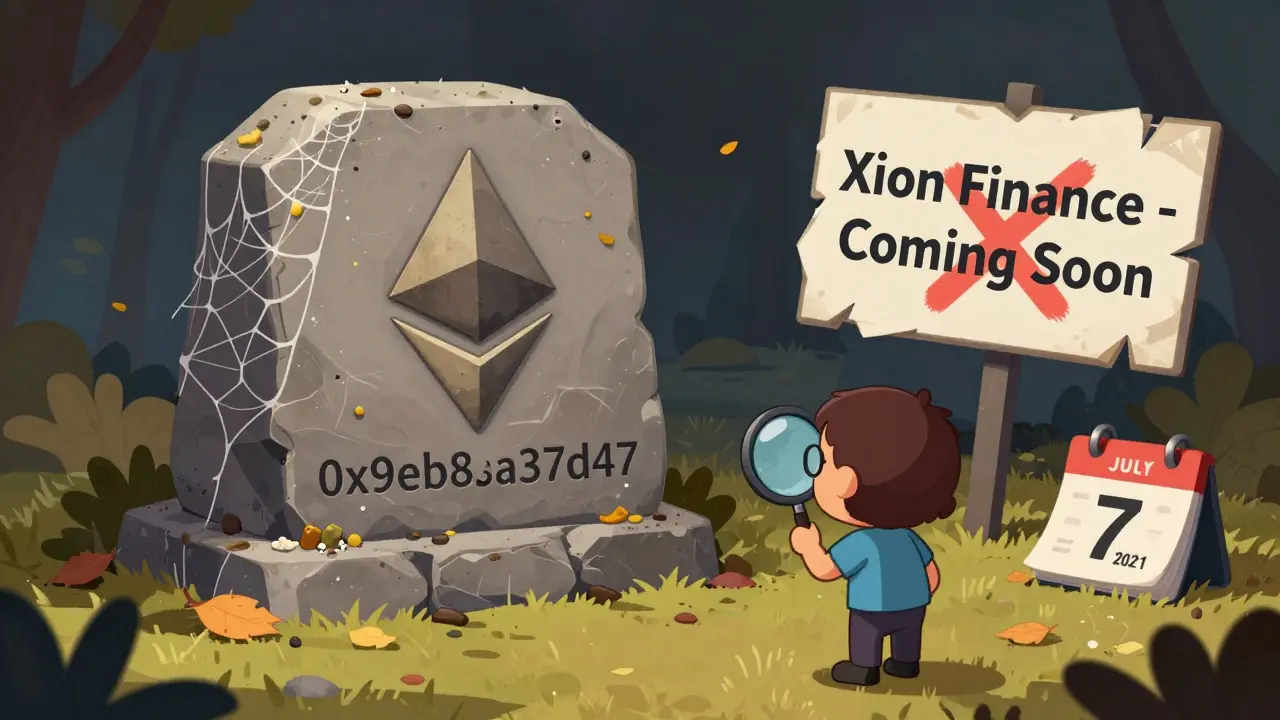
Back in July 2021, Xion Finance announced a two-phase token release: 50% of XGT tokens on July 7, followed by 25% on July 14. Both dates were listed on TrustPad, a platform that tracks token launches. The numbers looked promising - millions of tokens ready to be handed out. But when you check the actual blockchain records, the numbers don't add up. Zero XGT was sent to any public wallet. Not one. Not even a test transaction.
This isn't just a glitch. It's a pattern. Xion Finance positioned itself as a one-click DeFi platform for merchants, claiming to support over one million businesses in crypto payments. Yet, the token distribution tells a different story. Only 0.84% of the total 1 billion XGT supply went to private investors. Another 0.06% went to public IDO buyers. That’s 8.4 million tokens for private rounds and just 630,000 for the public sale. No community rewards. No loyalty bonuses. No airdrop for early users or testers.
The math doesn’t support the marketing. If you were one of the lucky few who bought XGT during the IDO on July 7, 2021, you paid $0.18 per token. Today, the price is effectively zero. The token never made it onto major exchanges like Binance, Coinbase, or Kraken. No liquidity pools were meaningfully seeded. No DEX listings followed. The contract address - 0x9eb8...a37d47 - still exists on Ethereum, but it’s inactive. No new transfers. No swaps. No interactions.
So why does this matter? Because Xion Finance didn’t build a token economy - it built a fundraising vehicle. The seed round raised $500,000 at $0.08 per token. The private round brought in $301,000 at $0.14. These investors saw returns of over 100% and 18% respectively. But the public participants? They lost 8%. That’s not a community launch. That’s a private sale wrapped in DeFi branding.
The technical specs sound impressive. XGT is an ERC-20 token. It’s designed to work across EVM chains. It’s supposed to bridge payments between blockchains. But without real usage, those features are just code on a whitepaper. No merchant has publicly confirmed integrating XGT. No payment gateway shows XGT as a supported currency. No wallet app lists it as a functional asset. The claim of supporting one million merchants? No evidence. No case studies. No partners named.
Compare this to real DeFi airdrops. Uniswap gave away 400 million UNI tokens to early users. Compound distributed 2.5 million COMP to liquidity providers. Even obscure projects like SushiSwap had active community participation. But Xion Finance? No forum threads. No Reddit discussions. No Twitter updates since 2021. No GitHub commits. No Discord activity. The project vanished after the IDO.
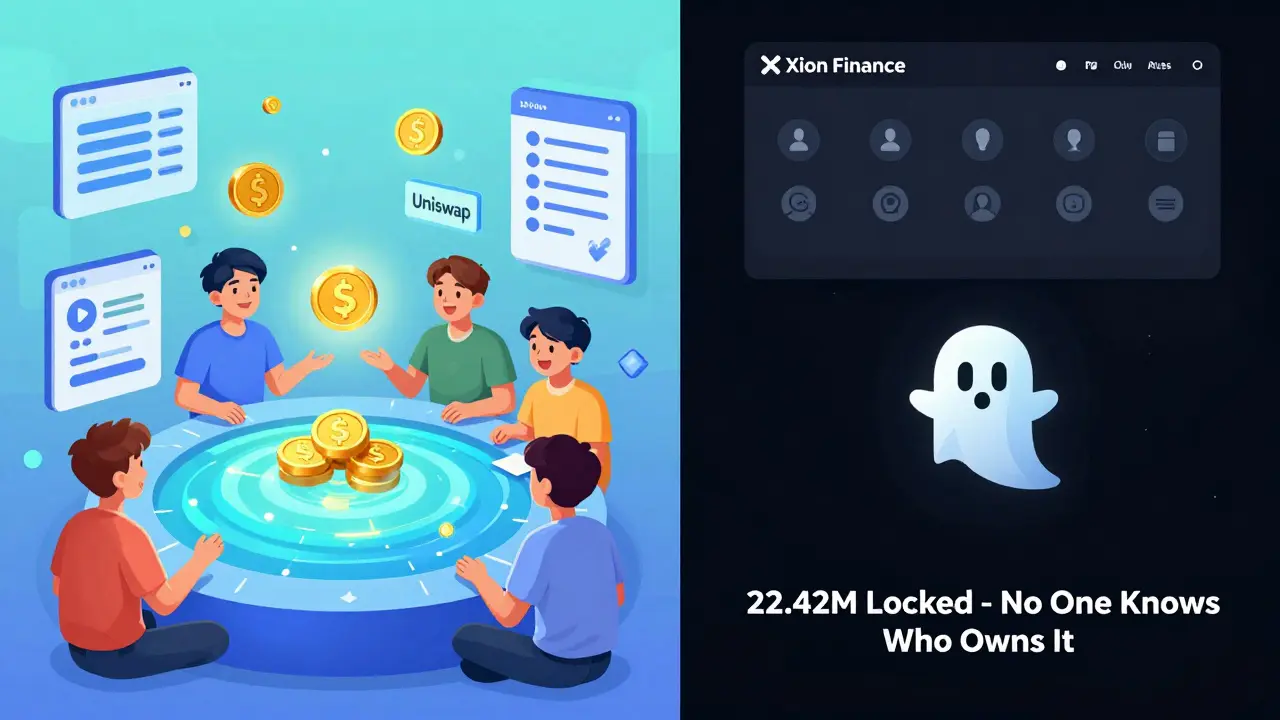
Today, the circulating supply of XGT is listed as 22.42 million tokens - just 2.24% of the total supply. But here’s the catch: most of that supply is locked in private wallets. There’s no public record of who holds it. No token transfers since 2021. No trading volume. The token is effectively dead. If you’re looking for a way to claim XGT, you can’t. There’s no portal. No form. No instructions. The airdrop never happened.
So what should you take from this? First, don’t trust announcements that only appear on project websites and token launch platforms. Always check the blockchain. Look for actual transfers. Check wallet activity. If a project doesn’t show real usage - even months after launch - it’s likely abandoned.
Second, understand that not all airdrops are created equal. Some are genuine community rewards. Others are marketing stunts designed to attract buyers before the team exits. Xion Finance falls into the second category. The token was never meant to be used. It was meant to be sold.
If you’re still interested in DeFi payment tokens, look at projects with live usage. Look at ones that list real merchants. Look at ones that update their roadmaps. Look at ones with active developers. XGT doesn’t meet any of those criteria. It’s a relic. A ghost token. A lesson in how not to launch a crypto project.
What happened to the XGT token after the IDO?
After the July 2021 IDO, XGT went silent. There were no press releases. No Twitter threads. No Telegram updates. The official website remained static. The GitHub repository showed no activity after the launch. The token’s contract on Ethereum hasn’t processed a single transaction since late 2021.
The 22.42 million XGT in circulation is mostly held in wallets tied to the private sale. There’s no public list of holders. No wallet tracker shows movement. The token’s market cap, if calculated, would be less than $100,000 - barely enough to cover the gas fees for a single swap on Uniswap.
Some early buyers tried to sell their XGT on decentralized exchanges. But without liquidity, the price dropped to near zero. No market maker stepped in. No liquidity pool was created. The token became untradeable.
Was there ever a real airdrop campaign?
No. There was never a public airdrop. The dates listed on TrustPad - July 7 and July 14, 2021 - were placeholders. No tokens were distributed. No wallets were claimed. No users received XGT.
Projects that run real airdrops always have: a registration page, a verification step, a blockchain confirmation, and a public list of recipients. Xion Finance had none of these. No sign-up form. No eligibility criteria. No claim window. No announcement after the fact.
Even if you were an early user of the Xion Finance platform, you wouldn’t have qualified. There was no product to use. No wallet to connect. No staking, no farming, no liquidity provision. The platform itself was never fully launched.
Why didn’t XGT list on major exchanges?
Exchanges like Binance and Coinbase require projects to meet strict criteria: active development, transparent team, real usage, and liquidity. Xion Finance met none of these. The team never disclosed identities. No audit reports were published. No partnerships were announced. The token had no utility beyond speculation.
Without exchange listings, XGT couldn’t gain traction. Without liquidity, traders couldn’t move it. Without users, the project lost all credibility.
Can you still claim XGT tokens today?
No. There is no active claim process. No official website still accepts claims. No smart contract allows users to mint or receive XGT. The airdrop never happened, and there’s no mechanism left to claim anything.
Any website or social media post claiming you can still claim XGT is a scam. They’ll ask for your private key or a small fee. Neither is legitimate. The token is dead. The project is gone.
Is Xion Finance still operating?
Based on all available public data, Xion Finance is no longer active. The last update was in 2021. The domain is inactive. The social media accounts are silent. The team has disappeared.
There’s no evidence of ongoing development, customer support, or merchant onboarding. The platform’s claimed one million merchants? No names, no logos, no case studies. Just a number with no proof.
Was there ever a real XGT airdrop?
No. Despite scheduled dates listed on TrustPad, zero XGT tokens were distributed to any public wallet. The airdrop was never executed. The data you see online is either placeholder information or misinformation.
Can I still claim XGT tokens today?
No. There is no active claim portal, smart contract, or official process to receive XGT. Any site asking you to connect your wallet or pay a fee to claim tokens is a scam.
Why did Xion Finance fail?
Xion Finance failed because it never delivered a working product. The token had no real utility, no merchant adoption, no liquidity, and no community. The team raised funds through private and public sales, then vanished. The project was a fundraising effort, not a DeFi platform.
Is XGT listed on Binance or other major exchanges?
No. XGT is not listed on Binance, Coinbase, Kraken, or any major centralized exchange. It was never approved due to lack of transparency, liquidity, and usage.
What happened to the Xion Finance team?
The team disappeared after the 2021 IDO. No updates, no social media, no GitHub commits. Their identities were never disclosed, and they have not responded to inquiries since late 2021.
What should you learn from this?
If you’re looking at a new DeFi project, don’t just look at the hype. Look at the blockchain. Look at the wallet activity. Look at the team. Look at the real users.
XGT was a cautionary tale. It promised innovation but delivered nothing. It claimed to support merchants but never onboarded one. It announced an airdrop but never sent a single token.
The lesson? Real projects don’t need to promise free tokens. They build tools. They attract users. They update their roadmaps. They answer questions. Xion Finance did none of that. And now, it’s gone.

22 Comments
Wow, this is wild. I thought I missed out on free tokens, but turns out there never was one.
Of course there was no airdrop. This is how every crypto project starts - fake hype, private dumps, then silence. They didn’t even bother to fake the blockchain activity. Lazy.
The sheer incompetence here is breathtaking. Xion Finance didn’t just fail - they failed with zero effort. No liquidity, no audits, no team transparency, and they still had the audacity to list dates on TrustPad? This isn’t a DeFi project. It’s a phishing page with a whitepaper. The ERC-20 standard was never meant to be used as a shell for exit scams. The fact that anyone believed this was a ‘community-driven’ launch speaks volumes about the state of retail crypto literacy.
Compare this to Compound or Uniswap - even their early-stage airdrops had verifiable on-chain activity, governance participation, and developer engagement. Xion didn’t even have a GitHub commit after launch. Zero. Not one. That’s not negligence. That’s intentional obfuscation.
The 0.84% to private investors? That’s not a distribution. That’s a backdoor. The 0.06% to public IDO buyers? A bait-and-switch. They raised $800K total and left 99% of the supply locked in wallets that will never move. The token’s ‘circulating supply’ is a statistical illusion. It’s like claiming a museum exhibit is ‘in circulation’ because it’s on display - while the actual artifact is buried in a vault.
And the worst part? People still chase these ghosts. There are entire subreddits where folks trade ‘XGT recovery guides’ and ‘claim portals’ - all scams. The blockchain doesn’t lie. If there’s no transaction since 2021, it’s dead. Not ‘dormant.’ Not ‘waiting for revival.’ DEAD. Like a fossil.
Let this be the textbook case for how NOT to launch a token. No utility. No transparency. No community. Just a press release, a website, and a silent contract. The only thing this project built was a warning label.
USA needs to ban this kind of garbage. Crypto’s getting a bad name because of these frauds. They think they’re smart, but they’re just stealing from people who don’t know better. This isn’t innovation - it’s theft dressed up in blockchain jargon.
I read this whole thing and just felt… sad. Not angry. Not surprised. Just sad. Because this happens so often now, and it’s not even shocking anymore. People invest their savings into something they think is the next big thing - and then it just… vanishes. No warning. No apology. Just silence. And the worst part? The people who lose money are usually the ones who believed in the dream. Not the insiders. Not the founders. The ones who thought, ‘Hey, maybe this time it’s different.’
I don’t know how to fix it. But maybe if we stop celebrating hype and start rewarding transparency, we can change this. Not with more regulations. With better culture.
Per the whitepaper, XGT was designed as a multi-chain EVM-compatible settlement layer for merchant payment rail integration. However, the absence of on-chain activity, zero liquidity provision, and non-existent DEX pairings indicate a fundamental misalignment between stated technical architecture and operational execution. The tokenomics model, with 99.1% of supply allocated to private entities and zero community incentives, constitutes a structural incentive misalignment that precludes network effects. Ergo, the project’s failure is not circumstantial - it is systemic.
I knew it. I KNEW IT. I told my friends not to touch this. I told them! I said, ‘If they’re not showing you the wallet addresses, if they’re not linking to the blockchain explorer, if they’re not even posting a single tweet after launch - it’s a trap!’ And now here we are. The whole thing was a front. A slick website, a fake roadmap, a TrustPad listing - all just to suck in the last dumb investors before they ghosted. I’m so mad. I lost my rent money on this. And now I’m sitting here watching the price chart go sideways… forever. No one cares. No one’s coming back. It’s over. And they got away with it.
It is evident that the token distribution mechanism employed by Xion Finance was not aligned with the principles of decentralized finance. The absence of public airdrop infrastructure, coupled with the disproportionate allocation of tokens to private investors, indicates a centralized financial model masquerading as a decentralized initiative. The project’s failure to establish any measurable utility or merchant adoption further substantiates its classification as a speculative instrument rather than a functional protocol.
They didn’t even try. Zero transactions. No updates. No team. Just a website that still says ‘coming soon’ in 2024. This is why crypto is a joke. People are still falling for this. I feel bad for them.
Of course there was no airdrop. The whole thing was a pump. The team took the money, vanished, and left everyone holding a ghost token. They didn’t even fake the blockchain. That’s not incompetence - that’s arrogance. They thought we were too stupid to check. And guess what? We were. Until now.
Look - I’ve been in crypto since 2017. I’ve seen projects rise, crash, vanish, and sometimes - rarely - rebuild. Xion Finance? This is the kind of project that makes me want to quit. Not because I lost money. Because I believed. I believed in the idea of a merchant-focused DeFi tool. I believed they were building something real. And then… nothing. No updates. No transparency. Just silence. If you’re a dev reading this - don’t make this mistake. Build for users, not investors. If you’re an investor - check the chain. Not the website. Not the Twitter. The chain. Always the chain.
And if you’re a newbie who just got scammed? You’re not dumb. You were hopeful. That’s not a flaw. It’s a human trait. Don’t let this kill your curiosity. Just learn. Check the transactions. Look for the wallets. Ask: ‘Who owns this?’ Not ‘Who’s selling it?’
Interesting case study. The lack of on-chain verification and absence of community engagement clearly indicate a non-decentralized structure. The project appears to have functioned as a fundraising vehicle rather than a protocol. A lesson in due diligence.
No airdrop. No updates. No future. Just a dead token. Sad.
I’m from the U.S., but I’ve seen this exact pattern in emerging markets too. A flashy website, promises of global adoption, then silence. It’s not just crypto - it’s human nature. People want to believe in something new. But belief without verification is dangerous. Always check the blockchain. Always. Even if the website looks perfect.
Let’s be real - if a project doesn’t have a single on-chain transaction since 2021, it’s not ‘inactive.’ It’s dead. And dead projects don’t come back. They don’t ‘reboot.’ They don’t ‘relaunch.’ They just become cautionary tales. Xion Finance didn’t fail because of market conditions. They failed because they never built anything. They just wrote a press release and called it a token. The fact that anyone believed this was a ‘DeFi platform’ is the real tragedy here.
The ERC-20 standard is just code. It doesn’t mean anything without usage. Without liquidity. Without users. Without a single merchant accepting it. This isn’t innovation. It’s theater. And the audience? We were all just waiting for the curtain to fall.
And now? The contract sits there like a tombstone. No one’s visiting. No one’s mourning. Just a silent address with a million dollars’ worth of nothing.
I’m not mad. Just disappointed. I thought maybe this time, someone built something real. But no. It was all just words. I wish I’d checked the blockchain before investing. I wish I’d known better. But I didn’t. And now I know. Next time, I’ll look at the transactions first. Not the website.
Actually, I think this is normal. Most crypto projects die. This one just did it faster. The real question is - why are we still surprised?
If you’re reading this and you’re new to crypto - listen. Airdrops aren’t free money. They’re community rewards. Real ones have claim windows, verification steps, and public recipient lists. Xion Finance had none of that. The dates on TrustPad? Empty placeholders. The ‘22.42 million circulating’? Locked wallets. The ‘one million merchants’? Zero proof.
Always check the blockchain explorer. Always. Type in the contract address. Look at the transaction history. If there’s nothing after the launch - walk away. Don’t wait. Don’t hope. Don’t ‘wait for the rebound.’ It’s not coming.
And if you already lost money on this? You’re not alone. But you’re not stupid. You just trusted a pretty website. That’s not a crime. It’s a lesson. Learn it. Then move on.
There are real projects out there. Ones that update. Ones that answer questions. Ones that post GitHub commits. Find them. Don’t chase ghosts.
It’s heartbreaking how many people still don’t know how to verify on-chain activity. This isn’t a scam - it’s a symptom. A symptom of a system that rewards marketing over mechanics. We need better education. Not more regulations. More awareness.
The philosophical underpinning of this failure lies in the ontological dissonance between the rhetoric of decentralization and the actual implementation of centralized capital allocation. The token, as a symbolic artifact, was never intended for circulation - but for extraction. The blockchain, in this case, became not a ledger of value, but a monument to absence.
So they raised $800k, vanished, and left us with a dead token. Classic. I’m surprised they didn’t even bother to mint a single test transaction. I mean, come on - put on a show. At least fake it till you make it. This is just… lazy.
I lost everything on this. I believed. I thought they were different. I cried when I checked the blockchain. I’m not okay. I don’t know if I ever will be.