
- 2 Mar 2026
- Elara Crowthorne
- 25
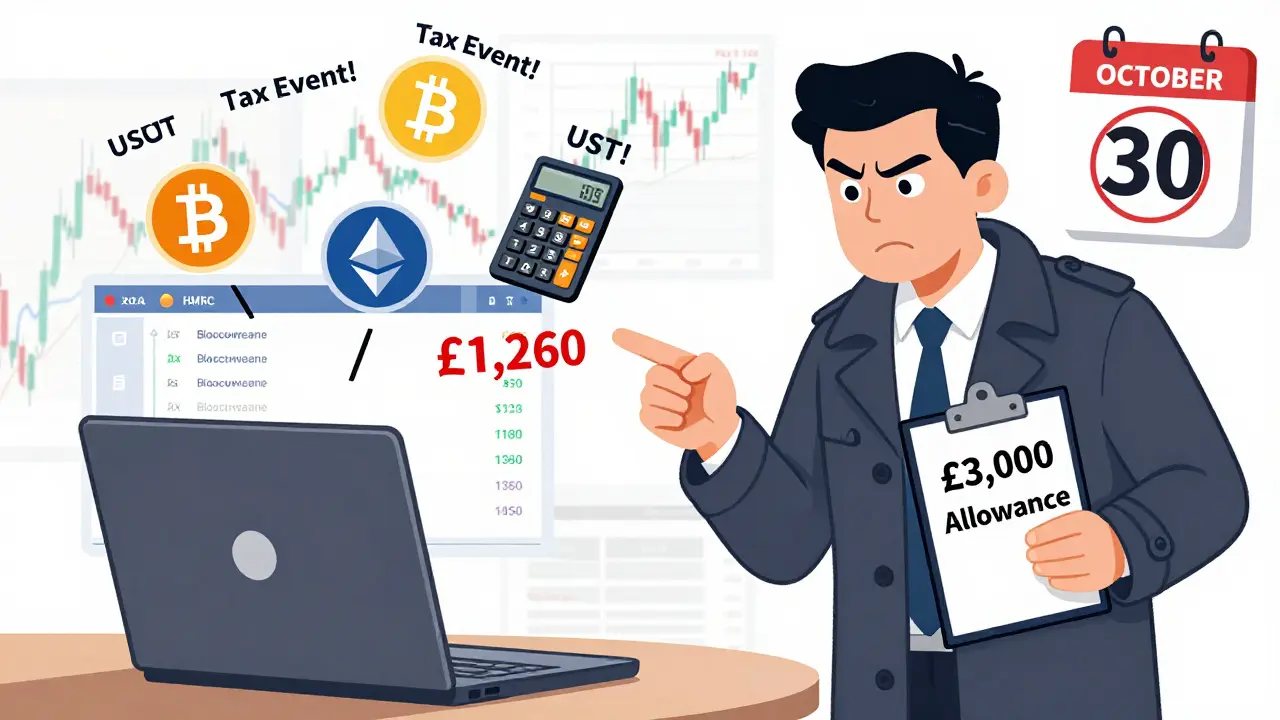
When you buy, sell, or trade cryptocurrency in the UK, you’re not just moving digital assets-you’re triggering a tax event. Since October 2024, the rules have gotten tighter, and many crypto users are caught off guard. The UK government now treats crypto like any other investment asset, and if you don’t track your trades, you could owe hundreds-or even thousands-of pounds in taxes you didn’t expect.
What Counts as a Taxable Event?
It’s not just selling crypto for pounds that triggers tax. HMRC defines a disposal as any time you:
- Sell crypto for fiat currency (GBP, USD, etc.)
- Trade one crypto for another (like BTC for ETH)
- Use crypto to buy goods or services
- Gift crypto to someone who isn’t your spouse or civil partner
Even swapping your USDT for SOL counts. That’s a disposal. And every single one of these actions is tracked by HMRC. Since January 2026, UK-based exchanges like Coinbase, Binance, and Kraken are legally required to report your transaction history directly to HMRC. If you didn’t keep your own records, they’ll send HMRC yours-and you’ll have to explain why your numbers don’t match.
Capital Gains Tax: The £3,000 Allowance
Before October 2024, you could make up to £6,000 in crypto profits each year without paying tax. Now? That’s been cut in half. For the 2024/2025 and 2025/2026 tax years, the annual exemption is £3,000. That’s it. Once your total gains exceed that, you pay Capital Gains Tax (CGT) on everything above it.
Here’s how the rates work:
- Basic-rate taxpayers (income up to £50,270): 18%
- Higher and additional-rate taxpayers (income over £50,270): 24%
These rates apply only to disposals made on or after October 30, 2024. If you sold crypto before that date, you were still under the old rates of 10% and 20%. But now? There’s no grandfathering. Every trade counts under the new rules.
Let’s say you bought 0.5 BTC for £15,000 in 2023 and sold it for £25,000 in March 2025. Your gain is £10,000. You subtract the £3,000 allowance, leaving £7,000 taxable. If you’re a basic-rate taxpayer, that’s £1,260 in CGT. If you’re a higher-rate taxpayer? £1,680.
Income Tax: Mining, Staking, and Airdrops
If you earn crypto as income, it’s taxed differently. This includes:
- Staking rewards
- Mining rewards
- Airdrops you didn’t ask for but received
- Crypto paid as salary or freelance payment
These aren’t capital gains. They’re treated as income. That means they’re added to your total earnings for the year and taxed at your normal income tax rate: 20%, 40%, or 45%, depending on how much you make overall.
Here’s the catch: the personal allowance for income tax is £12,570 for 2024/2025. If you earn £10,000 in staking rewards and your salary is £40,000, your total income is £50,000. That £10,000 in crypto gets taxed at 20% or 40%, depending on where it pushes you.
Unlike capital losses, you can’t use crypto losses to reduce your income tax. If you lose money trading, that loss only helps you offset future capital gains-not your salary or staking income.
How to Calculate Your Tax Liability
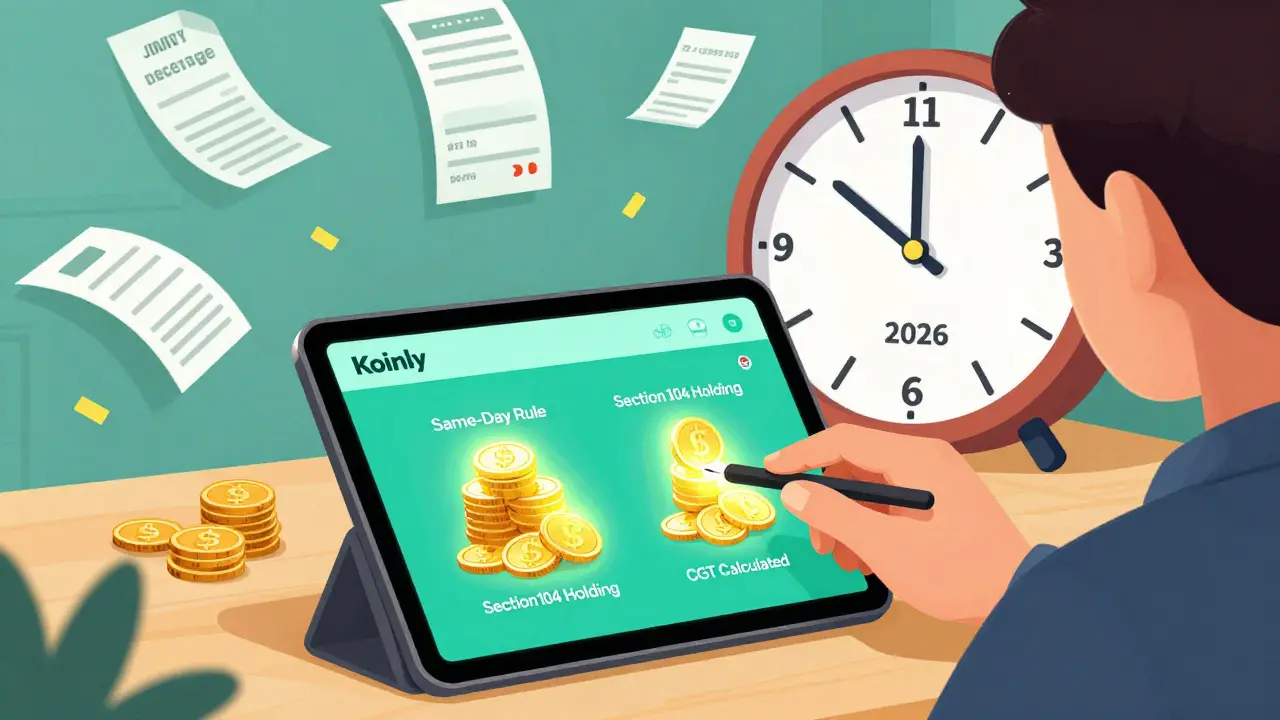
HMRC uses a specific method called the “same-day rule” and “bed and breakfasting” rules to determine your cost basis. Here’s how it works:
- First, match disposals with identical purchases on the same day.
- If no same-day matches, look at purchases within the next 30 days.
- If still no match, use the average cost of all your holdings in that asset (known as the Section 104 holding).
This sounds simple-but it’s not. Imagine you bought ETH in January, sold some in February, bought more in March, sold again in April, and then swapped ETH for SOL in May. Each trade has to be traced back to its original purchase price. If you traded 50 times last year, you’re looking at hundreds of individual calculations.
Most people can’t do this manually. That’s why 62% of UK crypto investors now use tax software like Koinly, CoinTracker, or Blockpit. These tools connect to your exchanges, import all your trades, and auto-calculate your gains and losses. Without them, you’re risking mistakes that could trigger an HMRC audit.
What Records You Must Keep
HMRC doesn’t just ask for your tax return-they demand proof. You need to keep detailed records for every transaction, including:
- Date of acquisition
- Amount of crypto bought
- Cost in GBP at the time of purchase
- Date of disposal
- Proceeds in GBP at the time of sale
- Transaction fees paid
Keep screenshots of trade confirmations, wallet addresses, and exchange statements. HMRC doesn’t accept vague estimates. If you can’t prove your cost basis, they’ll assume you made £0 profit-and tax you on the full sale amount.
Deadlines matter too. The UK tax year runs from April 6 to April 5. Your return is due by January 31st of the following year. If you file late, you’ll face automatic penalties: £100 after three months, then £10 per day up to £900. Deliberate underreporting? That’s a criminal offense.

Common Mistakes and Real-Life Stories
Most people don’t get in trouble because they’re trying to cheat. They get in trouble because they don’t understand the rules.
One Reddit user, ‘ETH_Hodler88,’ gifted £4,000 worth of ETH to his brother. He thought it was a kind gesture. HMRC saw it as a disposal. He owed £240 in CGT because the gain exceeded the £3,000 allowance. He didn’t even realize gifting crypto was taxable.
Another user spent 40 hours manually tracking 500+ trades across three exchanges. They missed a few trades. HMRC flagged the return. They had to pay an extra £870 in back taxes and penalties.
On the flip side, professional traders are adapting. One trader on TradingView said he now times his sales to stay under the £3,000 limit each year. He sells small amounts monthly instead of one big trade at year-end. It’s working.
What’s Coming Next?
The UK isn’t done changing crypto tax rules. In January 2026, all crypto exchanges will be required to report every user transaction to HMRC. That means no more hiding behind privacy wallets or offshore platforms-if you’re a UK resident, they’ll know.
There’s also talk of a de minimis rule-a £1,000 threshold below which small trades wouldn’t be taxed. But as of March 2026, it’s still just a proposal. Don’t count on it.
The Financial Conduct Authority (FCA) approved crypto exchange-traded notes (ETNs) in October 2025. This could let people invest in crypto through Stocks & Shares ISAs, meaning gains could grow tax-free up to £20,000 per year. But this doesn’t change current rules. It’s a future option-not a loophole now.
What Should You Do Right Now?
If you’ve traded crypto in the UK since 2023:
- Export all your transaction history from every exchange and wallet.
- Use tax software to calculate your gains and losses.
- File your Self-Assessment by January 31, 2026.
- Keep records for at least five years.
If you’re new to crypto, don’t wait. Start tracking every trade from day one. Use a wallet that logs cost basis. Choose exchanges that integrate with tax tools. The cost of getting it wrong isn’t just money-it’s time, stress, and legal risk.
The UK government isn’t trying to punish crypto users. They’re trying to catch up. Crypto isn’t going away. And neither is the taxman.
Do I pay tax if I just hold crypto and never sell?
No. Holding crypto without selling, trading, or spending it doesn’t trigger a tax event. You only owe tax when you dispose of it-meaning you sell it, trade it, spend it, or gift it to someone who isn’t your spouse.
What if I lost money trading crypto? Can I get a refund?
You can’t get a refund, but you can use losses to reduce future capital gains. If you lost £5,000 in 2025 and made £8,000 in 2026, you can offset £5,000 of that gain. Losses can be carried forward indefinitely, but they can’t reduce your income tax or give you cash back.
Is staking crypto taxable in the UK?
Yes. Staking rewards are treated as income. You pay income tax on the GBP value of the rewards when you receive them. If you later sell those rewards, you may also owe capital gains tax on any increase in value since you received them.
Do I need to report crypto if I made less than £3,000 profit?
Technically, you don’t owe tax if your total gains are under £3,000. But HMRC still expects you to report all disposals if you’re required to file a Self-Assessment return. Many people who earn crypto income or have other taxable income must file anyway-even if their crypto gains are under the allowance.
Can I use a crypto tax app to file my UK tax return?
Yes. Apps like Koinly, CoinTracker, and Blockpit are widely used and accepted by HMRC. They generate a report you can upload directly into your Self-Assessment form. Just make sure the app supports UK tax rules and calculates gains using the correct cost basis method.
Bottom line: Crypto isn’t tax-free. It’s not a loophole. It’s an asset class-and the UK treats it like one. Stay informed. Stay organized. Or risk paying more than you should.

25 Comments
theyre just scared of tech thats all.
People think crypto is a get rich quick scheme and then get mad when the state says no you cant just ignore taxes like its a game
Its not a loophole its an asset class and you knew that when you bought it