

- 2 Oct 2025
- Elara Crowthorne
- 0
China Crypto Seizure Penalty Calculator
Calculate Your Potential Fine
Under China's June 2025 ban, possessing cryptocurrency can result in severe penalties. This tool estimates potential fines based on the value of your holdings.
On June 1, 2025, China made it illegal to own, trade, or mine any cryptocurrency - not just Bitcoin or Ethereum, but all digital assets. This wasn’t a surprise. It was the final step in a 16-year campaign to wipe out private digital money from its borders. If you’re in China and you have crypto in a wallet, on an exchange, or even stored on a USB drive, the government can seize it. And they will.
How China Got Here: A 16-Year Crackdown
China didn’t wake up one day and decide to ban crypto. It built this system brick by brick. In 2009, the first rule came: you couldn’t use Bitcoin to buy real stuff like phones or food. That was the beginning. By 2013, banks were told not to touch Bitcoin transactions. A year later, trading accounts were shut down. In 2017, Initial Coin Offerings (ICOs) - the crypto version of crowdfunding - were outlawed. Exchanges were forced offline. Then came the mining ban in June 2021. China used to run over 70% of the world’s Bitcoin mining. That changed overnight. Miners packed up their rigs and moved to Kazakhstan, the U.S., and Canada. The government cited energy use, but the real reason was control. Crypto mining meant people were earning money outside the state’s financial system. That couldn’t be allowed. By September 2021, even holding crypto was officially discouraged. But people still found ways - using VPNs to access foreign exchanges, peer-to-peer trades, or hiding coins in cold wallets. The 2025 ban closed every loophole. Now, it doesn’t matter if you’re trading on Binance, Kraken, or a local P2P app. If you’re in China and you’re using crypto, you’re breaking the law.What’s Illegal Now? Everything.
The June 2025 decree doesn’t leave room for interpretation. Three things are banned:- Trading - buying, selling, or exchanging any cryptocurrency, even for stablecoins like USDT.
- Mining - running any device to validate blockchain transactions, whether it’s a single GPU or a warehouse full of ASICs.
- Ownership - simply holding crypto in a wallet, even if you never trade it, is now a violation.
How Seizures Work in Practice
When authorities find crypto, they don’t just ask for it - they take it. The process is automated and fast. Once a wallet address is linked to a person, law enforcement can freeze the associated bank account and request access to the wallet’s private keys. In some cases, they’ve used court orders to force individuals to unlock devices. Refusal can lead to fines or jail time. In October 2025, a Chinese national living in the UK was arrested for running a $7 billion crypto scam. UK police seized 61,000 Bitcoin - the largest single crypto seizure in history. The case exposed how Chinese citizens were still involved in global crypto fraud, even after the ban. Chinese authorities demanded the funds be returned to victims, while the UK government argued they should go toward public funds. The standoff continues, but it proves one thing: the ban didn’t stop Chinese actors from operating abroad - it just made them harder to track. Inside China, seizures are quieter but just as effective. Reports from provincial enforcement units show hundreds of wallets frozen monthly. Some people have lost their life savings overnight. Others were fined 10 times the value of their crypto holdings. There’s no appeals process. Once seized, the assets are transferred to state-controlled wallets and eventually liquidated - often at a discount - with proceeds going into the national treasury.
Why China Did This: Control Over Money
This isn’t about fear of scams or volatility. It’s about power. China’s real goal is to replace private money with its own digital currency: the digital yuan. The digital yuan is not decentralized. It’s not anonymous. Every transaction is recorded by the central bank. The government can track where money goes, freeze payments, and even set expiration dates on cash in digital wallets. By eliminating Bitcoin, Ethereum, and every other crypto, China removes competition. If people can’t use a better, faster, or more private alternative, they have no choice but to use the digital yuan. That’s the entire point. The ban isn’t just regulation - it’s a monetary takeover. It also tightens capital controls. For years, Chinese citizens used crypto to move money out of the country. Crypto was a loophole in China’s strict foreign exchange rules. Now, that loophole is welded shut. No more sending money to offshore accounts via crypto. No more buying property overseas with Bitcoin. The state now controls every digital yuan transaction - and that’s exactly what they wanted.The Global Impact
China’s ban changed the world. Before 2021, Chinese traders made up nearly half of all Bitcoin volume. Now, that market is gone. Exchanges like Huobi and OKX shut down their Chinese operations. Mining equipment manufacturers like Bitmain shifted focus to overseas markets. Crypto startups that once relied on Chinese users had to pivot or collapse. The ripple effect hit prices. When China banned mining in 2021, Bitcoin’s price dropped 30% in a week. When the 2025 ban was announced, Ethereum fell 22% in two days. Global crypto markets now operate with the understanding that China will never rejoin them as a participant. The world’s largest economy has chosen state control over decentralization - and it’s not looking back.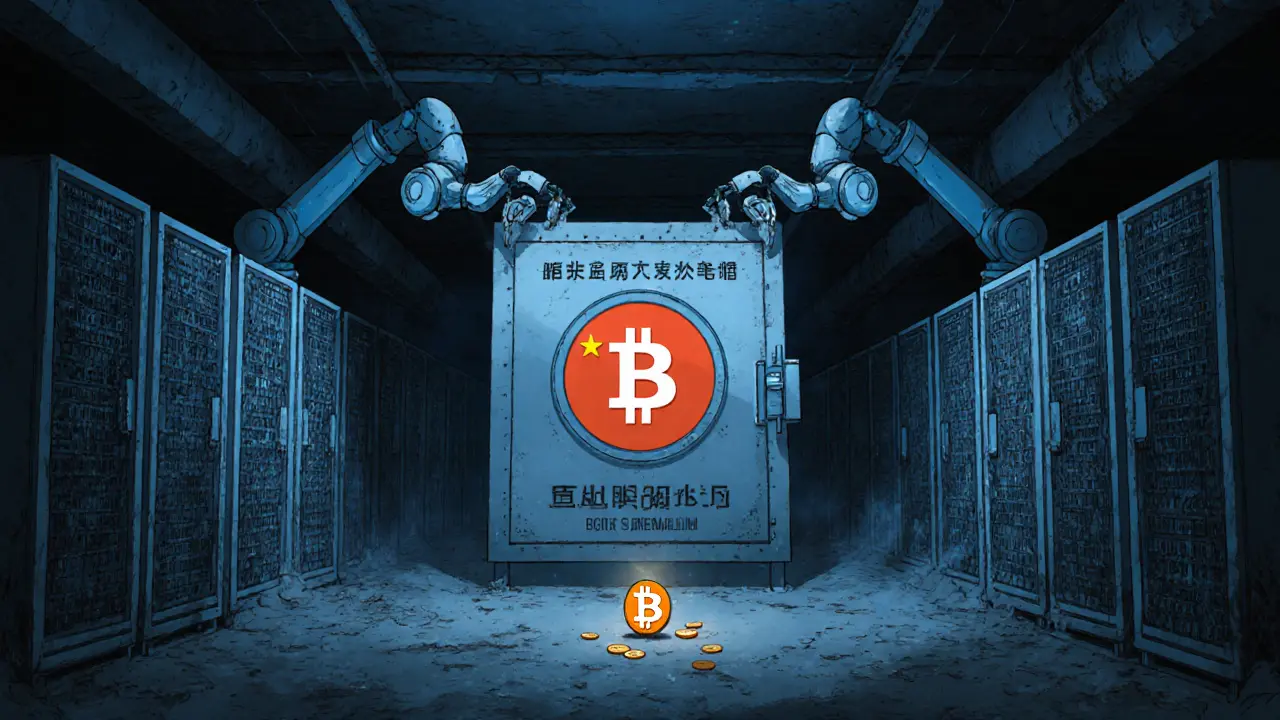
What About VPNs and Workarounds?
Some people still try to bypass the ban using VPNs to access foreign exchanges. But it’s getting harder. In 2024, China upgraded its Great Firewall to detect and block traffic patterns linked to crypto exchanges. Even encrypted traffic from services like NordVPN or ExpressVPN is now monitored for signs of crypto activity. If you’re using a VPN and sending money to a crypto address, your ISP can flag you. Fines for using a VPN to access crypto range from 5,000 to 50,000 RMB (about $700 to $7,000 USD). Repeat offenders face criminal charges. There are no gray areas anymore. The government doesn’t want you to avoid the ban - it wants you to forget crypto ever existed.Is There Any Hope for Reversal?
No. Not in the foreseeable future. Experts agree: China’s policy is permanent. The digital yuan is now in use by over 700 million people. The infrastructure is built. The control is in place. Reversing the ban would mean giving up that control - something the Communist Party won’t do. Even if global crypto prices surge again, or if new technologies emerge, China’s stance won’t change. They’ve made their choice: centralized money over decentralized freedom. And they’re willing to seize wallets, jail users, and crush entire industries to keep it that way.What This Means for the Rest of the World
China’s model is being watched - not copied, but studied. Other authoritarian regimes are taking notes. Russia, Iran, and North Korea have all increased surveillance of crypto users. Even in democracies, regulators are asking: “What if we just banned it?” But China’s approach is extreme. It’s not about protecting investors. It’s about eliminating financial alternatives. It’s about making sure no one can store value outside the state’s control. That’s why it’s so dangerous - not because it’s effective, but because it works. If you’re outside China and you believe in open finance, this is a warning. The most powerful government on Earth chose control over innovation. And it won.Is it still possible to own cryptocurrency in China?
No. As of June 1, 2025, owning any cryptocurrency - whether Bitcoin, Ethereum, or a stablecoin - is illegal in China. Authorities can seize digital assets from wallets, devices, or exchanges. Holding crypto, even without trading, is considered a violation of the law.
What happens if I’m caught with crypto in China?
If you’re caught with cryptocurrency, your assets will be seized. You may also face fines ranging from 5,000 to 50,000 RMB ($700-$7,000 USD), depending on the amount and whether it’s a repeat offense. In serious cases - especially if linked to fraud or money laundering - you could be charged criminally and face jail time.
Can I use a VPN to access foreign crypto exchanges from China?
Using a VPN to access foreign crypto exchanges is illegal under China’s 2025 ban. The government has upgraded its internet monitoring systems to detect and block crypto-related traffic, even through encrypted VPNs. If detected, you risk fines, account freezes, or criminal charges.
Why did China ban cryptocurrency?
China banned cryptocurrency to eliminate private alternatives to its state-controlled digital yuan (CBDC). The goal is to maintain full control over financial transactions, prevent capital flight, and ensure all digital money flows through government-monitored systems. The ban also removes competition for the digital yuan and reinforces strict capital controls.
Are there any exceptions to the crypto ban in China?
No exceptions exist. The 2025 ban applies to all individuals and entities within China’s jurisdiction, regardless of nationality. There are no legal allowances for personal use, investment, mining, or even holding crypto as a collectible. All forms of private cryptocurrency activity are prohibited.