- 28 Feb 2026
- Elara Crowthorne
- 17
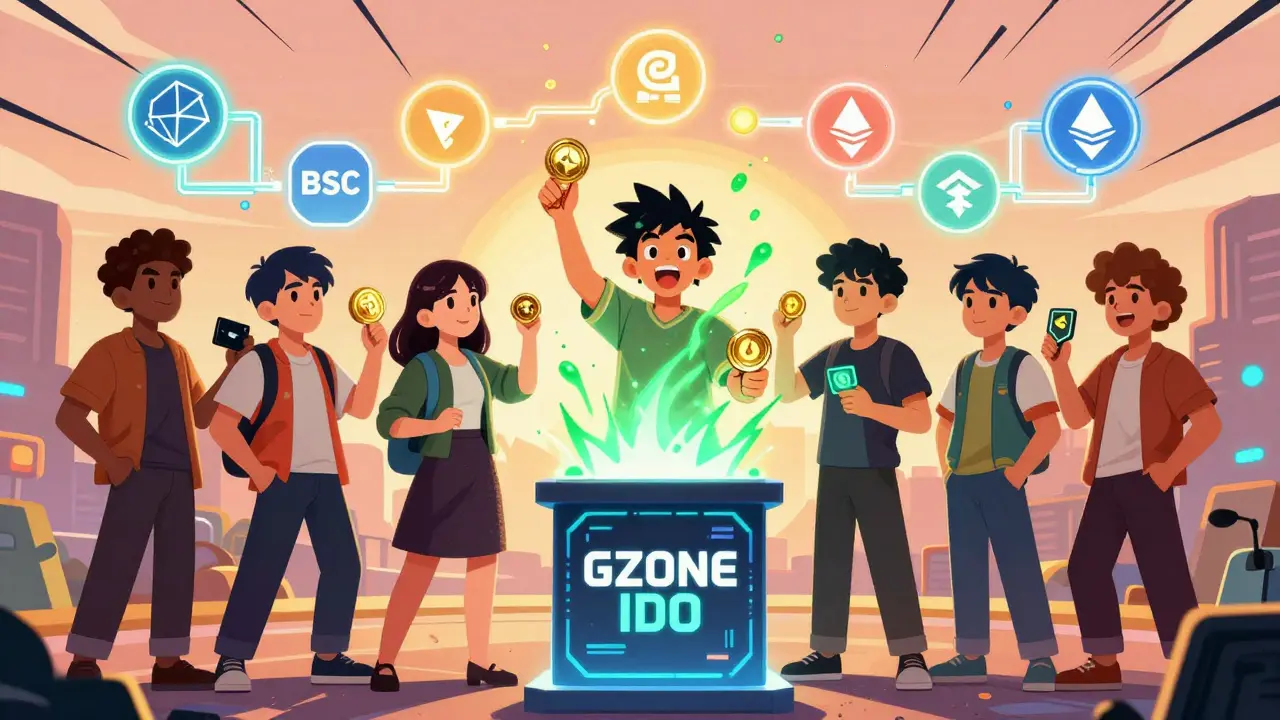
When GameZone (GZONE) launched its IDO in September 2021, it didn’t just raise money - it built a system designed to give everyday gamers a real shot at getting into the next big blockchain game. Forget the old model where only big investors got early access. GameZone’s whole purpose was to flip that script. And while the token’s price has dropped since its peak, the underlying mechanics still matter - especially if you’re trying to understand how to earn from it today.
What GameZone Actually Does
GameZone isn’t another crypto exchange. It’s a launchpad built specifically for blockchain games. Think of it like a filter: out of dozens of new gaming projects trying to raise funds, GameZone picks the ones with real potential and gives their tokens to real players - not just whales. It’s part of the BlueZilla ecosystem, which has a reputation for backing serious Web3 startups. That connection gives GameZone credibility, tools, and access to networks most small platforms never get.
The platform supports games on Polygon, Binance Smart Chain, Solana, and Ethereum. That means whatever game you get into through GameZone, you’re not locked into one blockchain. You can play, trade NFTs, and earn across multiple networks.
The GZONE Token: More Than Just a Speculative Asset
The GZONE token isn’t just a way to speculate. It’s the key that unlocks everything else on the platform. You need it to participate in Initial Game Offerings (IGOs), access the marketplace, and earn rewards. Here’s how it works:
- Total supply: 1 billion GZONE tokens
- Circulating supply: 421,550,084 GZONE (as of early 2026)
- Current price: ~$0.00274 (down from its all-time high of $1.18 in November 2021)
What’s interesting isn’t the price - it’s the design. Every time someone sells GZONE, a 7% fee is applied. That fee doesn’t vanish. Two percent gets burned permanently. That reduces the total supply over time. The other 5% goes directly into staking rewards. That’s not a one-time bonus - it’s a continuous payout to people who hold and stake their tokens.
How the "Airdrop" Actually Works (It’s Not What You Think)
There’s no public sign-up page for a traditional GameZone airdrop. You won’t find a Twitter campaign asking you to follow, retweet, and join a Discord. Instead, GameZone runs what’s essentially a continuous airdrop through staking.
If you stake your GZONE tokens, you earn a share of that 5% fee from every sell order on the platform. The more you stake, and the longer you hold, the bigger your slice. It’s not random. It’s predictable. And it’s tied directly to how much you contribute to the ecosystem.
This system replaces the old-school airdrop model. Instead of giving tokens away for free to anyone who shows up, GameZone rewards people who stick around. It’s a smarter way to build loyalty. You’re not chasing a one-time drop - you’re building a long-term position.
The Tier System: Your Staking Level Determines Your Access
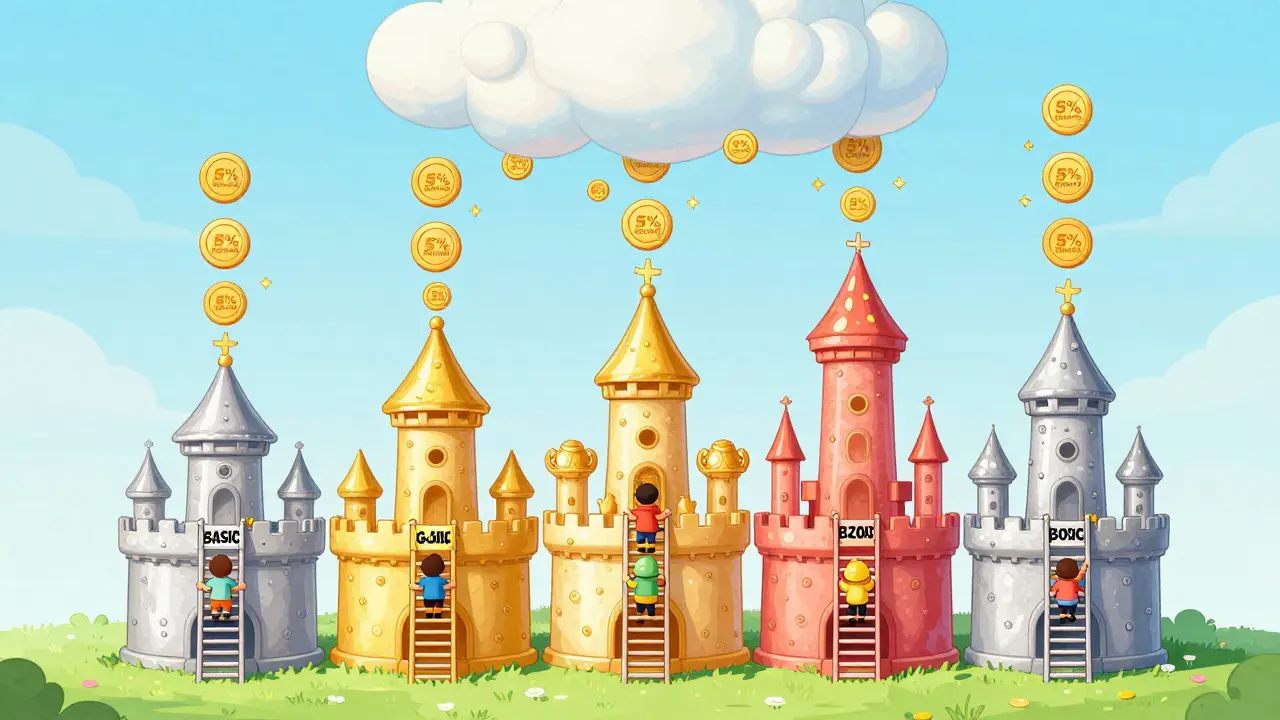
GameZone doesn’t treat everyone the same. It uses a tiered system based on how much GZONE you stake. There are four tiers:
- Basic: 1,000-9,999 GZONE staked
- Silver: 10,000-49,999 GZONE staked
- Gold: 50,000-199,999 GZONE staked
- Platinum: 200,000+ GZONE staked
Each tier gives you a higher "pool weight" - which means when a new game launches, you get a larger share of the tokens available. A Platinum holder might get 10x more allocation than a Basic holder, even if they both applied at the same time.
There’s also a penalty for early unstaking. If you withdraw your staked tokens before the lock-up period ends, you lose up to 25% of your staked amount. That’s not a bug - it’s a feature. It keeps people from jumping in just to grab a quick reward and leaving. It’s designed to create a stable, committed community.
Real Projects That Made It Through GameZone
GameZone doesn’t just talk - it delivers. Some of the most successful blockchain games in 2022 and 2023 launched through its platform:
- Katana Inu: A play-to-earn NFT game with over 50,000 active players within three months of launch.
- Galactic Quadrant: A space-themed strategy game that raised $1.2 million in its IDO and has since added real-time multiplayer features.
- Velhalla: A Norse mythology-based RPG that integrated GameZone’s marketplace for NFT trading.
These aren’t pump-and-dump projects. They have gameplay, active development teams, and ongoing updates. GameZone doesn’t just list any project - it vets them. Legal checks, tokenomics reviews, and marketing support are part of the incubation package. That’s why these games still have active communities today.
The Marketplace: Where Your NFTs Actually Have Value
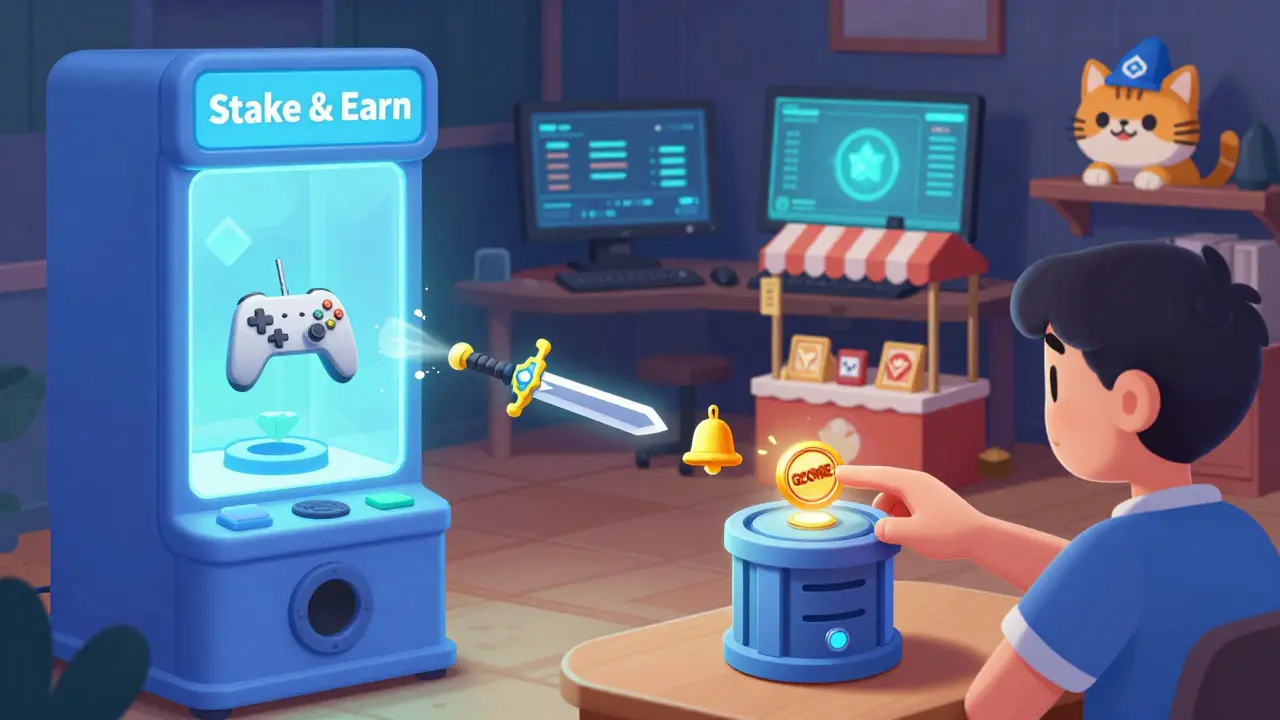
GameZone isn’t just about buying tokens. It has its own NFT marketplace. You can buy, sell, and trade in-game items - weapons, skins, characters - all paid for in GZONE. The fees are lower than OpenSea or Blur, and again, they’re tiered. Higher-tier users pay less.
This matters because it gives GZONE utility beyond price speculation. If you’re playing a game and earn a rare sword, you can sell it on GameZone’s marketplace and get paid in GZONE. That GZONE can then be staked again, earning you more rewards. It creates a loop: play → earn → trade → stake → earn more.
Price Predictions: Hope vs. Reality
Crypto analysts are divided. Some predict GZONE could hit $2.50 by 2026, driven by new partnerships and increased adoption. Others point out that the token has lost 99% of its value since its peak and is still trading below its all-time low of $0.003617, hit in March 2025.
The technical indicators don’t look great. The 14-day RSI is at 15.56 - deeply oversold. The 50-day SMA is $0.012, while the current price is $0.00274. That’s a massive gap. It suggests the market is still in a prolonged correction.
But here’s the thing: price isn’t everything. GameZone’s value isn’t in its chart. It’s in its ecosystem. The platform has real users, real games, and real utility. If blockchain gaming grows over the next two years, GameZone’s infrastructure could become essential - not because the token price skyrockets, but because it’s the only place where small players can get into the best new games.
Why This Still Matters in 2026
Most people write off GZONE because it’s down 97%. But that’s missing the point. The original goal wasn’t to make you rich overnight. It was to build a fair system where you don’t need $100,000 to get into the next big blockchain game.
If you’re serious about playing Web3 games, you don’t need to buy GZONE at $1. You just need enough to hit the Basic tier. That’s $2.74 worth of GZONE today. Stake it. Earn rewards from every sell. Get early access to new launches. Trade NFTs. Reinvest. It’s a slow game - but it’s a game you can actually win.
The airdrop isn’t a one-time event. It’s happening every time someone sells GZONE - and you’re part of it if you’re staking.
Is there a public GZONE airdrop I can join right now?
No, GameZone doesn’t run traditional airdrops where you sign up for free tokens. Instead, it rewards users through its staking system. When you stake GZONE tokens, you earn 5% of the 7% sell fee from every trade on the platform. This is an ongoing, automated reward - not a one-time giveaway.
How do I start earning from GZONE staking?
First, buy at least 1,000 GZONE tokens on a supported exchange like PancakeSwap or Uniswap. Then, connect your wallet to the GameZone platform and stake your tokens. The more you stake and the longer you hold, the higher your tier and the more rewards you earn. You’ll also gain better access to new game launches.
What happens if I unstake my GZONE early?
If you unstake before the lock-up period ends, you’ll lose up to 25% of your staked amount as a penalty. This discourages short-term speculation and encourages long-term participation, which helps stabilize the ecosystem.
Can I use GZONE outside of the GameZone platform?
Yes. GZONE is an ERC-20 token on Ethereum and also available on Binance Smart Chain and Polygon. You can hold it in any wallet that supports those networks, trade it on decentralized exchanges, or use it to pay for NFTs on GameZone’s marketplace. But its real utility - early access to games and staking rewards - only works within the GameZone ecosystem.
Is GameZone still active in 2026?
Yes. While the token price has fallen, the platform continues to support new blockchain game launches, maintain its NFT marketplace, and update its staking system. The BlueZilla partnership remains active, and new game integrations are still being added. The ecosystem is quieter than in 2022, but it’s still functioning.
What to Do Next
If you’re curious about blockchain gaming, don’t wait for a price surge. Start small. Buy 1,000 GZONE. Stake it. See how the rewards add up over a month. Try trading one NFT on the marketplace. Play one game that launched through GameZone. You don’t need to go all-in. You just need to show up.
The future of gaming isn’t just about graphics or controllers. It’s about ownership. And GameZone is one of the few platforms built to make that real for regular people - not just the wealthy.

17 Comments
Best part? I'm still in Basic tier. Can't afford more yet. But I'm in. That's enough.
And yeah, the price is low. But so what? I'm not here for a pump. I'm here because Katana Inu actually works. The game's fun. The NFTs matter. That's real.
Don't chase price. Chase utility.
I'm not saying don't stake. I'm saying don't pretend this isn't a graveyard with a pretty sign.
Price is noise. Utility is king. 🤑
This isn't about getting rich. It's about owning your place in the future of gaming. That's worth more than any price chart.
One might argue that the current price reflects market sentiment rather than intrinsic value. However, the ecosystem's operational continuity and ongoing integrations suggest a resilient foundation.
One does not invest in GZONE. One commits to its ethos.
Don't overthink it. Just stake. Wait. See what happens.
This isn't a revolution. It's a slow fade with a nice infographic.
Don't look at the chart. Look at the community. They're still here. And they're building.
Trust but verify. And I'm not trusting.
It's not about the money. It's about being part of something that actually tries to do things right. I play games. I earn. I trade. I help others learn. That's the vibe. 💫
That's not a graveyard. That's a foundation.
Pathetic.
Wake up. This isn't Web3. It's Web2 with a blockchain sticker.