
- 10 Jan 2026
- Elara Crowthorne
- 14
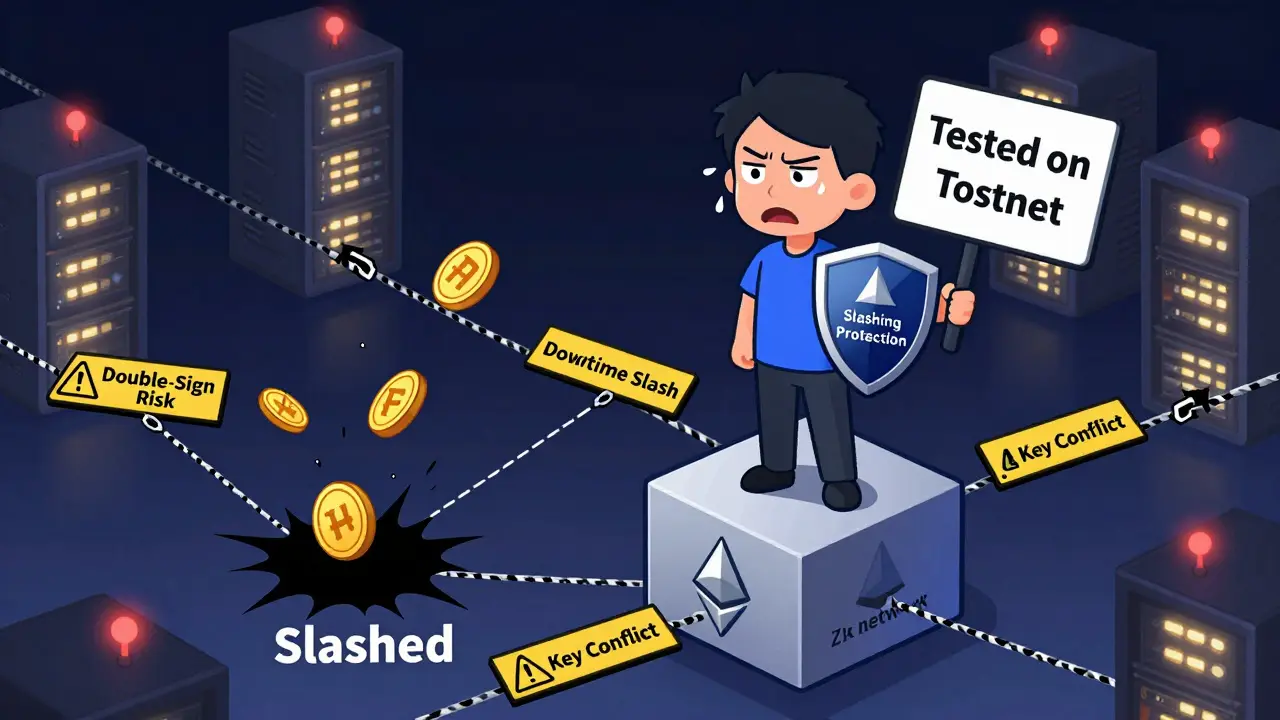
Restaking is growing fast. More people are locking up their ETH or other staked assets to secure multiple blockchains at once - not just one. It sounds like free money: earn rewards from Ethereum, then use the same stake to help secure a rollup, a ZK network, or a liquid staking protocol. But there’s a hidden danger most beginners don’t talk about: slashing.
Slashing isn’t a bug. It’s a feature. It’s how proof-of-stake blockchains punish bad behavior so the whole system stays secure. But when you restake, you’re not just betting on one chain anymore. You’re betting on several. And if you mess up once, you could lose everything across all of them.
What Exactly Is Slashing?
Slashing means losing part - or all - of your staked cryptocurrency because you broke the rules. It’s not a fine. It’s not a warning. It’s automatic. The network detects the violation, and your stake gets burned.
On Ethereum, the three main ways to get slashed are:
- Double-signing: Your validator signs two different blocks for the same slot. This looks like you’re trying to create a fork - even if it was an accident.
- Surround voting: You vote on a block that completely surrounds another vote you made earlier, effectively rewriting history.
- Double-voting: You vote for two different blocks in the same epoch, as if you’re trying to manipulate consensus.
These aren’t theoretical. Between Ethereum’s launch in 2020 and February 2024, 414 validators were slashed out of about 916,000 active ones. That’s less than 0.04%. But here’s the kicker: every single one of those slashes was caused by operator error. Not hacking. Not malice. Just bad setup.
Why Restaking Makes Slashing Worse
When you stake normally, you’re only responsible for one chain. Restaking means you’re now validating for multiple protocols at the same time. Maybe you’re securing Ethereum, Arbitrum, and EigenLayer. Each one has its own rules, its own slashing conditions, and its own timing.
Here’s where it gets dangerous: your validator node might be perfectly fine for Ethereum, but if it goes offline for five minutes on EigenLayer, you could get slashed there - even if you never missed a single block on Ethereum.
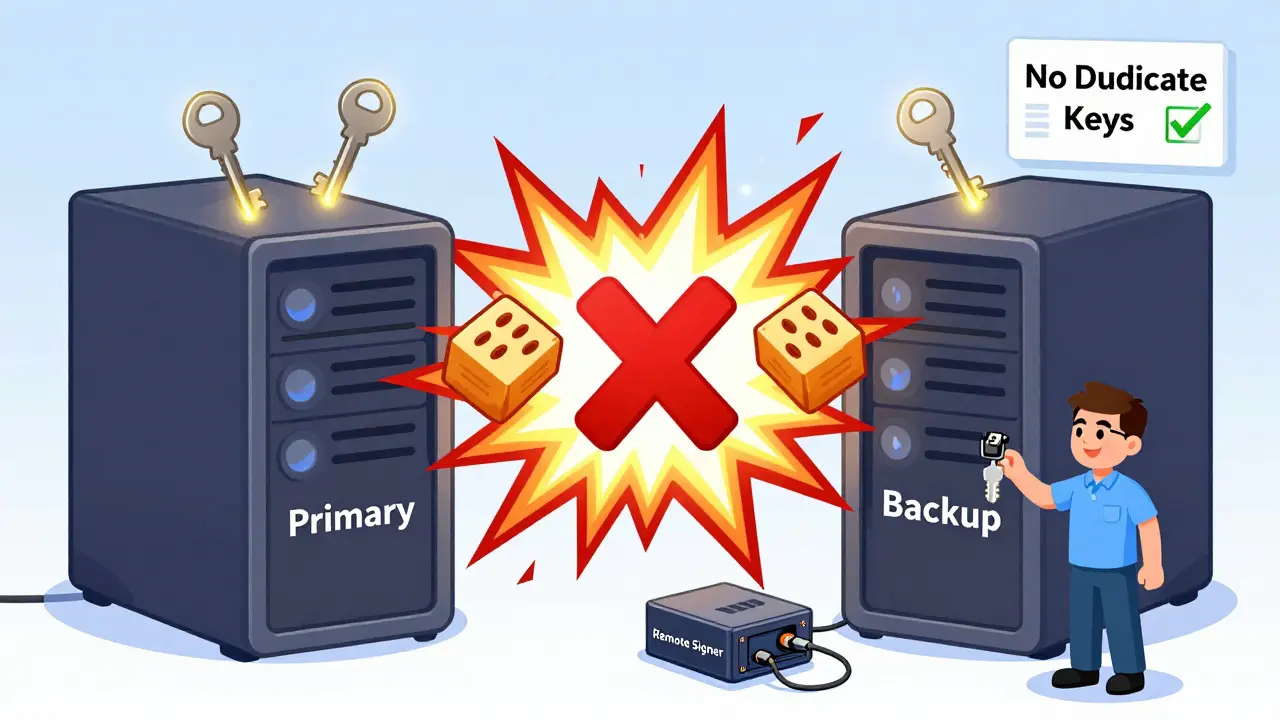
And then there’s double-signing. If you set up a backup server to avoid downtime, you might accidentally run the same key on two machines. One node signs a block. The backup node, thinking it’s the primary, also signs. The network sees two signatures from the same key - and assumes you’re trying to cheat. Boom. Slashed.
There’s no official data yet on restaking-specific slashing rates because it’s still early. But experts agree: the risk is higher. More services. More moving parts. More chances to mess up.
How to Avoid Getting Slashed
Slashing isn’t inevitable. Most of it is preventable. Here’s what works.
1. Use Slashing Protection Tools
Every serious validator uses slashing protection. It’s not optional. Tools like Slashing Protection Interchange (SPI) or Lighthouse’s slashing database keep a record of every block and attestation your validator signs. If your node tries to sign something conflicting, the tool blocks it.
Don’t just enable it. Test it. Move your validator to a testnet first. See if the protection kicks in when you simulate a double-sign. If it doesn’t, fix it before going live.
2. Never Run Duplicate Keys
Having a backup server sounds smart. Until you realize: if both servers use the same key, you’re asking to be slashed.
Instead, use key sharding or remote signing. With remote signing, your private key lives on a separate, air-gapped device. Your validator node only talks to it over encrypted channels. No key ever touches the internet-facing server. Even if that server gets hacked, your key is safe.
Tools like Signer from Prysm or Kurtosis make this easier than ever. You don’t need to be a crypto engineer to set this up.
3. Monitor Everything - Relentlessly
Most slashes happen because no one noticed something was wrong until it was too late.
Set up alerts for:
- Node downtime longer than 10 minutes
- Missed attestations
- Block proposal failures
- High CPU or memory usage (can cause laggy signing)
Use free tools like StakeWise Dashboard, Blockchair, or Validator Monitor. They show you real-time stats. If your attestation success rate drops below 98%, you’re in trouble. Fix it before the network does.
4. Keep Your Software Updated
Protocol upgrades happen every few months. Each one can change slashing rules. A rule that was safe last month might get you slashed next month.
Subscribe to official network updates. Follow Ethereum’s Core Developers, EigenLayer’s blog, and your client’s release notes. Never auto-update without testing. But never ignore updates either.
The Hidden Cost: Reputation
Slashing isn’t just about losing money. It’s about losing trust.
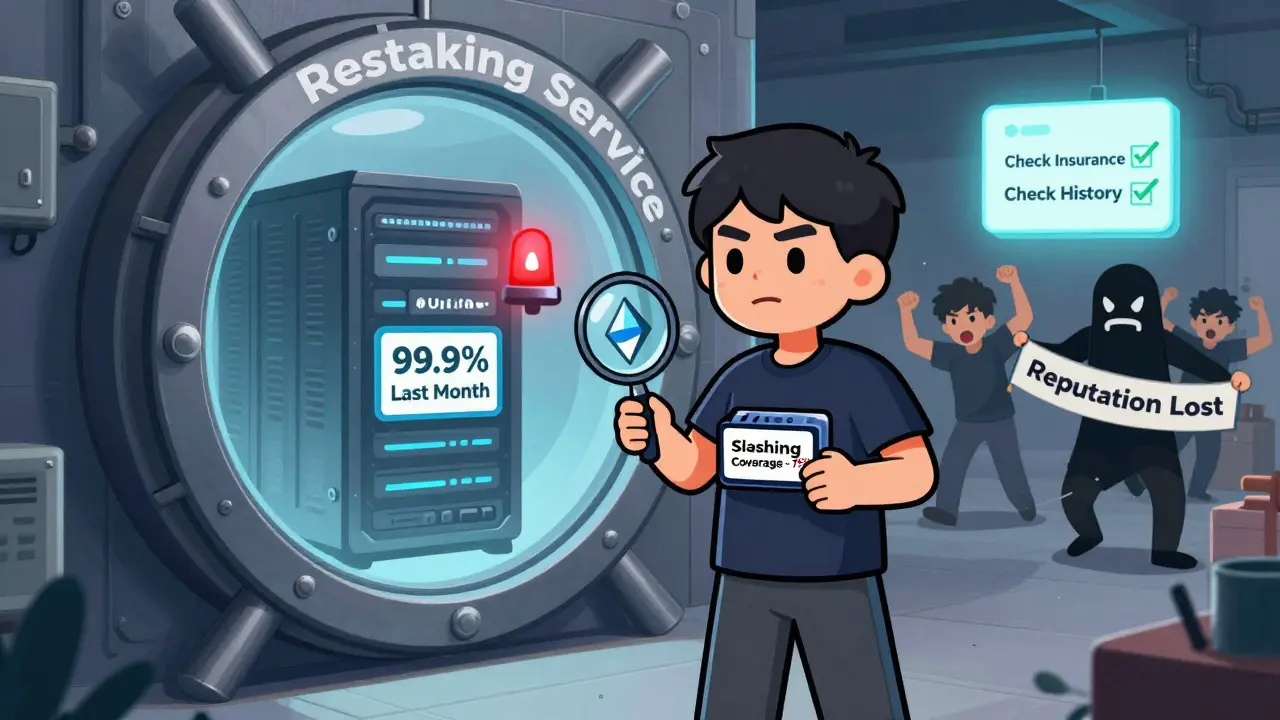
Imagine you’re a staker. You put your ETH with a validator because they’ve been online 99.9% of the time. Then one day, they get slashed. You don’t know why. Maybe they were sloppy. Maybe they were hacked. Either way, your funds are at risk.
Delegators flee. Fast. Even if you fix everything, it takes months to rebuild trust. Institutional investors - the ones with big money - won’t touch a validator with a slashing history. Not even if they promise it won’t happen again.
Reputation is your most valuable asset. Once it’s gone, you can’t buy it back.
What If You’re Not a Validator? (For Stakers)
You don’t run a node? That’s fine. But you’re still exposed.
If you stake through a service like Lido, Rocket Pool, or Coinbase, you’re trusting them to avoid slashing. And they’re restaking too.
Ask these questions before you deposit:
- Do they use slashing protection?
- Do they use remote signing or key sharding?
- Have they ever been slashed? (Check their public logs.)
- Do they have insurance or compensation policies for slashing events?
Some platforms now offer slashing insurance. It’s rare, but it exists. If you’re staking large amounts, it’s worth paying extra for.
Future Risks: Will Slashing Get Worse?
As networks grow in value, the cost of attacking them goes up. That means slashing penalties might too.
Right now, Ethereum slashes about 0.5% of your stake for a first offense. Some experts think that could jump to 5% or more if a major attack happens. Others argue that’s too harsh - it could scare off small validators and centralize power.
The truth? Nobody knows. But if you’re restaking, you need to assume penalties will get stricter. Plan for the worst.
Final Checklist: Are You Ready to Restake?
Before you hit ‘confirm’ on restaking, run through this:
- ✅ I use a remote signer or key sharding - no duplicate keys.
- ✅ I have slashing protection enabled and tested.
- ✅ I monitor my node with alerts for downtime and missed attestations.
- ✅ I update my software manually after testing on a testnet.
- ✅ I know the slashing rules for every chain I’m restaking on.
- ✅ If I’m using a service, I checked their slashing history and insurance policy.
If you answered yes to all six, you’re in a much safer position than 90% of restakers today.
Restaking unlocks new yields. But it also multiplies your risk. The difference between profit and loss isn’t luck. It’s discipline. The people who win aren’t the ones chasing the highest APY. They’re the ones who avoid getting slashed.
Can you get slashed just for being offline?
Not always. On Ethereum, being offline doesn’t trigger slashing - it just means you miss rewards. But on some other chains, like Cosmos or Polygon, extended downtime can lead to slashing. Always check the specific rules of the chain you’re restaking on.
Is restaking safer than regular staking?
No. Restaking is riskier. You’re securing multiple networks at once, so one mistake can cost you across all of them. Regular staking only exposes you to one chain’s rules. Restaking multiplies your exposure.
Do I need to run my own node to restake?
No. Many platforms like EigenLayer, Lido, and Rocket Pool let you restake without running hardware. But if you use them, make sure they use secure practices like remote signing and slashing protection. Don’t assume they’re safe just because they’re popular.
What happens if I get slashed?
You lose a portion of your staked ETH or asset - typically between 0.5% and 10%, depending on the network and offense. Your validator may be removed from the active set. You’ll also lose reputation, making it hard to attract delegators or use premium services in the future.
Can I insure against slashing?
Yes - but it’s rare. A few platforms like StakeWise and Figment offer optional slashing insurance for a fee. It usually covers 50-100% of losses from accidental slashing. Read the fine print: it won’t cover negligence or poor setup.

14 Comments
Just staked my ETH through Lido. Hope they know what they’re doing.
So let me get this straight-you’re telling me I need to become a sysadmin just to not lose my crypto? Wow. Just wow. The blockchain revolution is here, and it’s demanding my time, my sanity, and my dignity. Thanks, decentralization.
They’re lying. This whole restaking thing is a Fed-backed trap. They want you to run nodes so they can track your IP, then freeze your assets under ‘national security’. I’ve seen the documents. They’re coming for your keys next. Don’t trust the ‘slashing protection’ tools-they’re honeypots. Use air-gapped USB drives. Burn the rest.
Oh wow. A 6-page essay on how to not get punished for being human. Groundbreaking. I didn’t realize crypto was just a high-stakes game of ‘don’t blink’ where the house always wins. Thanks for the reminder that my life is now a series of automated alerts and existential dread.
Let me guess-you’re the type who thinks ‘remote signing’ is a Netflix show. You think if you just copy-paste some GitHub code, you’re safe? Honey, if you don’t understand the difference between a validator and a toaster, you shouldn’t be touching a key. Slashing isn’t a bug-it’s karma for people who think ‘DeFi’ is a personality trait.
Bro, if you’re not using Prysm’s Signer + Prometheus + Grafana + custom Slack alerts, you’re not even playing the game. I’ve got 3 nodes, 2 remote signers, and a backup generator. My attestation rate is 99.98%. You want to restake? Start here. No excuses. This isn’t a hobby-it’s a full-time ops job now.
Wow, this is so helpful!! I just started staking last week and I had NO IDEA about double-signing or slashing protection!! I’m going to go check my validator right now!! I’m so excited to learn more!! Thank you for sharing all these tools!! I’ll definitely use StakeWise and test on Goerli first!! 😊
Canada’s got more validators than the US now? Yeah right. This whole thing’s a socialist crypto scam. Real Americans run their own nodes. The rest are just renting their security from Big Ethereum.
Man I used to think crypto was just about getting rich. Now I realize it’s about not being an idiot. I almost ran duplicate keys last month. Almost. Glad I caught it. This guide saved my stash. Thanks.
Okay so I just read this entire thing and I’m crying. I mean, I’ve been running a node for 8 months and I didn’t even know about surround voting? What if I’ve been slashing myself? What if I’m already a criminal? I’m going to delete my keys. I’m going to move to a cabin. I’m going to live off the grid. I can’t do this anymore. The weight of consensus is too much. Someone please tell me I’m not alone.
Look, if you’re still using a single key on a VPS, you’re not a validator-you’re a walking target. I’ve seen 12 different slashes in the last year, all from people who thought ‘auto-update’ meant ‘auto-safe’. No. No. NO. You need a hardware wallet, a cold-signing rig, a firewall, and a priest. And even then, you’re still gambling. The system is rigged. The devs are in cahoots with the exchanges. You think they want small players to win? They want you to fail so they can buy your dust for pennies. Wake up. This isn’t finance. It’s psychological warfare.
I appreciate the depth here. It’s easy to get swept up in APYs without understanding the underlying mechanics. I’ve been using EigenLayer for a few months and I’ve been monitoring via Blockchair. So far, so good. Still cautious, but informed.
Hey if you’re new to this, don’t panic. Start small. Use a trusted platform like Rocket Pool-they’ve got slashing insurance and remote signing built in. Once you’re comfortable, dip your toes into running your own node on a testnet. Watch the logs. Learn the alerts. It’s not magic, it’s just practice. You’ve got this. And if you mess up? That’s how you learn. We all did.
Just wanted to say thanks for writing this. I was about to restake on EigenLayer without knowing anything about key sharding. Now I’m going to pause and read up. You saved me from a bad decision. Really.